The Week The Week
flag of US
US
flag of UK
UK
https://cdn.mos.cms.futurecdn.net/skoGBi9qKFoUtnNWkovjJQ.jpg

SUBSCRIBE

Try 6 Free Issues

Sign in
  • View Profile
  • Sign out
  • The Explainer
  • Talking Points
  • The Week Recommends
  • Podcasts
  • Newsletters
  • From the Magazine
  • The Week Junior
  • More
    • Politics
    • World News
    • Business
    • Health
    • Science
    • Food & Drink
    • Travel
    • Culture
    • History
    • Personal Finance
    • Puzzles
    • Photos
    • The Blend
    • All Categories
  • Newsletter sign up Newsletter
  • The Week Evening Review
    Trump’s Venezuela fixation, MAGA’s war at TPUSA, and climate change’s impact on Christmas

     
    TALKING POINTS

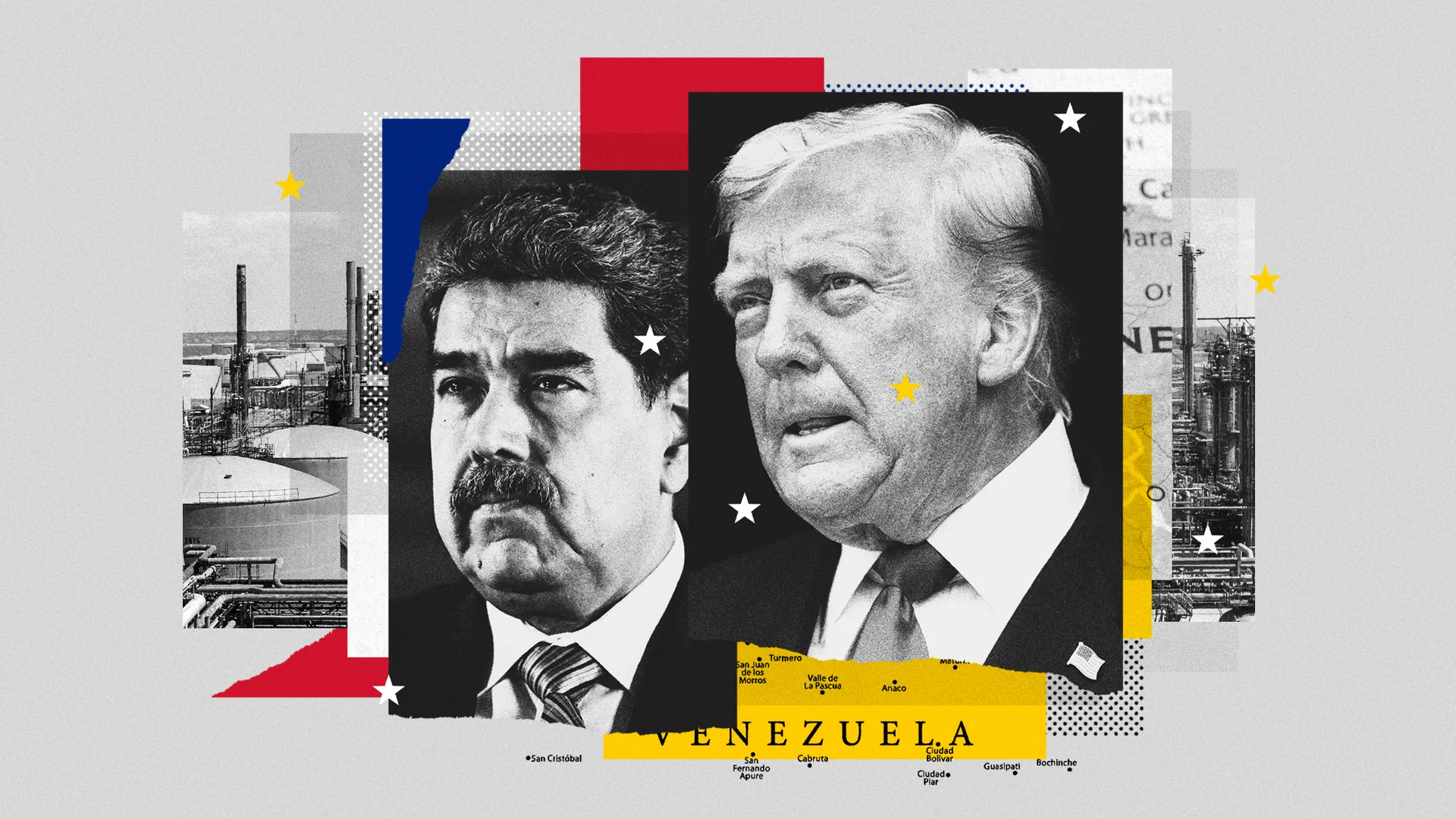
    Why, really, is Trump going after Venezuela?

    The U.S. appears to be readying for war in Venezuela or at least seeking to depose leader Nicolás Maduro. President Donald Trump has “repeatedly” shifted the public rationale for targeting Venezuela, said The Wall Street Journal. And Congress has largely been left out of the loop. 

    Minerals? Oil? Putin?
    Trump’s focus on Venezuela is “about oil, not drugs,” said Chris Brennan at USA Today. Venezuela must “return to the United States of America all of the oil, land and other assets that they previously stole from us” during the nationalization of that country’s oil industry, said Trump on Truth Social. But a war in pursuit of oil profits would be the kind of “American military adventurism” that Trump once decried.

    “It’s minerals, not drugs,” said Krystal Kauffman at The Hill. Rare minerals used in high technology and advanced manufacturing are “emerging as geopolitical currency” in the race to shape the next century, and Venezuela claims more than a trillion dollars in reserves. If that’s the objective, the Trump administration should “negotiate agreements” instead of wage war. 

    Venezuela is a “client state of Russia,” said David Marcus at Fox News. Action against Venezuela would serve as proof that Russian President Vladimir Putin “cannot keep his sketchy global friends safe.” The Russian leader is already “stretched” by the Ukraine war and U.S. sanctions. Trump’s target in Venezuela “isn’t really Maduro, it’s Putin.”

    Maduro’s regime is “both an importer and exporter of instability,” said Bret Stephens at The New York Times. His government’s ties to China, Iran and Russia give those countries a “significant foothold in the Americas.” 

    Nation-building trap
    The Trump administration has asked American oil companies if they want to return to Venezuela but is “getting no takers,” said Politico. Oil markets are already “glutted with supply,” and prices are at “nearly five-year lows.” 

    Forcing Maduro out of power would probably be the “easy part,” said Gregory J. Wallance at The Hill. It’s the governing afterward that would be difficult. And Trump could become the latest American president to “fall into the nation-building trap.”


    QUOTE OF THE DAY

    ‘It’s an honor to serve you in this volunteer position to make Greenland a part of the U.S. This in no way affects my position as governor of Louisiana!’

    Louisiana Gov. Jeff Landry (R), in an X post, thanking Trump on his appointment as special envoy to Greenland. Denmark expressed anger at Landry’s appointment, with the country’s prime minister stating that “national borders and the sovereignty of states are rooted in international law.”


    IN THE SPOTLIGHT

    MAGA civil war takes center stage at TPUSA conference 

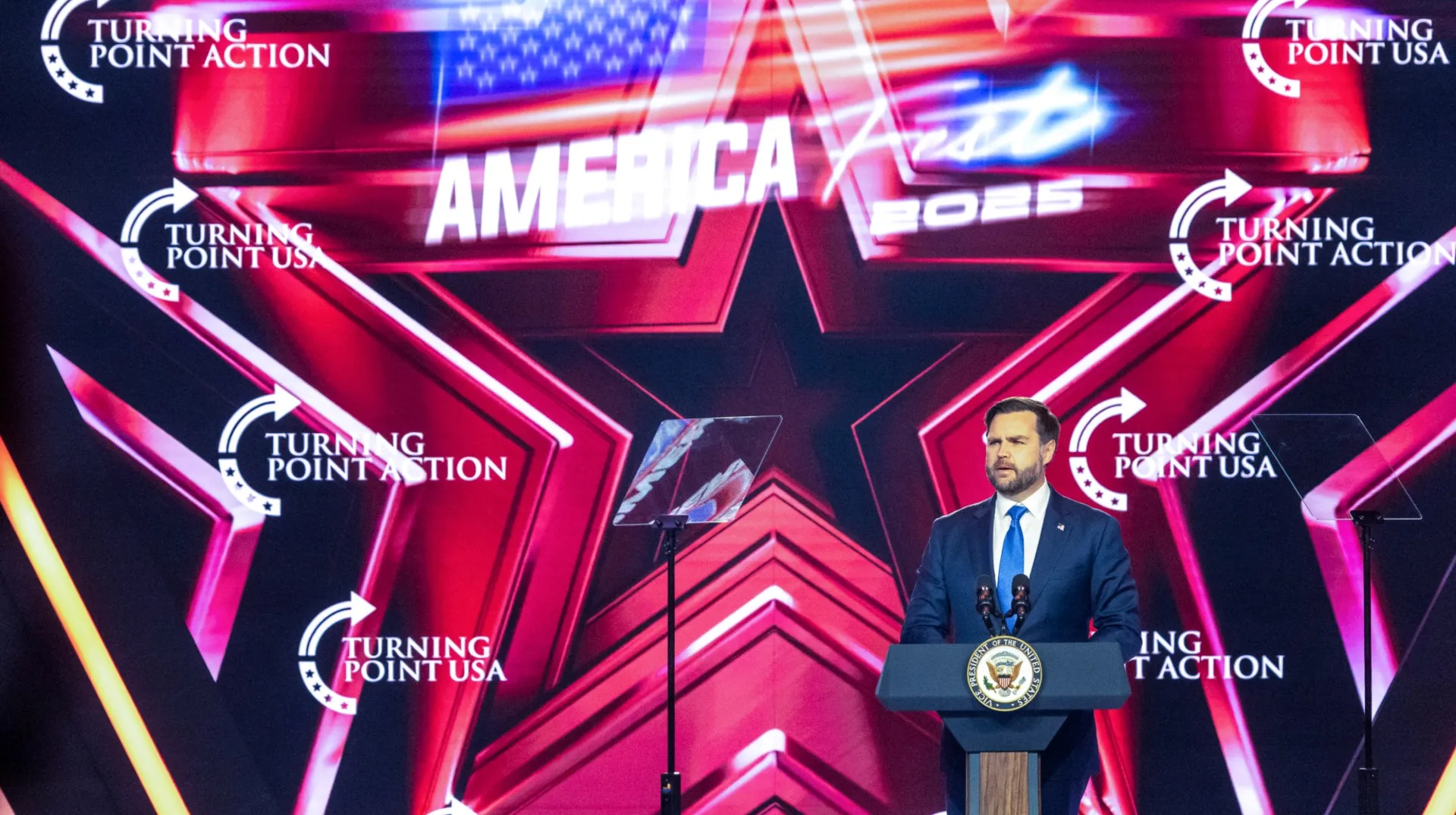
    This past weekend, some of the brightest stars in the conservative sky descended on Phoenix, Arizona, for Turning Point USA’s “Americafest 2025” conference, which quickly shed its veneer of camaraderie to expose deep fracture lines threatening the ultranationalist group. Across four days of dueling speeches, TPUSA’s first major event since the shooting death of co-founder Charlie Kirk became a microcosm of the broader forces jockeying for MAGA power and influence nationwide.

    ‘Grifters’ and ‘charlatans’ 
    Although its annual conferences have been “long billed as a show of unity for young conservatives,” this year’s event was a “public airing of deepening fractures inside the MAGA movement,” said Salon. While “clashes over Israel, antisemitism and leadership” dominated the weekend, Kirk’s death and the “absence of a clear successor loomed large” as tributes “veered into ideological disputes, particularly over foreign policy and the influence of far-right figures within the movement.” 

    Conservative broadcaster Ben Shapiro used his address to lash out at “grifters and charlatans” who he claimed were “guilty of misleading their audiences with falsehoods and conspiracy theories,” said CNN. He took particular aim at former Fox News host Tucker Carlson for interviewing avowed antisemite Nick Fuentes in what Shapiro said was an “act of moral imbecility.” 

    Carlson returned fire during his speech, calling Shapiro’s attempt at “deplatforming and denouncing people” at a TPUSA event “hilarious,” said CNN. He then “downplayed the problem of anti-Jewish hate,” said the Times of Israel, in part by framing antisemitism as “less pervasive than bias against white men.” Speaking Sunday evening, Vice President JD Vance conspicuously declined to condemn the “streak of antisemitism that has divided the Republican Party,” said The Associated Press. 

    All eyes on 2028
    The schisms exposed over the weekend “laid bare” the challenge for any conservative hoping to succeed President Donald Trump atop the MAGA movement: how to address the “explosive debate” over whether conspiracy theorists and extremists should be “embraced or excluded from the conservative coalition,” said The New York Times. In Vance’s remarks, delivered after Kirk’s widow and current TPUSA CEO Erika endorsed him for 2028, the vice president signaled he was “more than willing to forgo imposing any moral red lines.” 


    Statistic of the day

    $167.5 million: The combined price that Mastercard and Visa will pay as part of a settlement for a class-action lawsuit filed in 2011 accusing them of inflating ATM fees. The companies paid $197.5 million last year as part of another ATM-fee-related case. 


    THE EXPLAINER

    How climate change is affecting Christmas

    Some people may be dreaming of a white Christmas when they wake up on Thursday, but for many parts of the world, climate change could make this a rare event. And snowfall is not the only part of the holiday that could be impacted by extreme weather patterns.

    How is holiday weather changing?
    Climate change is “causing temperatures to rise across the country, and it’s impacting precipitation patterns,” said Time. In the last 75 years, temperatures in December have “warmed three to five degrees” nationwide, David Robinson, a New Jersey climatologist and Rutgers University professor, said to Time.

    This small change in the global temperature “could mean the difference between snow and rain” on Christmas Day, said Time. And this pattern has already been seen for years. From 2003 to 2024, the “average Christmas morning snow cover blanketed just 36% of the contiguous U.S. states,” according to National Oceanic and Atmospheric Administration data cited by Time, though this also factors in areas of the country like southern California, where it rarely snows.

    What else is impacted?
    While the drive to the store for Christmas gifts may not be covered in snow, once shoppers arrive, they may be disappointed. Many of the “most lucrative Christmas commodities are grown” in areas transformed by climate change, said Mother Jones. In African countries over the past few years, plummeting cacao yields altered the production of cocoa, which goes into “all sorts of holiday classics, from yule log cakes to marshmallow-topped cocoa.” 

    People’s Christmas trees may look different in future years too, as “modern-day circumstances are slowly transforming the tree-farming industry,” said CBC News. And not even classic Christmas characters like Rudolph will be able to avoid the changing climate. Global warming could cause a 50% decline in the global reindeer population by the end of the 21st century, according to a study in the journal Science. Population decline could be particularly bad in North America, where “projected losses are expected to exceed 80%.” 


    Good day 🎤

    … for country singers. The Tennessee Board of Parole has pardoned rapper turned country artist Jelly Roll for previous robbery and drug convictions, “making it easier“ for him to “perform concerts internationally,” said The New York Times. He’s one of 33 people granted clemency by Tennessee Gov. Bill Lee.


    Bad day 🐸

    … for galaxy frogs. The last remaining species of the Melanobatrachus genus native to India’s Western Ghats rainforest is now at risk of extinction. The distinctive star-spangled pattern of the Melanobatrachus indicus, aka galaxy frogs, attracts photographers who are destroying the amphibians’ habitats during unregulated trips, according to a report in the journal Herpetology Notes.


    Picture of the day

    Moscow blast

    A Moscow Investigative Committee expert examines the wreckage of a car bombing that killed a top general this morning. Ukraine may be behind the attack on Lt. Gen. Fanil Sarvarov, the third such killing of a senior Russian military officer in a year, according to officials.
    Sefa Karacan / Anadolu / Getty Images


    Puzzles

    Daily crossword

    Test your general knowledge with The Week's daily crossword, part of our puzzles section, which also includes sudoku and codewords

    Play here


    The Week recommends

    The best drama movies of 2025

    From this vantage point, it’s impossible to know how this year will be remembered. But it certainly seems like the very interesting times everyone is living through are reflected in a crop of films that tackle themes of democracy, rebellion, autocracy and madness.

    ‘A House of Dynamite’
    In director Kathryn Bigelow’s unsettling “A House of Dynamite” (pictured above), an unattributed ballistic missile launch from the Pacific heads toward Chicago. Despite an ambiguous ending that may frustrate some viewers, “A House of Dynamite” is a “movie of our time, worth watching, mulling, debating and asking officials why they are doing so little about everything,” said Fred Kaplan at Slate. (Netflix)

    ‘It Was Just an Accident’
    Eghbal (Ebrahim Azizi) is traveling with his family when their car breaks down outside a factory after workers strike and kill a dog. One of the employees, Vahid (Vahid Mobasseri), believes the driver of the car is his torturer from years ago. Director Jafar Panahi explores questions about “prisons — the ones time and memory make for us — and the hard-to-find psychological keys that will release us,” said Robert Daniels at Roger Ebert. (in theaters now)

    ‘Sorry, Baby’
    Released during an ongoing national backlash to the “Me Too” movement, director Eva Victor’s intimate drama looks at the long aftermath of sexual violence through the eyes of one sardonic survivor. Centered around the “sort of multifaceted, beautifully drawn-out protagonist you rarely see in movies,” Victor’s film is a “truly astounding work of art, from start to finish,” said David Fear at Rolling Stone. (HBO Max)

    Read more


    WORD OF THE DAY

    potash

    Mined and manufactured potassium-rich salts that are used as fertilizer. After almost four years, the U.S. has lifted sanctions on Belarus, allowing American companies to purchase potash from the country, which produced about “20% of the world’s potash” before sanctions were put in place, said Michigan Farm News.


    INSTANT OPINION

    Today's best commentary

    ‘How America and Iran can break the nuclear deadlock’
    M. Javad Zarif and Amir Parsa Garmsiri at Foreign Affairs
    The “external securitization of Iran has fed into a parallel dynamic at home, as the state adopted a stricter approach in dealing with domestic social challenges,” say M. Javad Zarif and Amir Parsa Garmsiri. The result is a “securitization cycle: a vicious spiral in which Iran and its adversaries feel compelled to adopt more hostile policies in response to each other’s behavior.” Breaking this cycle will “not be easy, and it will require that foreign powers respect Iran’s rights and dignity.”

    ‘Chatbots can inflict harm. Why aren’t they held liable?’
    Samuel Kimbriel at The Washington Post
    Large language models are “capable of interacting with the human psyche at the most intimate level,” says Samuel Kimbriel. If a “therapist can be subject to prosecution in many states for leading a person toward suicide, might LLMs also be held responsible?” In “many of the accounts of teen suicide, what begin with seductive compliments gradually turn into possessiveness.” Our “social capacities are among the most valuable but also most vulnerable features of human life. They deserve protection.”

    ‘I didn’t let my kids believe in Santa. They are glad they didn’t.’
    Nicole Russell at USA Today
    Kids are “prone to lean into the wonder and magic of the holidays, and this can be a really beautiful, uplifting thing for tired, cynical adults to see,” says Nicole Russell. But after “creating annual Christmas traditions wrapped around Santa Claus, most parents have to sit their kids down” and “reveal to their child that the story they have been telling their kid all along is a myth or, really, a lie.” This means “trust is broken,” and “doubt seeps in.”


    Poll watch

    Almost half of Americans (46%) have made charitable donations this year, according to an AP-NORC survey. Of the 1,146 adults polled, 6% plan to donate before the end of the year, while 30% have not donated and do not intend to do so.


    Evening Review was written and edited by Theara Coleman, Nadia Croes, Scott Hocker, Justin Klawans, Joel Mathis, Summer Meza and Rafi Schwartz, with illustrations by Stephen Kelly and Julia Wytrazek.

    Image credits, from top: Illustration by Stephen Kelly / Getty Images; Olivier Touron / AFP / Getty Images; Gary Hershorn / Getty Images; Eros Hoagland / Netflix
     

    Recent editions

    • Morning Report

      Israel expands West Bank settlements

    • Sunday Shortlist

      ‘Joyous’ festive theatre delights

    • Saturday Wrap

      Is Europe really in decay?

    VIEW ALL
    TheWeek
    • About Us
    • Contact Future's experts
    • Terms and Conditions
    • Privacy Policy
    • Cookie Policy
    • Advertise With Us
    • FAQ
    Add as a preferred source on Google

    The Week UK is part of Future plc, an international media group and leading digital publisher. Visit our corporate site.

    © Future Publishing Limited Quay House, The Ambury, Bath BA1 1UA. All rights reserved. England and Wales company registration number 2008885.