The Week The Week
flag of US
US
flag of UK
UK
https://cdn.mos.cms.futurecdn.net/skoGBi9qKFoUtnNWkovjJQ.jpg

SUBSCRIBE

Try 6 Free Issues

Sign in
  • View Profile
  • Sign out
  • The Explainer
  • Talking Points
  • The Week Recommends
  • Podcasts
  • Newsletters
  • From the Magazine
  • The Week Junior
  • More
    • Politics
    • World News
    • Business
    • Health
    • Science
    • Food & Drink
    • Travel
    • Culture
    • History
    • Personal Finance
    • Puzzles
    • Photos
    • The Blend
    • All Categories
  • Newsletter sign up Newsletter
  • The Week Evening Review
    A new world order, Iran’s death tolls, and an emerging AI tool

     
    TALKING POINTS

    Is the American era officially over? 

    A “rupture” in the world order — this declaration from Canadian Prime Minister Mark Carney last week was more than a criticism of President Donald Trump’s recent elbow-throwing on the global stage. To many observers, it was a eulogy for the age of American preeminence.

    The world is “witnessing the self-immolation of a superpower” via Trump’s trade wars and territorial aggressiveness, said Garrett M. Graff at Wired. “The old order is not coming back,” Carney said in Switzerland. That speech, along with America’s European allies drawing a red line against Trump’s designs on Greenland, will likely “someday be seen as heralding the official end” of the American-led world order in place since the end of World War II, said Graff. 

    Dismantling the West?
    Trump is abandoning the “traditional foundations of U.S. influence,” said Joschka Fischer, the former German vice chancellor, at Project Syndicate. The U.S. ended WWII as the “principal victor in both the European and Pacific theaters.” But now, European countries that have been “friends and allies for eight decades” are being portrayed as “adversaries” by the White House. As a result, Trump has “effectively dismantled the transatlantic West.”

    “It’s over,” said David French at The New York Times. Carney’s assertion that the American order has been ruptured might “seem bracing and perhaps even premature,” but it’s correct. Europe and Canada have little choice but to back away from American leadership and band together. Trumpists may think “we’ll no longer be exploited by freeloading allies,” but it raises the question: “How does engineering enmity with some of the most prosperous nations in the world guarantee American prosperity?”

    The president is “catalyzing a new world order,” said Noah Rothman at the National Review. The way he’s doing so is damaging to American interests and “diminishing our own influence” over what comes next. 

    Looking ahead, and away
    The U.S. remains “globally influential and will continue to matter,” said Timothy Garton Ash at the European Council on Foreign Relations. But few observers expect the U.S. to “gain in influence,” and world leaders are looking ahead and away from American leadership. It’s a “wicked challenge” for Europe to wean itself from U.S. power, John Thornhill said at the Financial Times, but there’s no choice. “Thanks, Donald, Europe will take it from here.”


    QUOTE OF THE DAY

    ‘I cannot support the national Republican stated retribution on the citizens of our state nor can I count myself a member of a party that would do so.’

    Republican Chris Madel, in a video on X, on why he’s dropping out of the Minnesota governor’s race. He cited the ongoing Immigration and Customs Enforcement operation and added that U.S. citizens, “particularly those of color, live in fear.”


    IN THE SPOTLIGHT

    The disparity of the Iran protest death tolls

    Iran’s supreme leader has blamed foreign actors for anti-government protests that have rocked the regime and left “several thousands” of people dead in recent weeks. Ayatollah Ali Khamenei has accused the U.S. and Israel of direct involvement in the violence, following a brutal crackdown on protesters by the government. But while his remarks largely reaffirm Iran’s longstanding position, what stands out, said Al Jazeera, is the “scale of the alleged death toll.” 

    ‘Comes down to methodology’ 
    Estimates of how many have died since unrest broke out across Iran on Dec. 28 have ranged from several hundred to more than 30,000. A communications blackout has hindered information flows and independent verification of deaths. The Human Rights Activists News Agency, an Iranian outlet based in Washington, puts the number of confirmed fatalities as of Saturday at 5,459 deaths with 17,031 under review, after analyzing reports from the ground and contacting mortuaries and hospitals. 

    The “wide disparity in estimates” from rights groups and independent news agencies “mostly comes down to methodology,” said The Wall Street Journal. But if the figures emerging amid the current violence are “roughly accurate,” the total exceeds those in other major crackdowns worldwide, including the killing of demonstrators in Cairo following a military coup in 2013 and the Tiananmen Square massacre in China in 1989. 

    ‘Purely psychological warfare’ 
    As the latest Iran protests spread and President Donald Trump threatened to intervene militarily if the killing continued, the regime had an “incentive to under-report the toll and its opposition to exaggerate it,” said The Times. But there has been a noticeable shift recently as the immediate threat to the regime appears to have receded. 

    An Iranian government official put the toll at 2,000 on Jan. 13. And another official told Reuters on Jan. 18 that authorities ‍had verified that at least 5,000 people had been killed, including about 500 security personnel. The regime blamed “terrorists and armed rioters” ⁠for the death of “innocent Iranians.” 

    Iran’s propaganda machine has also been “working to intimidate protesters and break their momentum,” said ABC News. Some of the few videos to emerge amid the communications blackout show long lines of body bags outside morgues in Tehran. This is “purely psychological warfare to scare people,” said human rights journalist Saba Vasef, and “part of a systemic, deliberate, deterrence-based, state-sponsored terrorism.”


    Statistic of the day

    2%: The annual aircraft fuel savings that airlines could achieve from a 10% reduction in passenger weight, according to the Wall Street firm Jefferies. As more Americans continue to use GLP-1 weight-loss drugs, Jefferies estimates this could translate to $580 million saved per year.


    the explainer

    Claude Code: the explosively popular AI app

    ChatGPT may be the best-known artificial intelligence chatbot on the market, but lately, the latest iteration of AI startup Anthropic’s coding bot, Claude Code, is entering the spotlight. By simplifying the process of writing code, the tool hints at a more democratized digital era. But for engineers, feelings about this progress in the AI industry are complicated.

    What can it do?
    This AI tool can generate code based on a prompt, allowing people with little to no coding experience build their own websites, programs and apps, in a trend known as vibecoding. And unlike other widely used chatbots, Claude Code can “operate autonomously, with broad access to user files, a web browser and other applications,” said The Wall Street Journal. 

    While technologists have “predicted a coming era of AI ‘agents’ capable of doing just about anything for humans,” progress has been slow, said the Journal. Using Claude Code was the “first time many users interacted with this kind of AI,” offering an “inkling of what may be in store.”

    Though it debuted last May, the bot’s popularity “truly exploded late last month,” said The Atlantic, after a recent update “improved the tool’s capabilities.” One user created a “custom viewer for his MRI scan,” while another had it “analyze their DNA.” Despite being a coding tool, the bot can do “all sorts of computer work,” including “book theater tickets, process shopping returns and order DoorDash.”

    What does it mean for the future of AI?
    Some engineers who tinkered with the bot described a “feeling of awe followed by sadness at the realization that the program could easily replicate expertise they had built up over an entire career,” said the Journal. “It’s amazing, and it’s also scary,” said Andrew Duca, the chief executive of a cryptocurrency tax platform, to the Journal. “I spent my whole life developing this skill, and it’s literally one-shotted by Claude Code.”

    Not every user is “so sanguine” about the app’s potential, said The Atlantic. At times, it “lacks the prowess of an excellent software engineer” and occasionally “trips up on simple tasks.” Nonetheless, Claude Code is a “win for the AI world” as the “luster of ChatGPT has worn off,” and Silicon Valley has been “pumping out slop.” The bot is “evidence that the AI revolution is real.”


    Good day 🧈

    … for having “special” fat. Specialized fat cells nestled around certain blood vessels — called beige fat in mice and inducible brown fat in humans — send signals that relax arteries and lower blood pressure, according to a study published in Science. This fat stores energy “like white fat under some conditions” and burns energy “like brown fat under others.”


    Bad day 🏔️

    … for living in Tyrol. Since going viral online, the small, remote German-speaking Italian village near the Austrian border has been overrun with tourists. The surge has brought “traffic jams, trespassing and a rise in littering, fuelling tensions with the 2,500 residents,” said The Times. Locals have taken to installing barriers to stop the influx of visitors.


    Picture of the day

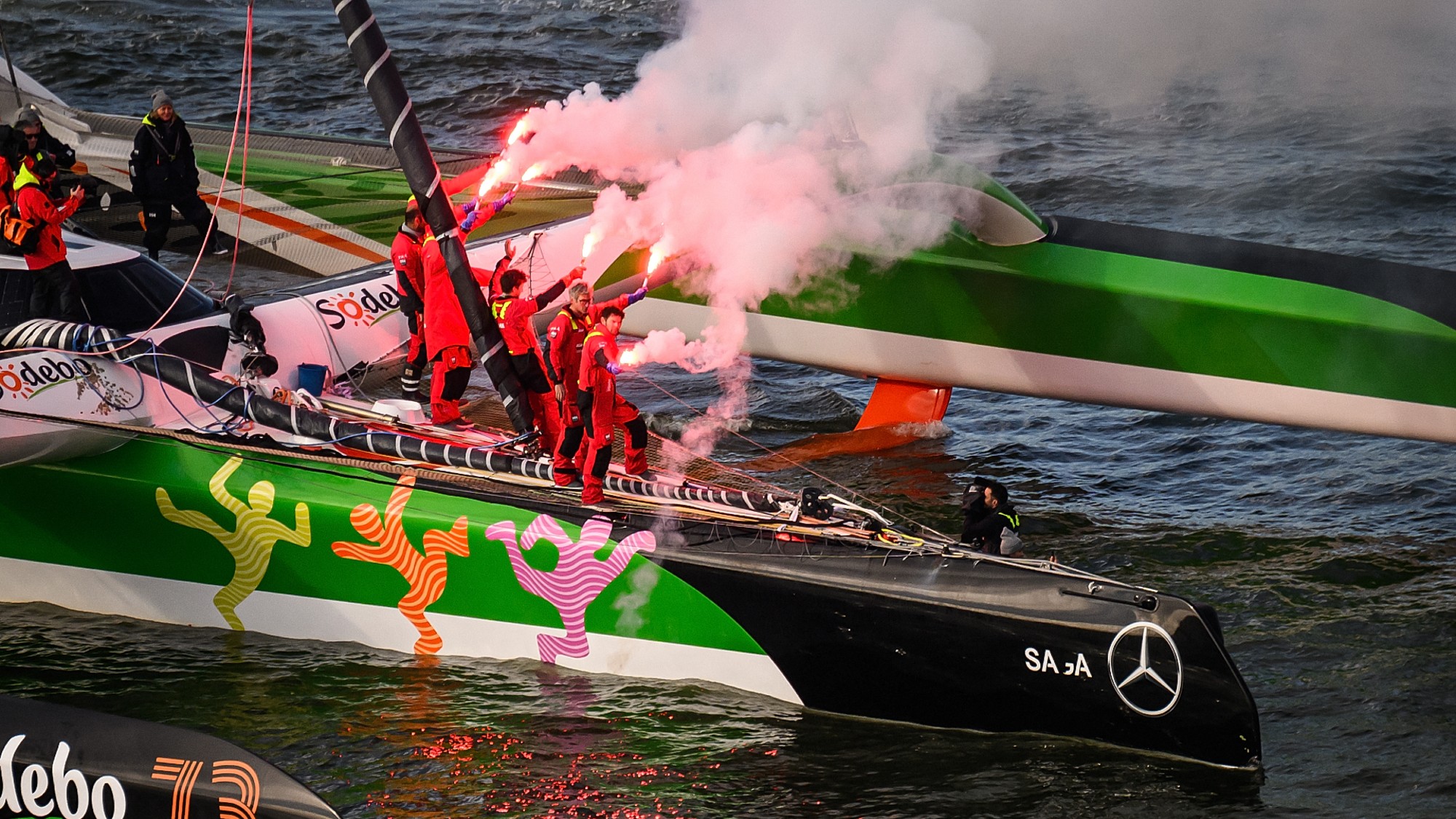
    Speed run

    French skipper Thomas Coville and crew members burn celebratory flares after setting a record by sailing around the world in 40 days, 10 hours and 45 minutes. Finishing along France’s coast yesterday, they broke the record for the fastest unassisted and nonstop circumnavigation on any type of yacht.
    Loic Venance / AFP / Getty Images


    Puzzles

    Daily sudoku

    Challenge yourself with The Week’s daily sudoku, part of our puzzles section, which also includes guess the number

    Play here


    The Week recommends

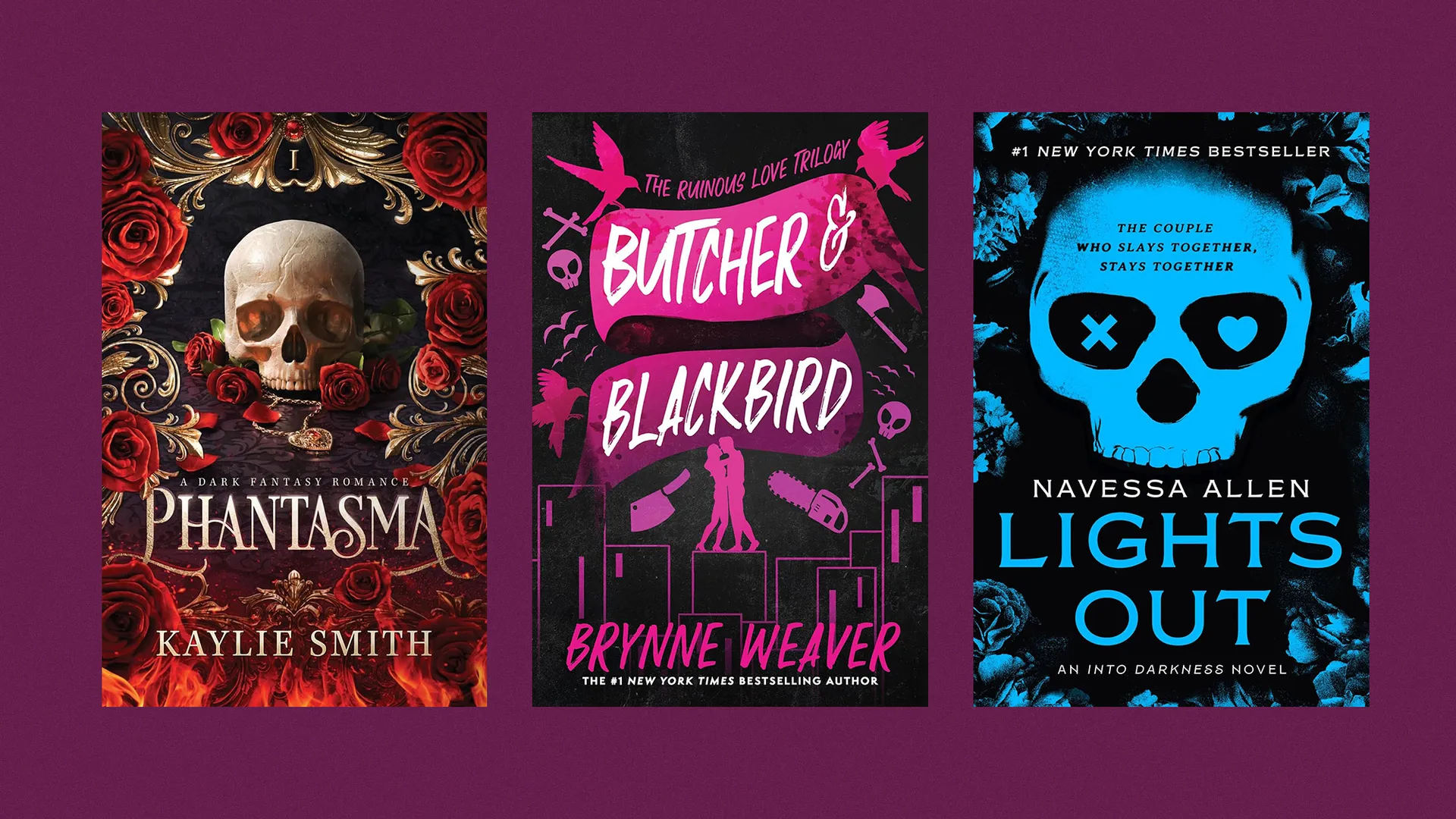
    The best dark romance books to gingerly embrace 

    Romance books have seen a resurgence in popularity thanks to BookTok communities. But for those seeking more intense, morally gray relationships with taboo themes and trigger warnings, dark romance has become the go-to subgenre — perfectly represented in these books. 

    ‘Hooked’ by Emily McIntire
    In this version of the classic tale “Peter Pan,” Peter is Wendy's father, and James, the book’s Captain Hook, plans to seduce her to get back at his nemesis. His plans to destroy his enemy become complicated when he begins to develop real feelings for Wendy. Anyone who “loves a good villain romance will appreciate these,” said ScreenRant. (out now, $18, Bloom Books)

    ‘Lights Out’ by Navessa Allen
    The story follows trauma nurse Aly Cappellucci, who obsesses over masked men on social media and fantasizes about them chasing her down. The “well-done spicy scenes” and “great individual character arcs made the novel compelling to audiences” and “expanded the tropes readers can find in the genre,” said ScreenRant. (out now, $19, Slow Burn)

    ‘The Ritual’ by Shantel Tessier
    This book is a cross between dark academia and dark romance. Barrington University, home to the Lords, a secret society that requires blood as payment, is the setting for the first installment of Shantel Tessier’s “The Lords” series. Members devote their lives to violence in exchange for the power to control the world. Ryat Alexander Archer, one of the powerful lords, meets the book’s heroine, Blakely Anderson, and she’s sucked into the world of the secret society as she succumbs to her feelings for him. (out now, $25, Amazon)

    Read more


    WORD OF THE DAY

    discombobulator

    The name used by Trump to describe a U.S. military “secret” weapon that disables equipment, in an interview with The New York Post. He boasted about its use in the capture of Venezuela’s Nicolás Maduro. Trump may be “conflating several capabilities into a single weapon that doesn’t exist,” according to a senior U.S. official, per CNN.


    Poll watch

    Nearly all veterinarians (94%) believe financial considerations prevent their clients from providing the recommended treatments for pets, according to a Gallup survey. But 81% of the 939 veterinarians polled recommend alternative treatment plans when clients decline care due to cost, and 41% provide financing or installment options. 


    INSTANT OPINION

    Today's best commentary

    ‘Why every parent should worry about human trafficking’
    Lauren Book at Newsweek
    Human trafficking is “not relegated to Epstein’s island or infamous parties hosted by disgraced rap stars,” says Lauren Book. It happens in “every ZIP code in the United States — in homes, schools and malls” and “increasingly on phones and laptops — hidden in plain sight.” It’s “important that every parent in America hear this message: If we keep looking for trafficking only in extreme or sensational cases, we will keep missing what may be happening right in front of us.”

    ‘Gaza is not a real estate fantasy’
    Sultan Barakat at Al Jazeera
    Gaza’s “devastation demands urgent and serious reconstruction. Homes, hospitals, schools, farms, cultural heritage and basic infrastructure lie in ruins,” says Sultan Barakat. But “urgency should never become an excuse for illusion, spectacle or political shortcuts.” The contrast between rhetoric and reality could not be sharper.” While Trump and a group of world leaders “gathered in Davos, Switzerland, to sign the charter of the so-called Board of Peace and unveil glossy reconstruction plans, the killing in Gaza continued.”

    ‘No, AI isn’t inevitable. We should stop it while we can.’
    David Krueger at USA Today
    Americans “believe that the rise of artificial intelligence is inevitable and that we all just have to bear the consequences,” says David Krueger. Do we “need to let AI sweep through society”? AI “acolytes are building ever more powerful systems without knowing how to control them.” We can “stop the reckless race to replace humanity if we have the political will.” AI development is “not a law of nature but rather an immense project that only proceeds through deliberate effort.”


    Evening Review was written and edited by Theara Coleman, Nadia Croes, Scott Hocker, Justin Klawans, Joel Mathis and Summer Meza, with illustrations by Stephen Kelly and Julia Wytrazek.

    Image credits, from top: Illustration by Stephen Kelly / Getty Images; Anonymous / Getty Images; Andriy Onufriyenko / Getty Images; Second Sky / Slowburn
     

    Recent editions

    • Morning Report

      Labour in turmoil as Burnham blocked

    • Sunday Shortlist

      The British Museum’s ‘thrilling’ new exhibition

    • Saturday Wrap

      Should Ice be abolished?

    VIEW ALL
    TheWeek
    • About Us
    • Contact Future's experts
    • Terms and Conditions
    • Privacy Policy
    • Cookie Policy
    • Advertise With Us
    • FAQ
    Add as a preferred source on Google

    The Week UK is part of Future plc, an international media group and leading digital publisher. Visit our corporate site.

    © Future Publishing Limited Quay House, The Ambury, Bath BA1 1UA. All rights reserved. England and Wales company registration number 2008885.