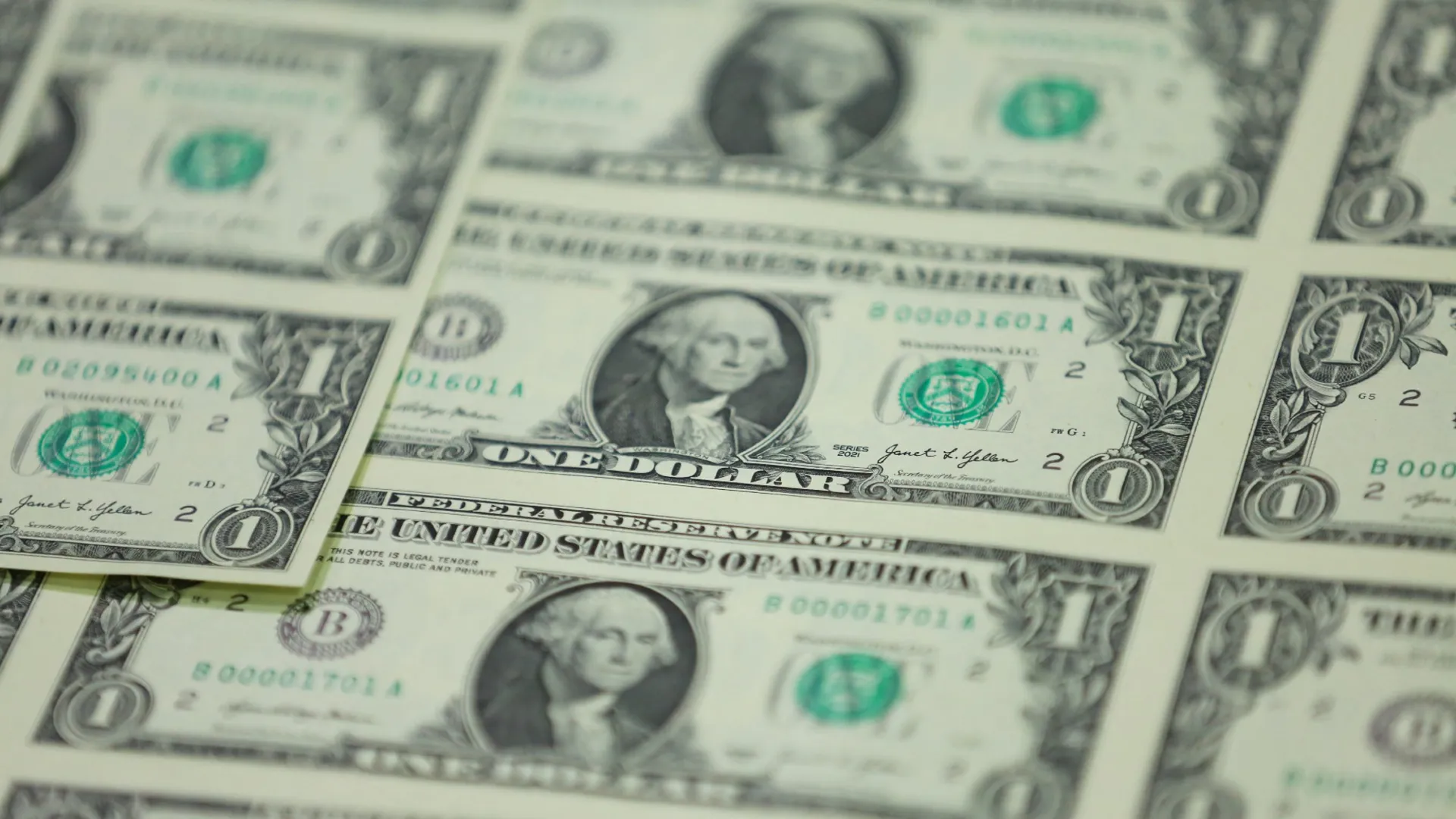
The value of the U.S. dollar has been steadily declining, but one person who doesn’t seem worried is President Donald Trump. On the contrary, he has been lauding the dollar’s fall as a positive thing for the American economy. “I think it’s great,” Trump said to reporters last week. But with the dollar recently hitting a four-year low, some economists are sounding warning bells.
‘Interferes with his priorities’
Trump’s main argument is that having a weaker dollar breeds more competition among American businesses. In his view, a “strong dollar, like higher interest rates, interferes with his priorities: faster growth, reshored manufacturing and a smaller trade deficit,” said The Wall Street Journal.
A weaker dollar could provide “near-term benefits to the U.S. economy,” as a “lower currency also boosts exports, without the uncertainty and distortions that tariffs entail,” said the Journal. This occurs even as the weakening currency, combined with Trump’s sweeping tariffs, can “discourage imports.” Historically, Trump has also felt that the dollar “appreciated when the U.S. economy outperformed.”
Some appear fine with this economic stance. Trading floors are “abuzz with talk of the ‘debasement trade,’ a broad term for bets on the deterioration of American financial exceptionalism,” said The Economist.
‘Signifies diminished confidence’
Trump may not have a problem with a weakened dollar, but most economists feel differently. A weak dollar is “not the weather, it’s the barometer,” said Steve Englander, a researcher at U.K. bank Standard Chartered, to CNBC. A weaker currency “reflects the fact that something’s going wrong, either domestically or internationally, and the currency weakness is sort of an escape valve.” Having a weak dollar also “signifies diminished confidence in the U.S. as foreign investors grow wary over the country’s fiscal outlook,” said CNBC.
And the dollar’s fall has largely been Trump’s own doing, as it has been “driven, in part, by concerns about Trump’s unpredictable, and often unorthodox, approach to economic policy,” said NPR. Having a weaker dollar can also make items overseas more expensive, a “major issue given that the U.S. has traditionally imported more from abroad than it exports.” As the dollar continues to drop, alternative assets like gold, which has risen nearly 8% year to date, are “outperforming as a safe haven for investors,” said Fortune. |