The Week The Week
flag of US
US
flag of UK
UK
https://cdn.mos.cms.futurecdn.net/flexiimages/jzblygzdxr1769609154.gif

SUBSCRIBE

Try 6 weeks free

Sign in
  • View Profile
  • Sign out
  • The Explainer
  • Talking Points
  • The Week Recommends
  • Podcasts
  • Newsletters
  • From the Magazine
  • The Week Junior
  • More
    • Politics
    • World News
    • Business
    • Health
    • Science
    • Food & Drink
    • Travel
    • Culture
    • History
    • Personal Finance
    • Puzzles
    • Photos
    • The Blend
    • All Categories
  • Newsletter sign up Newsletter
  • The Week Evening Review
    ICE reform, Musk’s pivot to the moon, and US higher ed losing its edge

     
    TODAY’S BIG QUESTION

    How are Democrats trying to reform ICE?

    While Democrats and Republicans work to reach an agreement on funding for Immigration and Customs Enforcement, the parties remain far apart. Despite Republicans controlling Congress, they are unable to pass funding for ICE without some Democratic votes. Democrats in both chambers of Congress have put forth a series of changes they want to see at the agency, whose funding expires on Friday.

    What did the commentators say?
    These reforms are a “line in the sand,” said House Minority Leader Hakeem Jeffries (D-N.Y.). Democrats want to “bar federal immigration agents from entering private property without a judicial warrant,” said The Washington Post. ICE has previously advised its agents that they can “enter homes to make arrests without a warrant from a judge, outraging Democrats,” who say this violates the Fourth Amendment.

    The widespread use of face coverings by ICE has also come under scrutiny, and Democrats are “pushing for a mask ban and identification requirements for federal agents,” said The Hill. ICE officials say that wearing masks prevents their agents from being doxxed online, but Democrats “argue that officers’ practice of masking and not displaying ID badges erodes accountability in these operations.” Republicans, including House Speaker Mike Johnson (R-La.), have “indicated changes to a mask and ID policy amount to nearly a nonstarter.”

    And while ICE has recently said it will equip all of its agents with body cameras, this has Democrats “running headlong into a new problem: fear that the technology will provide another avenue for mass surveillance of protesters,” said Politico. Though the party has made these body cams one of its foremost demands, it must also navigate a growing “outcry from privacy advocates that surveillance tools will allow ICE agents to identify and track protesters.”

    What next?
    Democrats have rejected an offer from the White House, and “finding real agreement in such a short time will be difficult,” said The Associated Press. It will likely be an “impossibility,” said Senate Majority Leader John Thune (R-S.D.), per the AP. House GOP leadership is also “demanding that some of their own priorities be added to the Homeland Security spending bill,” including a provision requiring proof of citizenship before registering to vote.


    QUOTE OF THE DAY

    ‘Everyone needs to understand that the crisis we are living through is a profound geopolitical rupture.’

    French President Emmanuel Macron, to European reporters, on the risk Europe faces if it does not invest in its economy and resist being “swept aside” by American technology and imports from China


    IN THE SPOTLIGHT

    Elon Musk’s pivot from Mars to the moon

    The world’s richest man has long had a passion for Mars. The moon? It’s a diversion. But that plan has now shifted.

    SpaceX will “prioritize going to the moon first," said The Wall Street Journal. Just last year, Elon Musk called the prospect of a moon landing a “distraction.” The company was aiming to go “straight to Mars," with plans to send five Starship-class rockets to the red planet in 2026, he said. Now, SpaceX is focused instead on putting a lander on the moon by March 2027.

    Why did Musk want to go to Mars?
    A Mars mission has been Musk’s “guiding goal" since SpaceX was founded in 2002, said CNN. The billionaire frequently argued that a “permanent human presence" on the planet was vital for “ensuring a colony of humans can survive a potential apocalypse" on Earth. That ambition sounded like a move out of a science fiction novel. Establishing a Mars colony would take “upwards of 1 million people and millions of tons of cargo" and up to 10 rocket launches a day, SpaceX said on its website. The objective is to make humanity “multiplanetary.”

    Why switch to the moon?
    “It’s all about speed," said Space.com (a sister site of The Week). SpaceX is now focused on “building a self-growing city on the moon," Musk said on X. That goal could be achieved in “less than 10 years," whereas colonizing Mars would “take 20-plus years."

    The pivot may also “cover up" the plain truth that the tech billionaire “simply is not delivering on his Red Planet promises," said Ellyn Lapointe at Gizmodo. Musk in 2020 claimed SpaceX might be able to land humans on Mars by 2026. With that goal now unreachable, it makes sense for the company to “align its strategic vision" with NASA’s aim of putting people back on the moon by 2030.

    What next?
    The moon pivot is a “bitter pill to swallow" for Mars hopefuls, said Eric Berger at Ars Technica. But it’s a realistic one. Landing on the moon “may be hard," but history has already proven it’s doable. Plus, the moon will be a “lot easier to develop than Mars.”


    Statistic of the day

    $3.9 billion: The amount that the U.S. owes the United Nations, according to U.N. Secretary-General António Guterres. This includes $2.1 billion toward the organization’s operating budget and $1.8 billion for peacekeeping operations. At least 95% of the U.N.’s budget arrears are from the U.S.


    the explainer

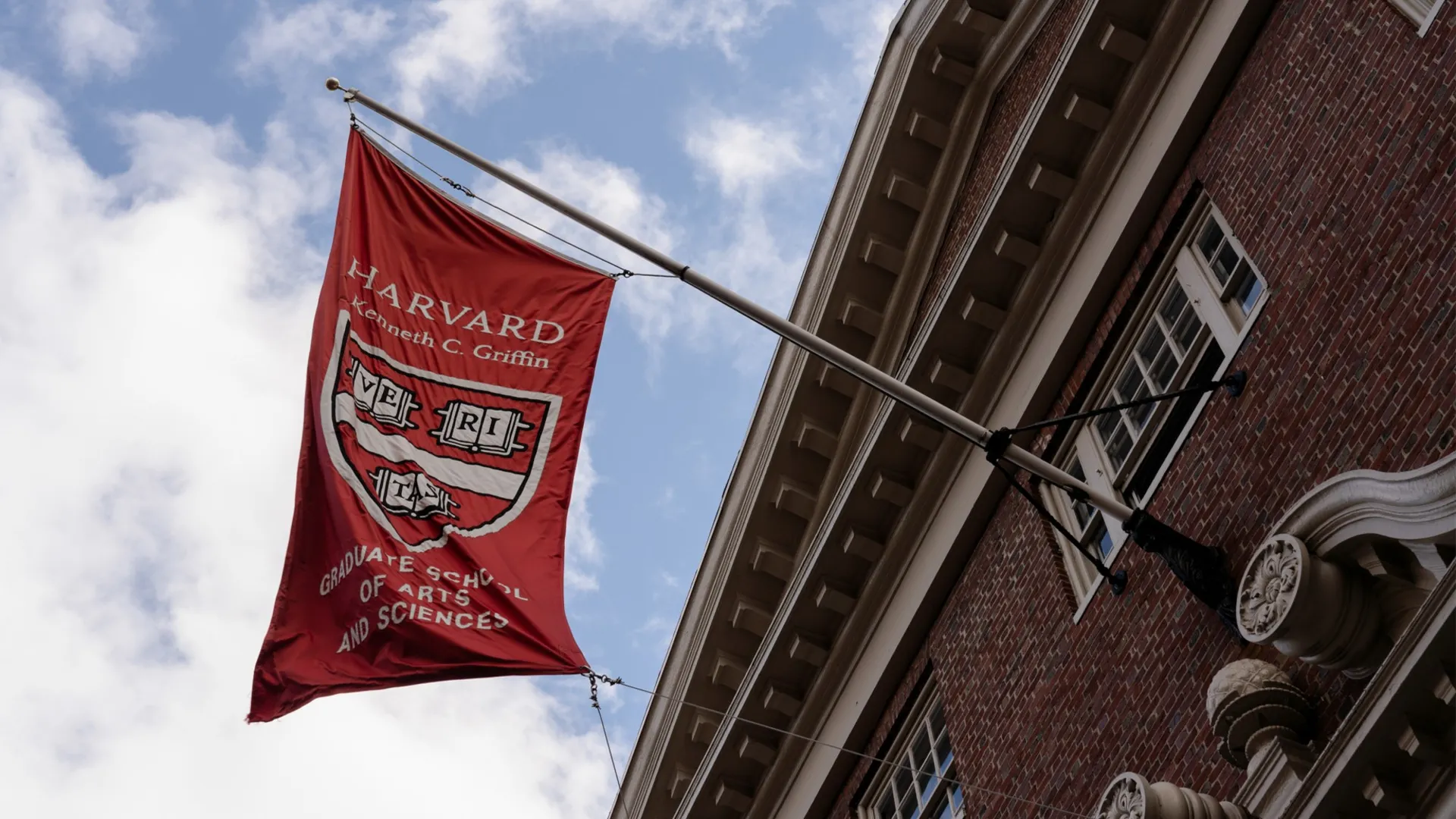
    US universities lose ground to foreign counterparts

    American higher learning is considered among the best in the world, but recent rankings show the top of the food chain may be changing. While U.S. schools still dominate most lists, foreign universities have been slowly superseding them. And with the Trump administration’s continued attacks on higher education, the trend may be here to stay.

    Which universities are considered the best?
    Six major rankings use a variety of factors to determine the best universities. These vary but include the number of research publications, the “success and employment records of graduates, the perceived quality of the faculty,” measures of scholarly quality, and general institutional reputation, among other variables, said Forbes.

    In the “initial iteration of each system, an American university was ranked first in the world,” said Forbes, with Harvard University and the Massachusetts Institute of Technology taking the various rankings’ top spots. But in the “most recent rankings, we see different outcomes. In four of the systems, the number of top-10 spots occupied by U.S. universities declined.” Notably, Chinese universities have been replacing many American institutions on these lists.

    One of these lists' most recent editions ranks China’s Zhejiang University first and Harvard third, with “12 of the following 13” based in China, said The Daily Beast. In another, more than 60 U.S. universities fell in the rankings.

    Why are foreign schools gaining steam?
    It’s largely due to a global reordering, which comes as the Trump administration has been “slashing research funding to American schools that depend heavily on the federal government to pay for scientific endeavors,” said The New York Times. President Donald Trump’s policies “did not start the American universities’ relative decline, which began years ago, but they could accelerate it.” U.S. universities also strive to attract foreign students but are facing challenges from “travel bans and an anti-immigration crackdown that has swept up international students and academics.”

    The disparity between people who can afford higher education could also be a factor. The data shows that “access for talented students from families outside the traditional ‘elite’ is much more restricted than it ought to be,” said Time. And students from “wealthy backgrounds are heavily overrepresented: More than 15% come from families in the top 1% of the U.S. national income distribution.”


    Good day 🎭

    … for playing make-believe. In the first documented case of pretend play in another species, a bonobo named Kanzi engaged with cups of imaginary juice and bowls of grapes at “tea parties” with researchers. His responses suggest apes have a “rich mental life,” said study co-author Christopher Krupenye of Johns Hopkins University.


    Bad day 🏫

    … for going to school. For the first time in 47 years, San Francisco’s public school teachers are on strike. The closure of schools for about 50,000 students since yesterday means “missed learning and missed connections with their peers and teachers,” said Laura Dudnick, the director of communications at the San Francisco Unified School District.


    Picture of the day

    Faith on fire

    A Hindu devotee walks over hot coals during a firewalk festival in Yangon, Myanmar. The annual celebration invites Myanmar’s Hindu minority to gather near temples and walk or run across red-hot embers to prove their faith.
    Sai Aung Main / AFP / Getty Images


    Puzzles

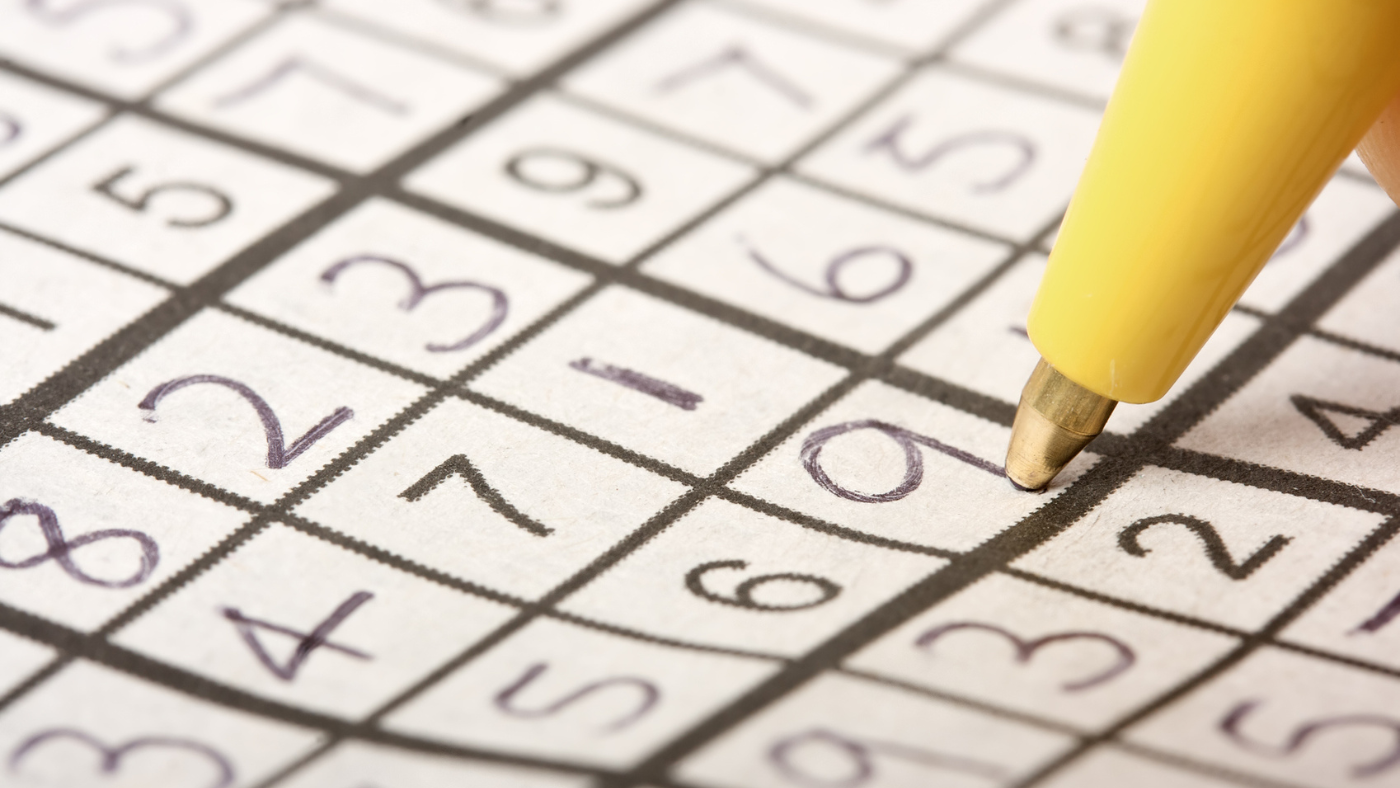
    Daily sudoku

    Challenge yourself with The Week’s daily sudoku, part of our puzzles section, which also includes guess the number

    Play here


    The Week recommends

    How to navigate dating apps to find ‘the one’

    Dating in the digital age can be overwhelming, with numerous dating apps and millions of users. If finding your person has become a daunting task, here are tips for how to best approach dating online, right in time for Valentine’s Day.

    Start from scratch
    If you want a fresh start, first “detox your poor phone,” said Vice. Get rid of “all those pesky dating apps” for a “morale boost.” Too many apps “take too much toll on people and provoke them to do nothing,” dating coach Julie Nguyen, of Hily Dating App, said to Vice. “So just delete them all.” This does not mean you are “kissing your dating apps goodbye forever,” said Vice. Rather, you are “giving yourself some time to slow down and clarify your intentions.” 

    Choose good photos
    First, ensure that all pictures are of yourself, or “risk getting barred from the app,” said Business Insider. People using “images that are not human,” such as “anime photos, part of a scenery, or a backdrop,” tend to get “hidden and banned,” Shn Juay, the CEO of the dating app Coffee Meets Bagel, said to Business Insider.

    Remember that it’s not a game
    Dating apps have been “cleverly designed to hook you in and keep you scrolling” and can be “highly addictive,” said Hello. Remind yourself that it's not a game. Endlessly swiping “without paying attention will not get you anywhere” and will most likely “end up with you having a case of dating app fatigue.”

    Read more


    Poll watch

    Only 59.2% of Americans are optimistic they will have high-quality lives in five years, according to a Gallup survey. The poll of 22,125 adults found this to be the lowest percentage since this survey began in 2009. Black adults had the highest erosion in optimism from 2021 to 2024, marked by a 6.6-point drop.


    INSTANT OPINION

    Today’s best commentary

    ‘Jimmy Lai, a symbol of the end of freedom in Hong Kong’
    Le Monde editorial board
    The “final nail was hammered into the coffin of the freedom that for so long had made Hong Kong a unique territory in the Chinese world,” as judges “appointed by authorities loyal to Beijing imposed an exceptionally harsh sentence” of 20 years in prison for pro-democracy activist and former media mogul Jimmy Lai, said the Le Monde editorial board. This “fate mirrors that of several dissidents in mainland China — evidence, if any were needed, of the flattening of political differences inherited from history.”

    ‘I study moral panics. The Epstein files are not one.’
    Marcella Szablewicz at MS NOW
    As the world “recoiled from the revelations” in the U.S. government’s files on convicted sex offender Jeffrey Epstein, some op-eds “labeled it a moral panic,” says Marcella Szablewicz. As a “communication and media studies professor who studies moral panics, I want to be clear: The Epstein scandal is not one.” By definition, moral panics are “short-lived. The fervor dies down, and the once-threatening change is eventually accepted by society.” Let’s “not pretend that demanding more answers constitutes a moral panic.”

    ‘What Super Bowl commercials teach us about capitalism’
    Eben Shapiro at Time
    The Super Bowl is the “only thing Google cannot replicate,” says Eben Shapiro. In a “fragmented world, it’s one of the only times 120 million people look at the same screen simultaneously,” and the Super Bowl ad is “no longer just a commercial; it’s a vanity metric.” It’s the “only place where a brand can guarantee that its ad will be watched by a group of people at the same time, in one place, together.”


    WORD OF THE DAY

    gim

    Black, crispy, dried seaweed. In South Korea, the world’s largest producer and exporter of gim, an increased overseas demand for the snack has led to rising prices. The “worldwide appetite” reflects a “growing global demand in Korean goods, driven by cultural influences like K-pop and K-dramas,” said the BBC.


    Evening Review was written and edited by Theara Coleman, Nadia Croes, Scott Hocker, Justin Klawans, Joel Mathis and Summer Meza, with illustrations by Stephen Kelly and Julia Wytrazek.

    Image credits, from top: Illustration by Julia Wytrazek / Getty Images; NurPhoto / Getty Images; Sophie Park / Bloomberg / Getty Images; Olha Danylenko / Getty Images
     

    Recent editions

    • Morning Report

      King ready to work with police over Andrew

    • Evening Review

      Starmer’s man behind the curtain

    • Morning Report

      McSweeney quits as Starmer tries to steady ship

    VIEW ALL
    TheWeek
    • About Us
    • Contact Future's experts
    • Terms and Conditions
    • Privacy Policy
    • Cookie Policy
    • Advertise With Us
    • FAQ
    Add as a preferred source on Google

    The Week UK is part of Future plc, an international media group and leading digital publisher. Visit our corporate site.

    © Future Publishing Limited Quay House, The Ambury, Bath BA1 1UA. All rights reserved. England and Wales company registration number 2008885.