The Week The Week
flag of US
US
flag of UK
UK
https://cdn.mos.cms.futurecdn.net/flexiimages/jzblygzdxr1769609154.gif

SUBSCRIBE

Try 6 weeks free

Sign in
  • View Profile
  • Sign out
  • The Explainer
  • Talking Points
  • The Week Recommends
  • Podcasts
  • Newsletters
  • From the Magazine
  • The Week Junior
  • More
    • Politics
    • World News
    • Business
    • Health
    • Science
    • Food & Drink
    • Travel
    • Culture
    • History
    • Personal Finance
    • Puzzles
    • Photos
    • The Blend
    • All Categories
  • Newsletter sign up Newsletter
  • The Week Evening Review
    Trump’s immigration rebrand, Chile’s hard-right pivot, and Kharg Island’s role in the war

     
    today’s big question

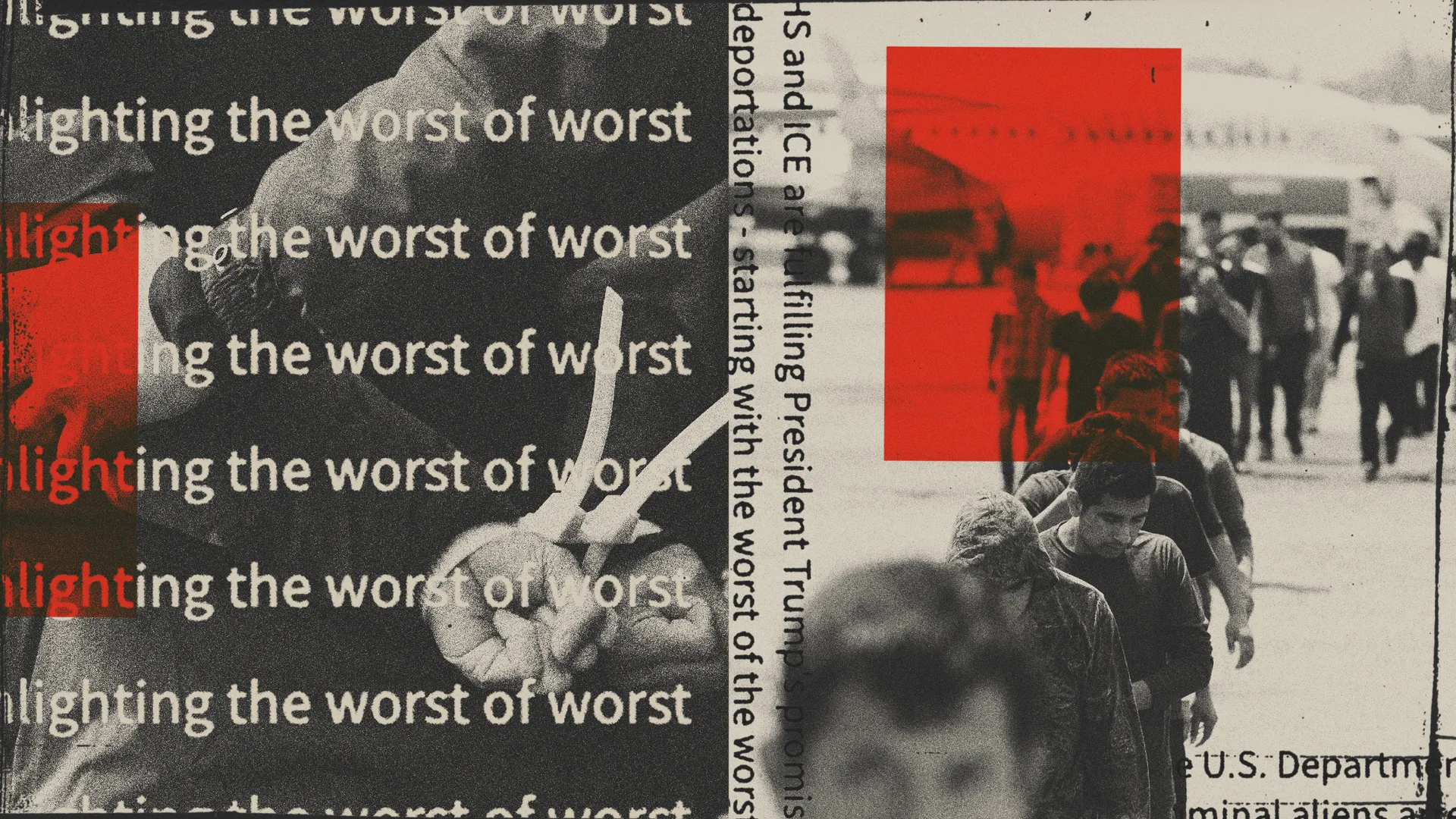
    Are Republicans abandoning mass deportations?

    President Donald Trump won the White House in 2024 on a promise to expel just about every undocumented immigrant. But ahead of this year’s midterm elections, the GOP’s message is changing.

    The White House wants House Republicans to “stop emphasizing ‘mass deportations,’” said Axios. “Nearly half” of Americans say the Trump administration’s deportation campaign has been “too aggressive” following the shooting deaths of Alex Pretti and Renee Good in Minnesota. Perhaps more concerning to Republicans: One in five voters who backed the president in 2024 agrees, according to a Politico poll. White House Deputy Chief of Staff James Blair urged House members to “focus their messaging on removing violent criminals” going forward. The “change in rhetoric” is coming as GOP “fears of election losses mount” as the midterms approach, said The Washington Post.

    What did the commentators say?
    The administration “wants to rebrand its mass-deportation push,” Ed Kilgore said at New York magazine. Trump and his allies argued for widespread expulsions while also creating the impression that “virtually all its targets would be hardened criminals.” The problem? “All sorts of peaceable legal immigrants” have been swept up in ICE roundups, including health care personnel, farm workers and innocent U.S. citizens. 

    Outgoing Homeland Security Secretary Kristi Noem “turned a popular issue” for Republicans into a “PR nightmare,” said Caroline Downey at the National Review. Her “aggressive and expansive approach” to deportations is “consistent” with Trump’s desires, but an approach focused on criminal migrants is “more politically prudent.” Conservatives may wish otherwise, but Americans “don’t seem to believe they are getting what they want” from Trump on immigration, said Ramesh Ponnuru at the National Review.

    Trump “knows he’s losing on immigration,” said Zeeshan Aleem at MS NOW. But efforts to rebrand his deportation push are “doomed,” because the president’s political persona is “predicated on a sweeping nativism.” 

    What next?
    Trump’s MAGA allies are “furious” about the administration’s deportation rebranding, asserting that narrowing the focus to criminal migrants is “not a winning policy,” said Politico. The administration “has a mandate on mass deportations,” said Chris Chmielenski, the president of the Immigration Accountability Project. Trump voters “expect” to see mass expulsions. 


    QUOTE OF THE DAY

    ‘There are no British actors nominated for Best Actor or Best Actress. A British spokesperson said, “Yeah, well, at least we arrest our pedophiles.”’

    Comedian Conan O’Brien while hosting the Academy Awards in Los Angeles last night. Former Prince Andrew and former U.K. Ambassador to the U.S. Peter Mandelson were arrested last month for their ties to the late child sex offender Jeffrey Epstein.


    in the spotlight

    Chile pivots back to the hard-right

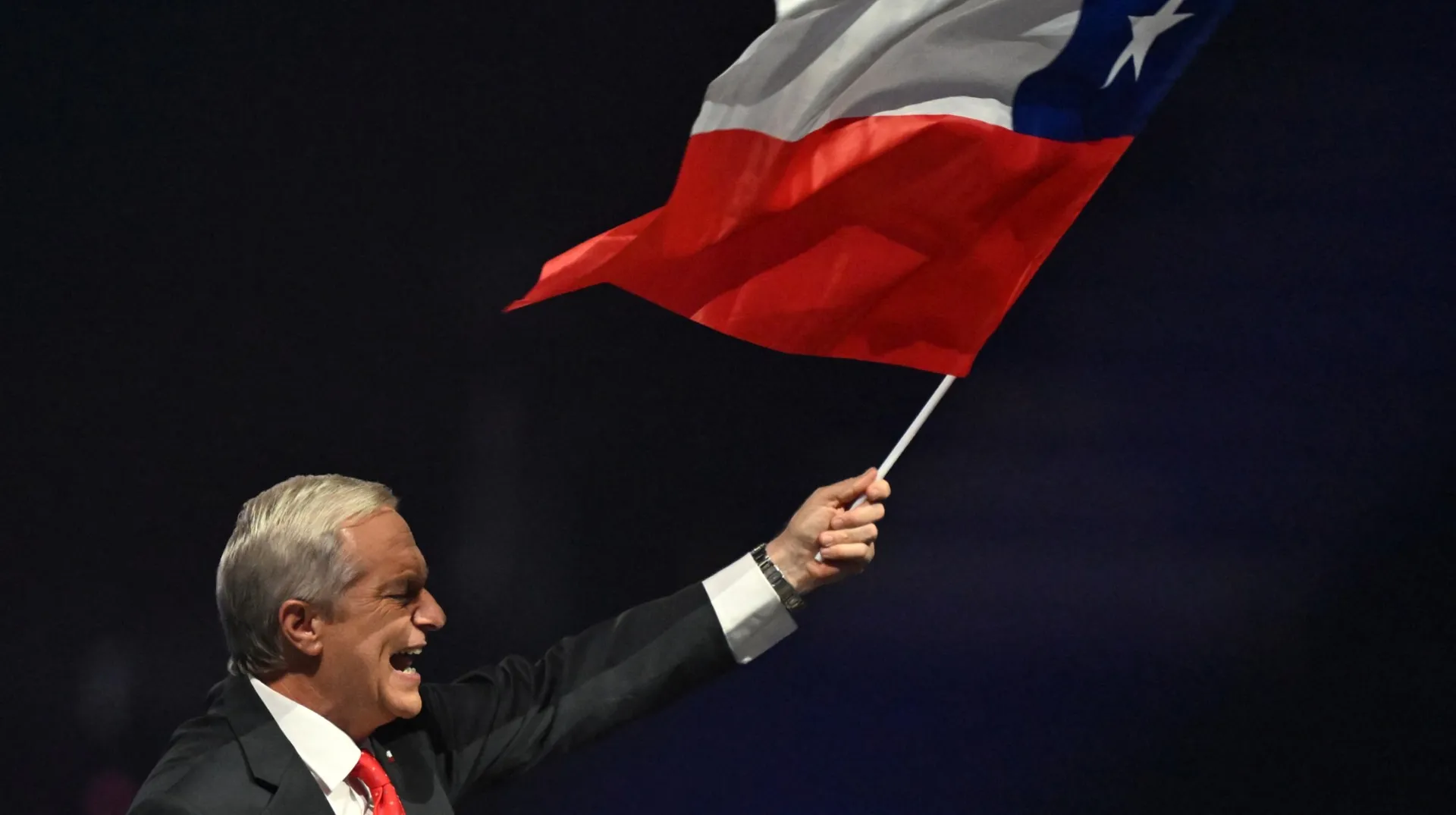
    When José Antonio Kast was elected as Chile’s next president in late 2025, it was “one more alarming case of a worldwide trend toward nativist authoritarianism,” said the Chilean American author Ariel Dorfman at The New York Times. It was also a sign of the “rehabilitation” of former dictator Augusto Pinochet, one of the continent’s “most infamous autocrats.” As a vocal supporter of the notoriously brutal Chilean strongman, Kast was elected in part for his hard-right bona fides, only to take office in a very different world than the one in which he campaigned. 

    ‘Celebration of a movement’
    Kast “built his career” in government by “railing against liberal values from the fringes of Chilean politics,” said NPR. But during this recent election, he “avoided all mention of the hard-line moral agenda” that has been “synonymous” with his decades-long career in public office.

    With Kast’s victory, the global right-wing excitement transformed the “routine transfer of power” at last week’s inauguration into a “celebration of a movement that’s gaining momentum across the hemisphere,” said The New York Times. For his supporters, Kast’s electoral victory and now presidency come as part of his promise to take a “harder line” on migration, crime and poverty — issues Chileans claim have “eroded the country’s sense of order,” said Zeteo. Critics counter that Kast’s “strongman rhetoric, Trump-style political playbook, and backing from hard-right coalitions” revives acute “fears of authoritarianism.”

    ‘Increasingly challenging’ geopolitical landscape
    Kast now assumes the Chilean presidency, a position whose relationship with the U.S. had “deteriorated significantly under the second Trump administration,” said the AP. Kast’s predecessor had been a “vocal critic” of Trump, at one point labeling Trump’s leadership as that of a “new emperor.”

    Although Kast seems interested in renewed rapprochement with the U.S., he enters office in an “increasingly challenging international geopolitical landscape,” including “economic risks from the Iran war, the U.S.’s security strategy in the region, and China’s influence in Latin America,” said Guillermo Holzmann, a political analyst from the University of Valparaíso, to Reuters. Chinese sway, in particular, poses an acute risk to Chile, the “world’s ​largest copper producer,” given that ⁠China is the “biggest purchaser of the metal.”


    Statistic of the day

    $20,000: The cost of a “budget-friendly” bunker by Atlas Survival Shelters that could survive “drone attacks, ballistic missile strikes or even nuclear Armageddon,” said The Telegraph. Inquiries from potential buyers have gone up “tenfold” since the U.S. war in Iran broke out, said Ron Hubbard, the owner of the company. 


    the explainer

    Kharg Island: Iran’s ‘Achilles’ heel’

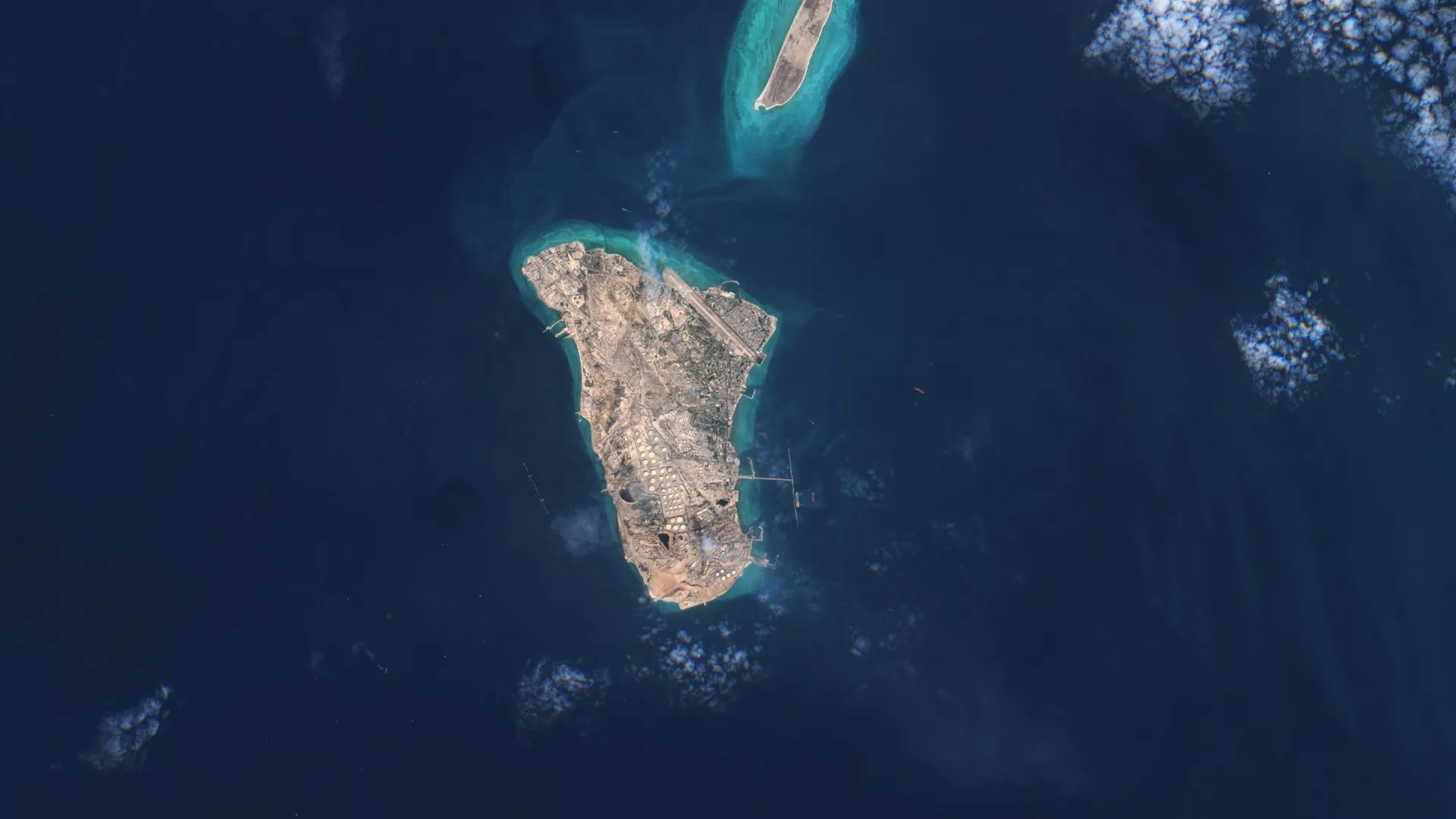
    Back in 1988, then property mogul Donald Trump talked about how the U.S. should respond to Iranian aggression. “One bullet shot at one of our men or ships, and I would do a number on Kharg Island,” he said to The Guardian. Situated northwest of the Strait of Hormuz, Kharg has long been seen as Tehran’s Achilles’ heel, said The Telegraph, and seizing it now could let President Trump “beat Iran without sending a single soldier.”

    What’s Kharg? 
    Roughly 15 nautical miles off the Iranian mainland, the small coral outcrop is just 5 miles long and 3 miles wide. But beyond its “imposing steel fences and military watchtowers” is the “beating heart of Iran’s modern energy empire,” said Al Jazeera. Kharg is linked to major oilfields by underwater pipelines and processes about 90% of the nation’s total oil exports, handling approximately 950 million barrels a year. 

    What would capturing Kharg mean? 
    Seizing Kharg Island would “cut off Iran’s oil lifeline, which is crucial for the regime,” said Petras Katinas, of U.K. security think tank Royal United Services Institute, to The Telegraph. Oil exports make up nearly 40% of the Iranian government’s budget, so this would “give the U.S. leverage during negotiations,” regardless of “which regime is in power after the military operation ends.” The move would be “reminiscent” of the U.S. intervention in Venezuela, when it “effectively took control of the country’s oil sector,” said oil analyst Tamas Varga to CNBC. 

    Why hasn’t Trump seized it? 
    Taking the island would involve making U.S. and Israeli troops vulnerable to attacks by Iranian forces. In the longer term, it would damage any future regime’s chances of managing the economy, which Washington may be keen to avoid. 

    It’s “unlikely” that Trump would take over the territory, said Neil Quilliam, of U.K. think tank Chatham House, to The Independent. Previous presidents have “steered away from Kharg, understanding its strategic importance to global oil markets.” But if Trump did control the island, said The Telegraph, he could pressure the existing regime into “compliance” or “all-out collapse,” forcing any new government to “toe Washington’s line” if it wanted to “regain sovereignty over oil exports.”


    Good day 🎵

    … for international tunes. Pop music tastes are becoming more linguistically diverse, according to Spotify data. The number of non-English songs making it on the platform’s Global Top 50 playlist has almost doubled in five years. The most-streamed tracks of last year featured songs in 16 different languages, including Arabic, Indonesian, Korean and Portuguese. 


    Bad day 🖋️

    … for editorial expertise. Journalist Julia Angwin has filed a class-action lawsuit against Superhuman, the parent company of Grammarly, alleging that it violated her rights by impersonating her without consent. Angwin is among the people used in Grammarly’s new AI feature called Expert Review, which simulates editorial feedback from prominent writers.


    Picture of the day

    Holy night

    Worshippers gather at the Sheikh Zayed Grand Mosque in Abu Dhabi for prayers to mark Laylat al-Qadr. Occurring during the last 10 days of Ramadan, the Night of Power is when the Koran is believed to have been revealed to the Prophet Muhammad.
    Ryan Lim / AFP / Getty Images


    Puzzles

    Daily sudoku

    Challenge yourself with The Week’s daily sudoku, part of our puzzles section, which also includes guess the number

    Play here


    The Week recommends

    Spring pops off at these exciting restaurants

    Eating well is a gift you should give yourself this spring after a doozy of a winter. French cooking through the lens of the West Coast, a neo-bistro in Chicago, Hawaiian on the run in New York City — map your meals now.

    Bar Nouveau, Portland, Oregon
    Chef Althea Grey Potter cooks French food “without Francophile reserve,” said Jordan Michelman at Portland Monthly about this new-ish restaurant off the well-trod paths of the Rose City. Chicken liver mousse is piped in ruffles on savory sablé cookies, and a thimble-size complimentary cocktail begins the meal. The restaurant “reminds me of what it was like to go out to eat in Portland a decade ago, and I mean that as a compliment.”

    Creepies, Chicago
    Creepies may be Chicago’s “first true neo-bistro,” said John Kessler at Chicago magazine. That means the roast chicken is the “one to beat” in town, the fries “stop conversation,” and a butterscotch custard has a “narrative arc in every bite.” None of this comes as a surprise for those who know Chicago’s dining scene. After all, some of the team behind the stellar Elske are running Creepies.

    Huli Huli, New York City
    A delicious well-executed takeout joint is forever welcome in Manhattan. Enter Huli Huli, the new rotisserie from the team of the modern-Hawaiian Noreetuh. The menu is tight — just roast chicken with shiitake-ginger rice, as well as fried chicken with cucumber-radish pickles. Flesh out the bird with sides like steamed bok choy and island-style mac salad, plus a choice of four sauces, including the “zippy, umami scallion sauce,” said The Infatuation. 

    Read more


    Poll watch

    Three out of five Americans (60%) believe abortion should be legal in all or most cases, according to a Pew Research Center survey of 8,512 adults. In 2024, when attention to women’s reproductive rights peaked after the Supreme Court’s Dobbs decision struck down Roe v. Wade, 63% agreed that it should be legal.


    WORD OF THE DAY

    butsukari

    Japanese for “bumping,” used to describe a disturbing trend of people deliberately barging into unwitting strangers. Viral footage of a child being pushed to the ground at Tokyo’s famous Shibuya Crossing has increased public angst about butsukari attacks, which some experts suggest are motivated by urges to vent stress and societal frustrations.


    INSTANT OPINION

    Today’s best commentary

    ‘Trump’s era normalizes Washington sex scandals’
    Juan Williams at The Hill
    The “tide of sex scandals in Washington is now beyond tabloid gossip,” says Juan Williams. These scandals “point to a raft of powerful people who put personal desire ahead of good government.” They “would reach beyond the tabloids to dominate all news coverage of official Washington in any other era of American politics.” But in the Trump administration, it’s “background noise to the regular news reports on the Justice Department’s defiance and slow-walking the opening of files on the Jeffrey Epstein scandal.”

    ‘It’s time to recognize menopause as a workplace issue’
    Lara Bertola, Akanksha Jalan and Belinda Steffan at Le Monde
    As many executives are “approaching or over 50, the fact that many are experiencing menopause is still largely overlooked,” say Lara Bertola, Akanksha Jalan and Belinda Steffan. Are senior women executives “somehow immune to hot flashes, sleepless nights and the resulting fatigue?” The lives of women executives are “thrown into upheaval by the hormonal changes they undergo.” This is a “burden affecting all women at this stage of life, who face both specific, unrecognized challenges and often unsympathetic attitudes.”

    ‘The death of Bay Area public transportation’
    The Washington Post editorial board
    It “looks like” the Bay Area Rapid Transit system is “headed for a financial death spiral,” says The Washington Post editorial board. Public transit use is “down across the country, but most other systems are closer to prepandemic levels. The Bay Area, however, is filled with technology firms that offer generous work-from-home policies.” BART has been “treated more like a jobs program for transit workers than a way for people to get around.”


    Evening Review was written and edited by Theara Coleman, Nadia Croes, Catherine Garcia, Scott Hocker, Anya Jaremko-Greenwold, Justin Klawans, Chas Newkey-Burden, Joel Mathis, Devika Rao and Rafi Schwartz, with illustrations by Stephen Kelly.

    Image credits, from top: Illustration by Stephen Kelly / Getty Images; Marvin Recinos / AFP / Getty Images; Gallo Images / Orbital Horizon / Copernicus Sentinel Data 2024 / Getty Images; Eva Katalin / Getty Images
     

    Recent editions

    • Morning Report

      UK readies minesweeping drones for Hormuz

    • Sunday Shortlist

      ‘Catnip’ for Peaky Blinders fans

    • Saturday Wrap

      The Middle East missile crisis

    VIEW ALL
    TheWeek
    • About Us
    • Contact Future's experts
    • Terms and Conditions
    • Privacy Policy
    • Cookie Policy
    • Advertise With Us
    • FAQ
    Add as a preferred source on Google Add as a preferred source on Google

    The Week UK is part of Future plc, an international media group and leading digital publisher. Visit our corporate site.

    © Future Publishing Limited Quay House, The Ambury, Bath BA1 1UA. All rights reserved. England and Wales company registration number 2008885.