Sign up to get Today’s Best Articles in your inbox
Join 350,000+ subscribers and keep yourself informed with a selection of
The Week’s most interesting, enlightening and entertaining stories - plus daily puzzles.
You are now subscribed
Your newsletter sign-up was successful
Want to add more newsletters?
An account already exists for this email address, please log in.
Kharg Island: Iran’s ‘Achilles’ heel’
The vital Gulf oil hub has been untouched so far by US attacks
Donald Trump accused Tehran of “making us look a bunch of fools” and said he would “go in and take” an island from Iran. But this threat wasn’t made in 2026. Trump said it in 1988.
In an interview with The Guardian’s Polly Toynbee nearly 40 years ago, the now US president raged against the Iranians, saying: “One bullet shot at one of our men or ships and I’d do a number on Kharg Island.”
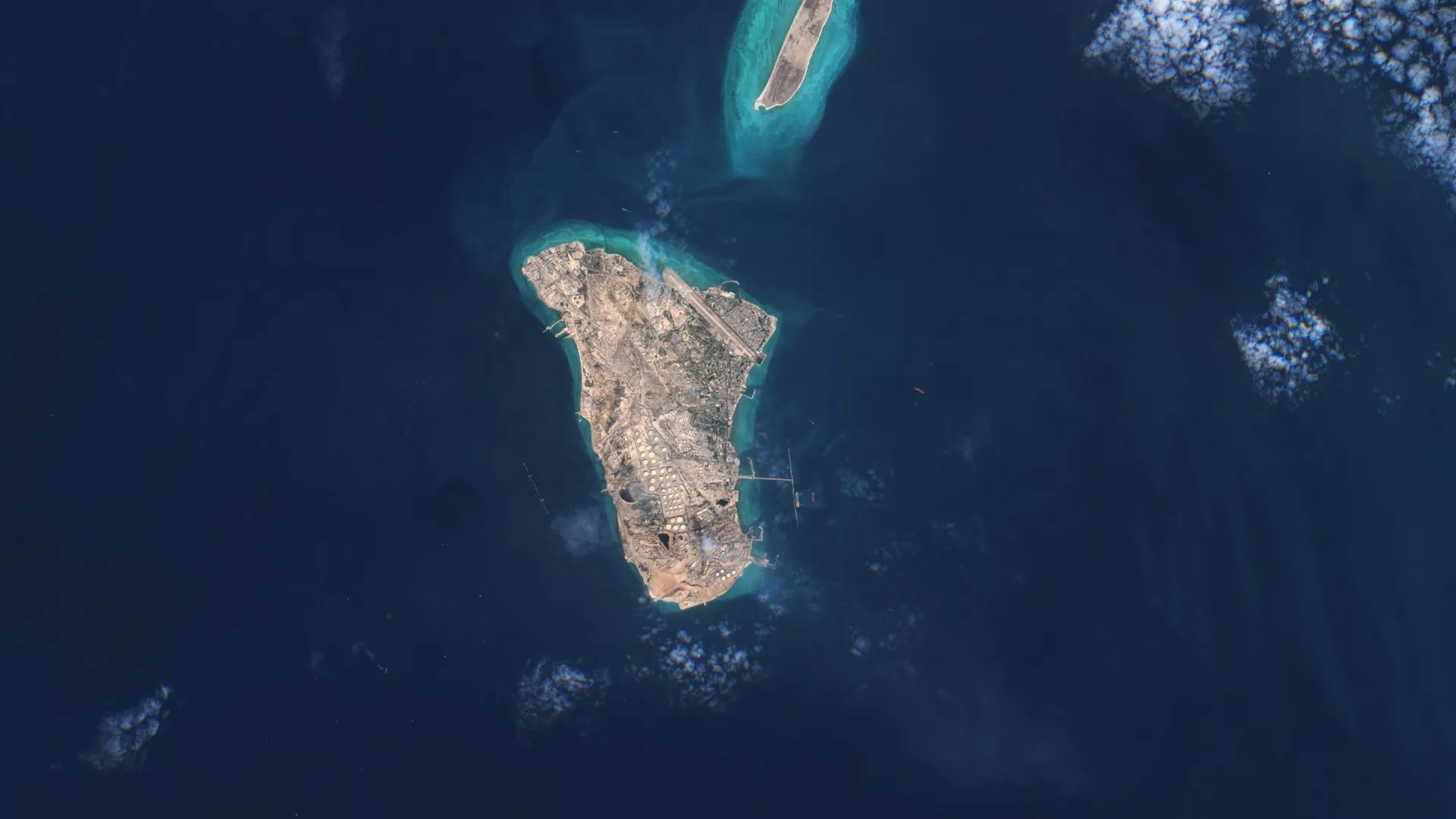
Situated northwest of the Strait of Hormuz, the strategically important shipping route in the Gulf, Kharg Island has long been seen as Tehran’s Achilles’ heel. Grabbing it today could “let Trump beat Iran without sending a single soldier”, said The Telegraph.
The Week
Escape your echo chamber. Get the facts behind the news, plus analysis from multiple perspectives.
Join more than 350,000 subscribers and keep yourself informed with a selection of The Week’s most interesting, enlightening and entertaining stories - plus daily puzzles.
Join more than 350,000 subscribers and keep yourself informed with a selection of The Week’s most interesting, enlightening and entertaining stories - plus daily puzzles.
Roughly 15 nautical miles from the Iranian mainland, this small coral outcrop is widely regarded by Iranians as the “Forbidden Island”. It is just five miles long and three miles wide.
Beyond its “imposing steel fences and military watchtowers” is a “pristine landscape” where “millennia of diverse human history quietly coexist”, said Al Jazeera. It is also home to the “beating heart of Iran’s modern energy empire”.
It has history with the US. When Iranian militants kidnapped 52 US diplomats in 1979, advisers to President Jimmy Carter suggested seizing Kharg but the plan was rejected as being too inflammatory. In 2016, 10 US marines were held after straying into Iranian waters near the island.
Why is it important?
It processes 90% of the nation’s total oil exports, handling approximately 950 million barrels a year. So if the US captured the island, it could cause a huge problem for Iran’s economy for years to come.
Sign up to get Today’s Best Articles in your inbox
A free daily email with the day’s biggest news and analysis – and the best features from TheWeek.com
“Seizing” Kharg Island would “cut off Iran’s oil lifeline, which is crucial for the regime”, Petras Katinas, from the Royal United Services Institute, told The Telegraph. It could be used as a bargaining chip as oil exports make up nearly 40% of the Iranian government’s budget, so this would “give the US leverage during negotiations”, regardless of “which regime is in power after the military operation ends”.
The move “would be reminiscent” of the US intervention in Venezuela, when it “effectively took control of the country’s oil sector”, oil analyst Tamas Varga told CNBC.
So why hasn’t Trump seized it?
Taking the island would make American and Israeli troops vulnerable to attacks by Iranian forces. In the longer term, it would damage any future regime’s chances of managing the economy, something Washington might be keen to avoid.
Neil Quilliam, from the Chatham House think tank, told The Independent it is “unlikely” Trump would take over the territory. Previous US presidents have “steered away from Kharg understanding its strategic importance to global oil markets”.
But if Trump did control Kharg Island, he could “pressurise the existing regime into compliance”, or “all-out collapse”, forcing any new government to “toe Washington’s line” if it wanted to “regain sovereignty over oil exports”, said The Telegraph.
Chas Newkey-Burden has been part of The Week Digital team for more than a decade and a journalist for 25 years, starting out on the irreverent football weekly 90 Minutes, before moving to lifestyle magazines Loaded and Attitude. He was a columnist for The Big Issue and landed a world exclusive with David Beckham that became the weekly magazine’s bestselling issue. He now writes regularly for The Guardian, The Telegraph, The Independent, Metro, FourFourTwo and the i news site. He is also the author of a number of non-fiction books.