Sign up to get Today’s Best Articles in your inbox
Join 350,000+ subscribers and keep yourself informed with a selection of
The Week’s most interesting, enlightening and entertaining stories - plus daily puzzles.
You are now subscribed
Your newsletter sign-up was successful
Want to add more newsletters?
An account already exists for this email address, please log in.
Chile pivots back to the hard-right
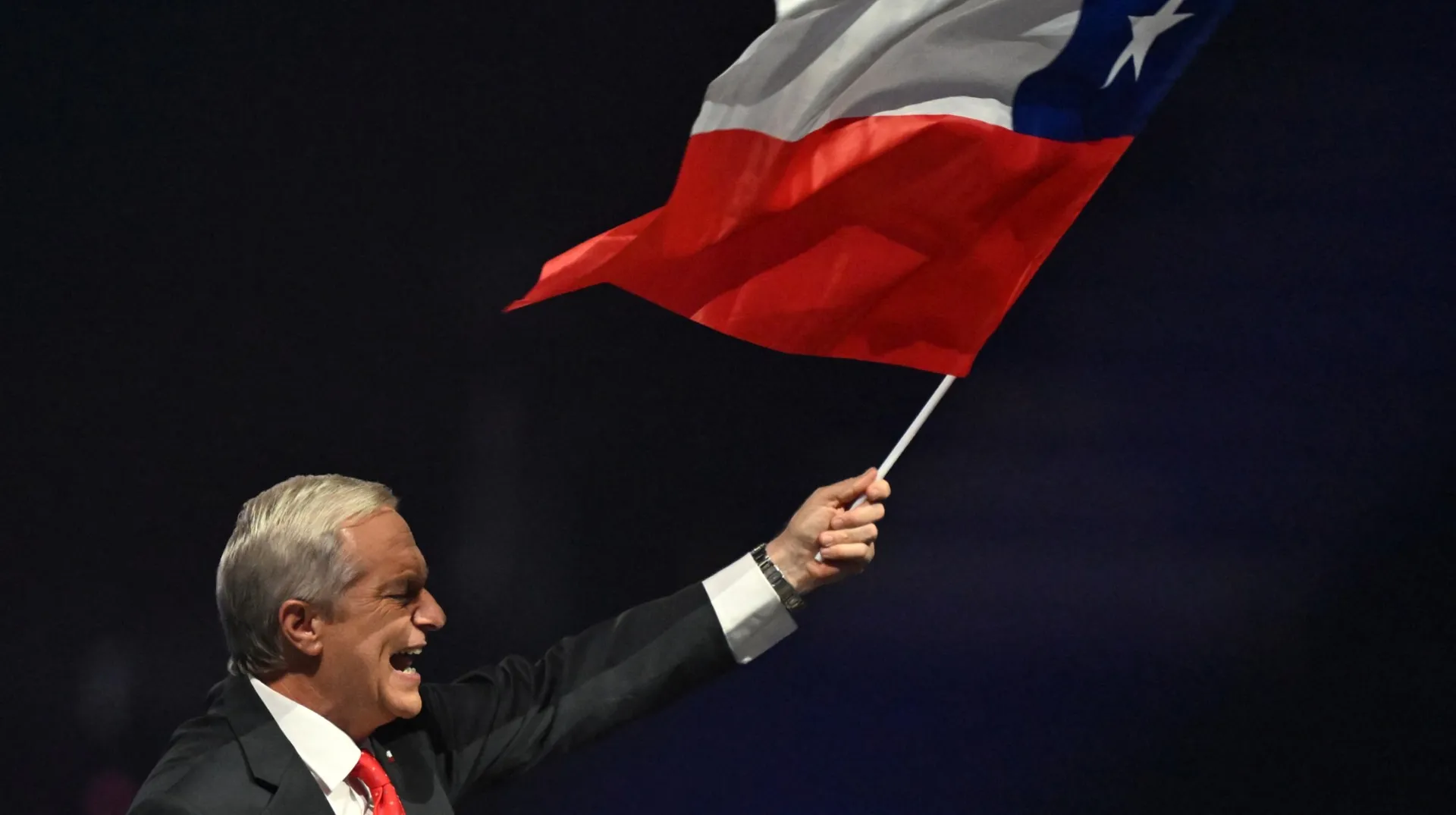
The inauguration of ultra-conservative president José Antonio Kast marks the South American nation’s sharpest right-wing turn since the end of the Pinochet dictatorship
When José Antonio Kast was elected as Chile’s next president in late 2025, it was “one more alarming case of a worldwide trend toward nativist authoritarianism,” said the Chilean American author Ariel Dorfman at The New York Times. It was also a sign of the “rehabilitation” of former dictator Augusto Pinochet, one of the continent’s “most infamous autocrats.”
Kast, as a vocal supporter of the notoriously brutal Chilean strongman, was elected in part for his hard-right bona fides, only to take office in a very different world than the one in which he campaigned. With war raging in the Middle East and a White House demonstrating an eagerness for regime change across the hemisphere, what does Kast’s unapologetically right-wing ascent mean for one of South America’s most robust economies?
‘Nostalgia’ for dictatorships past? Or ‘frustration with the status quo’?
President Kast “built his career” in government by “railing against liberal values from the fringes of Chilean politics,” said National Public Radio. But during this recent election, he “avoided all mention of the hard-line moral agenda” that has been “synonymous” with his decades-long career in public office.
The Week
Escape your echo chamber. Get the facts behind the news, plus analysis from multiple perspectives.
Join more than 350,000 subscribers and keep yourself informed with a selection of The Week’s most interesting, enlightening and entertaining stories - plus daily puzzles.
Join more than 350,000 subscribers and keep yourself informed with a selection of The Week’s most interesting, enlightening and entertaining stories - plus daily puzzles.
The son of a Nazi party member who fled to South America following the Holocaust, Kast has shown admiration for Pinochet that has left political analysts questioning whether the new president is showing “nostalgia for Latin America’s past dictatorships” or expressing signs of “frustration with the status quo,” said Al Jazeera.
Regardless of Kast’s personal motivations, the global right-wing excitement over his victory transformed the “routine transfer of power” at last week’s inauguration into a “celebration of a movement that is gaining momentum across the hemisphere,” The New York Times said. Kast is now part of a “growing roster of leaders” in South and Central America “aligned” with the Trump regime as the White House leans on “ideological allies” to address narco cartels and “purge Chinese influence from the region.”
Kast has “avoided” commenting on “controversial issues” both domestic and international, but he has nevertheless “made overtures to the Trump administration,” The Associated Press said. Indications of those types of overtures “intensified recently” with his cancellation of a planned submarine cable between Chile and China that had garnered “intense criticism” from — and deepened diplomatic tensions with — the United States.
For his supporters, Kast’s electoral victory and now presidency come as part of his promise to take a “harder line” on migration, crime and poverty — issues Chileans claim have “eroded the country’s sense of order,” said Zeteo. Critics counter that Kast’s “strongman rhetoric, Trump-style political playbook and backing from hard-right coalitions” revives acute “fears of authoritarianism.”
Sign up to get Today’s Best Articles in your inbox
A free daily email with the day’s biggest news and analysis – and the best features from TheWeek.com
Grappling with an ‘increasingly challenging’ geopolitical landscape
Kast now assumes the Chilean presidency, a position whose relationship with the U.S. has “deteriorated significantly under the second Trump administration,” the AP said. Kast’s predecessor was a “vocal critic” of Trump, at one point labeling Trump’s leadership “as that of a ‘new emperor.’”
Although Kast seems interested in renewed rapprochement with the U.S., he enters office in an “increasingly challenging international geopolitical landscape,” said Guillermo Holzmann, a political analyst from the University of Valparaíso, to Reuters, including “economic risks from the Iran war, the U.S.’ security strategy in the region and China’s influence in Latin America.” Chinese sway, in particular, poses an acute risk to Chile, the “world’s largest copper producer,” given that China is the “biggest purchaser of the metal.”
While the Trump regime “looks on enthusiastically at this trend” of arch-nationalist conservatives taking office across Latin America, said the Times, it “remains unclear” whether Kast’s Chile and others will “work with the United States on security” and move away from China, their “dominant trading partner.”
Rafi Schwartz has worked as a politics writer at The Week since 2022, where he covers elections, Congress and the White House. He was previously a contributing writer with Mic focusing largely on politics, a senior writer with Splinter News, a staff writer for Fusion's news lab, and the managing editor of Heeb Magazine, a Jewish life and culture publication. Rafi's work has appeared in Rolling Stone, GOOD and The Forward, among others.