The Week The Week
flag of US
US
flag of UK
UK
https://cdn.mos.cms.futurecdn.net/flexiimages/jzblygzdxr1769609154.gif

SUBSCRIBE

Try 6 weeks free

Sign in
  • View Profile
  • Sign out
  • The Explainer
  • Talking Points
  • The Week Recommends
  • Podcasts
  • Newsletters
  • From the Magazine
  • The Week Junior
  • More
    • Politics
    • World News
    • Business
    • Health
    • Science
    • Food & Drink
    • Travel
    • Culture
    • History
    • Personal Finance
    • Puzzles
    • Photos
    • The Blend
    • All Categories
  • Newsletter sign up Newsletter
  • The Week Evening Review
    Wealth tax talk, the razing of the Education Department, and toxic algae blooms

     
    talking points

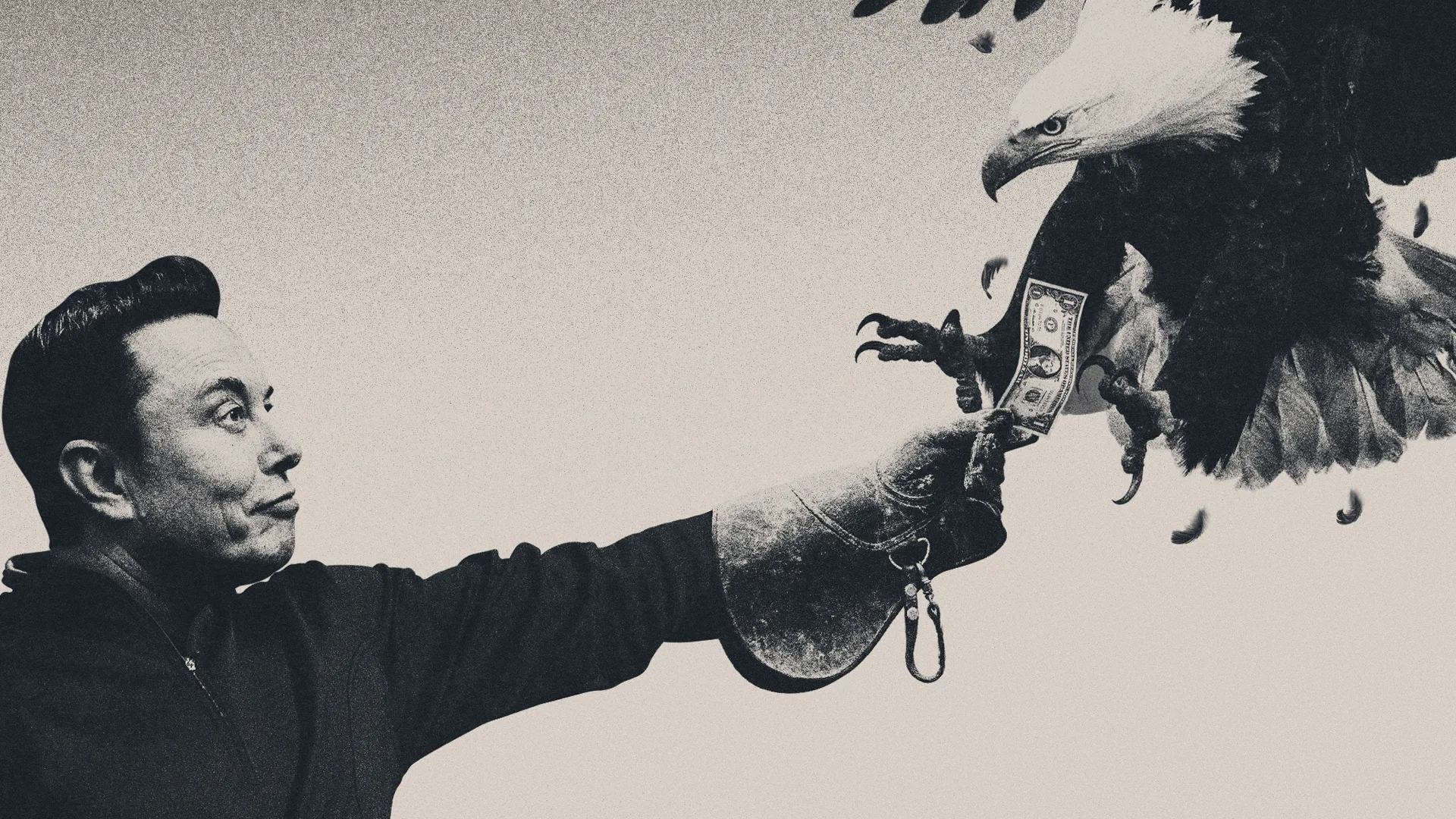
    Will Musk’s trillion-dollar payday lead to a wealth tax?

    Elon Musk is now the world’s first trillionaire thanks to SpaceX’s record-breaking debut on the stock market. This milestone has produced a backlash with some Democratic officials reviving talk of a wealth tax.

    The SpaceX initial public offering “thrust the richest man in the universe into an unexplored frontier of wealth,” said Wired. It also sparked a “tax-the-rich push” from Democrats, said Bloomberg. Musk’s vast holdings are a “sign the system is rigged,” said Rep. Ro Khanna (D-Calif.) in an email to supporters, per the outlet. A “typical” American family would “have to work more than 11 million years to make Elon Musk’s level of wealth,” said Sen. Elizabeth Warren (D-Mass.) on X. The trillionaire pushback will likely be a “prominent theme” in the Democrats’ 2028 presidential primary, said Bloomberg. 

    ‘World’s stingiest billionaire’
    Musk’s “trillion-dollar payday” came from “generous government subsidies, years of government-funded research and government contracts,” said Elizabeth Spiers at The Nation. Yet society has decided to “treat Musk’s wealth as if it’s fully earned” even as he remains “one of the world’s stingiest billionaires in terms of philanthropic giving.” 

    SpaceX is a “testament to human ingenuity, immigrant success and American greatness,” said Jonah Goldberg at the Los Angeles Times. If the trillionaire is successful in his goals, he will be “more responsible than any other human for making ours an interplanetary species.” The outrage over his riches can be attributed to “our obsession with income inequality,” but “no one was made poorer by Musk getting richer.” 

    ‘Making everyone’s life better’
    Democratic anger over Musk’s wealth “shows they don’t know how prosperity is created,” said the Washington Examiner in an editorial. The world’s richest man “hasn’t broken any rules,” but he does “provide immensely valuable services to millions of people, making everyone’s life better.”

    Musk is a “poster child” for a billionaire class that has “more dollars than we have the ability to count,” said Will Bunch at The Philadelphia Inquirer. The U.S.’s ultrarich continue to build unfathomable sums of wealth “even as thousands starve and his fellow Americans can’t pay the rent.” 


    today’s big question

    Do Trump’s moves signify the end of the DOE?

    President Donald Trump’s campaign promise to dismantle the Department of Education took a major step forward this month after the White House reassigned the agency’s special education and civil rights programs to other federal agencies. His administration says the adjustments will maximize efficiency. But critics claim the reassignments are an illegal effort to circumvent congressional funding challenges and will harm children and their educational prospects.

    What did the commentators say?
    At the center of this latest episode is the Education Department’s Office of Special Education and Rehabilitative Services, which protects the “rights of children with disabilities,” and its Office for Civil Rights, which works with students who “experience discrimination based on race, sex or religion,” said The Associated Press. Those offices will now be operationally reassigned to the Department of Health and Human Services and the Justice Department, respectively.

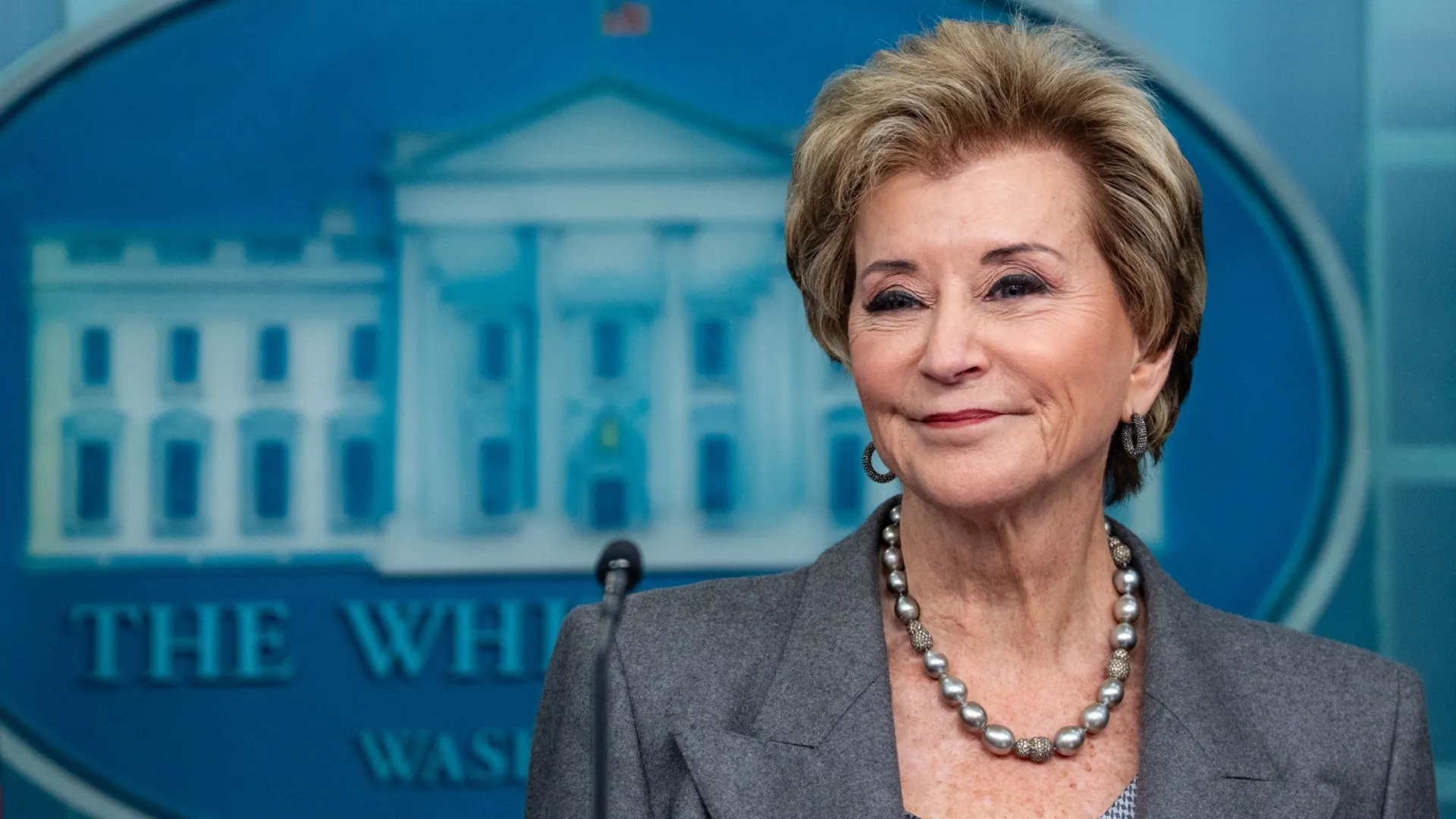
    By relocating the department’s programming now, critics say the White House is “weakening oversight after already drastically reducing staffing” in the affected offices, said The New York Times. Secretary of Education Linda McMahon (pictured above) has stated that using interagency agreements will “help build the case for skeptical lawmakers” to “support abolishing the Department of Education as an independent agency” at large, said Education Week. But lawmakers “across both parties” seem “reluctant to affirmatively endorse this plan.”

    What next? 
    Per the text of the agreement between the Departments of Education and Health and Human Services obtained by NPR, Health and Human Services “would do much of the work of administering formula grant programs” mandated under the Individuals with Disabilities Education Act, said NPR’s “All Things Considered.” The plan is “likely to garner some pushback” from legislators, “including among Republican lawmakers” who want to ensure the government meets its “legal obligations to students with disabilities,” said Politico.

    The Education Department’s Office of Civil Rights will similarly “refer cases to the Department of Justice for evaluation and resolution” but will “continue to decide whether to pursue administrative enforcement action,” said Education Week. Critics fear this “partnership could lead the Office of Civil Rights to become more like the DOJ,” said Inside Higher Ed, by “picking and choosing which cases it will address based on political priorities.”


    Statistic of the day

    770,000: The number of children no longer receiving Supplemental Nutrition Assistance Program benefits, also known as food stamps, after Trump’s signature domestic policy bill passed last year, according to the nonpartisan Center on Budget and Policy Priorities. Children are increasingly “collateral damage,” said Katie Bergh, a senior policy analyst at the center, to ProPublica.


    QUOTE OF THE DAY

    ‘May peace, respect and friendship prevail among all nations.’

    Iran’s soccer team in a handwritten note left in their World Cup dressing room after a 0-0 draw with Belgium. The message included “#168” and “#Minab,” referencing the number of people killed in the U.S. air strike on the Iranian school in Minab.


    in the spotlight

    The growing problem with toxic algae

    Though the Trump administration’s $14 million attempt to change the color of Washington, D.C.’s Reflecting Pool has backfired, something positive that can be said about its algae bloom is that it’s not toxic. But toxic algal blooms are a worldwide phenomenon that can harm humans and devastate marine life. And as the climate crisis warms the water, the problem is intensifying.

    ‘Underwater bushfire’
    “Algal blooms are a rapid, explosive growth of algae,” said pharmacology researcher Ian Musgrave at The Conversation. Blue-green algae, known as cyanobacteria, naturally occur in inland waters, estuaries and the sea. They can “suffocate fish” and produce toxins that cause nausea, skin irritation and even liver failure in humans.

    Algae have “flared at hot spots” along the South Australian coastline, causing “stinging eyes, coughing, rashes, headaches and breathing difficulties” among surfers, said ABC. And beachgoers are “horrified by the dead animals washing ashore,” said The New York Times. 

    A crowdsourced platform has recorded more than 100,000 instances of dead sea life in the Australian region since February last year. It was “literally just like an underwater bushfire,” said a recreational fisherman.

    ‘Visible from space’
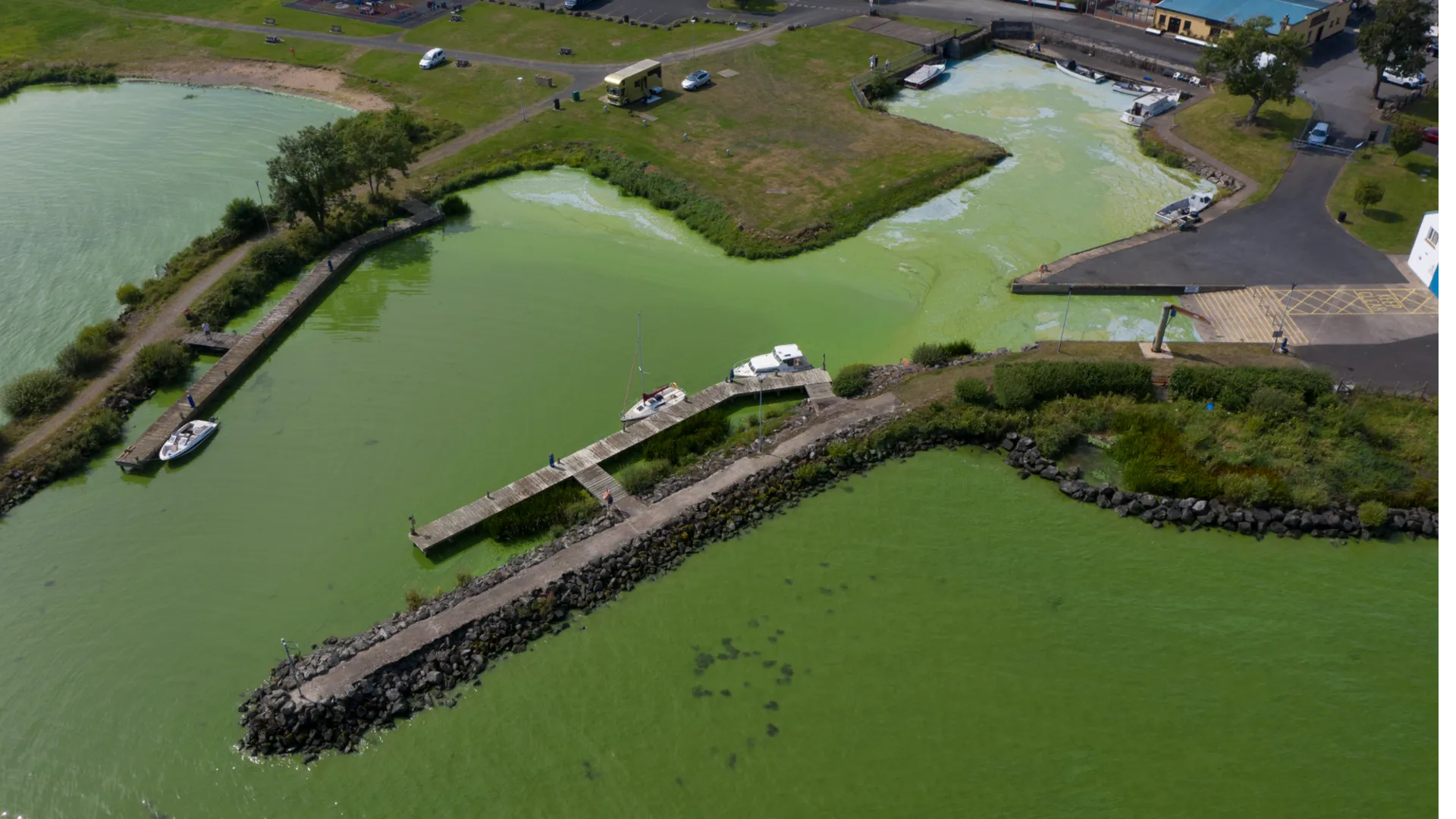
    Harmful algal blooms stalk shores far beyond Australia. In Southern California, an “unprecedented multi-toxin event” last year killed hundreds of seabirds, sea lions and dolphins, said the Public Policy Institute of California. And the U.K.’s largest freshwater lake, Lough Neagh (pictured above) in Northern Ireland, has also been “choking on recurring toxic algal blooms” for years, said The Guardian. 

    The algae feed on high levels of nutrients in the water, mainly from agricultural runoff, fertilizer and livestock waste, as well as “inadequate wastewater treatment.” Global warming has also increased water temperature, encouraging the abundant blooms.

    In some places, an algal bloom is “so widespread it’s visible from space,” said The Guardian. The blooms “coat the surface, kill wildlife, unleash stenches” and make the water “unusable,” and the impact on wildlife and tourism is “incalculable.”


    Good day 💰

    … for treasure hunters. A “summer-long hunt for hidden gold” called the Midnight Sun Hunt is underway in Lapland, the northern region of Finland known as the unofficial home of Santa Claus, said CNN. The treasure is a gold bar worth $23,300 hidden at the resort Levi.


    Bad day 🇫🇷

    … for French revelers. Authorities in France have placed over a third of the country under a “danger-to-life red alert” due to extreme heat, said The Guardian. This has led to not only the cancellation of outdoor sports events but also “restricted alcohol consumption” at the nationwide Fête de la Musique (World Music Day). 


    Picture of the day

    Man down

    British Prime Minister Keir Starmer announces his resignation as leader of the governing Labour Party outside 10 Downing in London following months of mounting political pressure. Leaving office nearly two years after being elected in a landslide, Starmer is the sixth PM in a decade to depart prematurely.
    Kin Cheung / AP Photo


    Puzzles

    Daily sudoku

    Challenge yourself with The Week’s daily sudoku, part of our puzzles section, which also includes guess the number

    Play here


    The Week recommends

    Beat the heat with these touring theater shows

    It’s the season of known quantities in theater-land. A beloved tearjerker moves from screen to stage. Simba is crowned king of beasts once again. And the semi-fictionalized life of Alicia Keys storms across the stage to the tune of her hits and new songs. Over the next few months, the motto is “go with what you know.”

    ‘Hell’s Kitchen’
    Keys took her hit songs and life story and melded them into the vibrant musical “Hell’s Kitchen.” Her stand-in protagonist, Ali, is a 17-year-old growing up in the show’s namesake neighborhood on the west side of Manhattan. Expect to catch “No One,” “Fallin’” and “Empire State of Mind,” along with new songs written for the show. It’s “thrilling from beginning to end,” said Elisabeth Vincentelli at The New York Times. (through Aug. 15, 2027)

    ‘The Lion King’
    The Disney behemoth just will not quit — nor should it. Because 29 years after its Broadway debut, director-designer Julie Taymor’s singular vision of “The Lion King” (pictured above) made a good movie into a startling, inspired piece of live theater. (through May 30, 2027)

    ‘The Notebook’
    The book-to-movie-to-musical pipeline hits its heartstring-tugging zenith with the Broadway-ification of “The Notebook.” In an attempt to breathe fresh life into the romantic tale of Allie and Noah, three pairs of actors play the characters across different time periods in their lives. The adjustment is novel, but the resulting version of the story hasn’t “lost its romantic magic,” said Gloria Oladipo in The Guardian. Brace yourself for Alysha Deslorieux’s barn-burning Act One number, “My Days,” as Middle Allie. (through May 16, 2027)

    Read more


    Poll watch

    More than half of Israelis (52%) believe Prime Minister Benjamin Netanyahu’s conduct has benefited their country’s interests in the U.S.-Iran agreement, while 24% feel it has helped and 24% are unsure, according to a survey from Israel’s Channel 12 and Midgam polling firm. 


    INSTANT OPINION

    Today’s best commentary

    ‘Russia was a cautionary tale. Now US risks becoming it.’
    Tim Richardson and Anna Nemzer at USA Today
    In the U.S., Russia’s “descent into autocracy has long been cited as a cautionary tale by those warning of democratic backsliding,” say Tim Richardson and Anna Nemzer. Now, “we risk parts of that history becoming our own.” Russia “hollowed out the country’s once-diverse media landscape, leaving behind only state media.” Similar “dynamics are taking hold here in the United States: the exclusion and punishment of those who scrutinize power, the rewarding of compliant media, and the consolidation of influence over government narratives.”

    ‘California’s rape kit audit deadline is fast approaching. There’s reason to worry.’
    Ilse Knecht and Kate Karpilow at the San Francisco Chronicle
    When a sexual assault survivor “undergoes an invasive and time-consuming forensic examination to compile a rape kit, there’s an implicit promise that law enforcement will test any discovered DNA to identify a perpetrator,” say Ilse Knecht and Kate Karpilow. But “too often, those rape kits don’t get tested and languish in storage.” Getting a “thorough and accurate count of untested rape kits isn’t an exercise in bean counting or a bothersome bureaucratic demand.” It’s an “important crime-fighting tool.”

    ‘Platner, Fetterman and the myth of the working-class politician’
    Jonathan Zimmerman at The Philadelphia Inquirer
    Sen. John Fetterman (D-Pa.) and Maine’s Democratic Senate nominee Graham Platner are “pretending to be rough-hewn working-class guys,” says Jonathan Zimmerman. But both were “born into significant family wealth. And so were almost all of America’s political leaders.” Americans “just don’t want to admit it.” People “want to believe that every American can become anything they wish — a senator or even a president.” That’s why “we are attracted to figures like Fetterman and Platner, who enact this dream for us.”


    WORD OF THE DAY

    sloptimization

    Another word for “generative-engine optimization,” or GEO, that describes the optimization of online content to appeal to generative AI tools like ChatGPT, Claude and Gemini. Chatbots are “cannibalizing the traditional search engine,” said The Atlantic, and web publishers are “scurrying to figure out how to get search bots to recommend a given product.”


    Evening Review was written and edited by Theara Coleman, Nadia Croes,  Scott Hocker, Anya Jaremko-Greenwold, Justin Klawans, Harriet Marsden, Joel Mathis and Rafi Schwartz, with illustrations by Stephen Kelly.

    Image credits, from top: Illustration by Stephen P. Kelly / Getty Images; Bonnie Cash / UPI / Bloomberg / Getty Images; Charles McQuillan / Getty Images; John Lamparski / WireImage / Getty Images
     

    Recent editions

    • Morning Report

      Starmer poised to outline exit timetable

    • Sunday Shortlist

      Steven Spielberg’s ‘proper summer blockbuster’

    • Saturday Wrap

      Who wants to be a trillionaire?

    VIEW ALL
    TheWeek
    • About Us
    • Contact Future's experts
    • Terms and Conditions
    • Privacy Policy
    • Cookie Policy
    • Advertise With Us
    • FAQ
    Add as a preferred source on Google Add as a preferred source on Google

    The Week UK is part of Future plc, an international media group and leading digital publisher. Visit our corporate site.

    © Future Publishing Limited Quay House, The Ambury, Bath BA1 1UA. All rights reserved. England and Wales company registration number 2008885.