The Week The Week
flag of US
US
flag of UK
UK
https://cdn.mos.cms.futurecdn.net/flexiimages/jzblygzdxr1769609154.gif

SUBSCRIBE

Try 6 weeks free

Sign in
  • View Profile
  • Sign out
  • The Explainer
  • Talking Points
  • The Week Recommends
  • Podcasts
  • Newsletters
  • From the Magazine
  • The Week Junior
  • More
    • Politics
    • World News
    • Business
    • Health
    • Science
    • Food & Drink
    • Travel
    • Culture
    • History
    • Personal Finance
    • Puzzles
    • Photos
    • The Blend
    • All Categories
  • Newsletter sign up Newsletter
  • The Week Evening Review
    Canada-US trade fight, Florida’s Haitian workforce, and the world’s shrinking rivers

     
    talking points

    Will Trump’s trade war crush Canada? 

    The trade war between the U.S. and Canada has turned white hot, and it’s not clear when or if the conflict will abate. Our northern neighbor is hunkering down for extended economic pain, while President Donald Trump argues that Canada has been “ripping off” the U.S. for years. 

    ‘Undiplomatic’ bargaining 
    Last weekend’s breakdown of trade talks is a sign that Trump’s “bulldozer approach” to trade “may be reaching its limits,” said The Washington Post. Canadian Prime Minister Mark Carney (pictured above at right) walked away from negotiations “rather than accept a lengthening list of U.S. demands,” choosing to face new American tariffs on an “array of Canadian products” that includes “hockey sticks and Crown Royal whisky.” (U.S. consumers could also face a surge in toilet paper costs.) Trump’s “undiplomatic style” of bargaining has made once-friendly Canadian public opinion “fiercely anti-American.”

    Canada is “among the worst nations in the world to deal with,” said Trump in a Truth Social post Monday. “We don’t need Canada. They need us!” But Canada “dominates” the type of lumber that U.S. contractors prefer for framing houses, said Paul Krugman on Substack, and the U.S. “imports millions of barrels a day” of Canadian oil. The U.S. economy is much larger, but an “all-out trade war would create a lot of pain” at home when American voters are “already dissatisfied with Trump’s economic management.”

    GOP candidates are “getting pounded” on affordability issues on the campaign trail, said The Wall Street Journal in an editorial. And Trump is providing fresh fuel for these concerns “10 weeks before midterm elections.”

    ‘United against Donald Trump’
    Carney was “right to call Donald Trump’s bluff,” said Tony Keller at Canada’s Globe and Mail. There was widespread fear among Canadians that Ottawa was “about to sign a bad deal” with the U.S. that would make major concessions to Trump. 

    Canada is now “more united against Donald Trump than ever,” said Stephen Maher at The Toronto Star. The Canadian government is preparing aid to assist the country’s hardest-hit businesses. Trump seems equally determined. It’s “time to teach Canada you can’t do this anymore,” he said to Glenn Beck on Wednesday, per Reuters. 


    QUOTE OF THE DAY

    ‘An affectionate friendship is not a sexual proposition. A gift is not sexual misconduct. Poetry is not sexual misconduct.’

    Rep. Chuck Edwards (R-N.C.), in a 22-page letter sent to colleagues, addressing numerous allegations against him that led to a House Ethics Committee investigation. There’s “substantial evidence” he engaged in “persistent unprofessional and inappropriate conduct toward two young female staffers,” said the committee’s report.


    the explainer

    Florida faces a workforce crisis as TPS for Haitians ends

    Since the Trump administration ended Temporary Protected Status for Haitian immigrants last month, terminating employment authorization for beneficiaries, South Florida has been bracing for impact. The sudden loss of TPS for so many Haitian employees who reside in the region has hit its economy hard.

    What’s happening in Florida?
    As a result of the end of TPS for Haitian immigrants, “some home-care agencies have shut down,” said The Wall Street Journal. Nursing homes and assisted living facilities in South Florida are “scrambling to fill vacant positions,” and restaurants are “scaling back operating hours.”

    Few industries have been left untouched. Hotels, retailers, airport contractors and small businesses are also struggling with staffing shortages. Of the “roughly 350,000 Haitian TPS holders” in the U.S., almost half live in the state, said the Journal. And about 93,000 of them are part of the state’s workforce, according to the immigrant-rights groups FWD.us, Haitian Bridge Alliance and UndocuBlack Network.

    Critics of TPS argue that people with the status “make up a fraction of the overall labor force — a loss the economy can absorb” — and that any difficulties in replacing them could have the “benefit of raising wages.” Their departure creates “real opportunities for less-educated, American-born workers,” said Steven Camarota, the director of research at the Center for Immigration Studies, to the Journal.

    Who’s feeling the impact?
    Employers and deportees aren’t the only ones feeling the impact. Businesses are “terminating employees with lots of experience,” said Wendi Walsh, the secretary-treasurer of the South Florida hospitality workers’ union Unite Here Local 355, to the Miami Herald. That will “put pressure on the workers left behind.” 

    The local economy will “miss the workers’ income too,” said the Herald. Haitians on TPS in South Florida provide “$1.5 billion in annual economic contributions, $174 million in annual federal and payroll taxes, and $176 million in annual state and local taxes,” according to Phillip Connor, a research fellow at Princeton University’s Center for Migration and Development, per the outlet.

    In South Florida and elsewhere across the nation, many “de-documented” immigrants are “taking refuge in a growing underground economy,” said the Sun Sentinel. Others rely on friends and family to go grocery shopping, “fearing they will be arrested by agents from Immigration and Customs Enforcement.”


    Statistic of the day

    $133.3 billion: The gross profit chipmaker Nvidia — valued at $5.1 trillion and comprising more than 7% of the entire S&P 500 — accrued in the first half of the year, according to the company. The results are a “bellwether for investment” in AI and the “health of the overall economy,” said Sky News. 


    in the spotlight

    Shrinking rivers force tough decisions in the US and Europe

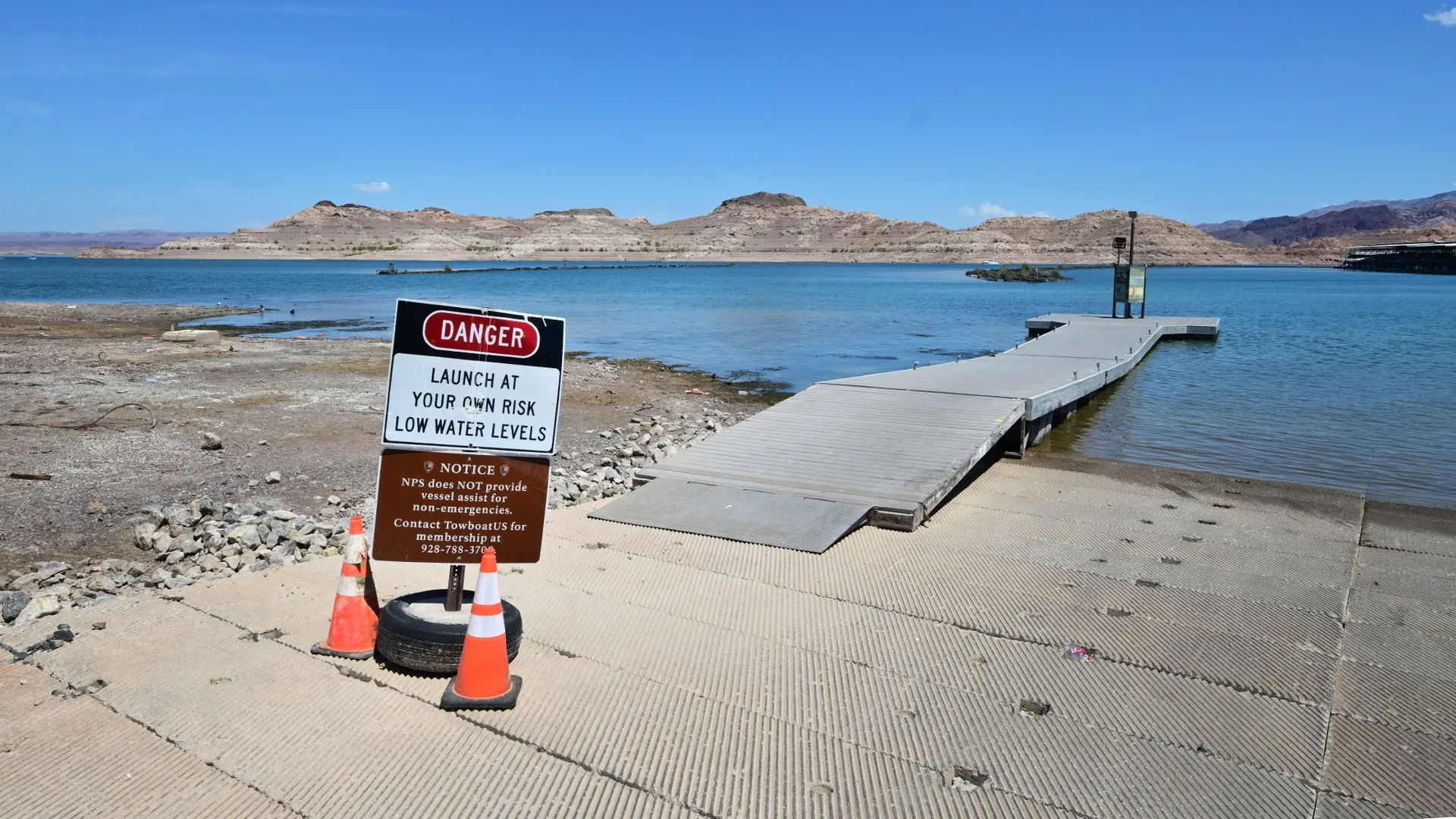
    Some of the world’s most important rivers are drying up. The Colorado River supplies water and electricity to millions of people in the southwest U.S. but is afflicted by a decadeslong drought, while blistering European heat is taking a toll on the Danube and other key waterways on the continent. Adjusting to these environmental changes will be an upstream battle for governments and communities.

    Colorado: ‘legal and political battles’
    Record-low water levels at reservoirs fed by the Colorado River have put the region in “uncharted territory,” said Jack Schmidt, of Utah State University, to CNN. Lakes Mead and Powell have been “shrinking for 20 years” because of the toll that climate change and overuse have taken on the river, which supplies water to 40 million people and hydropower electricity to 500,000 households. 

    Big cities like Phoenix and Tucson have “taken steps to prepare” for the crisis, said Schmidt. But procuring alternative water supplies “might be less feasible” for Indigenous tribes and small towns along the river.

    Dividing the remaining water will require “legal and political battles,” said the Arizona Daily Star. Farms and businesses along the Colorado say reducing water use is “more urgent than ever,” but the possible loss of Hoover Dam-produced power supplies could massively raise electricity costs. One hope: The “biggest El Niño season on record” might replenish the river.

    The crisis adds urgency to a federal proposal to require Arizona, California and Nevada to significantly reduce the amount of water they take from the Colorado, said The Associated Press. That would result in “a lot of potential devastating impacts” to farms and other river users, said Arizona water official Tom Buschatzke to the AP. Nevada this week sued to block the plan, said The Hill.

    Europe: altering the ‘old map of power’
    The Danube recently measured “just 9 inches deep” in Budapest, said The New York Times. Italy’s Po River and the Rhine in Switzerland are also in peril. That has nearly halted the “transport of chemicals, oil products and other goods” in Europe. The major rivers have served as “crucibles of the continent’s industrial power,” but the evaporation of those rivers could “alter the old map of Europe’s power and wealth.”


    Good day 🎢

    … for Japanese anime. France and Saudi Arabia have signed a $7 billion deal to build three amusement parks near Paris, including one that will feature the Japanese manga and anime show “Dragon Ball Z.” The plans reportedly grew from French President Emmanuel Macron and Saudi Crown Prince Mohammed bin Salman’s “shared love” of the series, said Al Jazeera.


    Bad day 📱

    … for social media bans. Eight months after Australia implemented an under-16 ban on social media apps like TikTok, younger users are “returning in droves,” said Bloomberg. About 26% of children ages 13 to 15 have been on TikTok as of last month, just 1 percentage point below the rate before the ban took effect, according to the parental control app Qustodio.


    Picture of the day

    Friend-sheep

    A young competitor sits alongside her sheep in a judging ring at the Melplash Agricultural Society Show in Dorset, England. The exhibition celebrates “rural life and farming heritage,” said Bridport News, teaching visitors about food production and farming practices while they watch farm animals compete.
    Finnbarr Webster / Getty Images


    Puzzles

    Daily sudoku

    Challenge yourself with The Week’s daily sudoku, part of our puzzles section, which also includes guess the number

    Play here


    The Week recommends

    The best affordable Maldives alternatives

    The Maldives has become synonymous with luxury travel. Its hard-to-reach location and proliferation of private island resorts mean the price point is out of reach for most. But many less-expensive destinations exist for equally picturesque getaways.

    Rangiroa, French Polynesia
    Popular Bora Bora tends to “mirror the Maldives in price,” said Lauren Dana Ellman at Travel and Leisure. But Rangiroa is more of a hidden gem with “many of the same elements,” said Jim Augerinos, the founder of travel company Perfect Honeymoons, to the outlet. Travelers can expect the usual “overwater bungalows, electric-blue lagoons, white-sand beaches and that isolated island feeling” at a “noticeably lower price point.”

    Sumba, Indonesia
    This almost “untouched” Indonesian island an “hour’s flight” from Bali has “only a tiny fraction of the tourists” on the bigger island, said Robert Jackman at The Telegraph. Complete with “gold sand” beaches, it is the perfect destination for those looking for their “own private paradise” away from any bustle and “definitely worth the longer journey.”

    Zanzibar, Tanzania
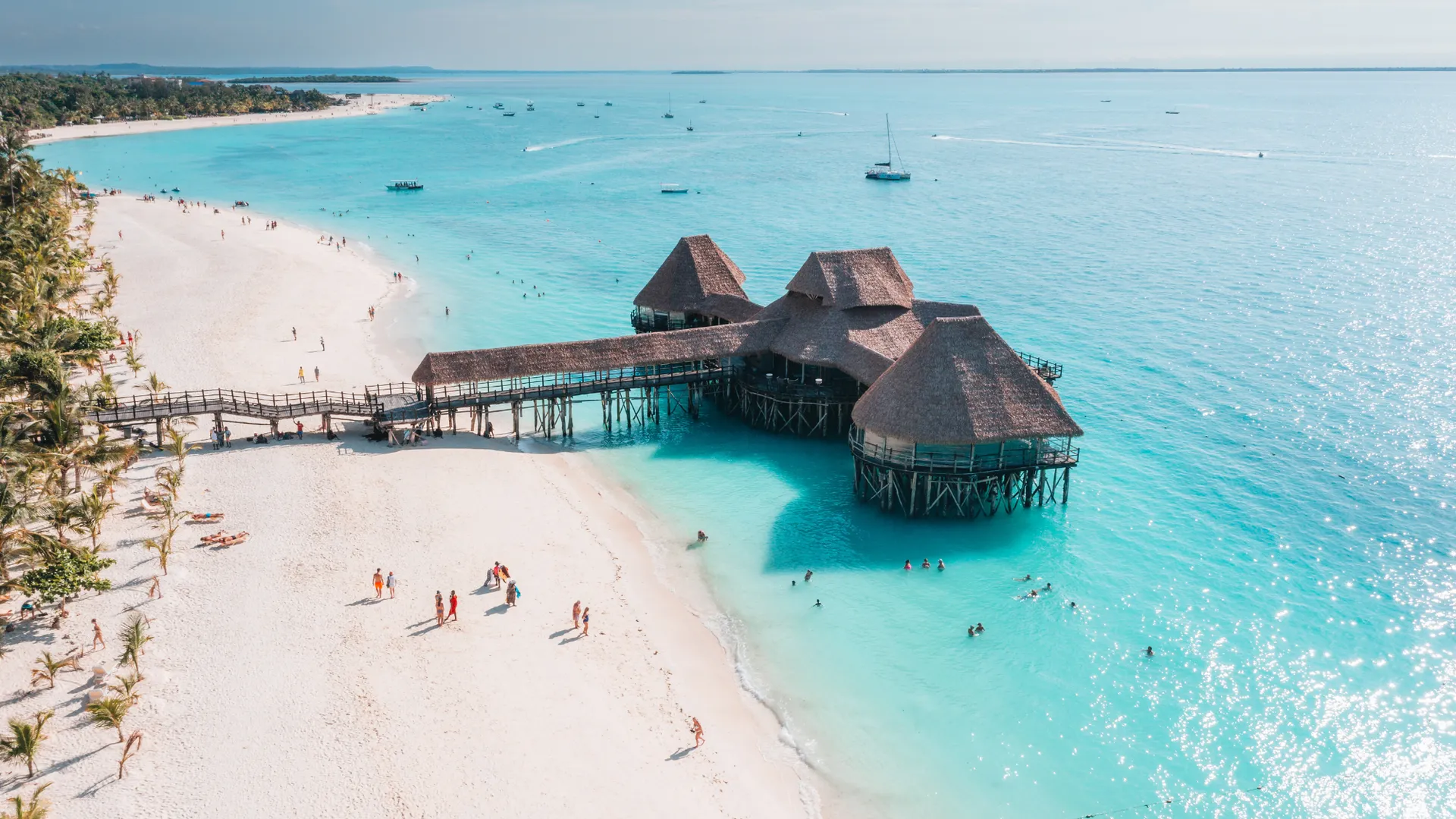
    If you are after a destination with “escapist appeal” but don’t want to lose out on “cultural edge,” Zanzibar (pictured above) is the place for you, said Ellman. Its rich Swahili history is a huge draw, along with the Unesco-listed Stone Town and local spice farms. It also delivers “brilliant blue water” and “sugar-sand beaches.” A holiday here comes at a “far lower price point” but still offers “polished luxury.”

    Read more


    Poll watch

    About 17% of Americans smoke marijuana, tying the record high from 2023, in a Gallup survey of 1,200 U.S. adults. Slightly fewer (15%) consume marijuana edibles. Meanwhile, cigarette smoking matches its record low of 11%, while vaping remains steady at 9% and nicotine pouch use is at 4%.


    INSTANT OPINION

    Today’s best commentary

    ‘Video gamers alone can’t keep our skies safe’
    Sheldon H. Jacobson at The Hill
    The FAA is “recruiting video gamers for air traffic controller job openings,” but “adding more people into the existing system does little to resolve the structural issues that have led to persistent shortages,” says Sheldon H. Jacobson. Skills “developed by video gamers” are “similar to the skills used to manage dozens of flights in the sky in real time.” However, recruiting video gamers to be air traffic controllers “makes good sound bites but falls short of resolving staffing shortages.”

    ‘Public health advocates are so desperate for help against conspiracies they have turned to the place you would least expect’
    Molly Olmstead at Slate
    Public health officials have one “innovative and surprising, if disconcerting, solution to our national public health information crisis: AI has the potential to help stave off a conspiratorial catastrophe during the next pandemic,” says Molly Olmstead. Looking to AI for “rescue is usually an eye-roll-worthy impulse,” as AI is a “Pandora’s box of yet-to-be-imagined evils.” But in “this case, the desperation of the situation might just call for public health advocates leaning into the dangerous new technology.”

    ‘A new poll shows how John Fetterman has created a 2028 predicament for himself’
    Zeeshan Aleem at MS NOW
    Pennsylvania Sen. John Fetterman’s “popularity with Democrats has taken a nosedive in the last couple of years,” says Zeeshan Aleem. Fetterman “should not be shocked by how his own party’s voters have soured on him,” as he “still caucuses with the Democrats” but has “made a name for himself by defecting from the party on several notable occasions.” Should he “seek reelection in 2028, it’s safe to wager that he would face tough chances” of winning in a Democratic primary.


    WORD OF THE DAY

    villeggiatura

    The Italian tradition of a monthlong break in August. The villeggiatura traces its origins “back to the Renaissance,” said The Guardian. By the 1960s, many Italians “had come to consider a long summer break a fundamental right.” Trade unions “fought for this right, securing Italian workers some of the longest protected holidays” in Europe.


    Evening Review was written and edited by Theara Coleman, Nadia Croes,  Scott Hocker, Anya Jaremko-Greenwold, Justin Klawans, Joel Mathis and Deeya Sonalkar.

    Image credits, from top: Evelyn Hockstein / POOL / AFP / Getty Images; Giorgio Viera / Contributor / Getty Images; Frederic J. Brown / AFP / Getty Images; Francesco Riccardo Iacomino / Getty Images
     

    Recent editions

    • Morning Report

      Rescuers hunt for survivors after flash flood

    • Evening Review

      Why did the CIA director take a secret trip to Moscow?

    • Morning Report

      Parton dies aged 80 after six decades at the top

    VIEW ALL
    TheWeek
    • About Us
    • Contact Future's experts
    • Terms and Conditions
    • Privacy Policy
    • Cookie Policy
    • Advertise With Us
    • FAQ
    Add as a preferred source on Google Add as a preferred source on Google

    The Week UK is part of Future plc, an international media group and leading digital publisher. Visit our corporate site.

    © Future Publishing Limited Quay House, The Ambury, Bath BA1 1UA. All rights reserved. England and Wales company registration number 2008885.