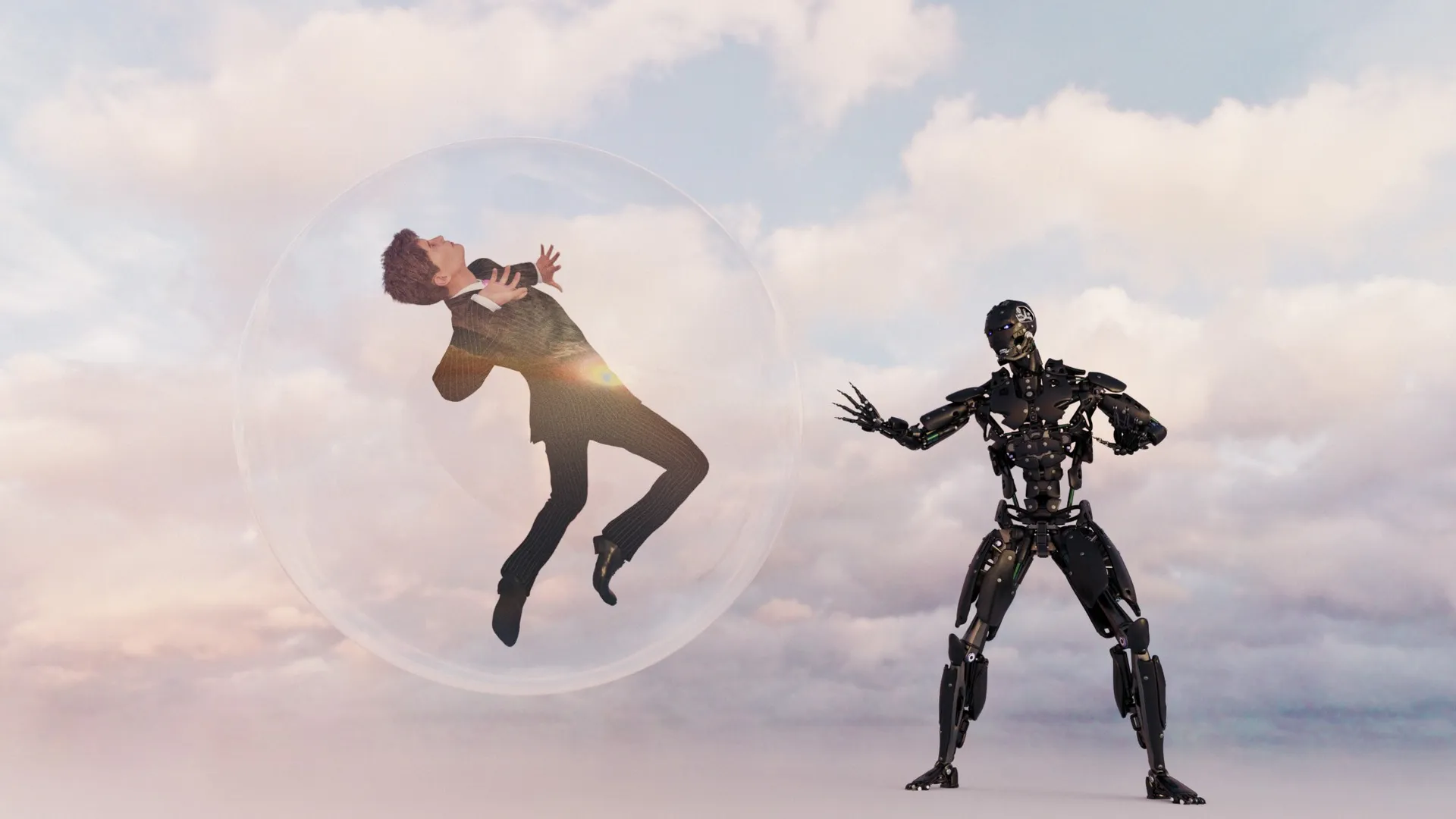
With artificial intelligence permeating nearly every aspect of life, therapists are seeing more people expressing anxiety about the technology. And the number is likely to rise exponentially in the coming years.
‘Techistential dread’
Rapid technological advancement can “induce a sense of overarching anxiety,” said therapist Mark Wilkes at Deseret News. Think of it as “techistential dread,” or the “vertigo of wondering if a new advancement will help or hurt, increase opportunities or threaten human thriving.”
For Silicon Valley therapist Candice Thompson, “discussing fears and worries about AI has now become a regular part of her workday,” said The New York Times. During her “clinical lifetime,” she has “never seen an existential threat like this,” said Thompson to the outlet. No one is immune, “even my clients who are not working in tech.”
Worries about AI are becoming increasingly common among therapy clients, as the technology “reshapes the workplace, gobbles up natural resources” and raises concerns about “privacy and security,” said the Times. For those who “already have a diagnosed disorder,” such as generalized anxiety, the “distress over AI may feel even more intense.”
There’s a “parallel” between this and “depression over climate change,” said Sherry Turkle, a sociologist and the author of “Artificial Intimacy: Who We Become When We Talk to Machines,” to the Times. “You feel that things are deeply amiss.” But action may feel “futile, so the depression becomes diffuse.”
‘No simple answers’
For people anxious about AI, there are “no simple answers,” but experts recommend “doing what you can to move the needle in your own life or in public life,” said the Times. The “existential dread” that some express often stems from a “sense of having lost control and any sense of meaning,” said psychologist Yuxin Sun to the outlet. It may help to ask: “What are the things I am not going to outsource to AI?”
For therapists, one place to begin is to “distinguish between goals and values,” said Psychology Today. It seems “plausible” that some clients’ “medium-term goals” will be “usurped by machines.” So goals, at least “certain kinds of professional goals,” will arguably “no longer be as central to clients’ self-conceptions as they have traditionally been.” |