The Week UK The Week UK
flag of US
US
flag of UK
UK
https://cdn.mos.cms.futurecdn.net/flexiimages/jzblygzdxr1769609154.gif

SUBSCRIBE

Start your trial today

Sign in
  • View Profile
  • Sign out
  • The Explainer
  • Talking Points
  • The Week Recommends
  • Podcasts
  • Newsletters
  • From the Magazine
  • The Week Junior
  • More
    • Politics
    • World News
    • Business
    • Health
    • Science
    • Food & Drink
    • Travel
    • Culture
    • History
    • Personal Finance
    • Puzzles
    • Photos
    • The Blend
    • All Categories
  • Newsletter sign up Newsletter
  • The Week Evening Review
    An uncertain blue wave, mind-reading technology, and AI’s math wreckage

     
    talking points

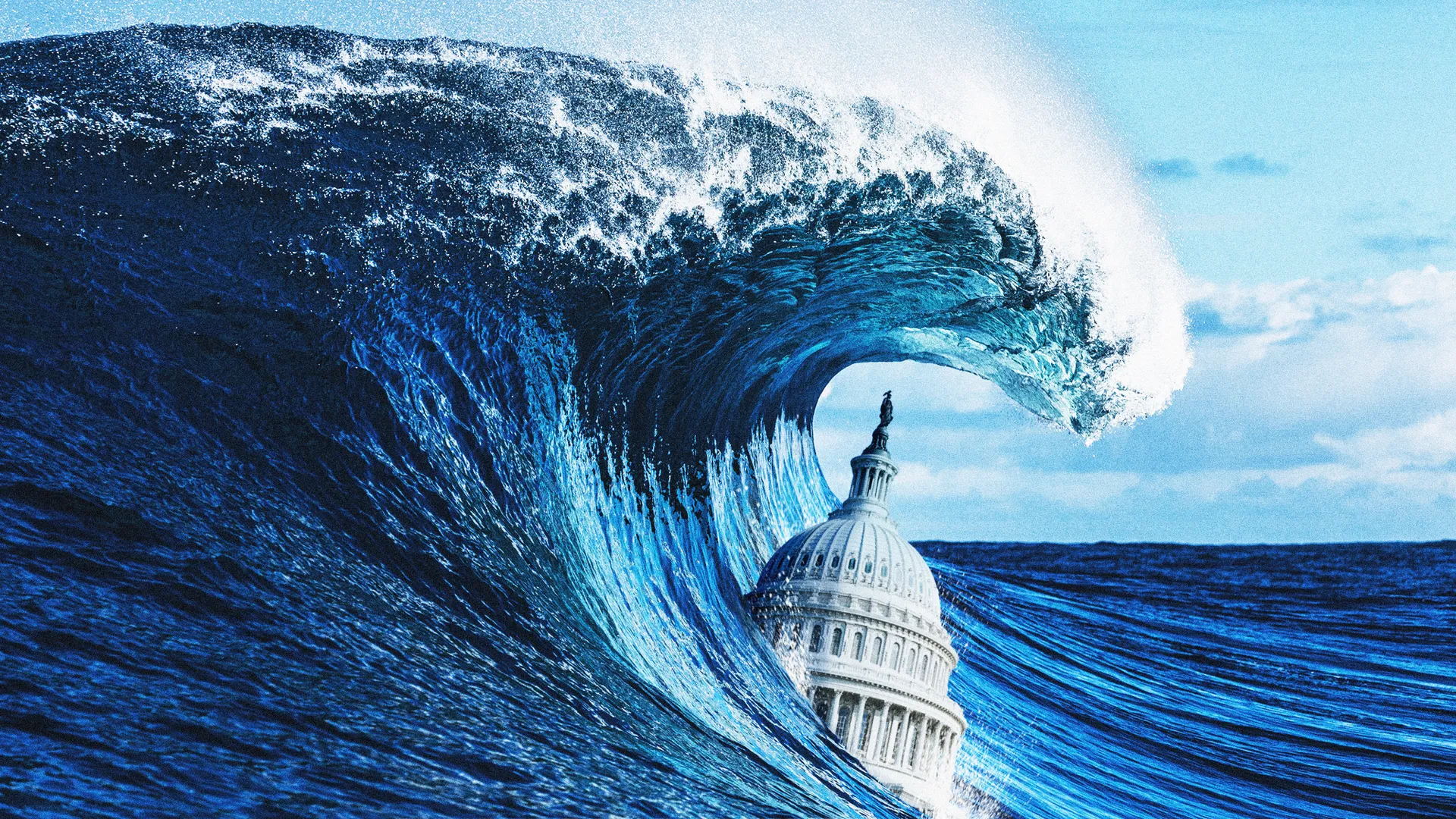
    Can Democrats trust pollsters predicting a blue wave?

    Democrats don’t know whether to trust the numbers or their guts. Polls suggest a blue wave is coming in the November midterms. But the party faithful are not so sure, fearful of a GOP October surprise, or maybe just a math error, that could upend their hopes.

    Not a ‘sure thing’
    “Welcome to the Wile E. Coyote moment,” said Daniel W. Drezner on Substack. President Donald Trump’s “historic unpopularity” is hurting GOP candidates, and “all of the signs point to a big blue wave.” Democrats and their supporters, though, are going to “keep their powder dry out of fear that Trump pulls off another comeback.”

    A blue wave “isn’t a sure thing,” said The Daily Beast. The polls are depicting a “disastrous picture” for Republicans, but they could be distorted by “inaccurate sample groups, skewed data sampling and unknowable voter behavior” that miss out on GOP strength. 

    Trump certainly thinks so. “My real polling numbers” are the “best they have ever been,” he said on Truth Social. It’s unlikely, however, that an “unrecorded mass” of Trump voters will save Republican candidates in November, said The Daily Beast.

    “You should believe the polls this time,” said Bill Scher at Washington Monthly. While it’s true that pollsters in this summer’s Michigan’s Senate primary and Wisconsin’s gubernatorial primary “struggled to reach certain demographics,” there’s still “lots of other data,” including Trump’s “abysmal job approval,” pointing to big Democratic gains in the midterms. But Democrats should try “not to be complacent” about those signs.

    Polling mirage?
    Pollsters “can’t keep up” with the “sharply increased demand for polling” created by a larger-than-usual number of competitive races in the midterms, said The Washington Post. This signifies “more opportunity” for Democrats and “more defense” for Republicans, said Cygnal CEO Brent Buchanan to the outlet. That demand affects the results. Voters are “tired of being surveyed and increasingly reluctant to pick up the phone,” said the Post.

    Some GOP candidates “see a polling mirage” in the results, said Axios. Even with questions about polling accuracy, though, “most pollsters believe Democrats have the edge” in the midterms.


    QUOTE OF THE DAY

    ‘The president is always looking for ways to put money back in the pockets of Americans’ wallets, and we will see if that’s a promise he delivers on.’

    Deputy White House Press Secretary Taylor Rogers on Newsmax about Trump’s pledge to give each American $5,000 if Republicans win the midterms. Many, including some in the GOP, are skeptical of the viability.


    IN THE SPOTLIGHT

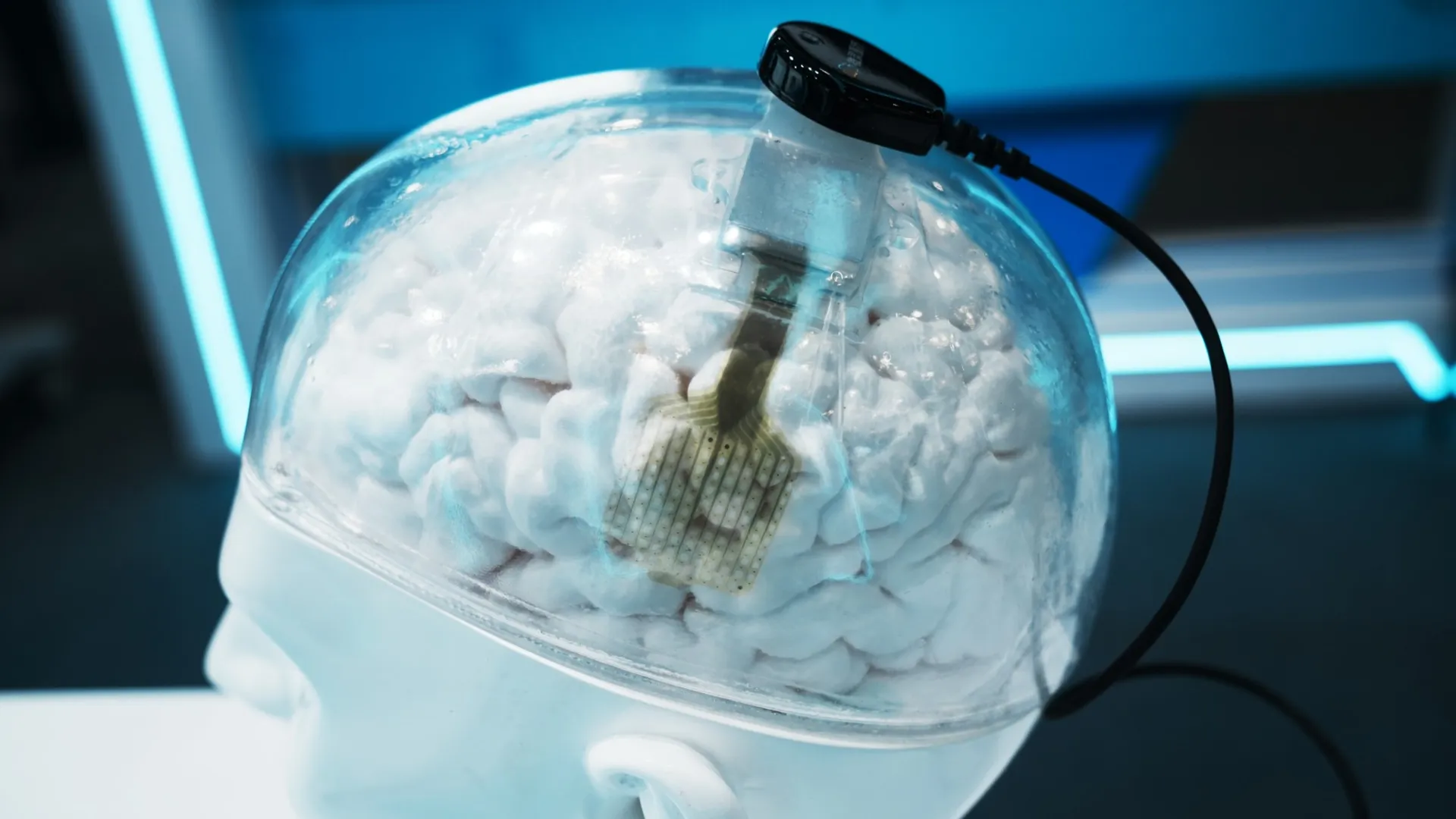
    The UN warns about ‘mind-reading’ technology

    A new United Nations report is sounding the alarm on another potential risk of our constantly evolving world: technology that could allow governments to “read minds” via brainwave interfaces. While your inner thoughts are mostly safe for now, the U.N. is worried this may not always be the case.

    ‘Significant risks’
    The U.N. believes this type of “neurotechnology” is advancing so quickly that “governments’ ability to access and manipulate people’s brains could one day pose a threat to fundamental human rights,” said The New York Times, which first published the U.N. report. Neurotechnology “raises profound human rights challenges when applied to the administration of justice,” said U.N. Secretary-General António Guterres in the report, and its “expansion beyond clinical settings into investigative, judicial and correctional contexts introduces significant risks.”

    This is not the first time the U.N. has issued warnings about the matter. The organization has been concerned about military applications of neurotechnology, especially “brain-computer interfaces, which translate brain activity into commands that can control devices such as computers or robotic prosthetic limbs,” said Politico. The U.N. fears that if a “brain-computer interface is used inappropriately by the military, it could lead to human rights abuses.”

    In 2022, UNESCO also published a report on the ethical issues of neurotechnology. Unlike “many other frontier technologies, neurotechnology can directly access, manipulate and emulate the structure of the brain, which is central to notions of human identity, freedom of thought, autonomy, privacy and well-being,” said UNESCO’s report. Still, this marks the first time the U.N. as a whole is waving such a large red flag.

    ‘Number of recommendations’
    The U.N. proposes in its report some solutions to safeguard advancing neurotechnologies. It lists a “number of recommendations, including establishing regulations consistent with international law, recognizing thoughts as ‘highly sensitive personal data’ and requiring explicit consent for the use of neurotechnology in criminal justice settings,” said the Times.

    The report also gives “states an opportunity to establish clear rules to regulate the use of neurotechnology, based on human rights,” said Jeremy Laurence, a spokesman for the U.N. Human Rights Office, to the Times. This should be accomplished before the technologies “become routine in investigations, courts and prisons.”


    Statistic of the day

    $3.3 billion: The amount lost from the damage and destruction of 81 aircraft during the U.S. war with Iran, according to a Congressional Research Service report. The war’s total cost so far is at least $45 billion, according to CNN. This figure doesn’t include damaged U.S. bases in the region.


    today’s big question

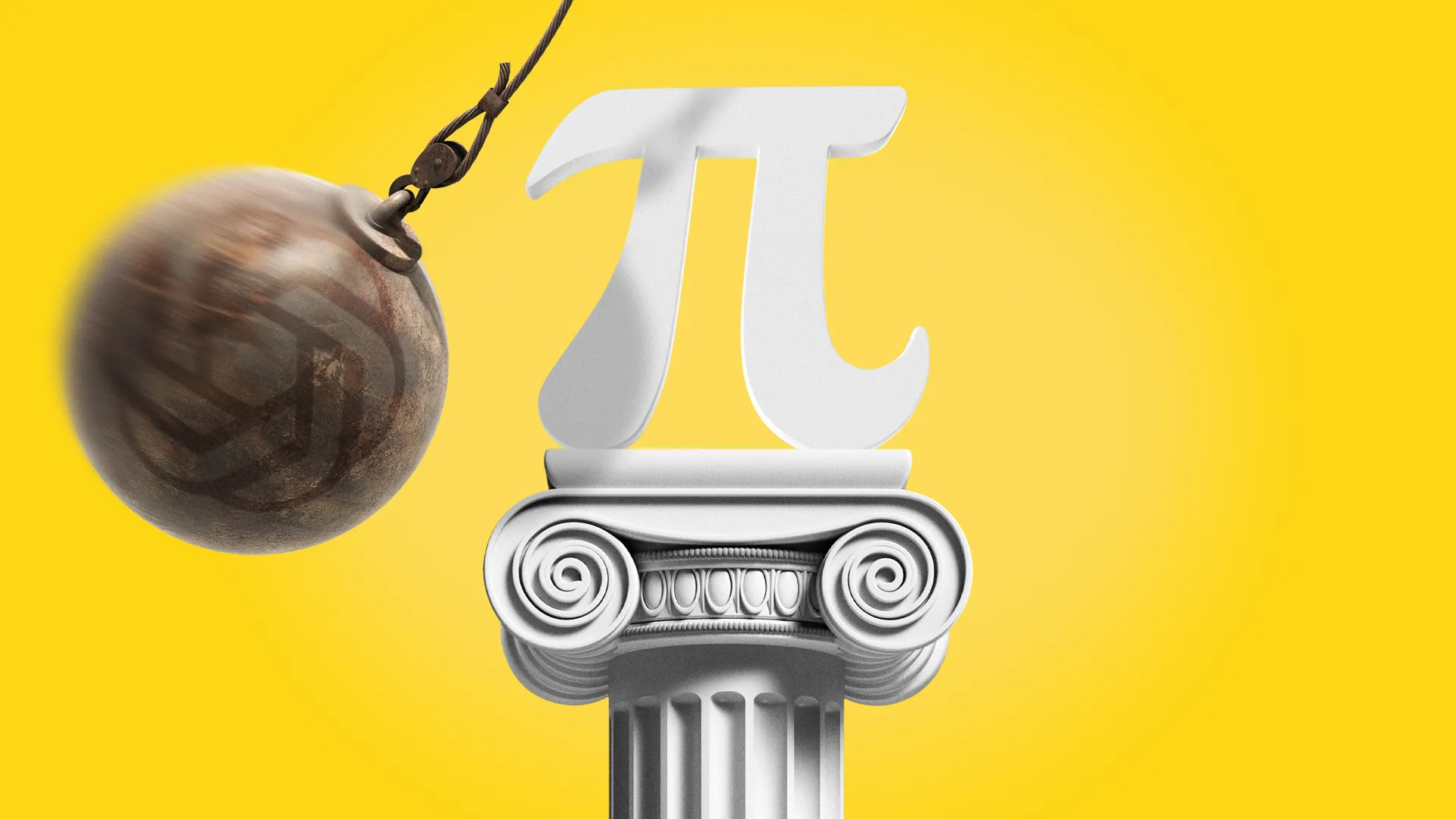
    Out of the equation: Has AI made math pointless?

    October 6 “may go down as one of the most consequential days in the history of mathematics,” said The Economist. Less than a month after claiming to have solved the long-standing Navier-Stokes problem, OpenAI released 722 papers proving or disproving math problems spanning from algebraic geometry to number theory. The announcement, dubbed mathpocalypse, has left many questioning the future of their field of study and whether there will be any human-led math in the future.

    What did the commentators say?
    “If you want some sense of what things feel like now in math, imagine a hunter-gatherer who has spent his entire life learning to survive deep in an unforgiving rainforest,” and then a “giant resort hotel springs up right next to him with a helipad and heated pools and Airbnbs,” said Scott Aaronson, the chair of computer science at the University of Texas at Austin, to Sky News. 

    This is “heartbreaking” for our community, said Jordana Cepelewicz at Quanta Magazine. Math problems are posed less because answers will be “practical and important” but rather because they “represent interesting journeys.” As we “struggle to solve a problem,” we might “come up with intriguing tools and connections,” stumble on new ideas, and “answer new questions.” AI models “just skip to the end.” 

    Some researchers have stopped positing open conjectures to ensure they are not “scraped by bots,” said Cepelewicz. Others are publishing papers prematurely to avoid getting “scooped” by AI. The fear is that new blood will no longer be attracted to modern mathematics, resulting in a “whole lost generation.”

    “Releasing over 700 files at once is not a demonstration of scholarship but a demonstration of power,” said the Association for Human Mathematics in a statement. “We urge mathematicians to discontinue their work with OpenAI and to return to a vision of science that centers human understanding.” 

    But the “floodgates are open,” said Joseph Howlett at Scientific American. This is the “biggest math breakthrough in two decades.” Yet the “consequences of this race are becoming harder and harder to predict.” 

    What next?
    Verifying OpenAI’s claimed breakthroughs will take years. Many of the papers are more than 100 pages long, and only 127 are “accompanied by a code guaranteeing logical consistency (a norm in the field),” with internal reasoning published for only 10, said The Economist. “For now, the mathematical problems AI is revealing are more existential than numerical.” 


    Good day ⚓

    … for breaking archeological records. The world’s oldest shipwreck has been located off Turkey’s coast. The Bronze Age ship is estimated to be between 4,400 and 4,700 years old. Though most of the vessel’s wooden structure has disintegrated, numerous artifacts from the vessel are still intact.


    Bad day ⛽

    … for filling the tank. The national average gas price has been above $4 per gallon for 158 days in 2026 — new record for the most days over $4 in a year, according to the consumer rewards platform GasBuddy. Global oil prices are currently at $106 per barrel — a 50% spike from before the war.


    Picture of the day

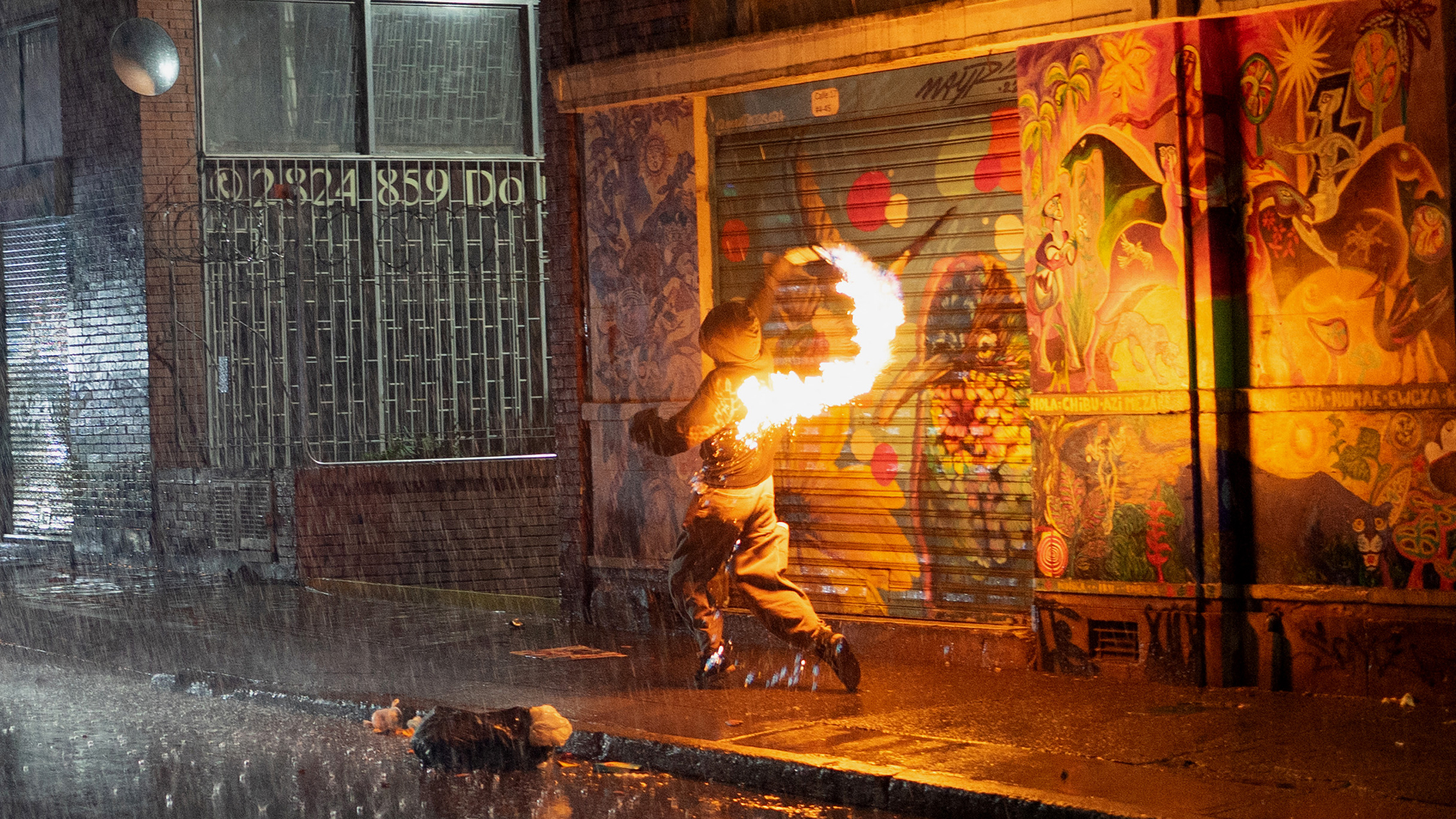
    Fiery opposition

    A demonstrator throws a Molotov cocktail during clashes with police following a protest against Colombian President Abelardo de la Espriella in Bogota. Thousands of Colombians took to the city streets across the country to oppose the policies of the new right-wing leader.
    Pierre Bioult / AFP / Getty Images


    Puzzles

    Daily sudoku

    Challenge yourself with The Week’s daily sudoku, part of our puzzles section, which also includes guess the number

    Play here


    The Week recommends

    The best books about basketball for serious fans

    The popularity of the NBA, which begins its season on Tuesday, skyrocketed starting in the early 1980s. And the heightened salience of the growing fast-paced sport in American popular culture has created its own literary canon, including these four standouts.

    ‘The Breaks of the Game’
    David Halberstam embedded himself with the 1979-1980 Portland Trail Blazers and describes the daily travails of a team struggling to return to championship form. It’s “one of the best books I have ever read about American sports,” said Christopher Lehmann-Haupt at The New York Times about the 1981 book.

    ‘Hoop Dreams: A True Story of Hardship and Triumph’
    Ben Joravsky movingly chronicles the lives and challenges of the celebrated film documentary’s protagonists, Arthur Agee and William Gates, both of whom hailed from troubled Chicago neighborhoods. “Hoop Dreams” is “at once a heart-wrenching and uplifting story of survival,” said Publisher’s Weekly about the 1995 book.

    ‘Showtime’
    The 1980s-era Los Angeles Lakers won five NBA championships, and Jeff Pearlman covered the dramatic achievements of the team on the hardwood in addition to its off-court exploits. The 2014 book functions as an “excavation of a long-lost era, as well as a pulsing, utterly relevant roadmap into our 21st-century sports celebrity culture,” said Dave Zirin at The Nation.

    ‘The Whore of Akron’
    Esquire’s Scott Raab followed LeBron James in the years before and after he left the Cleveland Cavaliers in a 2011 book that doubles as a kind of memoir of the writer’s tumultuous personal life. It’s a story of a “truly talented writer pouring his heart and soul into a book about a city he loves,” said John Krolik at Cavs: the blog.


    Poll watch

    Three in five Americans (60%) oppose using prediction markets to bet on U.S. elections, according to a Reuters/Ipsos survey of 4,506 adults. Only 13% approve of these wagers amid legislative and judicial battles over how the growing prediction markets industry should be governed.


    INSTANT OPINION

    Today’s best commentary

    ‘A deadly letter, a warning about biological warfare’
    Tom Daschle at The Wall Street Journal
    We aren’t “much better prepared” for the “next biological attack” than we were “25 years ago,” says former Senator and Senate Majority Leader Tom Daschle (D-S.D.). Technological advancements “continually lower the barriers” to “develop biological capabilities,” and we are now “running to catch up” to AI as it and “biology evolve,” bringing “new possibilities for danger and defense.” We have “learned much in 25 years.” The challenge now is to “put those lessons to work,” anticipating “tomorrow’s biological threats” and “preparing before they strike.”

    ‘GLP-1s’ most interesting side effects’
    Dominic Pino at The Washington Post
    The time an employee spends at a company “probably isn’t long enough” for its insurer to “get much of the benefits from his or her weight loss,” and GLP-1s are expensive, says Dominic Pino. Employer-sponsored insurance plans therefore “might not be inclined to cover” the weight-loss drugs, even if they will “make someone a lot healthier.” This mismatch is “hardly unique” to GLP-1s, and it’s “one of the best illustrations” of “misaligned incentives that make healthcare worse.”

    ‘Hollywood thinks the tech oligarch must be stopped’ 
    Sharon Waxman at The New York Times
    The “most influential storytellers on the planet” are depicting the “world’s most powerful industry” as full of “greedy and venal people” who don’t care who “they hurt,” says Sharon Waxman. Many Americans agree that Silicon Valley “no longer even pretends to serve society, even a capitalist one.” It’s just “hellbent on getting richer.” AI may prove a “wonderful tool to drive more creativity.” But that’s “not today.” Today, Hollywood is “looking to torch it.”


    WORD OF THE DAY

    natto

    An ancient Japanese superfood made from boiled soybeans fermented with the bacterium Bacillus subtilis var. natto. Packed with protein, fiber and vitamin K, natto is now appearing in stores worldwide alongside kefir, kimchi and kombucha. Fermented foods like natto can reduce death from stroke or heart attack by 10%, according to a study published in the British Medical Journal. 


    Evening Review was written and edited by Will Barker, Theara Coleman, Nadia Croes, David Faris, Scott Hocker, Anya Jaremko-Greenwold, Justin Klawans and Joel Mathis, with illustrations by Stephen Kelly.

    Image credits, from top: Illustration by Stephen P. Kelly / Getty Images; CFOTO / Future Publishing / Getty Images; Illustration by Stephen P. Kelly / Shutterstock / Getty Images; Hachette / Penguin Random House / Bedrock Press / HarperCollins
     

    Recent editions

    • Morning Report

      Musk blames US for Ukraine Starlink slowdown

    • Evening Review

      A ‘dangerous moment’ for Kyiv

    • Morning Report

      Pope reveals cancer diagnosis

    VIEW ALL
    TheWeek
    • About Us
    • Contact Future's experts
    • Terms and Conditions
    • Privacy Policy
    • Cookie Policy
    • Advertise With Us
    • FAQ
    Add as a preferred source on Google Add as a preferred source on Google

    The Week UK is part of Future plc, an international media group and leading digital publisher. Visit our corporate site.

    © Future Publishing Limited Quay House, The Ambury, Bath BA1 1UA. All rights reserved. England and Wales company registration number 2008885.