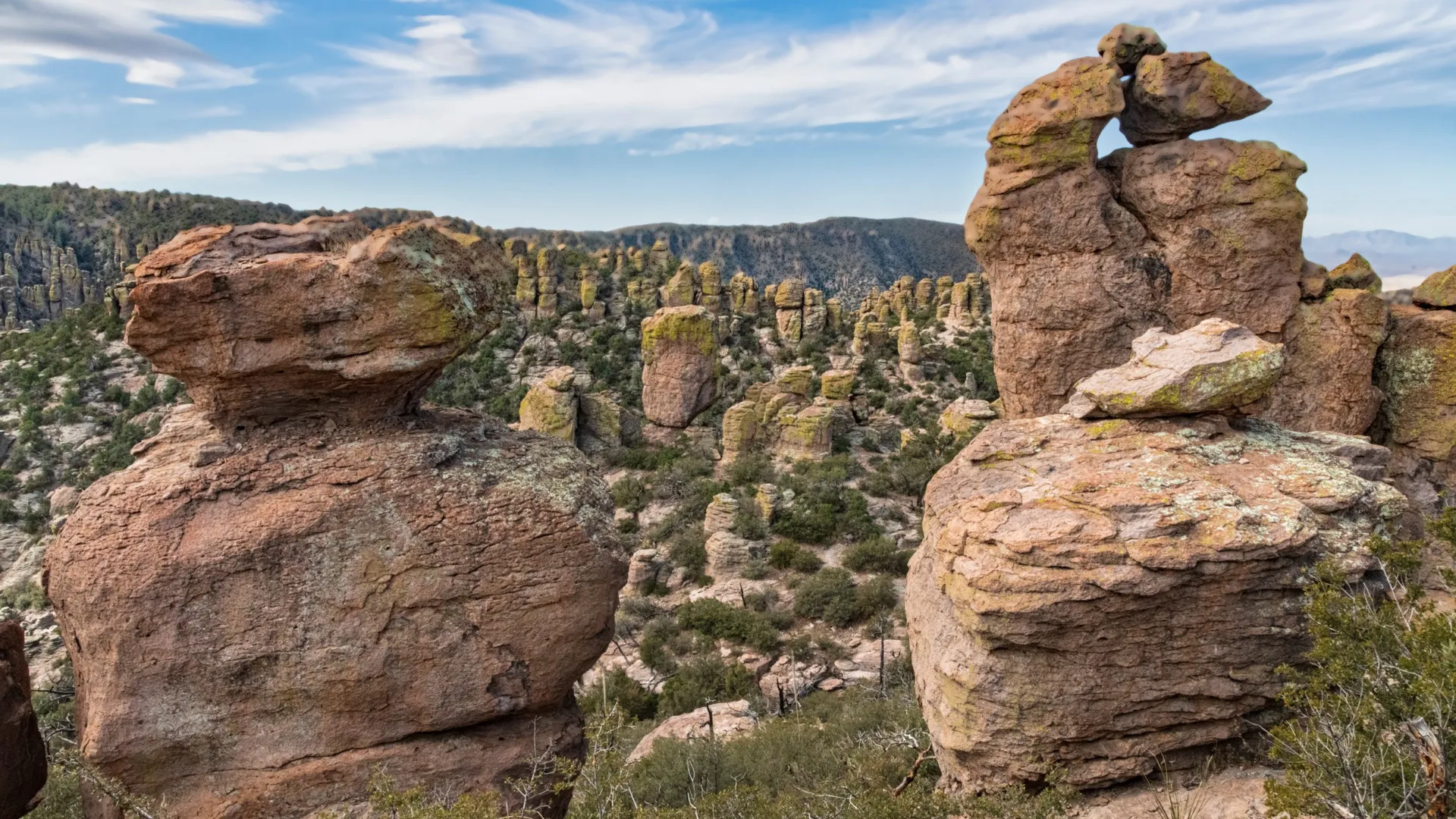
Sitting in the southeastern corner of Arizona, Chiricahua has for centuries been a central part of Apache life and last month was designated the 64th U.S. national park. Here’s how to best experience it.
Extraordinary rock formations
President Calvin Coolidge named Chiricahua, pronounced “cheery-COW-uh,” a national monument in 1924, courtesy of its geological marvels. The area’s rock spires, akin to Bryce Canyon’s hoodoos, were created from a volcano’s “spectacular series of eruptions,” said NASA.
To get a sense of the park’s breadth, drive to Massai Point, where a “manageable half-mile nature trail offers sweeping views from different vantage points,” said Kris Ann Valdez at Afar. You can also explore on foot across the “park’s showstopper,” the Heart of Rocks loop, with legendary formations like Duck on a Rock, said Timberline Adventures. The best months for a temperate visit are March to May and September to November.
Birding and bedding
“One of the legendary spots in all of American birding,” Cave Creek in Chiricahua is where to spot the Elegant Trogon, a species that “links southeastern Arizona with the tropics,” said Arizona Birding Trail. The park also hosts 200 to 500 resident and migratory species, along with the coatimundi, a sleek cousin of the raccoon.
Willcox, the closest town with “basic services,” is an hour away by car, said National Park Obsessed. You can also sleep in a tent at Bonita Canyon Campground, located at the park’s western limit. |