Sign up to get Today’s Best Articles in your inbox
Join 350,000+ subscribers and keep yourself informed with a selection of
The Week’s most interesting, enlightening and entertaining stories - plus daily puzzles.
You are now subscribed
Your newsletter sign-up was successful
Want to add more newsletters?
An account already exists for this email address, please log in.
All roads to Ukraine-Russia peace run through the Donbas
Volodymyr Zelenskyy is floating a major concession on one of the thorniest issues in the complex negotiations between Ukraine and Russia
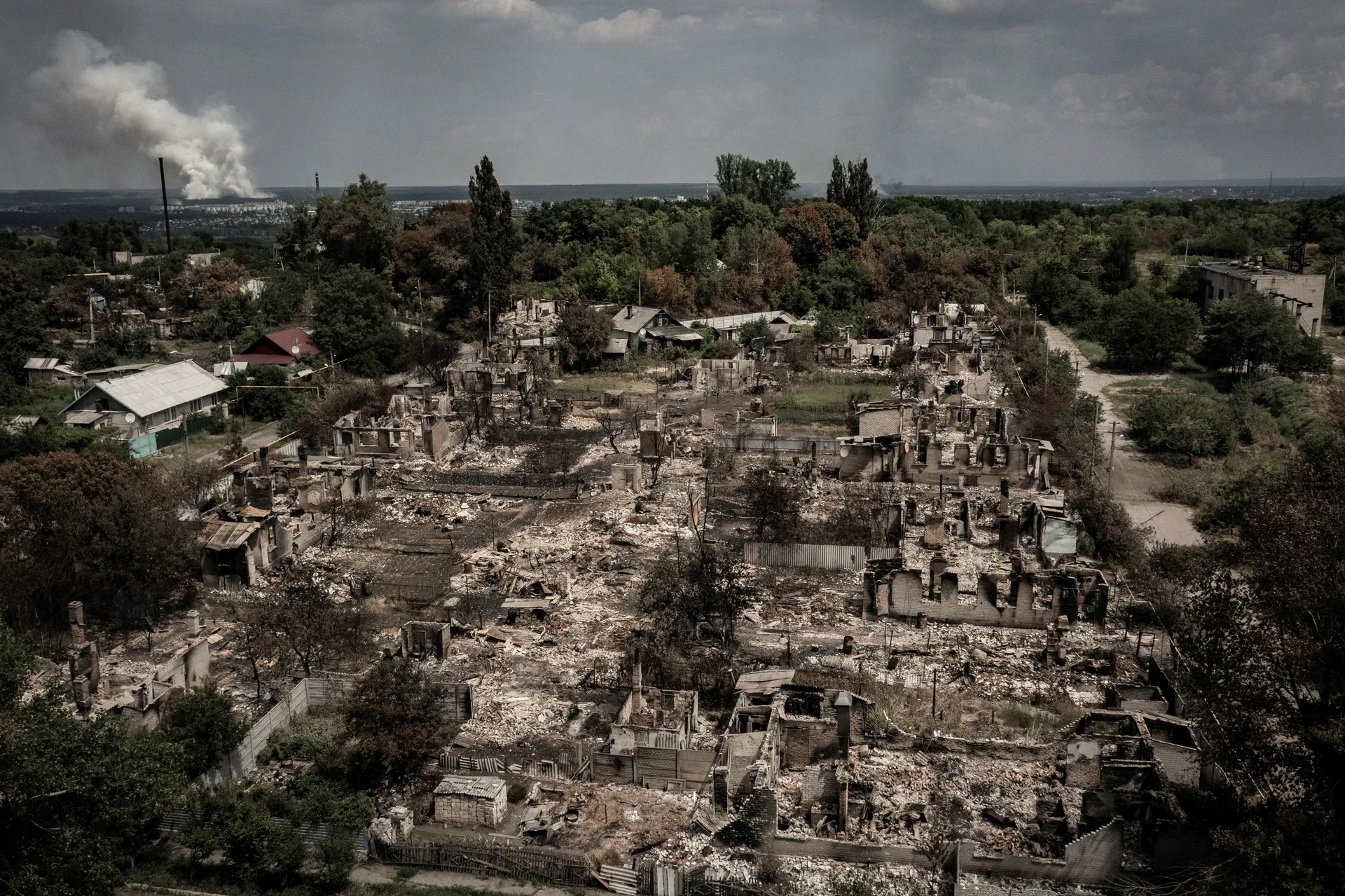
Ukrainian President Volodymyr Zelenskyy raised both eyebrows and hopes across Eastern Europe this week after offering a surprising concession in the fraught negotiations to end Russia’s ongoing invasion. He told reporters on Tuesday that he would be willing to pull troops from parts of the contested Donbas region that Ukraine shares with Russia to establish an internationally monitored demilitarized zone, so long as Moscow does the same with the territory it controls in the area. Donbas, Zelenskyy said, is the “most difficult point” in negotiations to end the war between both nations.
‘Thorny territorial disputes’
Zelenskyy’s openness to a Donbas demilitarized zone comes as part of a “revised 20-point peace plan” crafted by American and Ukrainian negotiators that “covers a broad range of issues,” The New York Times said. The blueprint outlines everything from “potential territorial arrangements” to “security guarantees” and plans for rebuilding areas damaged in the war. Zelenskyy’s Donbas comments are the “closest” the Ukrainian leader has come to addressing the “thorny territorial disputes” that have “repeatedly derailed peace talks” in the region. Russia, which occupies the majority of the Donbas region, has “insisted that Ukraine relinquish” what remaining territory it controls in the area in an “ultimatum that Ukraine has rejected,” said The Associated Press.
Donbas has emerged as one of the “chief sticking points” in the current peace plan, with Kyiv afraid that “surrendering fortified positions” across the region might help Russia to “stage further attacks,” The Wall Street Journal said. The United States has pushed for a “compromise” over the area by encouraging the development of a “free economic zone” in the demilitarized territory.
The Week
Escape your echo chamber. Get the facts behind the news, plus analysis from multiple perspectives.
Join more than 350,000 subscribers and keep yourself informed with a selection of The Week’s most interesting, enlightening and entertaining stories - plus daily puzzles.
Join more than 350,000 subscribers and keep yourself informed with a selection of The Week’s most interesting, enlightening and entertaining stories - plus daily puzzles.
In his remarks Tuesday, Zelenskyy “stressed that Ukraine is against the withdrawal,” Politico said. But “there are two options,” said Zelenskyy: “Either the war continues, or something will have to be decided regarding all potential economic zones.” The significance of his concession notwithstanding, it remains “difficult to imagine Russia accepting such terms,” considering how controlling the contested region has been “one of its main war objectives,” said Le Monde.
Referendum and nuclear problem
Beyond tactical fears of renewed Russian aggression in the region, Ukraine must also contend with “humanitarian concerns related to the relocation of residents” and the risk of a “serious blow to national morale” should it give up significant territory, the Times said. Accordingly, any demilitarized zone will need to be “approved by Ukrainians through a referendum.” The proposed peace plan also calls for a “joint U.S.-Ukrainian-Russian management” of Ukraine’s Zaporizhzhia nuclear power plant, “Europe’s largest,” currently under Russian control, said CBS News. Zelenskyy has stressed, however, that Ukraine “doesn’t want any Russian oversight of the facility.”
It is “now up to the Russian Federation to respond to this proposed agreement,” said Le Monde. To that end, Zelenskyy predicted, Moscow will be “ready to accept a plan in any case.”
“They can’t say to President Trump: ‘Listen, we’re against a peaceful settlement,’” Zelenskyy explained at his press briefing. “If they try to block everything, President Trump will then have to arm us heavily, while imposing every possible sanction on them.” In response to Ukraine’s apparent territorial flexibility, Russian President Vladimir Putin told a gathering of top Russian businessmen that a “partial exchange of territories from the Russian side is not ruled out,” said Russia's Kommersant newspaper, per Reuters. “In essence,” said the news service, “Putin wants the whole of Donbas” but is open to other territorial swaps “outside that area.”
Sign up to get Today’s Best Articles in your inbox
A free daily email with the day’s biggest news and analysis – and the best features from TheWeek.com
Rafi Schwartz has worked as a politics writer at The Week since 2022, where he covers elections, Congress and the White House. He was previously a contributing writer with Mic focusing largely on politics, a senior writer with Splinter News, a staff writer for Fusion's news lab, and the managing editor of Heeb Magazine, a Jewish life and culture publication. Rafi's work has appeared in Rolling Stone, GOOD and The Forward, among others.