Sign up to get Today’s Best Articles in your inbox
Join 350,000+ subscribers and keep yourself informed with a selection of
The Week’s most interesting, enlightening and entertaining stories - plus daily puzzles.
You are now subscribed
Your newsletter sign-up was successful
Want to add more newsletters?
An account already exists for this email address, please log in.
Shots fired in the US-EU war over digital censorship
The Trump administration risks opening a dangerous new front in the battle of real-world consequences for online action
European tech regulation lands in the Trump administration’s international crosshairs, earning condemnation from leaders like French President Emmanuel Macron
The Trump administration’s bellicosity toward Europe has taken a sharp turn, with the sudden State Department announcement that multiple European Union citizens have been barred from entering the country for allegedly working to censor American content online. The now-banned “leading figures of the global censorship-industrial complex” are part of “organized efforts to coerce American platforms to punish American viewpoints they oppose,” said Secretary of State Marco Rubio on X. In response, the EU has warned it will retaliate against any “unjustified measures.” And all the while, digital denizens on both sides of the Atlantic are left to wonder if, and how, the international internet can be regulated at all.
‘Extraterritorial overreach’
The barred Europeans, all of whom have been involved in organizations promoting digital rights and countering disinformation, are “part of a Trump administration campaign against foreign influence over online speech” that focuses on “immigration law rather than platform regulations or sanctions,” said The Associated Press. The move is the “latest in a series of warning shots volleyed by the U.S. at allies” for what the administration has deemed “unfair efforts to regulate American social media and tech giants,” said Politico.
European tech regulation, including the EU’s Digital Services Act and the U.K.’s Online Safety Act, has hit MAGA figures hard in two respects, said The Guardian: the “economic interests of Silicon Valley,” as well as their “view of free speech.” Already this month, X owner and onetime Trump administration official Elon Musk faces a $140 million fine for breaching the DSA in one of the “prime examples” of what Republicans in the U.S. view as an “anti-free speech culture on the other side of the Atlantic.” Under President Donald Trump, the “America First foreign policy rejects violations of American sovereignty,” said Rubio in a State Department press release. “Extraterritorial overreach by foreign censors targeting American speech is no exception.”
The Week
Escape your echo chamber. Get the facts behind the news, plus analysis from multiple perspectives.
Join more than 350,000 subscribers and keep yourself informed with a selection of The Week’s most interesting, enlightening and entertaining stories - plus daily puzzles.
Join more than 350,000 subscribers and keep yourself informed with a selection of The Week’s most interesting, enlightening and entertaining stories - plus daily puzzles.
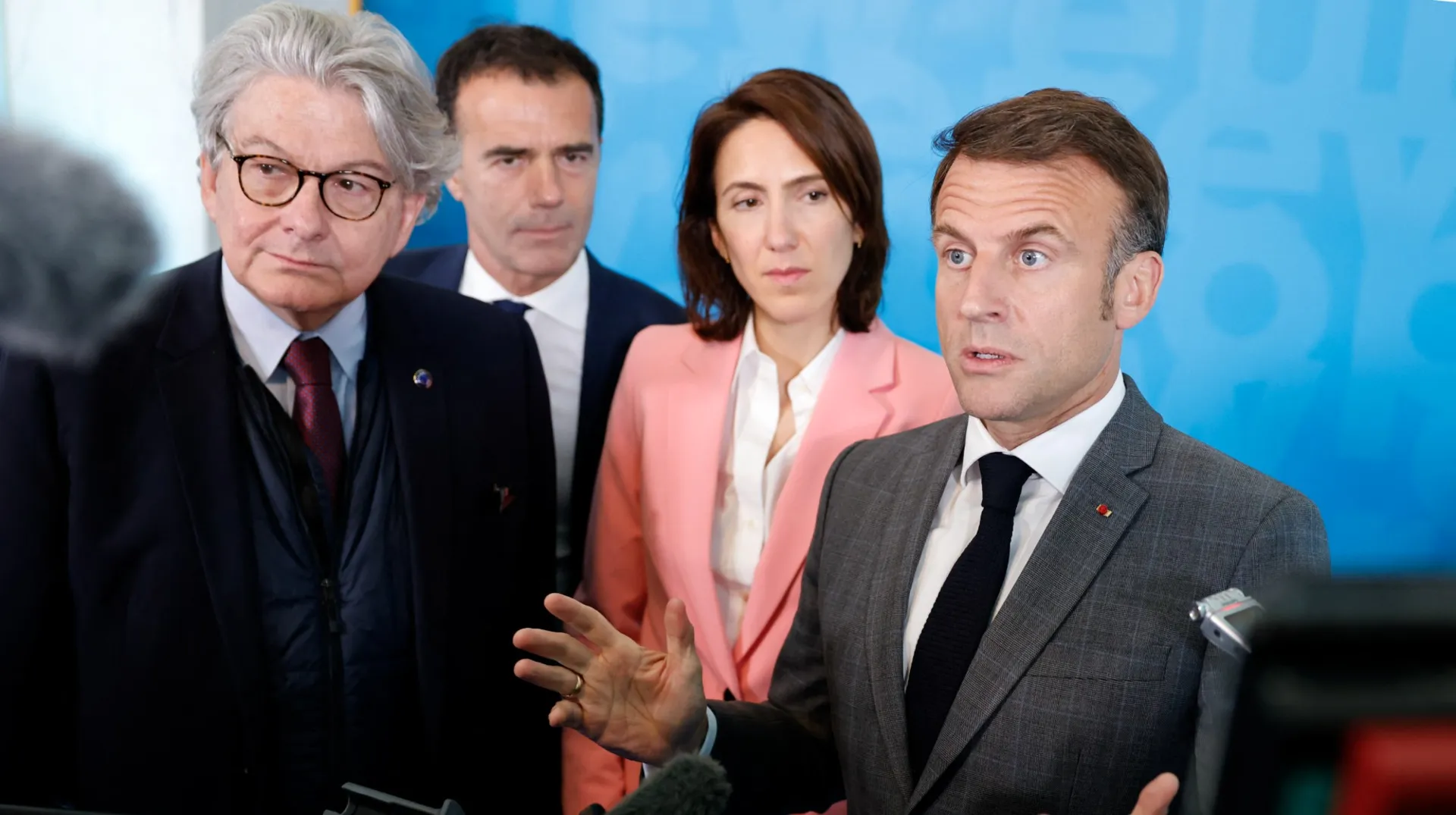
The European Union “strongly condemns” the travel bans, which risk running counter to the “fundamental right” to freedom of expression — itself a “shared core value with the United States across the democratic world,” the group said in a statement. But “if needed,” the EU is prepared to “respond swiftly and decisively to defend our regulatory autonomy against unjustified measures.” The travel ban, which includes former top EU technology regulator Thierry Breton, amounts to “intimidation and coercion” aimed at “undermining European digital sovereignty,” said French President Emmanuel Macron on X.
The administration’s ban “deepens a long-running dispute between the U.S. and EU” over the “major question” of “how do you regulate the internet?” said NPR host Ailsa Chang on “All Things Considered.” By banning “prominent individuals, notably Thierry Breton” from entering the United States, he is “now being treated the same way as an ISIS terrorist or a narco-trafficker would be,” said NPR’s Eleanor Beardsley in the same broadcast.
“Is McCarthy’s witch hunt back?” Breton asked on X, reminding followers that “90% of the European Parliament” and “all 27 Member States unanimously voted the DSA” into law, frustrating the Trump administration. “To our American friends: Censorship isn’t where you think it is."
Sign up to get Today’s Best Articles in your inbox
A free daily email with the day’s biggest news and analysis – and the best features from TheWeek.com
Rafi Schwartz has worked as a politics writer at The Week since 2022, where he covers elections, Congress and the White House. He was previously a contributing writer with Mic focusing largely on politics, a senior writer with Splinter News, a staff writer for Fusion's news lab, and the managing editor of Heeb Magazine, a Jewish life and culture publication. Rafi's work has appeared in Rolling Stone, GOOD and The Forward, among others.