Sign up to get Today’s Best Articles in your inbox
Join 350,000+ subscribers and keep yourself informed with a selection of
The Week’s most interesting, enlightening and entertaining stories - plus daily puzzles.
You are now subscribed
Your newsletter sign-up was successful
Want to add more newsletters?
An account already exists for this email address, please log in.
Could planting a trillion trees help counteract climate change?
Donald Trump has backed the environmental initiative - but is it enough?
Join more than 350,000 subscribers and keep yourself informed with a selection of The Week’s most interesting, enlightening and entertaining stories - plus daily puzzles.
Join more than 350,000 subscribers and keep yourself informed with a selection of The Week’s most interesting, enlightening and entertaining stories - plus daily puzzles.
But he backed the tree-planting initiative, saying: “What I want is the cleanest water and the cleanest air.”
Where did the idea come from?
The Trillion Trees initiative was launched in 2017 by leading conservation groups WWF, the Wildlife Conservation Society and BirdLife International.
They say that the planet is losing 10bn trees a year and the headline-grabbing target is needed to redress this. They add that “we must understand that time is not on our side and if we want to heal the planet, we must make every day count.”
Sign up to get Today’s Best Articles in your inbox
A free daily email with the day’s biggest news and analysis – and the best features from TheWeek.com
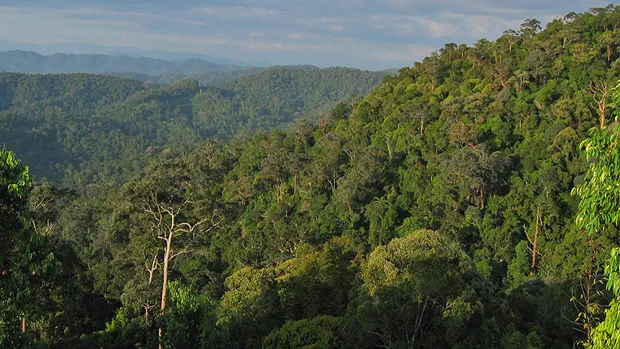
Forests soak up more than 45% of carbon on land, helping to offset the effects of climate change. They are home to two thirds of all land-based plants and animals, and clean our air and water.
Is it enough?
Writing for The Guardian, Fiona Harvey insists that “to make a real impact… tree fans must take on some of the biggest vested interests on the planet”.
She adds: “Fossil fuel businesses are rightly regarded as the main culprits in rising global emissions, but the food we eat, clothes we wear and stuff we use takes a heavy toll”.
Speaking to Discover last year, forest ecologist Simon Lewis said: “Yes, plantations have fast carbon uptake while the trees are growing. But as soon as those trees are used, much of that carbon gets back into the atmosphere.”
Carla Staver, an ecologist at Yale University, also said the initiative has its limits, telling Wired: “The reality is, there are no easy answers. The solution to these problems is going to involve tough choices, changes in lifestyle.
“We can’t propose that… planting a bunch of trees is going to get us to a solution without making systemic changes to the way we emit carbon as well.”
Is it a feasible ambition?
Critics are often quick to dismiss mass tree-planting plans. When the Labour Party promised at last year's general election to plant two billion trees by 2040, Richard Schondelmeier, a forestry expert, told The Sun that the pledge would be a “logistical nightmare or even impossibility”.
What do campaigners think?
Teenage enviromental activist Greta Thunberg said: “Planting trees is good, of course, but it’s nowhere near enough, and it cannot replace real mitigation and re-wilding nature. We don’t need to lower emissions. Emissions need to stop.”
Jennifer Morgan, Greenpeace’s executive director, struck a similar note, saying: “The 1tn trees initiative didn’t make up for the lack of a wider attack on the climate emergency.”