What is emergency contraception?
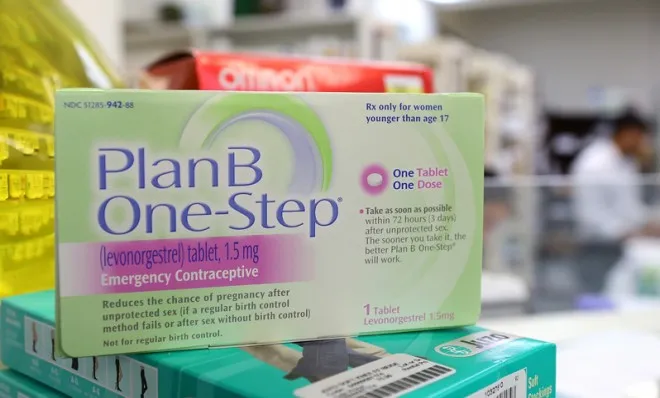
It's a means for preventing pregnancy after an episode of unprotected sex or sexual assault. Throughout the ages, women have resorted to various ineffective — and often desperate — methods to avoid pregnancy, from postcoital douching with Coca-Cola to drinking hot mercury. The search for a safer, more effective "morning-after" pill can be traced back to the 1920s, when veterinarians realized that a dose of estrogen could prevent pregnancy in female dogs and horses who had mated against their owners' wishes. Doctors adopted the use of estrogen to prevent pregnancy in a 13-year-old rape victim in the 1960s, and by the 1970s, oral contraceptive pills that combined estrogen with certain progestin hormones were used "off-label" as morning-after pills. In 1997, the Food and Drug Administration approved the first morning-after pill created for that purpose. In subsequent years, studies suggested that large doses of estrogen could raise the risk of cancer, so progestin-only forms of the pill were then developed — including Plan B, which was approved by the FDA in 1999.
How does Plan B work?
The Week
Escape your echo chamber. Get the facts behind the news, plus analysis from multiple perspectives.
SUBSCRIBE & SAVE
Sign up for The Week's Free Newsletters
Join more than 350,000 subscribers and keep yourself informed with a selection of The Week’s most interesting, enlightening and entertaining stories - plus daily puzzles.
Join more than 350,000 subscribers and keep yourself informed with a selection of The Week’s most interesting, enlightening and entertaining stories - plus daily puzzles.
Latest Videos FromThe Week US
Plan B is actually pretty similar to regular birth control pills: Both prevent pregnancy through the progestin hormone levonorgestrel, with Plan B using a higher dose. The drug works by blocking or delaying the release of an egg from the ovary, so that when sperm enter the fallopian tubes after intercourse, there's no egg there to be fertilized. And while it may be known as the morning-after pill, as long as a woman takes it within 72 hours of unprotected sex, it is 89 percent effective at preventing pregnancy. After those three days it becomes less effective, but can work for up to five days after sex. Plan B has been deemed unusually safe, and there have never been any serious complications reported.
Does it induce abortions?
This is the subject of hot debate. The pro-life movement insists that Plan B is "an abortifacient," and cites a statement on every box of Plan B that the pills may in some cases prevent fertilized eggs from being implanted in a woman's uterus. A recent scientific study of Plan B, however, has found that earlier guesses about how the medication works were wrong, and that the hormones in the pill prevent pregnancy only by blocking ovulation. In fact, research has found, if a woman is already pregnant, Plan B doesn't work. "These products are not abortifacients," says Susan Wood, a professor of health policy at George Washington University. "Their only connection to abortion is that they can prevent the need for one."
So can anyone buy Plan B?
Under a new FDA policy, anyone 15 and over can buy it without a prescription; younger girls still need a doctor's permission. A federal judge is demanding that the Obama administration drop the age requirement altogether, citing the recommendation of medical experts that Plan B should be available over the counter to "all females of child-bearing potential." This battle has been going on since 2003, when the drug's manufacturer filed an application to make Plan B available over the counter, without age restrictions. The Bush administration resisted, eventually allowing Plan B to be sold without a prescription to women 18 and above. President Obama found himself embroiled in that same controversy in 2011, after the FDA again recommended removing age restrictions. The administration rejected that recommendation, but, under pressure from a federal judge, said it would lower the age limit to 15. To the frustration of women's health advocates, Obama said he didn't want younger teens to find the morning-after pill at the local CVS, next to "bubble gum and batteries."
Why are social conservatives still upset?
They're concerned that making the drug widely available to teens of any age will undermine their authority over their children, and remove the negative consequences of sex. "It's adding to the green light that we are giving to kids for risky behavior," says child psychologist Dr. Miriam Grossman. Critics also worry that instead of being a "Plan B" for emergencies, the morning-after pill will become the only plan some young people have for contraception, leading them to shun condoms and become more vulnerable to sexually transmitted diseases. In response, women's health advocates argue that research shows that at least 30 percent of 15- and 16-year-olds are already having sex, and will continue to do so whether or not they have access to Plan B. For now, neither side is happy with the Obama administration, with liberals accusing him of betraying the cause of women's health for political reasons, and conservatives blaming him for further eroding traditional sexual morality. The morning-after pill, three scientists recently wrote in The New England Journal of Medicine, has proven to be "more dangerous to politicians than to adolescent girls."
The pill that does cause abortions
There is an abortifacient being used regularly across America, but it's not Plan B. RU-486, a drug that's used to end pregnancies of less than eight weeks, has been used by more than 1 million American women since the FDA approved it in 2000. It has revolutionized abortions, allowing women to end pregnancies in the privacy of their own homes. Exact statistics are not available, but it's estimated that about a quarter of all abortions in the U.S. are now performed with RU-486. "It was something I could do at home and be with my husband," said Judi Gilbert, a nurse who used the pill in 2005. "We were able to take care of it this way alone." Pro-life activists are alarmed by RU-486's growing popularity, saying the drug is unsafe and makes abortion too difficult to regulate, and Republican lawmakers in several states are trying to restrict its use. Industry experts, however, predict RU-486 may eventually become the main abortion method in this country, as it already is in some European countries, where 60 percent of abortions are performed with the drug.