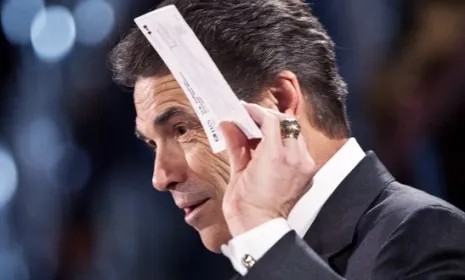
Texas Gov. Rick Perry, trying to revive his flagging GOP presidential campaign, has unveiled a proposal for a 20 percent flat tax that he says would help boost the economy and create jobs. (Americans would also have the option of sticking with their current tax rates, if they prefer.) Many independent economists say it would likely only be wealthier Americans who opted out of the current system — and getting a major tax break as a result. Ted Gayer, co-director of the Economic Studies program and a Brookings Institution senior fellow, says Perry's proposal would leave the government with a "substantial" drop in revenues, driving up deficits. Would Perry's proposal indeed lead America toward economic ruin?
Perry's plan would be a budget disaster: Perry should be applauded for trying to simplify the messy tax system, says Peter Schiff at the Financial Post. But his claim that a flat tax would lead to balanced budgets is "pure fantasy." He wants to let anyone already paying less than 20 percent stay in their low tax brackets, while handing the wealthy "a huge tax cut." All that will do is "blow another enormous hole in an already dangerously unbalanced budget."
The Week
Escape your echo chamber. Get the facts behind the news, plus analysis from multiple perspectives.

Sign up for The Week's Free Newsletters
Join more than 350,000 subscribers and keep yourself informed with a selection of The Week’s most interesting, enlightening and entertaining stories - plus daily puzzles.
Join more than 350,000 subscribers and keep yourself informed with a selection of The Week’s most interesting, enlightening and entertaining stories - plus daily puzzles.