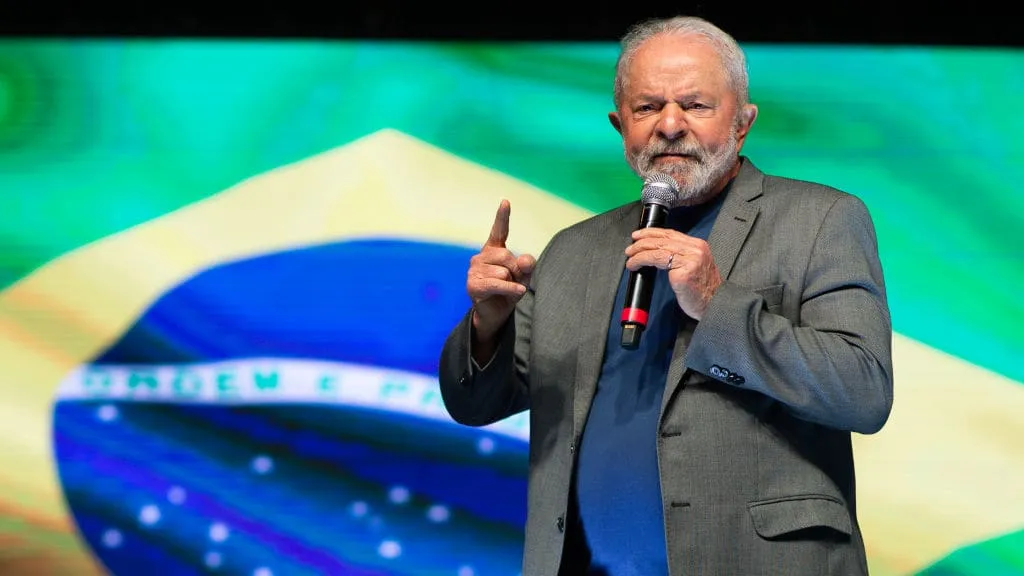
Brazil's next president is Luiz Inácio Lula da Silva of the leftist Worker's Party, the country's electoral authority announced Sunday.
Da Silva, known as Lula, defeated right-wing President Jair Bolsonaro, who is the first sitting Brazilian president to lose a re-election bid since 1985. With more than 99 percent of the votes counted, Lula is beating Bolsonaro 50.9 percent to 49.1 percent.
Lula, 77, served two terms as Brazil's president from 2003 to 2010. After leaving office, he was convicted of corruption and money laundering and served 19 months in prison. His convictions were later overturned by Brazil's Supreme Court, which ruled that the judge in the case colluded with prosecutors.
The Week
Escape your echo chamber. Get the facts behind the news, plus analysis from multiple perspectives.
SUBSCRIBE & SAVE
Sign up for The Week's Free Newsletters
Join more than 350,000 subscribers and keep yourself informed with a selection of The Week’s most interesting, enlightening and entertaining stories - plus daily puzzles.
Join more than 350,000 subscribers and keep yourself informed with a selection of The Week’s most interesting, enlightening and entertaining stories - plus daily puzzles.
Latest Videos FromThe Week US
Lula ran on a pro-democracy, social justice, and environment platform. During Bolsonaro's presidency, Brazil saw the worst deforestation in the Amazon rainforest in 15 years, and he was criticized for his lax handling of the COVID-19 pandemic and spreading of conspiracy theories. His supporters applaud him for his defense of conservative ideals and brash way of speaking. Going into this election, Bolsonaro questioned the security of Brazil's electronic voting machines, and recent polls show 75 percent of his supporters trust the voting system only a little or not at all, The New York Times reports.
The close results show that Lula will be leading a sharply divided country, political analyst Thomas Traumann told The Associated Press. "The huge challenge that Lula has will be to pacify the country," he said. "People are not only polarized on political matters, but also have different values, identity, and opinions. What's more, they don't care what the other side's values, identities, and opinions are."