Sign up to get Today’s Best Articles in your inbox
Join 350,000+ subscribers and keep yourself informed with a selection of
The Week’s most interesting, enlightening and entertaining stories - plus daily puzzles.
You are now subscribed
Your newsletter sign-up was successful
Want to add more newsletters?
An account already exists for this email address, please log in.
Is North Korea’s economic miracle sustainable?
Kim Jong Un says ‘everything has fundamentally changed’, but analysts caution that growth is just a war-fuelled ‘Russian sugar high’
North Korea has been hailed as “the world’s most surprising economic success story” by the leading US financial daily, The Wall Street Journal.
Despite being tightly controlled, technologically backward, and subject to crippling Western trade embargoes, the country has recorded year-on-year GDP growth of more than 3%, of which many advanced economies could only dream. Their unlikely success story has been “aided by arms sales and troop deployments to Russia” to fuel the Ukraine war, support from China, and “the ability to flout international sanctions to import more energy, components and materials”.
What has changed?
Five years after making a rare admission that the nation’s economic policies were falling short, in February Kim Jong Un addressed the Workers’ Party Congress to celebrate a turnaround, declaring “everything has fundamentally changed”. But while the supreme leader may have triumphantly taken credit for the boom, in reality “he has Russia and China to thank”, said Forbes.
The Week
Escape your echo chamber. Get the facts behind the news, plus analysis from multiple perspectives.
Join more than 350,000 subscribers and keep yourself informed with a selection of The Week’s most interesting, enlightening and entertaining stories - plus daily puzzles.
Join more than 350,000 subscribers and keep yourself informed with a selection of The Week’s most interesting, enlightening and entertaining stories - plus daily puzzles.
The effect of this influx on the so-called hermit kingdom has been sudden and startling. The regime has used some of the windfall to modernise Pyongyang with new brightly lit shopping districts filled with luxury and high-tech goods, and high-rise apartments blocks. Cars, once a rarity, are increasingly common and frequently electric, and can even be hailed with ride-sharing apps.
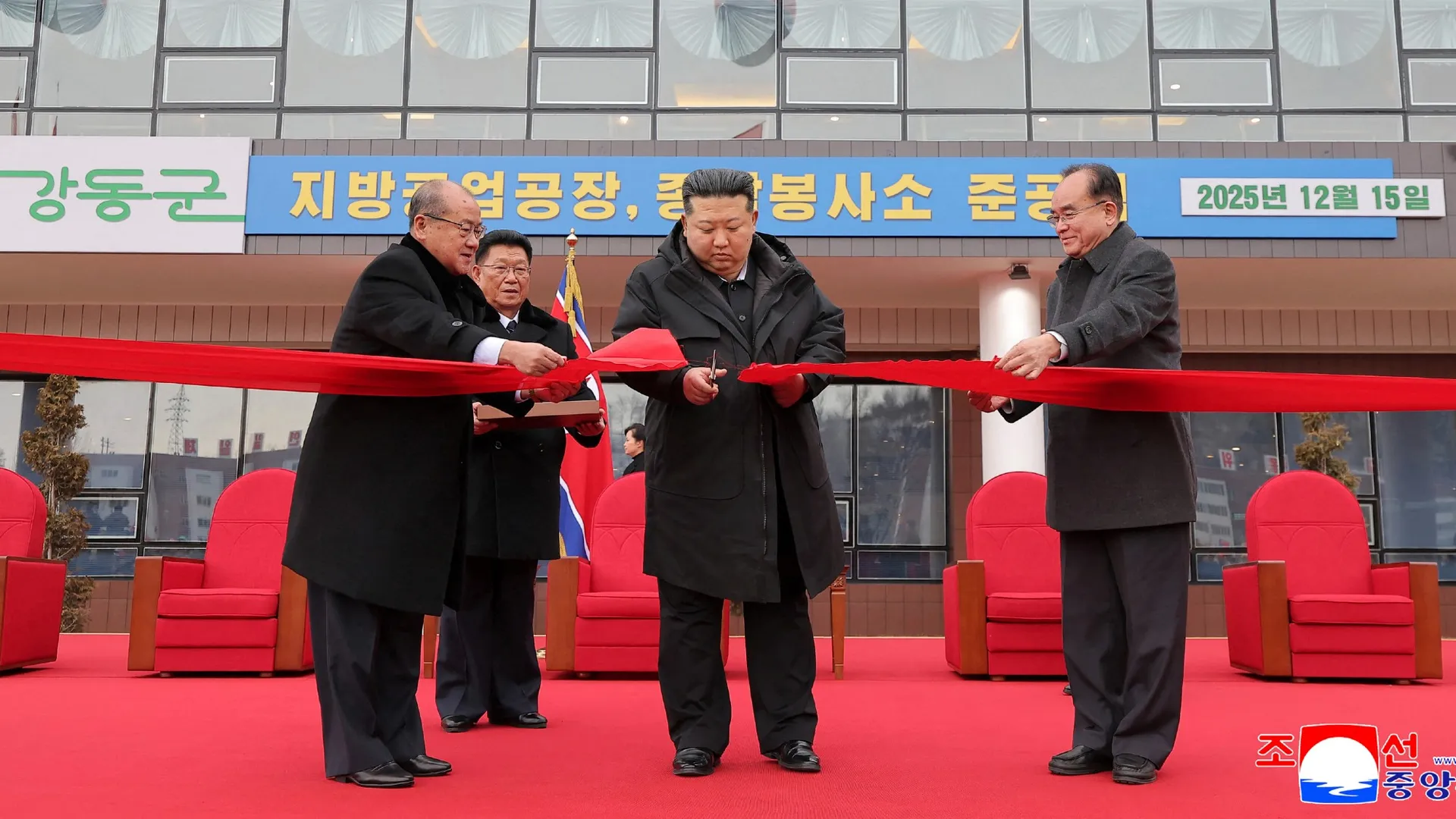
Outside the capital, the regime’s ambitious “20x10” regional development initiative aims to build new factories, housing and public infrastructure in 20 counties each year over a 10-year period.
All of this is an “incredible accomplishment for a country that is this poor”, regional expert Stephan Haggard told the WSJ.
Sign up to get Today’s Best Articles in your inbox
A free daily email with the day’s biggest news and analysis – and the best features from TheWeek.com
Can it last?
Due to a lack of reliable data and the regime’s complete control of the media, accurately assessing what is happening on the ground in North Korea is notoriously difficult, said WioNews. But “a closer look beneath the headlines reveals a more complicated picture than either Western critics” or the Pyongyang regime acknowledge.
While the growth over the last three years appears genuine, said the Financial Times, North Korea’s “economic resurgence fell short of a genuine transformation” in that it “was mostly being driven by participation in Russia’s war in Ukraine”.
Peter Ward of the Sejong Institute in Seoul said North Korea was in the throes of a “Russian sugar high” fuelling a slew of “shovel-ready, exciting-looking projects that will catch the eye of the leader, but aren’t necessarily sustainable”.
Ultimately, said Asia Business Daily, the racks of luxury goods and the Pyongyang construction boom are “merely an optical illusion”, in that they are enjoyed “almost exclusively by the leadership and a privileged class in Pyongyang”.
North Korea remains incredibly poor. Out of its 27 million citizens, 17 million are still believed to live in extreme poverty, and the UN estimates that more than 40% of the population are undernourished. Analysts are sceptical that Kim can turn the short-term gains brought about by the war in Ukraine into sustainable long-term growth. “Knowing the North Koreans, they probably haven’t fixed the roof while the sun is shining,” said Ward.