South African officials report 'much lower rate' of hospital admissions during Omicron wave
A free daily email with the biggest news stories of the day – and the best features from TheWeek.com
You are now subscribed
Your newsletter sign-up was successful
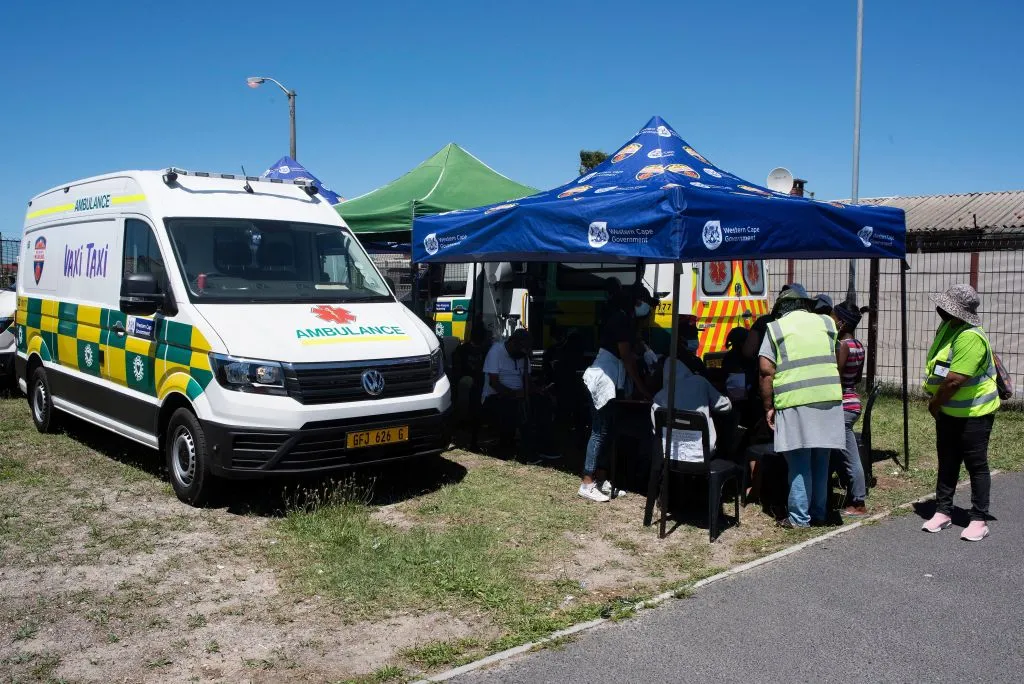
In a rare bit of good news to come out of the current Omicron variant-driven COVID-19 wave, South Africa, where the new, highly-transmissible strain was first detected, reported on Friday "a much lower rate of hospital admissions" as well as "signs that the wave of infections might be peaking," Bloomberg reports.
Only 1.7 percent of identified COVID-19 cases were admitted to the hospital in the second week of infections of this fourth wave, versus 19 percent in the second week of the third, Delta variant-driven wave, said South African Health Minister Joe Phaahla at a press conference.
Officials also shared evidence that "the strain may be milder, and that infections may already be peaking in the country's most populous province, Gauteng," writes Bloomberg.
Article continues belowThe Week
Escape your echo chamber. Get the facts behind the news, plus analysis from multiple perspectives.
Sign up for The Week's Free Newsletters
From our morning news briefing to a weekly Good News Newsletter, get the best of The Week delivered directly to your inbox.
All that said, however, new cases in week two of this fourth wave were over 20,000 a day, "compared with 4,400 in the same week of the third wave."
Also reportedly inflating this wave's hospitalization rate is the fact that "milder patients are being admitted because there is room to accommodate them," Bloomberg writes, per officials; some admittants are even there for other complaints. There are currently about 7,600 people hospitalized with COVID in South Africa, which is about 40 percent of the peak in the second and third waves.
"We have seen a decrease in a proportion of people who need to be on oxygen," said Waasila Jassat, a researcher with the National Institute for Communicable Diseases, at the press conference. "They are at very low levels."
A free daily email with the biggest news stories of the day – and the best features from TheWeek.com
Brigid Kennedy worked at The Week from 2021 to 2023 as a staff writer, junior editor and then story editor, with an interest in U.S. politics, the economy and the music industry.