The Week The Week
flag of US
US
flag of UK
UK
https://cdn.mos.cms.futurecdn.net/flexiimages/jacafc5zvs1692883516.jpg

SUBSCRIBE & SAVE

Less than $3 per week

Sign in
  • View Profile
  • Sign out
  • The Explainer
  • The Week Recommends
  • Newsletters
  • Cartoons
  • From the Magazine
  • The Week Junior
  • Student Offers
  • More
    • Politics
    • World News
    • Business
    • Health
    • Science
    • Food & Drink
    • Travel
    • Culture
    • History
    • Personal Finance
    • Puzzles
    • Photos
    • The Blend
    • All Categories
  • Newsletter sign up Newsletter
  • The Week Evening Review
    MAGA debates Iran, Orbán raises alarms, and the vagus nerve gets trendy

     
    Talking Points

    Will MAGA split over Iran?

    The war in Iran has probably ended any debate over whether President Donald Trump is an isolationist. He’s not. But his onetime promises of military restraint abroad were part of his appeal to MAGA voters, some of whom now find themselves alarmed.

    Many Trump voters “didn’t want to attack Iran. Now he has to win them over,” said Politico. Polling taken before the war began showed that just half of those voters supported military action against Iran, but nearly a third did not. 

    MAGA influencers were already feuding before the attack on Iran, which has caused them to “deepen their civil war,” said MS Now. War with Iran is “America Last,” former Rep. Marjorie Taylor Greene said on X. The administration’s shifting rationales for war are “to put it mildly, confused,” said right-wing podcaster Matt Walsh on the platform. Megyn Kelly and Tucker Carlson have also chimed in. But others are rooting for Trump. “Civilized people” in the West “will not bow down” to Islam, said influencer Laura Loomer on X.

    Biggest war since Iraq
    Trump and his pro-war congressional allies “think you are stupid,” said Jack Hunter at The American Conservative. The president has failed to provide a “solid, pinpoint” reason for launching the war at “this very moment.” Americans “overwhelmingly” did not want this war, and the flailing justifications are “adding insult to injury.” 

    In 2024, the president seemed to be the candidate “less likely to continue the Forever Wars,” conservative writer Rod Dreher said in his newsletter. Now, Trump has launched the U.S.’s “biggest war since Iraq.” When George W. Bush launched that 2002 invasion, he at least had 72% of the country behind him. Congress is “sleepwalking” while Trump leads the country into a major war. This is “Caesar stuff.”

    Trump embodies MAGA
    “Don’t confuse the Iran War’s MAGA critics with most Republicans,” David M. Drucker said at Bloomberg. Complaints from figures like Walsh and Greene “represent the minority opinion on the right.” 

    The war could still “challenge Trump’s ability to hold his base together,” Aaron Blake said at CNN. Polling suggests that while GOP support exists, that support is “pretty lukewarm.”

    Trump may not be worried. Criticism from MAGA influencers is not a problem because “I think that MAGA is Trump,” he said to journalist Rachel Bade. The MAGA movement “loves what I’m doing.”


    QUOTE OF THE DAY

    ‘The laws of decency condemn such villainy.’

    New York District Judge Gary Brown, in court papers, on the Department of Homeland Security’s “unimaginable cruelty” toward ICE detainee Hesler Asaf Garcia Lanza, a college graduate from Honduras who has no criminal record and came to the U.S. at age 9 as an abuse victim


    TODAY’S BIG QUESTION

    Why is Orbán raising alarms over Ukraine?

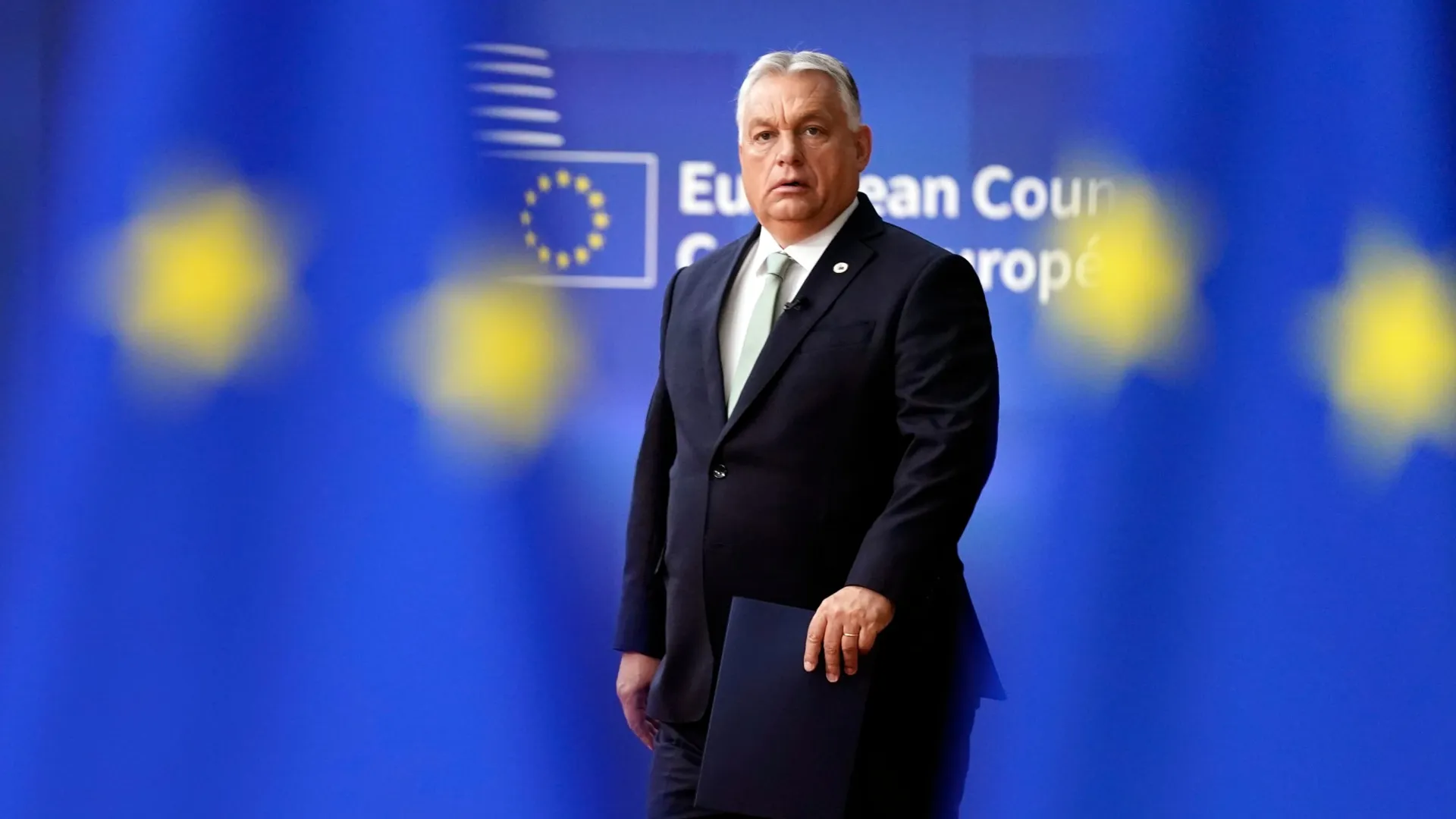
    Maybe it’s a coincidence, but maybe not. Hungarian Prime Minister Viktor Orbán is accusing Ukraine of a plot to sabotage his country’s energy infrastructure just weeks ahead of an April parliamentary election that threatens his grip on power.

    Orbán is “facing the prospect of defeat by his political rival, Péter Magyar,” said Politico. To make up a polling gap of eight points, Hungary’s leader has accused Magyar of being both pro-Ukraine and pro-European Union. And last week, he ordered troops to protect “key sites” such as oil pipelines against the possibility of a Ukrainian attack. That drew an “exasperated response” from European leaders trying to present a united pro-Ukraine front as that country fights a Russian invasion in its fourth year.

    What did the commentators say?
    Orbán’s actions are “aiding and abetting Russia’s kinetic war against Ukraine,” said Mark Toth and Jonathan Sweet at The Hill. He has long hidden behind “economic excuses” for his refusal to oppose Russia, claiming that Europe “cannot afford” to back Ukraine in its war, even as he “champions Putin’s interests in the West.” The prime minister would “gladly continue to crassly trade cheap Russian oil for Ukrainian lives.” Now, Orbán is trying to convince his country that Ukrainians are the real threat, even though Ukraine is “not at war” with Hungary.

    This spring’s elections are “shaping up to be the most serious challenge” to Orbán’s power in the last two decades, said Timothy Ash at The Kyiv Post. It’s no coincidence that the Hungarian leader’s campaign has been “shaped around picking fights” with the EU and Ukraine. He appears to believe he can “play Hungary as the victim here” with Ukraine as the culprit for higher fuel prices, thanks to energy disruptions caused by the war. The polling showing Magyar in the lead, however, suggests “this Orbán strategy is not really working.”

    What next?
    Hungary is “holding up about $105 billion in European funding” for Ukraine, said The Washington Post. Back at home, there are "growing fears" that Orbán may “cancel next month's election,” said The Bulwark. Hungary's constitution outlaws elections during a state of emergency, which makes the “manufactured” alarms over Ukraine look like a “deeply sinister” attempt to hold on to power.


    Statistic of the day

    541 million: The age of ancient sea sponges discovered by MIT researchers. This finding suggests they were among the first animals on Earth. The sea creatures could have been the key to the evolution of life as we know it, according to the study published in the journal Proceedings of the National Academy of Sciences.


    the explainer

    How the vagus nerve affects your health

    A growing social media obsession is seeing people “hum into their phones, gargle with theatrical enthusiasm, dunk their faces into bowls of ice water, and poke at their ears,” said The Conversation. They are all trying to “activate” or “train” their vagus nerve, the new “favorite body part” of the internet. Stimulate it and reset it, and you can improve your mental and physical well-being, according to wellness influencers. 

    What’s the vagus nerve? 
    The Latin word for “wandering” defines the longest cranial nerve in the human body. Its two branches run through the entire body, travelling from the brainstem down into the neck, chest and abdomen and connecting to the heart, lungs, gut and liver. It constantly relays information from the brain to the organs and back again and is often described as an internal communication superhighway or our body’s intranet. 

    How important is it? 
    As a “signal updater” between brain and body, the vagus nerve is a part of the autonomic nervous system that regulates processes that we don’t consciously control, such as heart rate, breathing and digestion. Within that system, it has a key role in the parasympathetic response, sometimes known as “rest and digest,” slowing heart rate and decreasing blood pressure. Put simply, when we feel calm, safe and relaxed, the vagus nerve is helping to make that happen. The theory is that the body can sometimes get “stuck” or spend too long in “fight or flight,” and stimulating the vagus nerve can prompt a return to calm. 

    Can stimulating it make you healthier? 
    Implanted devices that directly stimulate the vagus nerve have long been used to treat neurological conditions, including epilepsy and treatment-resistant depression. More recently, trials of transcutaneous devices, often placed around the neck or in the outer ear, have shown promising results in treating conditions including diabetes, Crohn’s disease, fibromyalgia and irritable bowel syndrome. 

    There’s caution about claims that the vagus nerve can be “switched on like a light,” said Arshad Majid, a professor of cerebrovascular neurology at England’s University of Sheffield, at The Conversation. But several clinical trials are taking place, and the “next few years of research” could “reshape” how we treat a range of conditions. So “maybe hold off on aggressively poking your ear” for now.


    Good day 🚀

    … for space travel. NASA is preparing to launch a historic mission to the moon, marking the U.S.’s first journey back in over 50 years. Launching next month, Artemis II will include the first Black astronaut, Victor Glover, and the first woman astronaut, Christina Koch.


    Bad day 📉

    … for Korean stocks. Concern over the war in the Middle East sent South Korea’s stock markets to their largest one-day crash on record. Panic spread through trading floors as the KOSPI index plunged 12.64% and the KOSDAQ dropped 14.1%. And a key volatility gauge jumped to its “highest level since 2008,” said Bloomberg.


    Picture of the day

    Painting the town

    A boy is covered in colored powder during Holi celebrations in Kolkata, India. The Hindu festival marks the arrival of spring and includes dancing, singing and the throwing of colored pigments and water.
    Sudipta Das / NurPhoto / Getty Images


    Puzzles

    Daily sudoku

    Challenge yourself with The Week’s daily sudoku, part of our puzzles section, which also includes guess the number

    Play here


    The Week recommends

    March’s cozy crime, creepy drama, and Carell dramedy

    While the titans of the entertainment industry continue their behind-the-scenes machinations with Paramount’s near-acquisition of Warner Bros. Discovery, the streaming content will keep flowing. This month that content is highlighted by these highly anticipated new and returning series.

    ‘Rooster’
    In the comedy “Rooster,” Steve Carell plays bestselling novelist Greg Russo, who swoops in to rescue his daughter, Katie (Charly Clive), and her academic career after she accidentally burns down her faculty housing and assaults her lecherous ex-husband (Phil Dunster). “Boasting a stacked ensemble and a strong central hook,” the show looks like a “warm, occasionally dramatic comedy,” said Jordan King at Empire. (March 8, HBO Max)

    ‘Deadloch’ season 2
    The hit cozy crime series returns for a second season. Kate Box and Madeleine Sami reprise their roles as Dulcie Collins and Eddie Redcliffe, respectively. The follow-up is being advertised as the show’s “Tropical Gothic era, with a cast of eclectic locals from a world of crocodile-fueled tourism, overstretched Indigenous rangers, cagey locals and huge reptilian predators,” said Jesse Whittock at Deadline. (March 20, Prime Video)

    ‘Something Very Bad Is Going to Happen’ 
    This new series from creator Haley Z. Boston, who wrote “Brand New Cherry Flavor,” follows the eight-day run-up to the wedding between Nicky (Adam DiMarco) and Rachel (Camila Morrone). The extremely creepy teaser trailer is “basically a full minute of everyone apologizing to each other in an escalating manner,” said Tony Maglio at The Hollywood Reporter. (March 26, Netflix)

    Read more


    Poll watch

    Over 4 in 10 Americans (43%) want to change career fields this year, according to a survey of over 4,000 respondents by employment platform FlexJobs. Driving factors include layoffs, AI and work-life balance. However, many people “haven’t fully defined the role they want” or how existing skills “translate to a new field,” said FlexJob’s Keith Spencer.


    WORD OF THE DAY

    eusociality

    An ant social structure in which nonreproductive workers care for the young of the reproductive queens. Air pollution is causing instability in ant colonies known for their eusociality. Ozone exposure disrupts their scent, which leads ants to attack nestmates, according to a study from the German nonprofit Max Planck Society.


    INSTANT OPINION

    Today’s best commentary

    ‘Is the US running out of ammo?’
    The Wall Street Journal editorial board
    The Iran war is “still in its early days, but the press is playing the wrap-it-up music by warning that America and its allies lack air defenses for a long fight,” says The Wall Street Journal editorial board. The White House will have to “elevate U.S. weapons lines to a national priority.” The U.S. “can choose to build more weapons,” but it “doesn’t matter how many missiles are in the cabinet if our enemies conclude America won’t accept risk to defend itself.”

    ‘A middle powers club would make the world more dangerous’
    Manjari Chatterjee Miller at Foreign Policy
    The “sight of a North American country working with three of the Indo-Pacific’s largest economies” underscores the “new salience of middle powers,” says Manjari Chatterjee Miller. But “while middle-power diplomacy has suddenly become ubiquitous, there’s a widespread misunderstanding of not only the nature of these countries but also the risks of their collective rise.” These countries are “unable or unwilling to step up regionally or globally to define a more general agenda for international order.”

    ‘Gucci needs fresher ideas than “sex sells”’
    Andrea Felsted at Bloomberg
    The luxury sector “must excite customers enough to tempt them to buy rather than repel them with missteps such as the rampant price increases of the past five years,” says Andrea Felsted. After a “two-year, industry-wide slump, even competitors are rooting for Gucci.” The company wants to “reestablish Gucci at the cutting edge,” but “relying on nostalgia can only take the brand so far.” Making a “more rounded collection with wide-ranging appeal” will “take time.”


    Evening Review was written and edited by Theara Coleman, Nadia Croes, David Faris, Scott Hocker, Justin Klawans, Joel Mathis, Summer Meza and Chas Newkey-Burden, with illustrations by Stephen Kelly and Julia Wytrazek.

    Image credits, from top: Illustration by Julia Wytrazek / Getty Images; Pier Marco Tacca / Getty Images; Sebastian Kaulitzki / Science Photo Library; Netflix
     

    Recent editions

    • Morning Report

      Talarico victory tees up Texas-sized Senate fight

    • Evening Review

      Can Trump explain his war with Iran?

    • Morning Report

      Trump floats lengthy Iran war

    VIEW ALL
    TheWeek
    • About Us
    • Contact Future's experts
    • Terms and Conditions
    • Privacy Policy
    • Cookie Policy
    • Advertise With Us
    • FAQ
    Add as a preferred source on Google

    The Week is part of Future US Inc, an international media group and leading digital publisher. Visit our corporate site.

    © Future US, Inc. Full 7th Floor, 130 West 42nd Street, New York, NY 10036.