The Week The Week
flag of US
US
flag of UK
UK
https://cdn.mos.cms.futurecdn.net/flexiimages/jacafc5zvs1692883516.jpg

SUBSCRIBE & SAVE

Less than $3 per week

Sign in
  • View Profile
  • Sign out
  • The Explainer
  • The Week Recommends
  • Newsletters
  • Cartoons
  • From the Magazine
  • The Week Junior
  • Student Offers
  • More
    • Politics
    • World News
    • Business
    • Health
    • Science
    • Food & Drink
    • Travel
    • Culture
    • History
    • Personal Finance
    • Puzzles
    • Photos
    • The Blend
    • All Categories
  • Newsletter sign up Newsletter
  • The Week Evening Review
    Europe vs. China, Nvidia’s superchip, and America’s cattle shortage

     
    TODAY’S BIG QUESTION

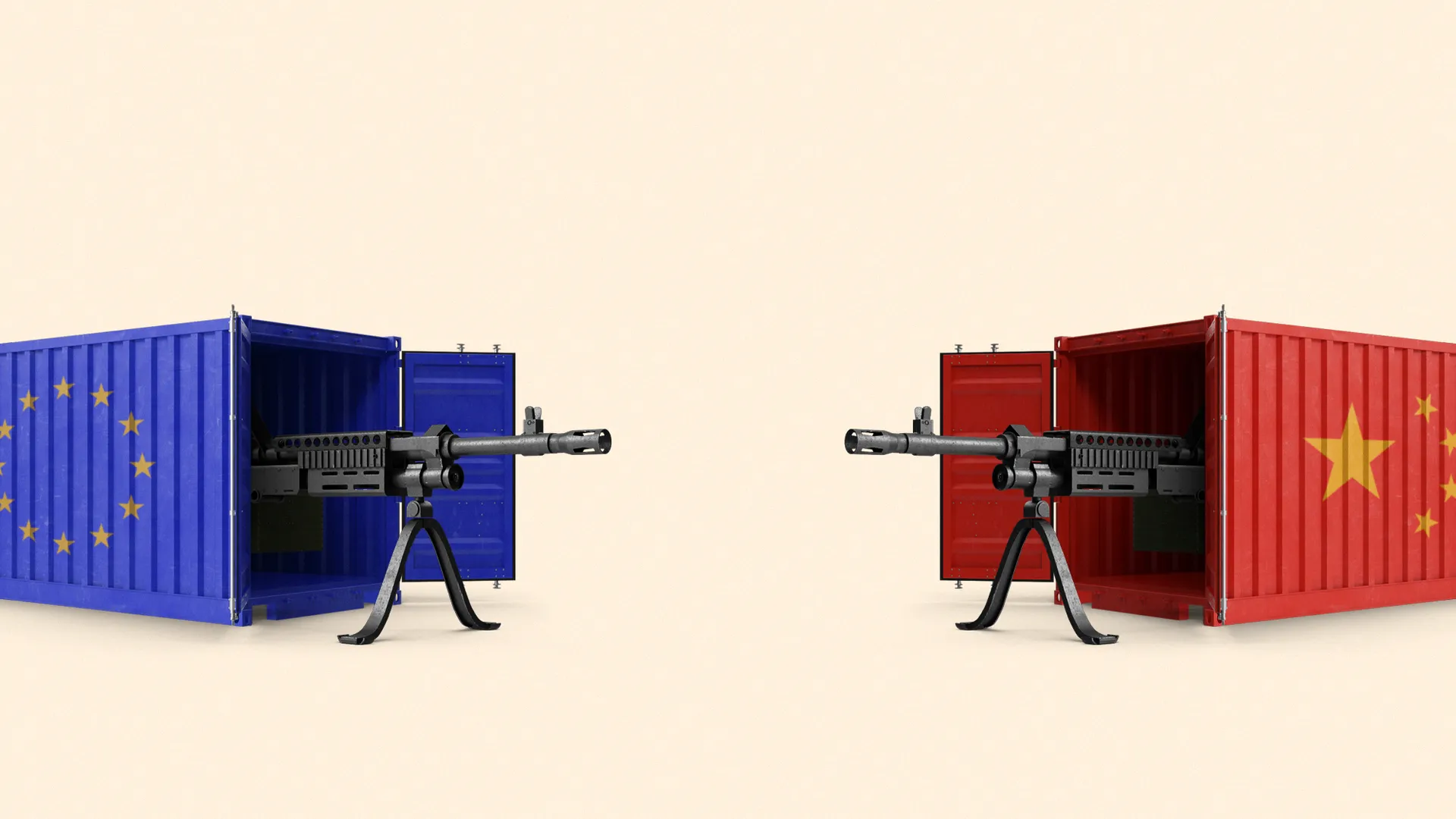
    Are China and Europe moving toward a trade war?

    China’s manufacturing might is overwhelming Europe, and Europe is gearing up to push back. A trade war could be in the offing as Brussels seeks to protect the continent’s workers and factories from a flood of inexpensive imports from state-backed Chinese manufacturers.

    European Commission President Ursula von der Leyen is aiming for a “major crackdown on subsidized Chinese imports,” said Politico. But China is warning it will retaliate against any EU action. The tit for tat could further unsettle a global economy already rattled by President Donald Trump’s trade policies and fallout from the Iran war.

    What did the commentators say?
    The Chinese economy is “taking everyone down,” said Michael Schuman at The Atlantic. The country has become a “government-subsidized, export-driven manufacturing juggernaut” that’s “alienating trading partners.” That includes Europe, where Chinese imports are “costing Germany 10,000 manufacturing jobs a month.” The success of China’s export strategy may make its businesses seem “unstoppable,” but its continuation relies on the “assumption that other countries will continue to absorb China’s exports.” 

    “What, precisely, is the problem with Chinese surpluses?” said Martin Sandbu at the Financial Times. Chinese car imports have indeed increased in recent years, but that merely “displaced imports from elsewhere.” The overall number of vehicles shipped into the EU has “remained steady” during that time. And Europe could benefit from manufacturing competition as a “spur to faster productivity improvements at home.” 

    The EU may be “finally waking up to China,” said Peggy Corlin and Luca Bertuzzi at Euronews. The reassessment has been “long in the making” after “decades of deepening economic dependence.” But Europe is not entirely united on the issue. Germany, for example, is still focused on “securing market access for German companies in China,” while Spain is welcoming a “growing share” of Chinese investments. 

    What next?
    Europe’s search for solutions is “increasingly urgent,” said The New York Times. EU officials are worried about the “imminent collapse of industry,” said Jeromin Zettelmeyer, the director of the think tank Bruegel, to the outlet. But curbing imports could be “profoundly tricky” in a European marketplace where consumers have become “hooked on what China is selling,” said the Times. 


    Statistic of the day

    7,100: The number of employees fired from the Social Security Administration since the beginning of the second Trump administration, according to OPM federal workforce data. The layoffs represented “more than 13% of its workforce and its largest staffing cut ever,” said Fortune, making it “harder to get disability benefits.”


    IN THE SPOTLIGHT

    The Nvidia superchip and a new PC era

    Nvidia’s new superchip for personal computers marks the tech giant’s first entry into the lucrative consumer market. This “reinvention of the computer is as big a deal as the reinvention of the phone into what we now know as the smartphone,” said CEO Jensen Huang (pictured above) as he announced the RTX Spark chip at the Computex show in Taiwan on Monday.

    ‘Warning shot’
    Selling artificial intelligence chips used in enormous data centers has helped Nvidia become the world’s most valuable company, with a market valuation of more than $5 trillion. Now, it’s “looking to put its technology in people’s homes,” said The New York Times.

    Expected to be released in the fall, the new chip will power laptop and desktop computers from makers including Dell, HP, Lenovo and Microsoft and is designed to run local AI systems that can sort files and quickly perform tasks. The “game-changer” move into personal computing fires a “warning shot across the bow” of historic industry leaders such as AMD, Apple and Intel, said TechRadar (a sister site of The Week).

    With the RTX Spark, the company hopes to conquer the growing market for AI computers. Apple “more or less owns this market today,” said Max Weinbach, a technology analyst at the research firm Creative Strategies, to The New York Times. But Nvidia wants to “build a laptop ecosystem for Windows that’s an alternative.”

    AI supercomputer in every home
    The new superchip “lies at the heart of Nvidia’s push to embed AI directly into end-user devices,” said Aqsa Qaddus Tahir at The News International. The goal is to “transform PCs into personal assistants” that “perform various tasks such as searching email, fixing coding bugs and accelerating generative AI features in software including Adobe Photoshop.”

    The Nvidia-Microsoft partnership has “quietly built the hardware layer that makes AI run locally, privately, instantly, no cloud needed,” said digital creator Shohag Hossain on X. With this chip, your laptop “becomes an AI agent that works offline,” which means “no more sending your data to some server farm.” According to Huang, the RTX Spark could be the first step toward AI supercomputers becoming a common home appliance.


    QUOTE OF THE DAY

    ‘Cinema is a young medium — only around 125 years old — so we have to be open to how it can evolve.’

    Filmmaker Martin Scorsese in a statement on why he’s using artificial intelligence to create images for storyboards and joining AI company Black Forest Labs as an adviser. “There’s absolutely no reason to need AI built on the stolen work of millions of artists to storyboard your vision,” said animation director Samuel Deats on X in response.


    THE EXPLAINER

    A 75-year cattle low means beef prices could stay high

    People looking to grill hamburgers this summer may not get a respite from rising beef prices anytime soon, as an ongoing cattle shortage across the U.S. could compound high costs at the grocery store. Farmers are now worried the beef industry will be on the fritz for a while.

    How is the shortage affecting the beef market?
    At the beginning of 2026, American cattle producers had 86.2 million heads of cattle nationwide, marking the lowest number to start the year since 1951, according to the U.S. Department of Agriculture. And the number of cattle that had calved (given birth to a baby) was down 100,000 from the prior year. Several factors have been pushing these livestock numbers down, including “rising costs, international competition, and increased consolidation in the cattle industry,” said NPR.

    “Years of severe drought in the western United States” have also “strained feed supplies and forced many ranchers to reduce their herds,” said WTHR-TV Indianapolis. With less grain comes less grass for cattle to feed on, so farmers have “cut herd sizes — a decision that can shrink the nation’s beef supply for years.” The reduced supply is becoming unsustainable for ranchers. And as cattle become more scarce, their price goes up. 

    What does the future hold?
    There’s “no quick fix for tight supplies, as the sticker shock in the grocery aisles didn’t happen overnight,” said Bloomberg. But Americans don’t want beef any less just because it’s more expensive, and demand has “allowed big retailers to stay on the winning side of these sales, while meatpackers lose out, as larger accounts have leverage to negotiate their pricing,” said David Anderson, an agricultural economics professor at Texas A&M University, to the outlet.

    President Donald Trump’s effort to “lower beef prices has divided top administration officials and some of his closest allies,” said Politico. He faces a dilemma in “trying to balance consumers’ concerns about rising grocery prices with those of his supporters in the cattle industry.” 

    The administration’s decision to import large quantities of Argentinian beef has also rubbed many ranchers the wrong way. Despite this, the government remains optimistic that the livestock lull is only temporary. 


    Good day 🏃‍♀️

    … for intense exercise. Brief bursts of physical movement like sprinting may be an effective treatment strategy for those who suffer from panic attacks, according to a study published in Frontiers in Psychiatry. Triggering similar physical sensations felt during extreme anxiety with short aerobic intensity is more effective than relaxation therapy in reducing the severity and frequency of attacks.


    Bad day 🚔

    … for white-collar crime. The Department of Justice is investigating former New York Congressman George Santos for allegedly engaging in insider trading on the prediction market Kalshi. He placed bets on himself not appearing at the State of the Union address after posting an earlier video saying that he would be in the audience, which initially sent the odds soaring. 


    Picture of the day

    No love lost

    Ukraine’s Marta Kostyuk stands to the side as she refuses to pose with Russia’s Mirra Andreeva before their semifinal tennis match at the French Open in Paris. Kostyuk had not lost a match in more than two months, but Andreeva won 6-1 6-3 and advanced to the final.
    Thibault Camus / AP Photo


    Puzzles

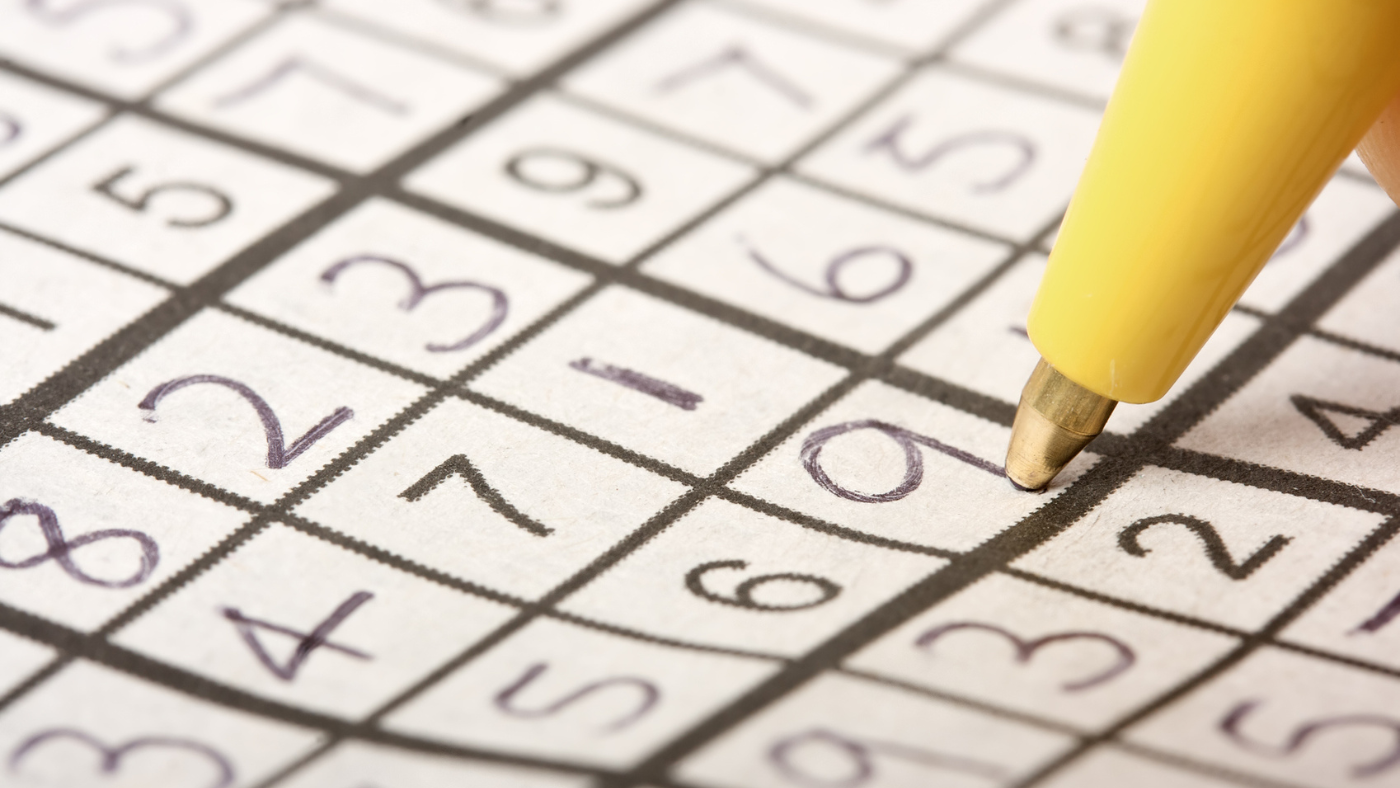
    Daily sudoku

    Challenge yourself with The Week’s daily sudoku, part of our puzzles section, which also includes guess the number

    Play here


    The Week recommends

    The beat goes on and on at these music-centric hotels

    Listening lounges, recording studios, secret venues and vinyl lending libraries are a few of the perks guests can tap into at these seven hotels made for music lovers. You may not run into your favorite artist, but you sure might discover a new one.

    Aria Hotel Budapest, Hungary
    Music inspired every design element at Aria Hotel Budapest, starting with the piano-keyboard marble inlay that stretches across the indoor courtyard. Rooms come in four styles — classical, opera, contemporary and jazz — and feature elegant touches like Murano glass chandeliers, coffered ceilings and custom area rugs.

    Hotel El Ganzo, San José del Cabo, Mexico
    Creatives love staying at this boutique property, where murals cover the walls, the rooms feature one-of-a-kind paintings, and the Musicians in Residence program brings artists like Thievery Corporation, Rufus du Sol and Khruangbin to the hotel. When you are ready to chill, head to the beach and swim club Playa El Ganzo, the rooftop pool, or the spa and wellness center.

    Hotel Saint Cecilia, Austin, Texas
    Hotel Saint Cecilia (pictured above), named in honor of the patron saint of music, is an “ultraprivate” spot where “record label execs, artists, musicians and writers” go for a getaway, said Condé Nast Traveler. The rooms and suites inside this Victorian-era mansion have their own “distinct decor and personality” and come with Rega turntables and Geneva sound systems. When you feel like listening to tunes, head to the hotel’s lending library and borrow a vintage vinyl.

    Read more


    Poll watch

    Over a quarter of MAGA loyalists (26%) don’t want the Treasury Department to print “commemorative” $250 banknotes with Trump’s face on them to “honor America’s 20th anniversary,” according to a YouGov survey, said Axios. Of the 1,604 adults polled, 48% approve of this proposal, which is being pursued by a congressional ally of the president.


    INSTANT OPINION

    Today’s best commentary

    ‘India is losing its economic edge’
    Sadanand Dhume at The Wall Street Journal
    Indian Prime Minister Narendra Modi “faces a painful reality check: His promise to modernize India’s economy hasn’t panned out,” says Sadanand Dhume. The country is dealing with a “rapidly weakening rupee, dwindling net foreign investment, and worries that artificial intelligence will take a wrecking ball to the information technology industry.” Instead of “assuming that the world wants to beat a path to India, the government should emulate countries like Vietnam that ruthlessly focus on being more business-friendly.”

    ‘We have come too far to let AIDS win’
    Elton John and Bill Frist at USA Today
    Thanks to “American leadership and extraordinary global cooperation, despair has given way to hope and action,” as “we are closer than ever to ending AIDS,” say Elton John and former Sen. Bill Frist (R-Tenn.). The “bipartisan President’s Emergency Plan for AIDS Relief has saved more than 26 million lives,” but the U.S. State Department should “consider doubling their rollout plan so resources can reach more communities without delay” and “reengage community health workers.”

    ‘As we approach July 4, the capital is, fittingly, a mess’
    Jackie Calmes at the Los Angeles Times
    One month out from America’s celebration of its 250th birthday, the national capital is a “mess,” says Jackie Calmes. This includes sites “central to the pilgrimages that millions of Americans make each year to Washington.” It’s “all about Trump,” who “sees only a site for self-glorification.” This is “hardly the adulatory message appropriate to a people who, by the Declaration of Independence 250 years ago, renounced a king and went on to create a democratic republic.”


    WORD OF THE DAY

    finasteride

    A prescription medication for male pattern hair loss, also known by the brand name Propecia. Trump’s medical records no longer include the drug, despite it being “routinely used during his first term in office,” said The Washington Post. It has not appeared on his medical reports since he returned to office last year.


    Evening Review was written and edited by Theara Coleman, Nadia Croes, Catherine Garcia, Scott Hocker, Anya Jaremko-Greenwold, Justin Klawans and Joel Mathis, with illustrations by Stephen Kelly.

    Image credits, from top: Illustration by Stephen P. Kelly / Shutterstock; I-Hwa Cheng / AFP / Getty Images; Angela Piazza / The Dallas Morning News / Getty Images; Grant Pifer
     

    Recent editions

    • Morning Report

      House rebuffs Trump on Iran

    • Evening Review

      A conspicuously missing congressman

    • Morning Report

      Midterms take shape after key primaries

    VIEW ALL
    TheWeek
    • About Us
    • Contact Future's experts
    • Terms and Conditions
    • Privacy Policy
    • Cookie Policy
    • Advertise With Us
    • FAQ
    Add as a preferred source on Google Add as a preferred source on Google

    The Week is part of Future US Inc, an international media group and leading digital publisher. Visit our corporate site.

    © Future US, Inc. Full 7th Floor, 130 West 42nd Street, New York, NY 10036.