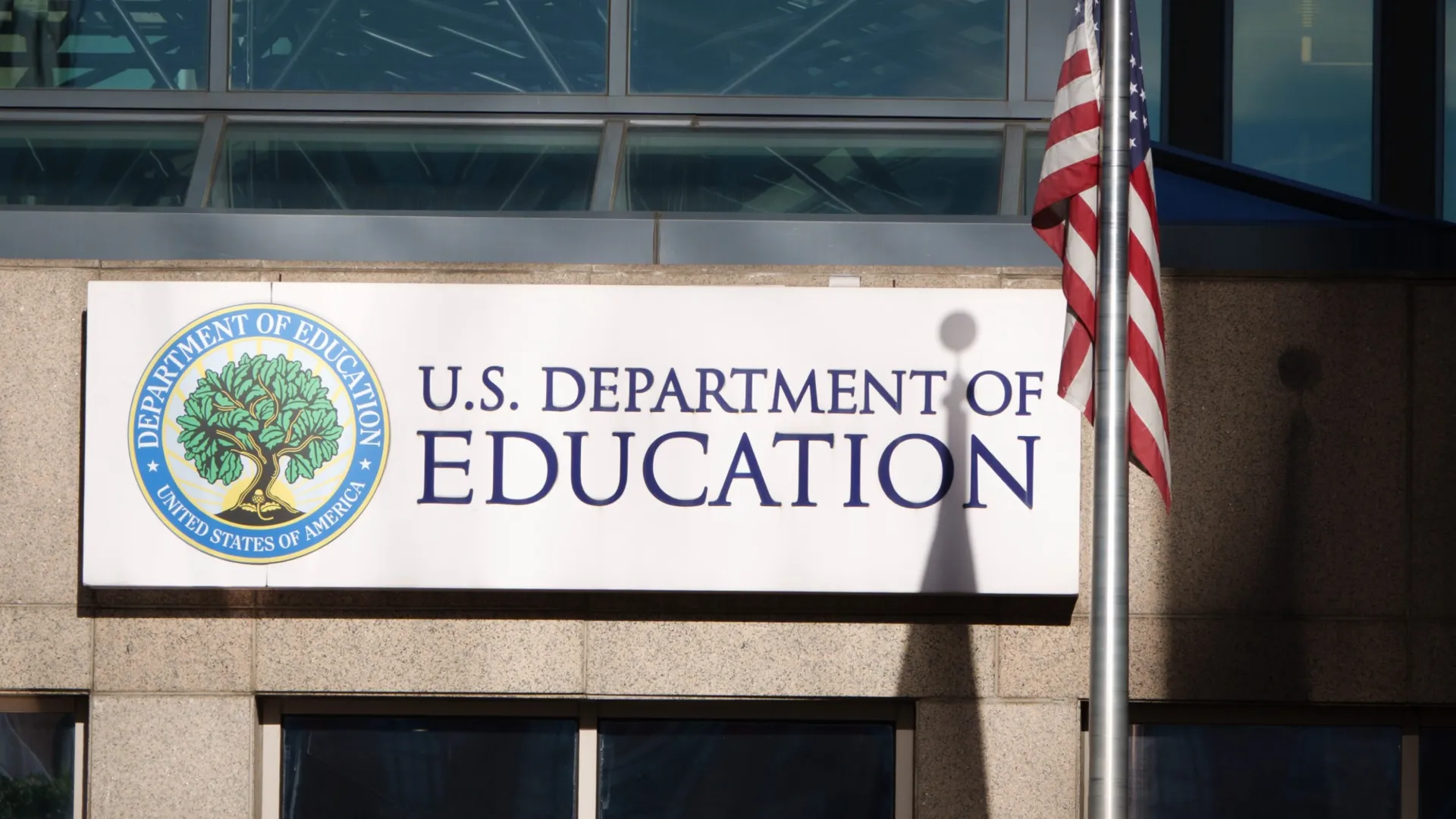
When the Department of Government Efficiency began cutting up government entities in 2025, among the most severely affected was the Education Department’s little-known National Center for Education Statistics (NCES). Now, more than a year later, experts say the gutting of this center has made it very hard to keep track of the nation’s education goals.
What does NCES do?
The federal body is “responsible for collecting, analyzing and reporting data on the condition of U.S. education, from early childhood to adult education, to help improve student outcomes,” said the agency’s website. It produces reports via “direct student assessments, longitudinal studies, international surveys, postsecondary institutions, adult surveys and synthesizing data from federal sources.”
The Trump administration's federal cuts have significantly hampered the agency. As part of nearly $900 million in cuts to the Department of Education last year, NCES’ work was “abruptly terminated and its headcount dropped” massively, said The Guardian. Prior to the funding slashes, NCES had about 100 staffers; it now has just 12, according to a government directory. This has “hamstrung the historically under-resourced agency’s ability to collect and report on a range of data on K-12 and college students,” said The Guardian.
What will NCES do now?
The American Statistical Association has put together a report on how the situation at NCES could be improved. More streamlined data collection would allow NCES to “much more readily modernize how it meets its responsibility to report on the condition and progress of education,” said the report. NCES should also be “ensuring that data is handled safely and ethically and is more useful to state and local practitioners,” said Education Week.
It would be beneficial for NCES to “become a more modern data-centric partner to states” instead of returning to the “structure it had before it was largely dismantled” and relying on the methods it used before being gutted, said StateScoop. “What’s lacking is national comparability,” said Shelly Martinez, an independent statistical consultant who worked on the report, to the outlet. “There’s an interest and an understanding that there’s federal data that could really enhance those analyses, and that evidence is building.” |