The Week US The Week US
flag of US
US
flag of UK
UK
https://cdn.mos.cms.futurecdn.net/flexiimages/jacafc5zvs1692883516.jpg

SUBSCRIBE & SAVE

Less than $3 per week

Sign in
  • View Profile
  • Sign out
  • The Explainer
  • The Week Recommends
  • Newsletters
  • Cartoons
  • From the Magazine
  • The Week Junior
  • More
    • Politics
    • World News
    • Business
    • Health
    • Science
    • Food & Drink
    • Travel
    • Culture
    • History
    • Personal Finance
    • Puzzles
    • Photos
    • The Blend
    • All Categories
  • Newsletter sign up Newsletter
  • The Week Evening Review
    NYC’s antisemitism strategy, France’s school protests, and AI worries in therapy

     
    TODAY’S BIG QUESTION

    Why is NYC’s plan to fight antisemitism sowing doubt?

    While some have accused Zohran Mamdani of antisemitism for his criticism of Israeli government policies, the Democratic New York City mayor recently unveiled a massive new plan to counter Jewish hatred in the Big Apple. It has been both lauded and scoffed at.

    What did the commentators say?
    The 35-page plan, titled “Tackling Hate: The Mamdani Administration’s Strategy to Combat Antisemitism,” is part of a $7.4 million “citywide commitment to confront antisemitism and to build a New York where Jewish New Yorkers can live their lives authentically,” said Mamdani in the plan’s introduction. While Jews make up only 12% of New York’s population, the city also has the highest concentration of Jews in the world outside Israel.

    Mamdani has been accused of antisemitism because he’s a “longtime critic of Israel,” said The New York Times. But his report never expressly mentions the ongoing Israeli-Palestinian conflict. Rather, it “recommends continuing and expanding many existing city policies, such as teaching public school students about the Holocaust and providing training to city workers” about Jewish customs. 

    What next?
    Since the report’s unveiling, some have “welcomed the additional security and education funding but said the strategy glaringly omits the role that anti-Israel hostility plays in fueling anti-Jewish hostility,” said The Wall Street Journal. Others have praised Mamdani’s effort. At a “moment of real and rising antisemitism, extremism and violence across the ideological spectrum, our communities deserve a whole-of-government response,” said Amy Spitalnick, the chief executive of the Jewish Council for Public Affairs, to the outlet.

    Antisemitism remains an ongoing issue in New York City. In 2026, there have been about “223 antisemitic hate crimes, making up more than half of all hate crimes in the city,” said Politico. 

    While Mamdani’s report does not specifically define “antisemitism,” that may not ultimately be its purpose. It’s not the city’s “role to settle a debate over how to define” this, and governments that have “adopted the definition have not seen a reduction in antisemitism,” said Phylisa Wisdom, the executive director of the Mayor’s Office to Combat Antisemitism, in a statement. “No other hate crime category is formally defined by the city.”


    QUOTE OF THE DAY

    ‘They can take out a city. Let ’em take out Los Angeles, let ’em take out San Diego. This is a very small price to pay.’

    Trump, in a campaign rally in Grand Island, Nebraska, on Iran potentially destroying American cities. The president’s comments were harshly criticized by many officials, including California Gov. Gavin Newsom (D), who called Trump “deranged and dangerous” on X.


    The explainer

    The school protests keeping France on edge

    Since a spontaneous blockade of a Paris suburb high school last month quickly turned into violent protests across the country, up to 500 schools have been closed, and more than 5,000 people have been arrested, 85% of them minors. With the unrest showing no signs of slowing down and presidential elections coming up, the government is on tenterhooks. Ever since the student demonstrations of May 1968, successive French leaders have “run scared of angry French youth,” said the BBC. 

    Why sparked the unrest?
    A “main complaint” is a shortage of teachers and support staff, said Time. In the 2024-2025 school year, nearly 10% of teaching hours in public secondary education went untaught, according to data from the education ministry. 

    Students have had to put up with “overcrowded classes of up to 40 children in crumbling buildings,” said The Guardian. “Ceilings partially collapsing during class, leaks, cockroaches and buildings in disrepair” are fairly common experiences. And “unbearable temperatures in classrooms during heat waves in May and June” have exacerbated discontent.

    How has the government responded?
    France’s Justice Minister Gérald Darmanin said on X Friday that he would pursue a “firm” criminal response and hold parents of minors civilly liable “wherever possible.” But the government has also tried to “placate” the rapidly spreading protests and has “acknowledged some of the students’ grievances,” said The New York Times. 

    Education Minister Édouard Geffray plans to introduce a new online platform on which students can voice their thoughts on education reform. The protests, which were “legitimate at the outset,” have been “taken hostage by ultra-left groups,” he said to France 2 last week.

    What could happen now?
    Student representatives who met Geffray said their talks “failed to produce the concrete measures they were seeking,” said The Wall Street Journal. And student unions have called for a third day of nationwide protest tomorrow.

    We cannot forget that French presidential elections are “only months away,” said the BBC. These protests, like many youth movements, are “unpredictable and shapeless” and have “no clear structure” that would allow for negotiation. They will surely have President Emmanuel Macron’s team in “cold sweats.”


    Statistic of the day

    29,320: The number of steps the most active 3- and 4-year-olds take per day, according to a study published in the Lancet. Among 3,570 children across 44 countries, the least active took 1,124. Three-year-old boys tend to take more steps than same-age girls, with an average of 18,064 steps compared to 16,426.


    in the spotlight

    AI anxiety has entered the therapy chat

    With artificial intelligence permeating nearly every aspect of life, therapists are seeing more people expressing anxiety about the technology. And the number is likely to rise exponentially in the coming years.

    ‘Techistential dread’
    Rapid technological advancement can “induce a sense of overarching anxiety,” said therapist Mark Wilkes at Deseret News. Think of it as “techistential dread,” or the “vertigo of wondering if a new advancement will help or hurt, increase opportunities or threaten human thriving.”

    For Silicon Valley therapist Candice Thompson, “discussing fears and worries about AI has now become a regular part of her workday,” said The New York Times. During her “clinical lifetime,” she has “never seen an existential threat like this,” said Thompson to the outlet. No one is immune, “even my clients who are not working in tech.”

    Worries about AI are becoming increasingly common among therapy clients, as the technology “reshapes the workplace, gobbles up natural resources” and raises concerns about “privacy and security,” said the Times. For those who “already have a diagnosed disorder,” such as generalized anxiety, the “distress over AI may feel even more intense.”

    There’s a “parallel” between this and “depression over climate change,” said Sherry Turkle, a sociologist and the author of “Artificial Intimacy: Who We Become When We Talk to Machines,” to the Times. “You feel that things are deeply amiss.” But action may feel “futile, so the depression becomes diffuse.”

    ‘No simple answers’
    For people anxious about AI, there are “no simple answers,” but experts recommend “doing what you can to move the needle in your own life or in public life,” said the Times. The “existential dread” that some express often stems from a “sense of having lost control and any sense of meaning,” said psychologist Yuxin Sun to the outlet. It may help to ask: “What are the things I am not going to outsource to AI?”

    For therapists, one place to begin is to “distinguish between goals and values,” said Psychology Today. It seems “plausible” that some clients’ “medium-term goals” will be “usurped by machines.” So goals, at least “certain kinds of professional goals,” will arguably “no longer be as central to clients’ self-conceptions as they have traditionally been.”


    Good day 🍿

    … for movie milestones. “Avengers: Endgame” is once again the highest-grossing film in box-office history, retaking the throne from “Avatar” after a recent re-release. The Marvel and Disney movie, originally released in 2019, now has a worldwide box-office total of $2.9255 billion, compared to the $2.9237 billion total of “Avatar.”


    Bad day ✈️

    … for airline passengers. A British Airways flight from London to Chicago dropped about 27,000 feet in 10 minutes yesterday, forcing it to turn back. The plane’s descent from 36,000 feet to 9,000 feet started 30 minutes after takeoff. The plunge was due to a “technical issue,” said British Airways, and the plane landed safely.


    Picture of the day

    Forest spa

    A tiny sunbird cools off in water pooled in a banana blossom petal. The photograph, by Vietnam’s Thong Duy Vu, has been shortlisted out of more than 10,000 entries for this year’s Nikon Comedy Wildlife Awards.
    Thong Duy Vu / Nikon Comedy Wildlife Awards


    Puzzles

    Daily sudoku

    Challenge yourself with The Week’s daily sudoku, part of our puzzles section, which also includes guess the number

    Play here


    The Week recommends

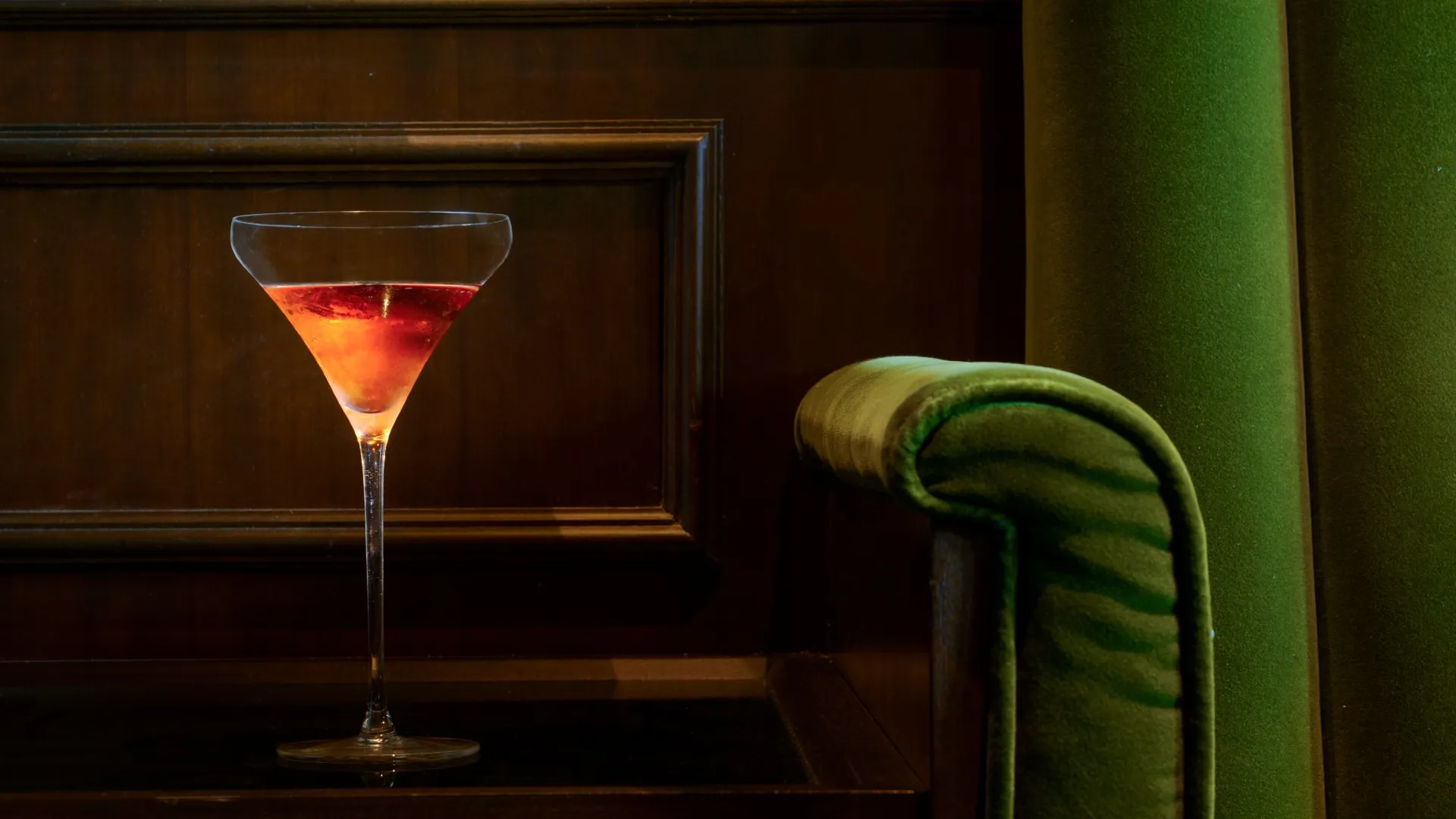
    Fall is for well-intentioned drinking at these great bars

    Autumn is for drinking a mite more seriously, not in a snobby way but by sipping your well-crafted drink instead of tanking endless low-alcohol beers or cheery rosés. These bars serve admirable cocktails without taking themselves or the drinks too seriously.

    Allegory, Washington, DC
    Whimsy and political materiality crash into each other at Allegory, where a mural of “Alice in Wonderland” stars the inadvertent child civil rights icon Ruby Bridges. The bar, with its lively cocktails, is “very much about storytelling, and our drinks reflect that,” said beverage director Princess “P.J.” Johnson to Punch magazine.

    Holywater, New Orleans
    Any time a new bar opens in New Orleans’ French Quarter serving cocktails that are made well and might get you righteously tipsy, an angel gets its wings. Holywater is a bar, yes. But it’s also an oyster house and, thanks to the return of beloved chef Alex Harrell to town, a destination for great eats.

    Lonely’s Bar, Minneapolis
    How refreshing to see a bar debut that “doesn’t exist to serve the algorithm but rather to be a true respite for bargoers looking to meet friends face-to-face,” said Callisto Martinez at Mpls.St.Paul Magazine. Lonely’s Bar serves solid drinks at admirable prices in an 1890 building.

    Mothership, San Diego
    Tiki remains a forever fraught concept. Is it still appropriation if a bar like Mothership harnesses the “same tropical escapism but in a different non-earthly way”? said Kory Stetina, the co-owner of this space-inspired bar, to Imbibe. Drink up and discuss.


    Poll watch

    Over two in five 18- to 29-year-olds in the U.S. (44%) consider their lives “thriving” — 20 points lower than the 64% who said the same in 2010, according to a Gallup survey of 15,156 people. Adults ages 30 to 44 have similarly dropped to 45% from 62%.


    INSTANT OPINION

    Today’s best commentary

    ‘Iran is losing — that’s why we should expect and prepare for more terrorist attacks’
    John Bolton at The Hill
    American successes do not mean Iran’s regime is “defeated, much less overthrown,” which “should be Washington’s objective,” says John Bolton. Instead, “surviving elements of its badly fractured regime” may be turning away from “conventional military operations” and toward “terrorism and other forms of asymmetric warfare.” Lower-profile and “somewhat deniable” acts of terrorism, “undertaken away from the battlefield,” could “sap U.S. resolve” and give Tehran time to “recover from the initial American-Israeli bombings.”

    ‘The year of the political outsider’
    Walter Mead at The Wall Street Journal
    This is a “bad year for incumbents,” says Walter Mead. Trump once benefited from the “anti-insider trend.” As a “charismatic outsider vowing to drain the swamp,” he won voters over. But as the “swamp’s proprietor,” he loses. Trump and “other insurgent politicians” have discovered that “popular slogans often turn into unpopular policies.” A new round of “anti-incumbent populists,” mobilizing supporters with “social media and the politics of outrage,” will “rise up and smite you in the next elections.”

    ‘Money reveals what kind of friend you are’ 
    Meehika Barua at Time
    The “wealth gap between friends” doesn’t necessarily cause “dramatic fights or resentment,” says Meehika Barua. More often, it “shows up in the small decisions.” Friendship has its own “financial morality.” Being a good friend means “being conscious of what your choices cost other people,” not assuming “everyone can afford your lifestyle,” paying people back “without being chased,” and “being willing to compromise.” The wealth gap “simply makes those values much more visible.”


    WORD OF THE DAY

    optogenetics

    A medical technique that combines genetic and optical methods by controlling nerve cells using light. American scientist Karl Deisseroth and his German colleagues Peter Hegemann and Georg Nagel have won this year’s Nobel Prize in Physiology or Medicine for their work developing optogenetics. They have “fundamentally altered our understanding of the brain,” said the Nobel Committee in a statement.


    Evening Review was written and edited by Will Barker, Theara Coleman, Nadia Croes, Scott Hocker, Anya Jaremko-Greenwold and Justin Klawans, with illustrations by Stephen Kelly.

    Image credits, from top: Illustration by Stephen P. Kelly / Getty Images / AP Photo; Giulia Morici / NurPhoto / Getty Images; Donald Iain Smith / Getty Images; Jordan Lye / Getty Images
     

    Recent editions

    • Morning Report

      US measles infections hit decades-old highs

    • Evening Review

      Race in welfare fraud ad sparks outrage

    • Morning Report

      US bombers exit Britain

    VIEW ALL
    TheWeek
    • About Us
    • Contact Future's experts
    • Terms and Conditions
    • Privacy Policy
    • Cookie Policy
    • Advertise With Us
    • FAQ
    Add as a preferred source on Google Add as a preferred source on Google

    The Week US is part of Future US Inc, an international media group and leading digital publisher. Visit our corporate site.

    © Future US, Inc. Full 7th Floor, 130 West 42nd Street, New York, NY 10036.