Sign up to get Today’s Best Articles in your inbox
Join 350,000+ subscribers and keep yourself informed with a selection of
The Week’s most interesting, enlightening and entertaining stories - plus daily puzzles.
You are now subscribed
Your newsletter sign-up was successful
Want to add more newsletters?
An account already exists for this email address, please log in.
California may pull health care from eligible undocumented migrants
After pushing for universal health care for all Californians regardless of immigration status, Gov. Gavin Newsom's latest budget proposal backs away from a key campaign promise
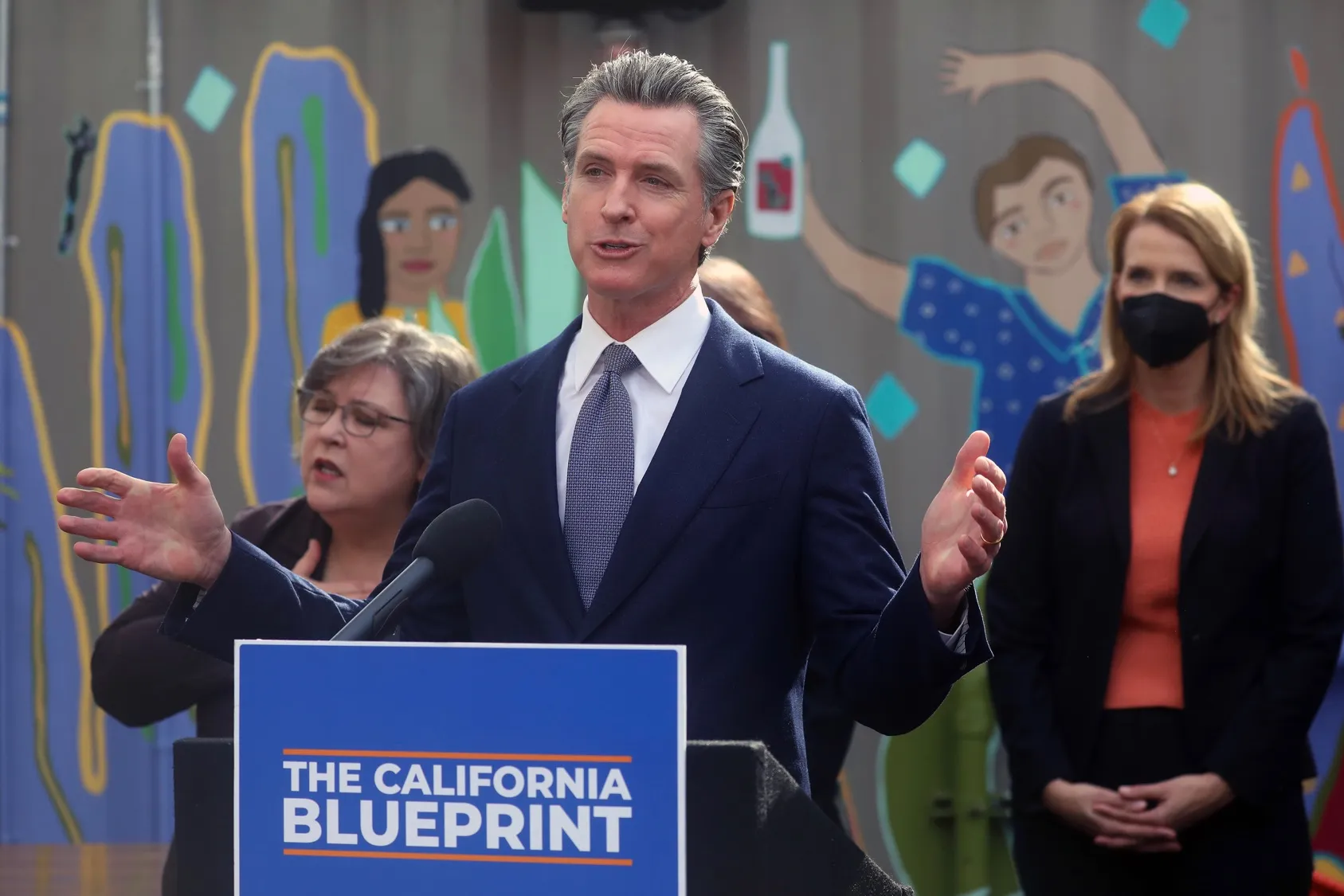
California Gov. Gavin Newsom (D) positions himself as a national figure for Democrats searching for party leadership following President Donald Trump's return to office. But his administration has just pulled back on the promise of health care for all in its latest budget proposal.
For years, Newsom made expanding California's public health care program toward a single-payer system one of the tentpole issues of his political career. Instead, his spending plan for the coming year would see undocumented migrants paying a hefty monthly premium to participate in the state's Medi-Cal Medicaid program. The shift would also block new enrollees starting in the coming year.
'Significant retreat' on a 'linchpin' issue
Newsom's budget proposal comes as the costs of his health care plan have "exceeded expectations" amid broader anticipation of "challenging economic times ahead," said the Los Angeles Times. Requiring Medi-Cal participants with "unsatisfactory immigration status" to pay a $100 monthly premium would "reduce the financial burden on the state" and could ultimately "lower the total number of people enrolled" in the program "if some immigrants cannot afford the new premiums."
The Week
Escape your echo chamber. Get the facts behind the news, plus analysis from multiple perspectives.
Join more than 350,000 subscribers and keep yourself informed with a selection of The Week’s most interesting, enlightening and entertaining stories - plus daily puzzles.
Join more than 350,000 subscribers and keep yourself informed with a selection of The Week’s most interesting, enlightening and entertaining stories - plus daily puzzles.
The proposed changes represent a "significant retreat on an issue" that Newsom has held as a "linchpin" of his broader goal of universal health care coverage in California, Politico said. The backtracking will be a "political gift to conservatives" and is "certain to encounter resistance" from California's Democratic lawmakers and health care advocates alike.
While Newsom has blamed the state budget shortfalls "partly on a projected $16 billion drop in tax revenues resulting from Trump's turbulent trade wars," it's been "clear for months" that the state's Medi-Cal program for low-income residents of all immigration statuses has cost "billions more than expected," said The New York Times. The "conundrum" facing Newsom is whether to cut Medi-Cal benefits for all participants, including citizens, focus solely on immigrant participants or "pursue some combination of both."
Another thing "complicating" Newsom's "political tightrope" is polling that shows programs which provide health care to undocumented migrants have "tepid support," CBS News said. Moreover, any serious budget trouble in California could "harm" Newsom's "political legacy" ahead of a potential 2028 presidential run.
Rightward tack in recent months
Costs associated with medical coverage for undocumented immigrants have become a "sensitive issue" for California's Democrats given both President Trump's "focus on deportations" and the "electorate's interest in scaling back illegal immigration" as a whole, The New York Times said. While the coverage for undocumented immigrants is "funded by state revenue," the San Francisco Chronicle said, "most of the program is funded through federal Medicaid dollars" now being targeted by congressional Republicans who have "singled out California for scrutiny."
Sign up to get Today’s Best Articles in your inbox
A free daily email with the day’s biggest news and analysis – and the best features from TheWeek.com
In this broader political context, Newsom has begun "embracing policy positions Republicans have begged him to adopt," said California Globe. His attempt at a "reputation facelift" will "likely end up as a facelift gone wrong." The Medi-Cal budget battle comes as Newsom, with an eye toward 2028, has "tacked to the right on a series of notable policy issues in recent months," NBC News said, including a podcast interview with right wing operative Charlie Kirk and a push for California cities to remove all unhoused encampments "without delay."
Rafi Schwartz has worked as a politics writer at The Week since 2022, where he covers elections, Congress and the White House. He was previously a contributing writer with Mic focusing largely on politics, a senior writer with Splinter News, a staff writer for Fusion's news lab, and the managing editor of Heeb Magazine, a Jewish life and culture publication. Rafi's work has appeared in Rolling Stone, GOOD and The Forward, among others.