Sign up to get Today’s Best Articles in your inbox
Join 350,000+ subscribers and keep yourself informed with a selection of
The Week’s most interesting, enlightening and entertaining stories - plus daily puzzles.
You are now subscribed
Your newsletter sign-up was successful
Want to add more newsletters?
An account already exists for this email address, please log in.
How the FCC’s ‘equal time’ rule works
The law is at the heart of the Colbert-CBS conflict
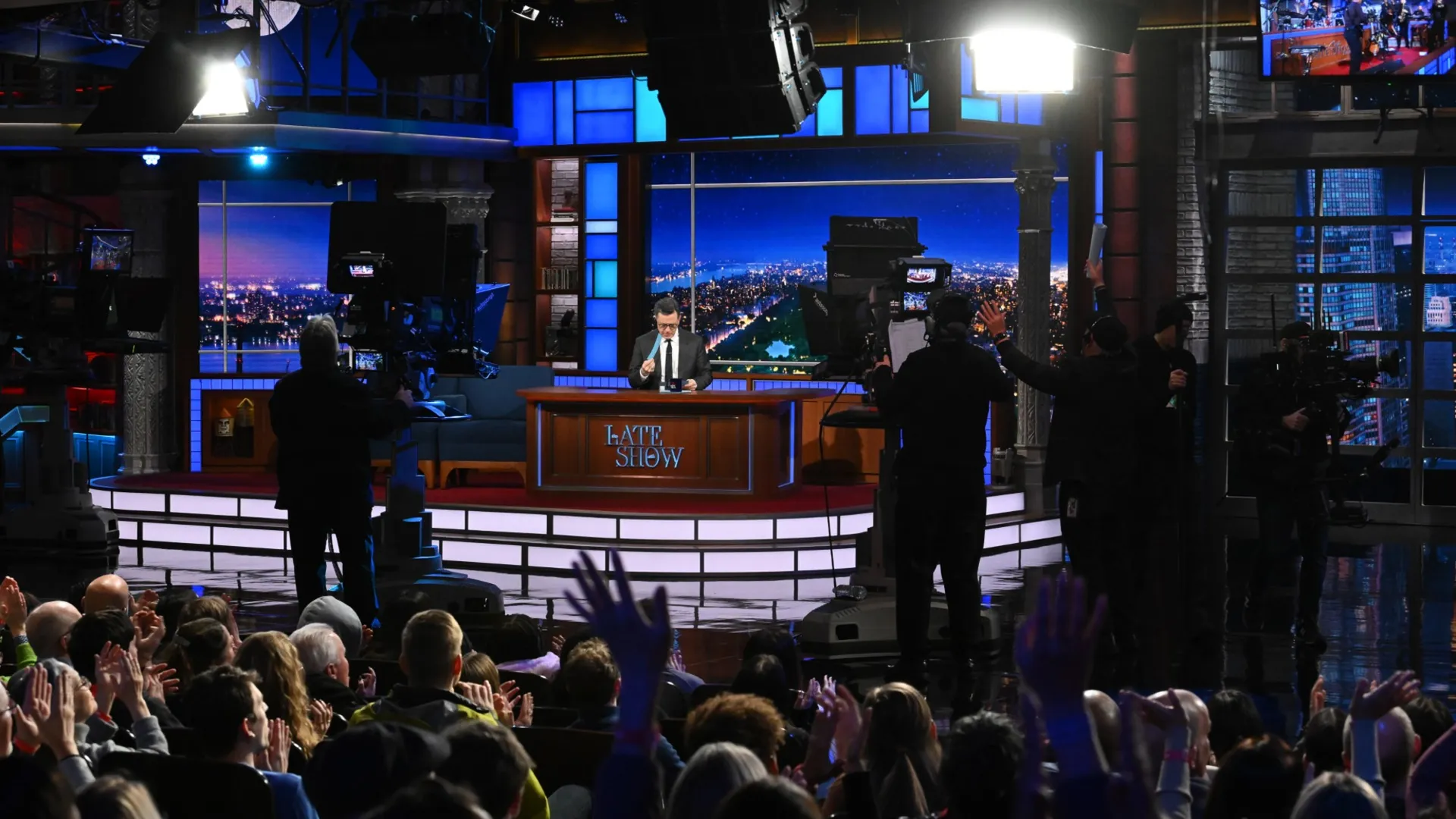
Stephen Colbert will not lead late night without a fight. The CBS host is clashing with his network bosses, saying they refused to air his interview with Texas Democrat James Talarico. At the heart of the conflict is the Federal Communications Commission’s “equal time” rule.
The FCC has long required radio and TV broadcast networks like CBS to “give equal time to political candidates” seeking the same office, said The Associated Press. Talarico is running for U.S. Senate, so that rule would seem to suggest that his Democratic primary opponents would get airtime if he had been featured on Colbert’s show. (The rule does not apply to streaming services, which is why the Talarico interview is featured on Colbert’s YouTube channel.) But the mandate “hasn’t traditionally been applied to talk shows.” Colbert’s staff “can’t find one example of this rule being enforced for any talk show interview” going back to the 1960s, the host said Tuesday night.
Changing standards
The law originated in the 1920s amid concerns that the then-brand-new medium of radio “could influence the outcome of elections by spotlighting a preferred candidate on the airwaves,” said Deadline. Networks and affiliates have taken notable steps to comply: Some stations refused to air Ronald Reagan movies during the 1980 election campaign “out of concerns that they would be on the hook to provide time to other candidates.” And NBC in 2024 gave Donald Trump free airtime during the presidential campaign after Kamala Harris appeared on “Saturday Night Live.”
The Week
Escape your echo chamber. Get the facts behind the news, plus analysis from multiple perspectives.
Join more than 350,000 subscribers and keep yourself informed with a selection of The Week’s most interesting, enlightening and entertaining stories - plus daily puzzles.
Join more than 350,000 subscribers and keep yourself informed with a selection of The Week’s most interesting, enlightening and entertaining stories - plus daily puzzles.
Congress “created four exemptions in 1959,” said Axios, due to concerns that a strict requirement “would make it impossible for news programs to report on candidates.” One of those exemptions included “bona fide news interviews” and was long understood to include interviews on “late night programming.”
FCC Chair Brendan Carr issued new guidance in January, saying late night and other talk shows would no longer be covered by the exemption, said Politico. The shows are often “motivated by purely partisan political purposes,” Carr said, and going forward must “provide all candidates with equal opportunities.” But critics saw a partisan play on the part of Carr, a Republican. His announcement did not include equal time enforcement for “talk radio, which conservatives dominate,” said David A. Graham at The Atlantic.
Future enforcement
The FCC’s “enforcement powers are limited,” said CNN. Trump has made “repeated calls for station licenses to be revoked” but that is “exceedingly unlikely” and would probably trigger lawsuits. The picture may soon become clearer, though, as the FCC has reportedly opened an investigation into ABC’s “The View” after Talarico was featured as a guest.
Congressional Democrats are offering “sharp condemnation” of Carr and vowing an investigation, said Mediaite. The FCC chairman is “blocking Democratic candidates” from public forums, said Rep. Darren Soto (D-Fla.) on X. Colbert’s run as the host of “The Late Show,” meanwhile, ends in May.
Sign up to get Today’s Best Articles in your inbox
A free daily email with the day’s biggest news and analysis – and the best features from TheWeek.com
Joel Mathis is a writer with 30 years of newspaper and online journalism experience. His work also regularly appears in National Geographic and The Kansas City Star. His awards include best online commentary at the Online News Association and (twice) at the City and Regional Magazine Association.