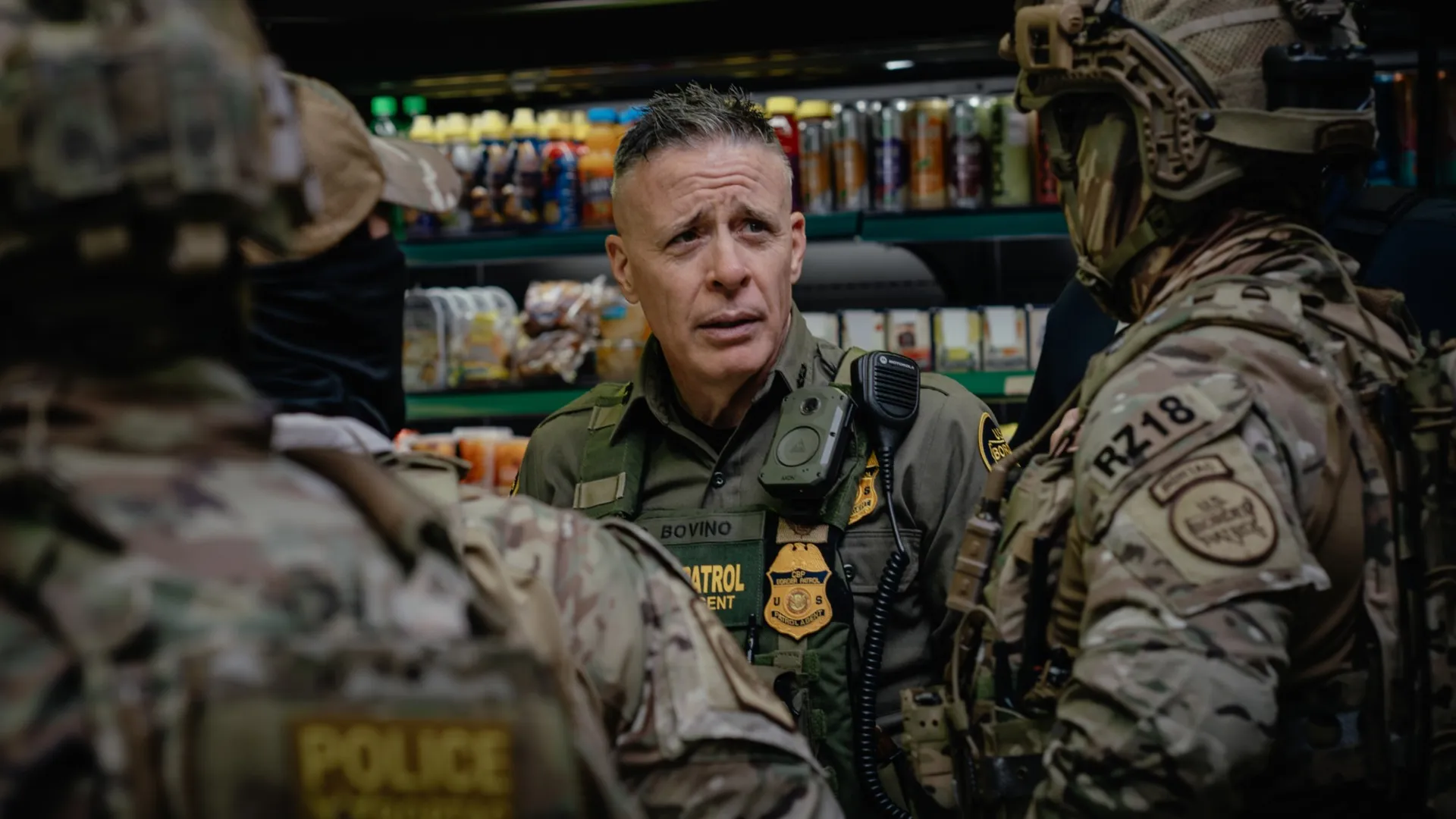
One man is at the forefront of the media frenzy around the White House’s immigration strategy: Gregory Bovino. While he has served in the U.S. Border Patrol under various capacities for years, Bovino has taken a front-facing role in the second Trump administration. And his direction of Border Patrol officers in Chicago has become particularly notable as courts question his methods.
Joining Border Patrol
Bovino, 55, was born in San Bernardino County, California. After graduating from college, he began exploring careers in law enforcement. Bovino started his tenure with the Border Patrol in 1996 and was stationed in California’s El Centro Sector. He was promoted to senior agent in 1999 and then to supervisory agent in 2002. Bovino later served in tactical assignments and also helped “develop the agency’s Marksman Observer training program,” said Newsweek.
In 2020, Bovino was appointed chief patrol agent of the El Centro Sector, responsible for operations across Imperial and San Diego counties and in desert areas of California and Arizona. He eventually began taking on a larger role on the national stage when President Donald Trump returned to office.
The Week
Escape your echo chamber. Get the facts behind the news, plus analysis from multiple perspectives.
SUBSCRIBE & SAVE
Sign up for The Week's Free Newsletters
Join more than 350,000 subscribers and keep yourself informed with a selection of The Week’s most interesting, enlightening and entertaining stories - plus daily puzzles.
Join more than 350,000 subscribers and keep yourself informed with a selection of The Week’s most interesting, enlightening and entertaining stories - plus daily puzzles.
Latest Videos FromThe Week US
Border Patrol ‘commander-at-large’
While Bovino still officially holds the title of El Centro Sector chief, he has become the “lead on the administration’s crackdown in cities — now, 2,000 miles from the California sector he helms,” said CNN. This places him in a “position of power unique among his peers in Border Patrol.” Homeland Security Secretary Kristi Noem has referred to him in an op-ed as the Border Patrol’s commander-at-large, though the meaning of this title is unclear.
Bovino has come under fire for aggressive Border Patrol methods, particularly during his time in Chicago overseeing the agency’s Operation Midway Blitz. In suburbs near Chicago, videos show Bovino “leading a phalanx of camouflage-fatigued agents,” many of whom have “shattered car windows, targeted Home Depots, fired chemical irritants at protesters and members of the media, and shoved to the ground people who are opposing their presence and tactics,” said CNN.
When it comes to immigration enforcement, the Border Patrol is “going to carry out that mission,” Bovino told CNN. But Midway Blitz represents a “drastically different urban landscape from the rural setting he and his agents are used to, posing potentially high risks, experienced law enforcement officers say,” according to The Guardian. Border Patrol is “trained and at their most effective on the border or within 25 miles of the border,” former Border Patrol Commissioner Gil Kerlikowske told the outlet. They are “not trained in policing a city like Chicago or Los Angeles or Boston.”
Bovino has defended the Border Patrol’s actions, but federal judges have pushed back. In particular, Bovino “admitted to lying about a rock-throwing incident used to justify deploying tear gas against protesters,” said U.S. District Judge Sara Ellis, which represented a “violation of the judge's earlier temporary restraining order limiting the use of force,” said ABC News. Bovino “claimed that he had been hit by a rock on the head before throwing the tear gas, but video evidence disproves this,” Ellis said in court. Homeland Security disputes this, saying that all agents are properly trained.