Sign up to get Today’s Best Articles in your inbox
Join 350,000+ subscribers and keep yourself informed with a selection of
The Week’s most interesting, enlightening and entertaining stories - plus daily puzzles.
You are now subscribed
Your newsletter sign-up was successful
Want to add more newsletters?
An account already exists for this email address, please log in.
Nicolás Maduro: from bus driver to Venezuela’s president
Shock capture by US special forces comes after Maduro’s 12-year rule proved that ‘underestimating him was a mistake’
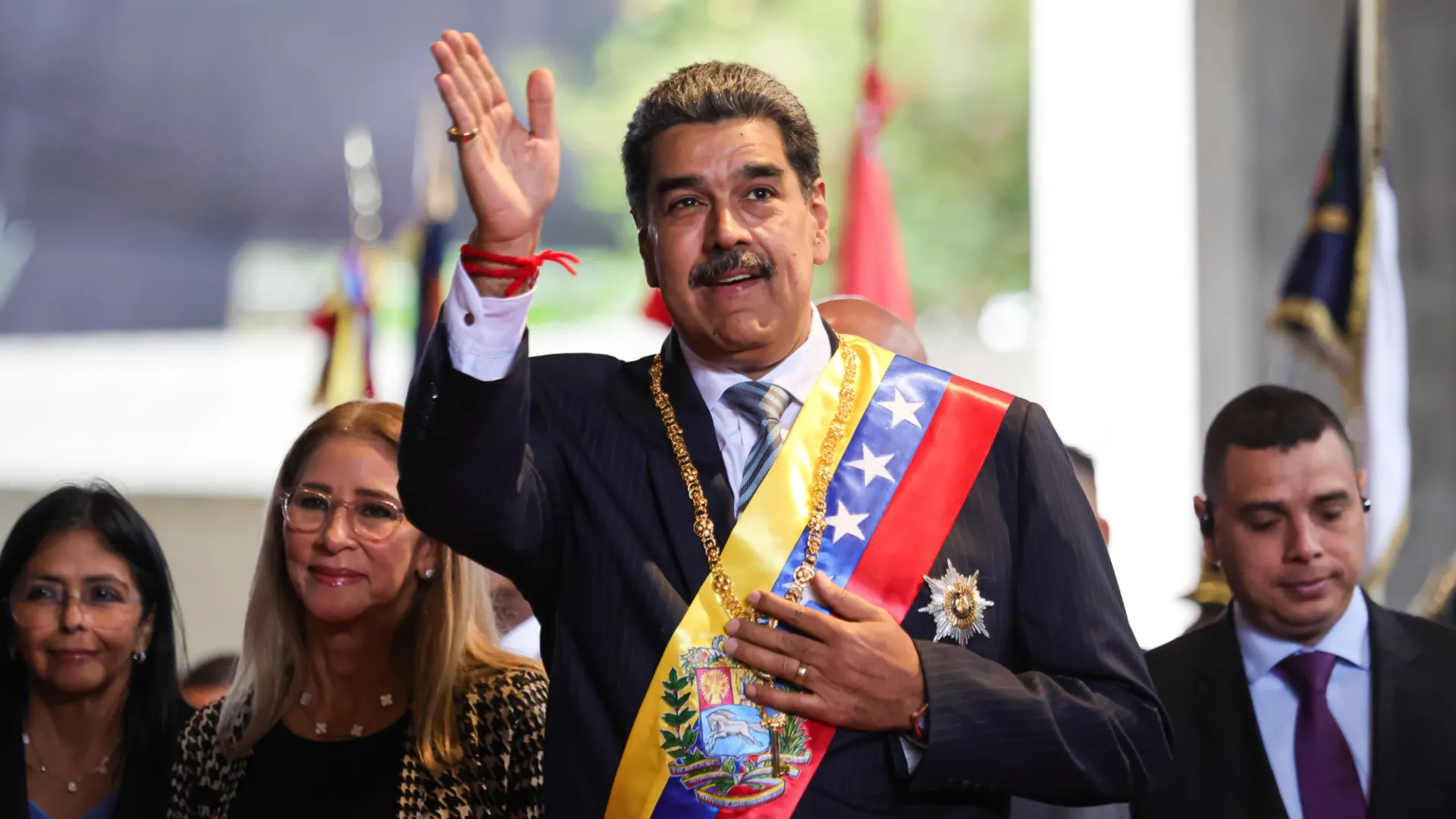
“I’m a president and prisoner of war,” Nicolás Maduro shouted as he was led away from a New York courtroom in tears on Monday.
It was a remarkable fall from grace for the former Venezuelan leader, who was sensationally captured by US special forces and whisked out of the country along with his wife, Cilia Flores, to face drug trafficking and weapons charges in the US.
The US operation in Caracas “put an end to Maduro’s contentious 12-year rule, which saw Venezuela lose millions of inhabitants, 72% of its economy, democratic legitimacy in the eyes of much of the world, and many of its most important international allies”, said Inés Capdevila on CNN.
The Week
Escape your echo chamber. Get the facts behind the news, plus analysis from multiple perspectives.
Join more than 350,000 subscribers and keep yourself informed with a selection of The Week’s most interesting, enlightening and entertaining stories - plus daily puzzles.
Join more than 350,000 subscribers and keep yourself informed with a selection of The Week’s most interesting, enlightening and entertaining stories - plus daily puzzles.
Born in 1962 in Caracas to a working-class family, Maduro began his career working as a bus driver for Caracas Metrobus, serving the capital city.
A member of the Socialist League since his student days, he was an up-and-coming union leader when he met his future wife, Flores, in the 1990s. Later the first woman to lead the National Assembly, she would come to be seen by many as the real “power behind the throne”, Carmen Arteaga, PhD in political science and professor at Simón Bolívar University, told CNN.
Maduro’s union activities also brought him into contact with the man who would become his political mentor: Hugo Chávez. When Chávez took office in 1998, Maduro’s “loyalty, political skill and ideological commitment led to a rapid rise through the ranks of Venezuela’s ruling party”, said Jason Burke in The Guardian. After six years in the National Assembly, Maduro was made foreign minister, before becoming vice-president six years later.
In government he was a “good second, always obedient”, Ronal Rodríguez, researcher at the Venezuela Observatory at Colombia’s Universidad del Rosario, told CNN. “Always an underestimated leader”, Maduro emerged from a pool of possible successors when Chávez fell ill with cancer. “None achieved what he did: on one hand, Cuban support, and on the other, distributing power within chavismo”, the regime’s programme of nationalisation and social welfare. A month after Chávez’s death in 2013, Maduro narrowly won the presidential election to secure his first six-year mandate, despite lacking the charisma of his political idol.
Sign up to get Today’s Best Articles in your inbox
A free daily email with the day’s biggest news and analysis – and the best features from TheWeek.com
From president to ‘narco-terrorist’
Almost immediately, Maduro’s presidency was “plunged into crisis”, said The Guardian. In a sign of the repressive tactics to come, security forces brutally cracked down on opposition protests led by the now-Nobel peace prize winner María Corina Machado, killing 42.
Having survived an assassination attempt in 2018, Maduro ran nearly unopposed in the presidential election that year after opposition parties were blocked from the ballot and some opposition figures were either imprisoned or fled into exile.
Along with allegations of rigged elections and human rights abuses, under Maduro’s leadership, Venezuela experienced a “severe economic collapse marked by hyperinflation and shortages”, said Modern Diplomacy. Amid the chaos, millions of Venezuelans left the country, sparking a refugee crisis across Latin America that exists to this day.
Hopes that economic reforms aimed at boosting the struggling economy and ending US-led sanctions and an oil embargo would lead to greater political freedoms and free elections were dashed in 2024 after a presidential election that was widely denounced as fraudulent.
Widely mocked – for his working-class roots, his belief that Chávez appeared to him in the form of a bird and a butterfly, and his presidential order bringing Christmas forward by two months to “lift the spirits of Venezuelans” – Maduro had nevertheless “proven for years that underestimating him can be a mistake”, said Capdevila on CNN.
That was until Saturday morning when he and his wife were dragged from their bedroom by US soldiers and put on a plane leaving Venezuela, most likely for the last time, with his second-in-command Delcy Rodríguez now in charge.

 talking pointsA leadership power vacuum may await Republicans
 QUOTE OF THE DAY‘What kind of culture looks at sexual violence and sees an opportunity for profit? This is rape culture. And it should disturb every single one of us.’
 today’s big questionHow long can US consumers continue their spending spree?