Sign up to get Today’s Best Articles in your inbox
Join 350,000+ subscribers and keep yourself informed with a selection of
The Week’s most interesting, enlightening and entertaining stories - plus daily puzzles.
You are now subscribed
Your newsletter sign-up was successful
Want to add more newsletters?
An account already exists for this email address, please log in.
Should the US resume nuclear testing?
Trump vows to restart testing, but China might benefit most
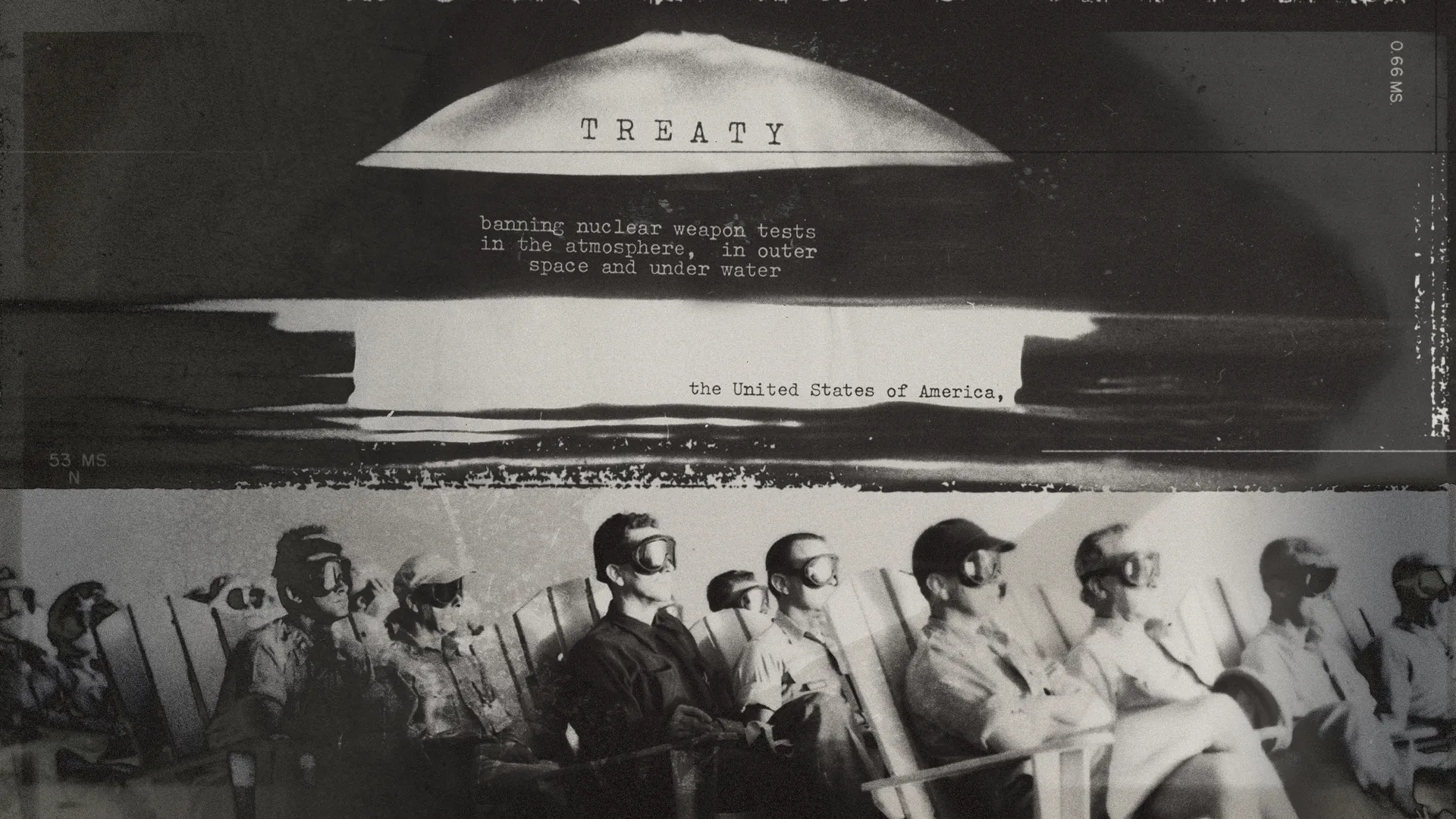
The United States has not conducted a working test of a nuclear weapon since the early 1990s. That could change. President Donald Trump has repeatedly vowed to restart testing, raising alarms about a dangerous new arms race with Russia and China.
“Other countries are testing,” Trump said Sunday on “60 Minutes.” The United States is the “only country that doesn’t test” its nuclear weapons, he said. That created some confusion among nuclear observers. The United States, China and Russia have all observed “decades-long moratorium on underground nuclear blasts,” said The Wall Street Journal, and continue to do so. (Russia has recently tested warhead delivery systems, which seems to have provoked Trump.) America also has an “extensive program to ensure the reliability of its nuclear arsenal” using computer simulations and small nuclear experiments. The president, however, seems determined to proceed. “That process will begin immediately,” he said on Truth Social.
Pragmatic and prudent?
The United States “should resume nuclear testing,” said the National Review editorial board. The country has “invested heavily” in maintaining the nuclear arsenal, but it is “common sense” that the next generation of weapons “will be strengthened with a responsible testing regime.” America should keep that arsenal up-to-date to “deter aggression from nations that wish us ill.” That is why a “pragmatic and prudent American testing regime is warranted.”
The Week
Escape your echo chamber. Get the facts behind the news, plus analysis from multiple perspectives.
Join more than 350,000 subscribers and keep yourself informed with a selection of The Week’s most interesting, enlightening and entertaining stories - plus daily puzzles.
Join more than 350,000 subscribers and keep yourself informed with a selection of The Week’s most interesting, enlightening and entertaining stories - plus daily puzzles.
Trump’s talk of nuclear testing is “dangerous,” said W.J. Hennigan at The New York Times. During his first term, the president ordered the Energy Department to be ready to conduct a simple test within six months. That never happened, but administration officials said such a test would be “political, to send a message to adversaries.” That is a bad reason for testing. Today’s Americans are “lucky” to live in a time “where the deadliest weapons aren’t routinely being exploded by leaders for show.” Resuming testing would augur a “dangerous, unpredictable new era.”
The long moratorium has been “one of the so-called nuclear taboos meant to preserve stability” among nuclear powers, said Andreas Kluth at Bloomberg. If America were to “blow up” that taboo, there is an increased risk that “somebody, somewhere, someday might break the ultimate taboo” and use the weapons in anger. No responsible leader “could reasonably want to take this risk.”
China would benefit
The concern is that Trump’s testing push “provokes other nations to do the same,” said The New York Times. “Why would we want to open the Pandora’s box” and provide an opportunity for nuclear testing to America’s rivals, said John F. Tierney, the executive director of the Center for Arms Control and Non-Proliferation.
China would be the biggest beneficiary, said Heather Williams at the Center for Strategic & International Studies. It has conducted only 47 tests of its weapons, while the United States conducted more than 1,000 during the Cold War. That has created an “asymmetry in test data” that has annoyed officials in Beijing, who would “gain the most in terms of weapons design and warhead information” from a resumption in nuclear testing.
Sign up to get Today’s Best Articles in your inbox
A free daily email with the day’s biggest news and analysis – and the best features from TheWeek.com
Joel Mathis is a writer with 30 years of newspaper and online journalism experience. His work also regularly appears in National Geographic and The Kansas City Star. His awards include best online commentary at the Online News Association and (twice) at the City and Regional Magazine Association.