Sign up to get Today’s Best Articles in your inbox
Join 350,000+ subscribers and keep yourself informed with a selection of
The Week’s most interesting, enlightening and entertaining stories - plus daily puzzles.
You are now subscribed
Your newsletter sign-up was successful
Want to add more newsletters?
An account already exists for this email address, please log in.
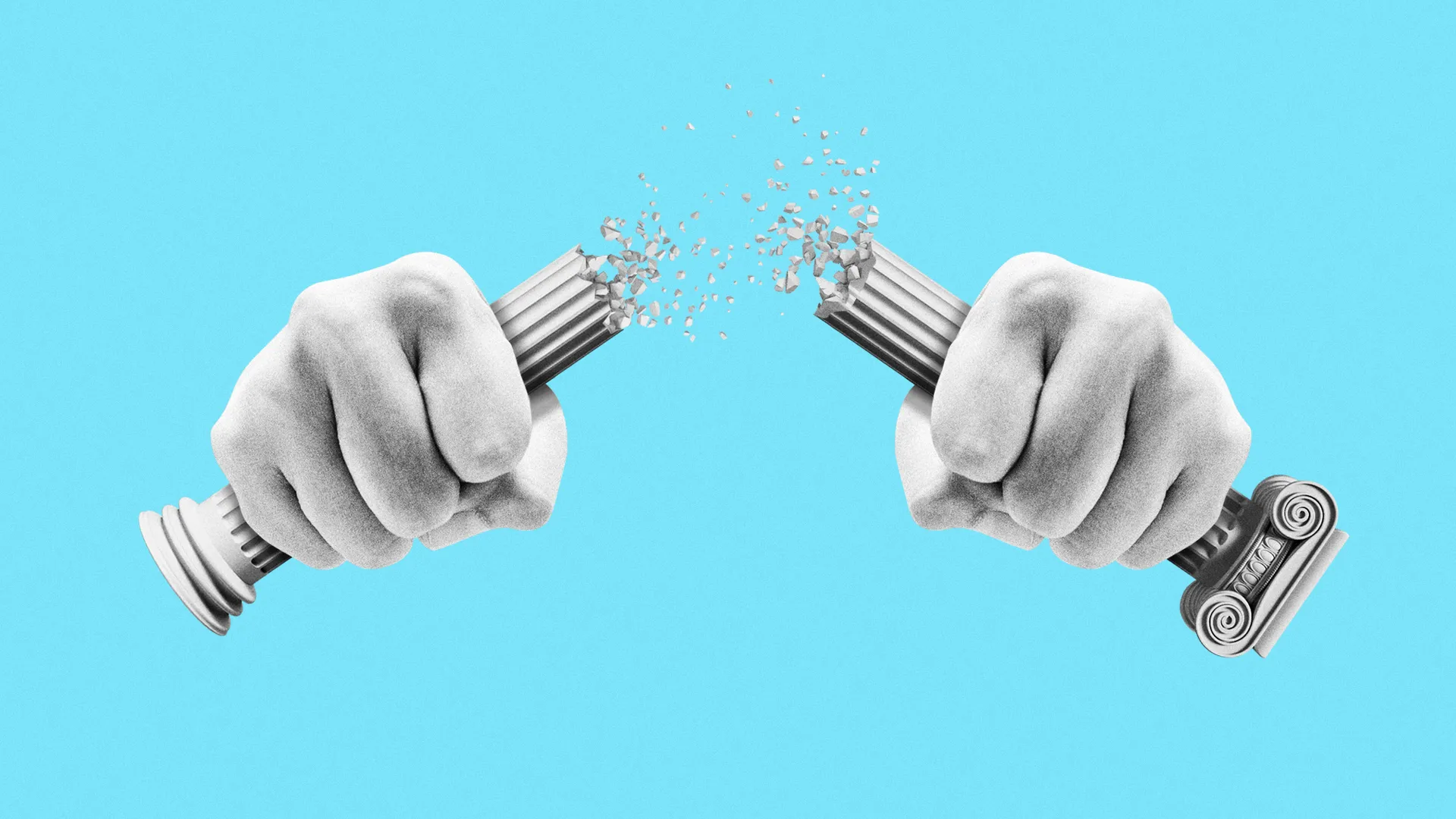
How robust is the rule of law in the US?
John Roberts says the Constitution is ‘unshaken,’ but tensions loom at the Supreme Court
The federal judiciary appeared to have a turbulent 2025. Lower courts regularly issued rulings constraining the Trump administration’s expansive assertions of executive authority, and the Supreme Court regularly overruled those decisions — often without fully explaining itself. That produced some pushback, but Chief Justice John Roberts says the rule of law is alive and well in the United States.
The Constitution remains “firm and unshaken” heading into 2026, Roberts said in his annual report on the state of the judicial branch. But his declaration comes after a year in which “legal scholars and Democrats raised fears of a possible constitutional crisis” in the face of President Donald Trump’s “far-reaching conservative agenda,” said The Associated Press. Roberts himself issued a “rare rebuke” in March after Trump called for the impeachment of a lower-court judge who ruled against the administration. But the Supreme Court has also given Trump a “series of some two dozen wins” on a range of issues, including budgetary authority and the president’s power to fire Senate-approved heads of independent agencies.
What did the commentators say?
Last year’s rulings gave Trump “much broader power to control the federal government,” said the Los Angeles Times. The Supreme Court “ruled consistently for the president, with some notable exceptions,” said Georgetown Law Professor David Cole to the Times.
The Week
Escape your echo chamber. Get the facts behind the news, plus analysis from multiple perspectives.
Join more than 350,000 subscribers and keep yourself informed with a selection of The Week’s most interesting, enlightening and entertaining stories - plus daily puzzles.
Join more than 350,000 subscribers and keep yourself informed with a selection of The Week’s most interesting, enlightening and entertaining stories - plus daily puzzles.
Those exceptions included orders forbidding the White House to unilaterally send the National Guard into American cities and establishing that immigrants are entitled to due process before deportation. Some of Trump’s “most disputed policies” will come before the court in 2026, said the AP, including expected decisions on the legality of the administration’s tariffs and whether the government can deny birthright citizenship to the children of immigrants.
The chief justice’s report avoided “any direct reference to a year of deep tension” within the broader federal judiciary, said Bloomberg Law. Federal judges “became the target of frequent verbal attacks” from Trump and his allies, and withstood an “uptick in threats and other types of harassment” in the wake of rulings against the White House. And tensions between the Supreme Court and federal courts “spilled into view” over the summer, with lower-court judges complaining that justices offered little guidance in pro-Trump “shadow docket” rulings.
What next?
The Supreme Court has “many pivotal cases” lined up for 2026, said Axios. In addition to the tariff and birthright citizenship rulings, justices will also consider cases involving the Voting Rights Act, transgender athletes, state-level bans on conversion therapy and a Hawaii law that prohibits bringing guns to private property unless the owner gives explicit consent.
The court’s “smooth relationship” with Trump just might “turn sour in the new year,” said NBC News. Justices appear poised to hand the president “at least one major defeat” involving tariffs or Trump’s efforts to fire a sitting member of the Federal Reserve board. The Supreme Court is “not confronting the president head-on until spring this year,” said Richard Pildes, a professor at New York University School of Law, to NBC.
Sign up to get Today’s Best Articles in your inbox
A free daily email with the day’s biggest news and analysis – and the best features from TheWeek.com
Joel Mathis is a writer with 30 years of newspaper and online journalism experience. His work also regularly appears in National Geographic and The Kansas City Star. His awards include best online commentary at the Online News Association and (twice) at the City and Regional Magazine Association.