Stephen Colbert has a Seussian cautionary tale for disaffected young Bernie Sanders fans

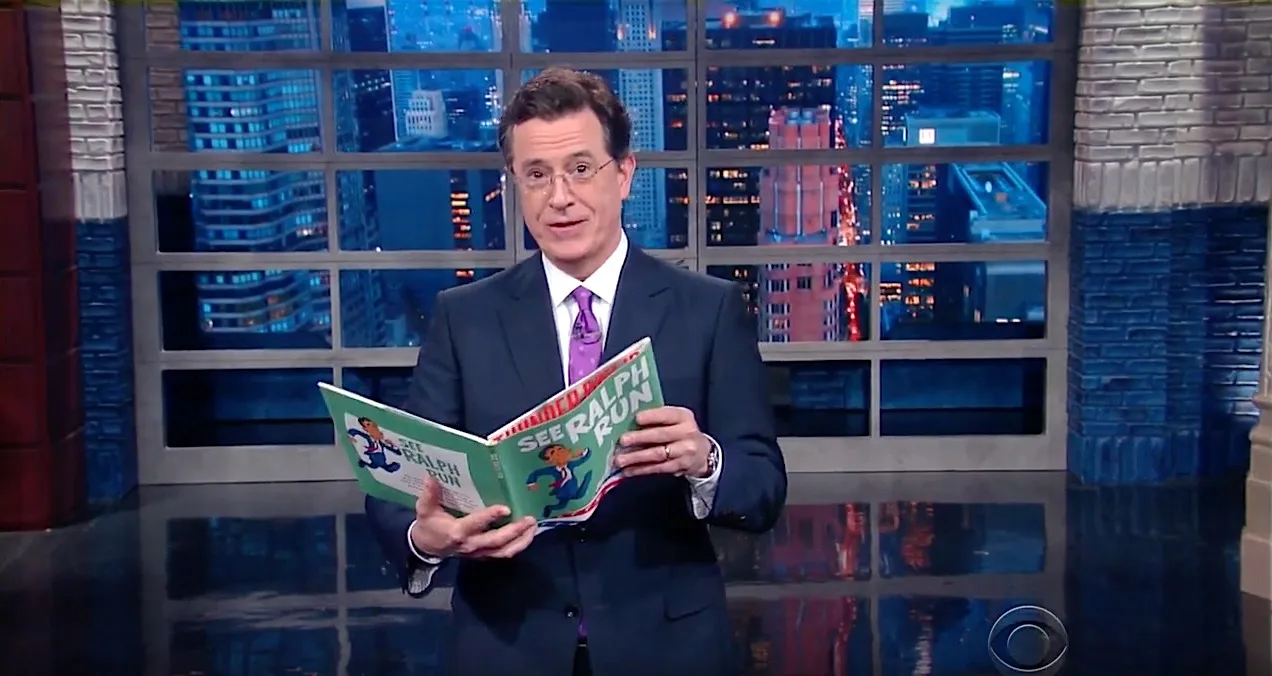
On Wednesday's Late Show, Stephen Colbert started things off with a look at the election, and it took him all of 10 seconds to mention Donald Trump. Trump "is slowly unifying the Republican Party," Colbert said. "All it took was no other options, and then a few more weeks to make sure there's no other options." But the big story was Tuesday's Democratic primaries in Oregon and Kentucky, and the increasing tensions between Bernie Sanders and his supporters, and the Democratic Party.
The Green Party has invited Sanders to join their ticket — "nothing's more green than recycling an old candidate," Colbert quipped — and now "thousands of disaffected Bernie supporters may be faced with a choice: go to the Green Party, or begrudgingly vote for Hillary, just like Hillary supporters do." But splitting the Democratic vote can have serious consequences — and has had serious consequences, Colbert said, bringing out a children's book on Ralph Nader, the Green Party candidate who hit his high-water mark in 2000. "Young voters don't know about Bush v. Gore, but trust me, this has all happened before," he read. "Thanks to Ralph Nader, who gave it his all, we got Cheney, whose heart was three sizes too small." Enjoy the entire Seussian cautionary tale in the video below. Peter Weber
The Week
Escape your echo chamber. Get the facts behind the news, plus analysis from multiple perspectives.

Sign up for The Week's Free Newsletters
Join more than 350,000 subscribers and keep yourself informed with a selection of The Week’s most interesting, enlightening and entertaining stories - plus daily puzzles.
Join more than 350,000 subscribers and keep yourself informed with a selection of The Week’s most interesting, enlightening and entertaining stories - plus daily puzzles.