Stephen Colbert is as horrified by the 'creepy clown' epidemic as you are

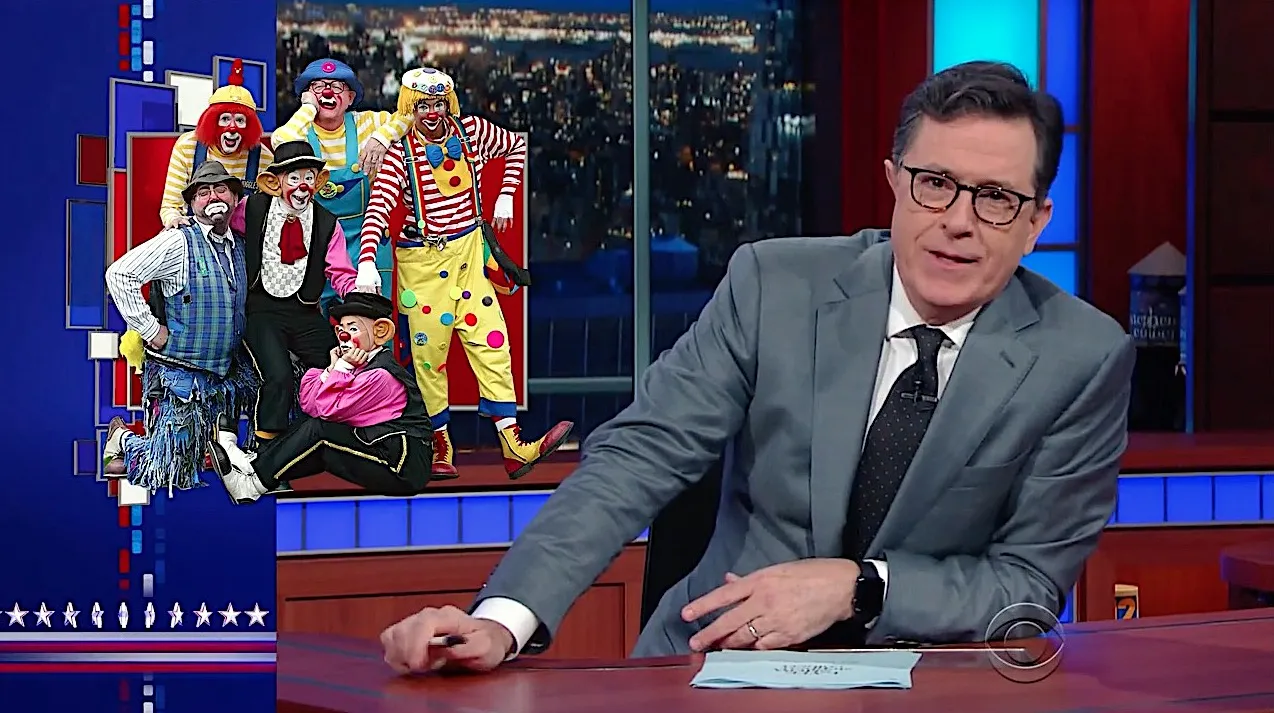
Stephen Colbert said on Wednesday's Late Show that he has been avoiding a certain story for months because "it contains a disturbing level of clown." In fact, he said, "parents may want to send children out of the room, and then leave the room yourself." A nationwide epidemic of "evil clown" sightings apparently started in South Carolina, and has now spread far and wide. Adults, children, "everyone is scared of clowns," Colbert said to any viewers left in the room. "In fact, the only thing creepier than a clown is someone who laughs at clowns: 'Haha, he's dressed like he's poor. And look at his swollen feet, there's something seriously wrong with him. Haha!'"
Colbert walked his viewers through the rash of "creepy clown" appearances, real and imagined, then noted that actual professional clowns are now fearing for their safety and livelihood, thanks to these malevolent impostors. "I feel for these clowns," Colbert said, changing his tune. "They're just trying to entertain us, they shouldn't have to answer for the actions of a few insane posses." He ended the segment with a PSA about treating clowns with the dignity they deserve. Watch below. Peter Weber
The Week
Escape your echo chamber. Get the facts behind the news, plus analysis from multiple perspectives.

Sign up for The Week's Free Newsletters
Join more than 350,000 subscribers and keep yourself informed with a selection of The Week’s most interesting, enlightening and entertaining stories - plus daily puzzles.
Join more than 350,000 subscribers and keep yourself informed with a selection of The Week’s most interesting, enlightening and entertaining stories - plus daily puzzles.