Can Samantha Bee convince you that Donald Trump literally can't read?

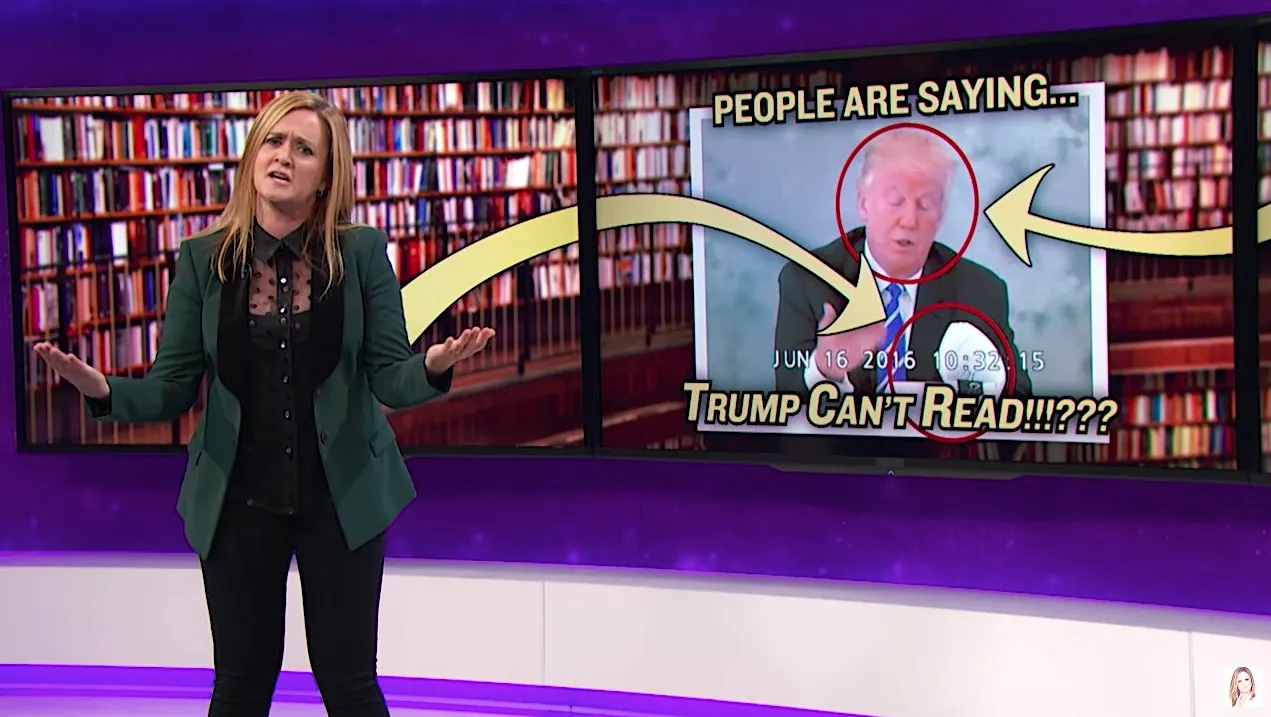
"After seeing how easy and fun it is to take random scraps of evidence and spin them into ridiculous conspiracy theories, we decided to try it ourselves," Samantha Bee said on Monday's Full Frontal. Since Donald Trump is a fan of the genre, she began by showing some video of one of Trump's depositions, and one thing really stood out for her, Bee said. "You heard it here first: People are saying Donald Trump can't read." It is, as Bee said, a "ridiculous conspiracy theory," but she insisted, "We have evidence, so much evidence, the best evidence." And it's surprisingly persuasive — which tells you a lot about conspiracy theories.
But of course Donald Trump can read. Right? "Now look, we are not definitively saying that Donald Trump cannot read, we're just asking the question," Bee said. "Mr. Trump, you can very easily clear up these questions — all you have to do is provide a video of yourself reading Barack Obama's long-form birth certificate out loud, and we'll be satisfied that we ended a terrible rumor that Hillary Clinton and Sidney Blumenthal started — shame on them!" There is some NFSW language, but if that doesn't bother you, watch below. Peter Weber

The Week
Escape your echo chamber. Get the facts behind the news, plus analysis from multiple perspectives.

Sign up for The Week's Free Newsletters
Join more than 350,000 subscribers and keep yourself informed with a selection of The Week’s most interesting, enlightening and entertaining stories - plus daily puzzles.
Join more than 350,000 subscribers and keep yourself informed with a selection of The Week’s most interesting, enlightening and entertaining stories - plus daily puzzles.