Senate Intelligence Committee leaders warn stopgap spending law could let intel agencies run amok

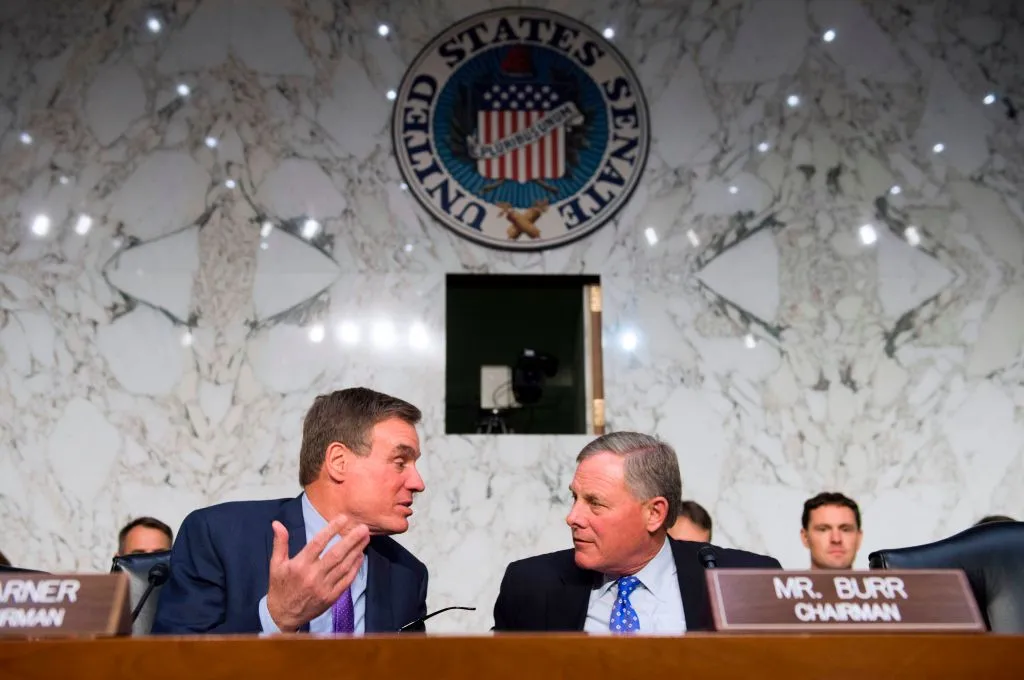
Before the Senate passed a three-week stopgap measure to fund the government on Monday, the Republican chairman and top Democrat on the Senate Intelligence Committee unsuccessfully tried to remove a measure inserted by House appropriators at the request of the White House. "The language is troublesome for the committee because it would authorize the intelligence community to spend funds notwithstanding the law that requires prior authorization," Sen. Richard Burr (R-N.C.), the chairman, said on the Senate floor. "Effectively, the intelligence community could expend funds as it sees fit."
"If this exemption is granted, you could potentially have an administration — any administration — go off and take on covert activities, for example, with no ability for our committee, which spends the time and has oversight, to say 'time out,'" warned Sen. Mark Warner (Va.), the ranking Democrat. "We just want to make sure that we don't give a blank check to any administration, particularly this administration. We need to get it fixed."
The Week
Escape your echo chamber. Get the facts behind the news, plus analysis from multiple perspectives.

Sign up for The Week's Free Newsletters
Join more than 350,000 subscribers and keep yourself informed with a selection of The Week’s most interesting, enlightening and entertaining stories - plus daily puzzles.
Join more than 350,000 subscribers and keep yourself informed with a selection of The Week’s most interesting, enlightening and entertaining stories - plus daily puzzles.

-
-
 talking pointsA leadership power vacuum may await Republicans
 -
 QUOTE OF THE DAY‘What kind of culture looks at sexual violence and sees an opportunity for profit? This is rape culture. And it should disturb every single one of us.’
 -
 today’s big questionHow long can US consumers continue their spending spree?
-
-
-
talking pointsA leadership power vacuum may await Republicans
-
QUOTE OF THE DAY‘What kind of culture looks at sexual violence and sees an opportunity for profit? This is rape culture. And it should disturb every single one of us.’
-
today’s big questionHow long can US consumers continue their spending spree?
-