Sign up to get Today’s Best Articles in your inbox
Join 350,000+ subscribers and keep yourself informed with a selection of
The Week’s most interesting, enlightening and entertaining stories - plus daily puzzles.
You are now subscribed
Your newsletter sign-up was successful
Want to add more newsletters?
An account already exists for this email address, please log in.
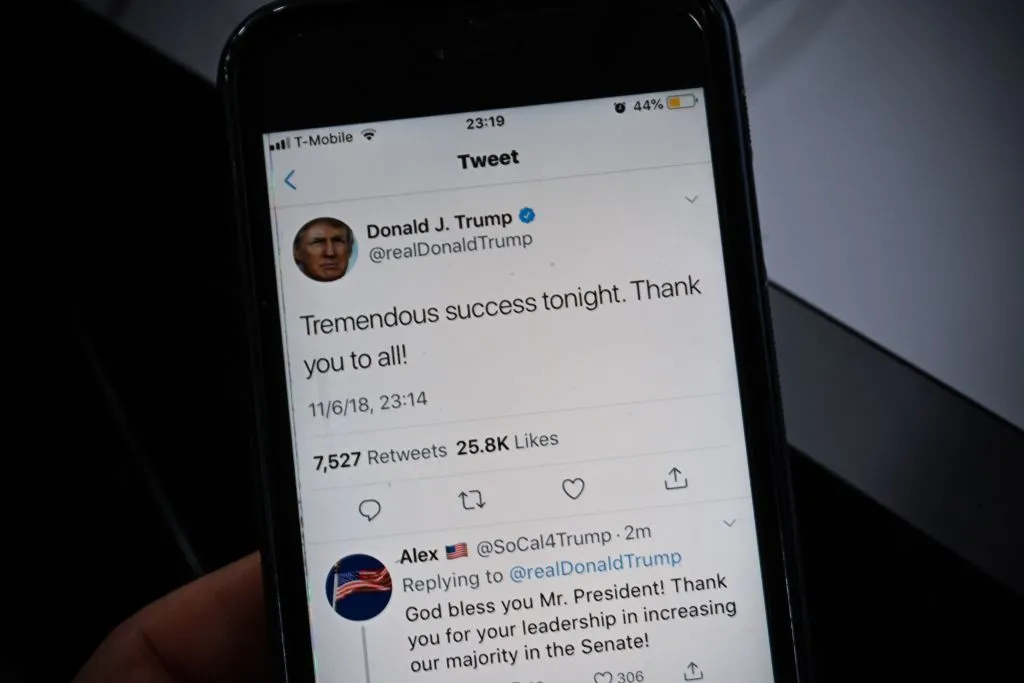
President Trump talks a lot. Should everything he says be relevant in court?
That's an increasingly key question, as the president's personal rhetoric at rallies and on his busy Twitter account often diverges from the language of executive orders and other statements put out by his administration. When the resultant policies are challenged in court, judges are faced with a new conundrum of whether to consider Trump's personally expressed motives or official texts alone.
For example, in the court battles preceding Trump's issuance of the final, indefinite travel ban on visitors from eight nations, most of them majority-Muslim, the U.S. 9th Circuit Court of Appeals struck down a previous version in part because of Trump's revealing rhetoric. The states of Washington and Minnesota "offered evidence of numerous statements by the president about his intent to implement a 'Muslim ban,'" the court noted, which showed the executive order was discriminatory in its intent.
The Week
Escape your echo chamber. Get the facts behind the news, plus analysis from multiple perspectives.
Join more than 350,000 subscribers and keep yourself informed with a selection of The Week’s most interesting, enlightening and entertaining stories - plus daily puzzles.
Join more than 350,000 subscribers and keep yourself informed with a selection of The Week’s most interesting, enlightening and entertaining stories - plus daily puzzles.
However, as a FiveThirtyEight analysis explains Monday, the Supreme Court would later disagree, with a majority opinion by Chief Justice John Roberts acknowledging Trump's comments but nevertheless concluding the final order was based on legitimate security considerations.
The question remains which approach will prevail going forward. "What's head-spinning about Trump is that there are a lot of cases where ... there doesn't seem to be a lot of room for doubt about his intentions," Richard Primus, a constitutional law professor at the University of Michigan, told FiveThirtyEight. Still, Primus predicted SCOTUS "will continue to insist on acting like they don't know the president's motivating attitudes," even though this could help Trump and any future presidents with similarly loose lips openly perpetrate abuses of power.
Read the full FiveThirtyEight breakdown of the implications of bringing Trump's tweets to court here.
Sign up to get Today’s Best Articles in your inbox
A free daily email with the day’s biggest news and analysis – and the best features from TheWeek.com
Bonnie Kristian was a deputy editor and acting editor-in-chief of TheWeek.com. She is a columnist at Christianity Today and author of Untrustworthy: The Knowledge Crisis Breaking Our Brains, Polluting Our Politics, and Corrupting Christian Community (forthcoming 2022) and A Flexible Faith: Rethinking What It Means to Follow Jesus Today (2018). Her writing has also appeared at Time Magazine, CNN, USA Today, Newsweek, the Los Angeles Times, and The American Conservative, among other outlets.