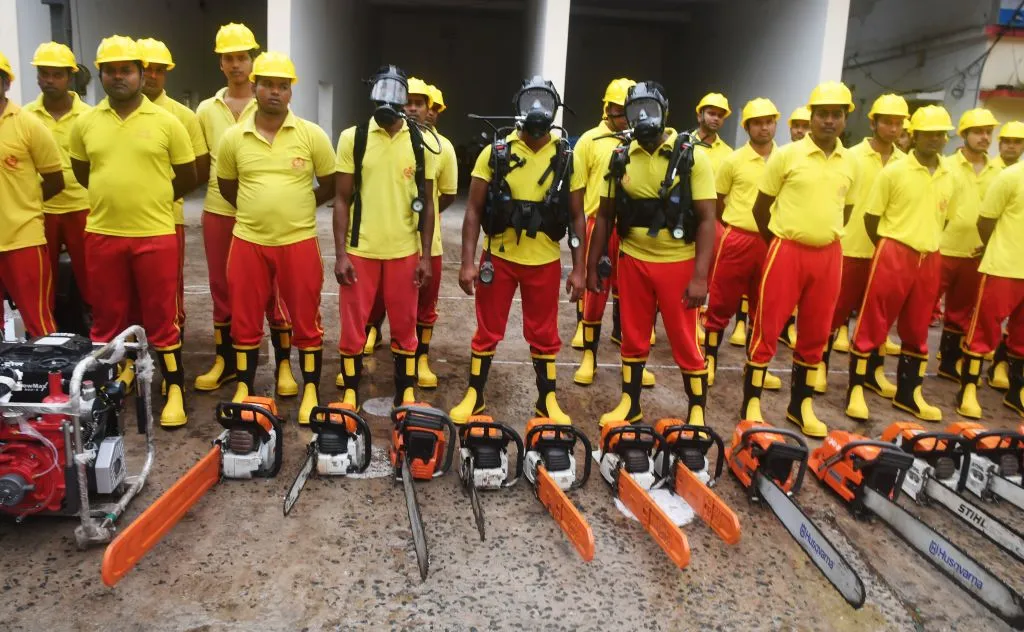
India evacuates 1.2 million as Cyclone Fani pounds eastern coast
A free daily email with the biggest news stories of the day – and the best features from TheWeek.com
You are now subscribed
Your newsletter sign-up was successful
Cyclone Fani made landfall in India's eastern Bay of Bangal on Friday morning as an "extremely severe" grade 5 storm, the India Meteorological Department said. Grade 5 is the second-highest rating, equivalent to a Category 3 hurricane, and wind gusts of up to 127 mile per hour were recorded in Odisha state, where the cyclone came ashore in the beach resort city Puri. Authorities evacuated an unprecedented 1.2 million people from low-lying areas of Odisha, moving them to about 4,000 shelters further inland, India's National Disaster Response Force said.
Three deaths have been reported in Odisha due to the cyclone, BBC News says. A 1999 "super" cyclone that killed about 10,000 people had wind speeds of up to 173 mph, so "this is not as bad," said India Meteorological Department's Dr. M. Mohapatra. And warning systems are better. More than 200 trains were canceled across India, and the airport in Kolkata (formerly Calcutta), the capital, is closed from from Friday afternoon to Saturday morning. The cyclone has even disrupted the weather on Mount Everest, The Associated Press reports, during the month that's typically best for climbing the world's highest peak.
A free daily email with the biggest news stories of the day – and the best features from TheWeek.com
The Week
Escape your echo chamber. Get the facts behind the news, plus analysis from multiple perspectives.
Sign up for The Week's Free Newsletters
From our morning news briefing to a weekly Good News Newsletter, get the best of The Week delivered directly to your inbox.
Peter has worked as a news and culture writer and editor at The Week since the site's launch in 2008. He covers politics, world affairs, religion and cultural currents. His journalism career began as a copy editor at a financial newswire and has included editorial positions at The New York Times Magazine, Facts on File, and Oregon State University.