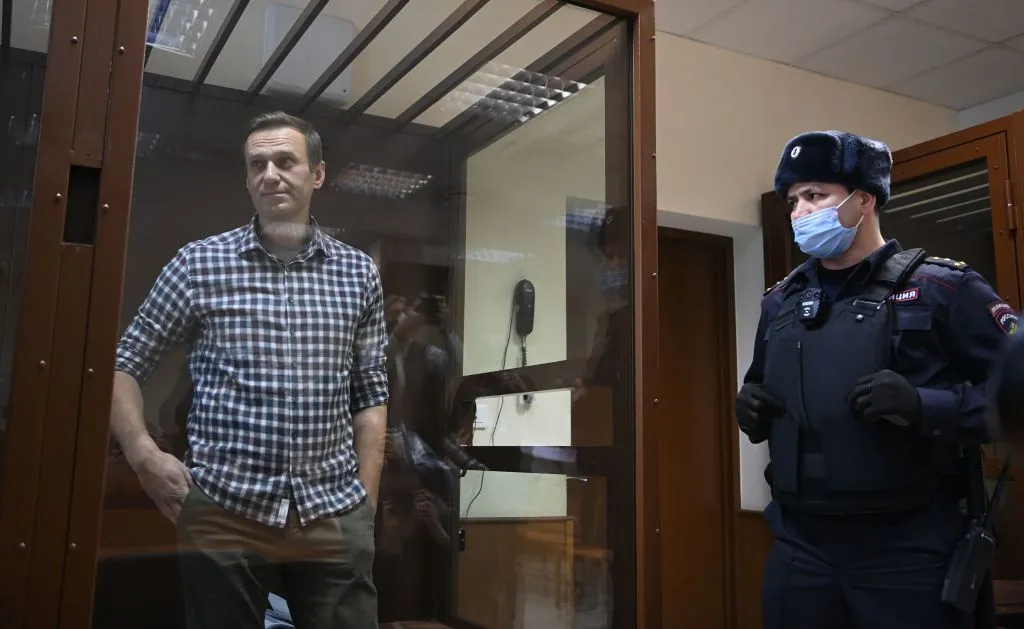
Russian court rejects Navalny appeal, setting up potential transfer to penal colony
A Russian court on Saturday rejected leading Kremlin critic Alexey Navalny's appeal against his prison sentence.
The decision, which was expected, did reduce the term by about six weeks, but the opposition leader is now facing around two-and-a-half years in prison. It's unclear whether Navalny will be moved from the high-security Moscow prison where he's currently being held to a penal colony, but the squashed appeal does pave the way for such a transfer, The New York Times reports.
The Kremlin is expected to face international backlash over the latest development. Per Reuters, Latvian Foreign Minister Edgars Rinkevics said the Council of Europe could soon impose sanctions on Russia if Navalny isn't freed, and the Times notes Moscow, which joined the human rights-focused council in 1996, could potentially withdraw or face expulsion.
The Week
Escape your echo chamber. Get the facts behind the news, plus analysis from multiple perspectives.
Sign up for The Week's Free Newsletters
Join more than 350,000 subscribers and keep yourself informed with a selection of The Week’s most interesting, enlightening and entertaining stories - plus daily puzzles.

Navalny, one of Russian President Vladimir Putin's top rivals, was detained for violating parole (Navalny has said the charges are politically motivated) in January upon returning to Moscow from Berlin, where he spent months recovering from a poisoning, which he and others allege was carried out by Russia's FSB spy agency. The detention sparked mass protests across Russia, resulting in thousands of arrests. Read more at The New York Times and Reuters.
A free daily email with the day’s biggest news and analysis – and the best features from TheWeek.com
Tim is a staff writer at The Week and has contributed to Bedford and Bowery and The New York Transatlantic. He is a graduate of Occidental College and NYU's journalism school. Tim enjoys writing about baseball, Europe, and extinct megafauna. He lives in New York City.