Sign up to get Today’s Best Articles in your inbox
Join 350,000+ subscribers and keep yourself informed with a selection of
The Week’s most interesting, enlightening and entertaining stories - plus daily puzzles.
You are now subscribed
Your newsletter sign-up was successful
Want to add more newsletters?
An account already exists for this email address, please log in.
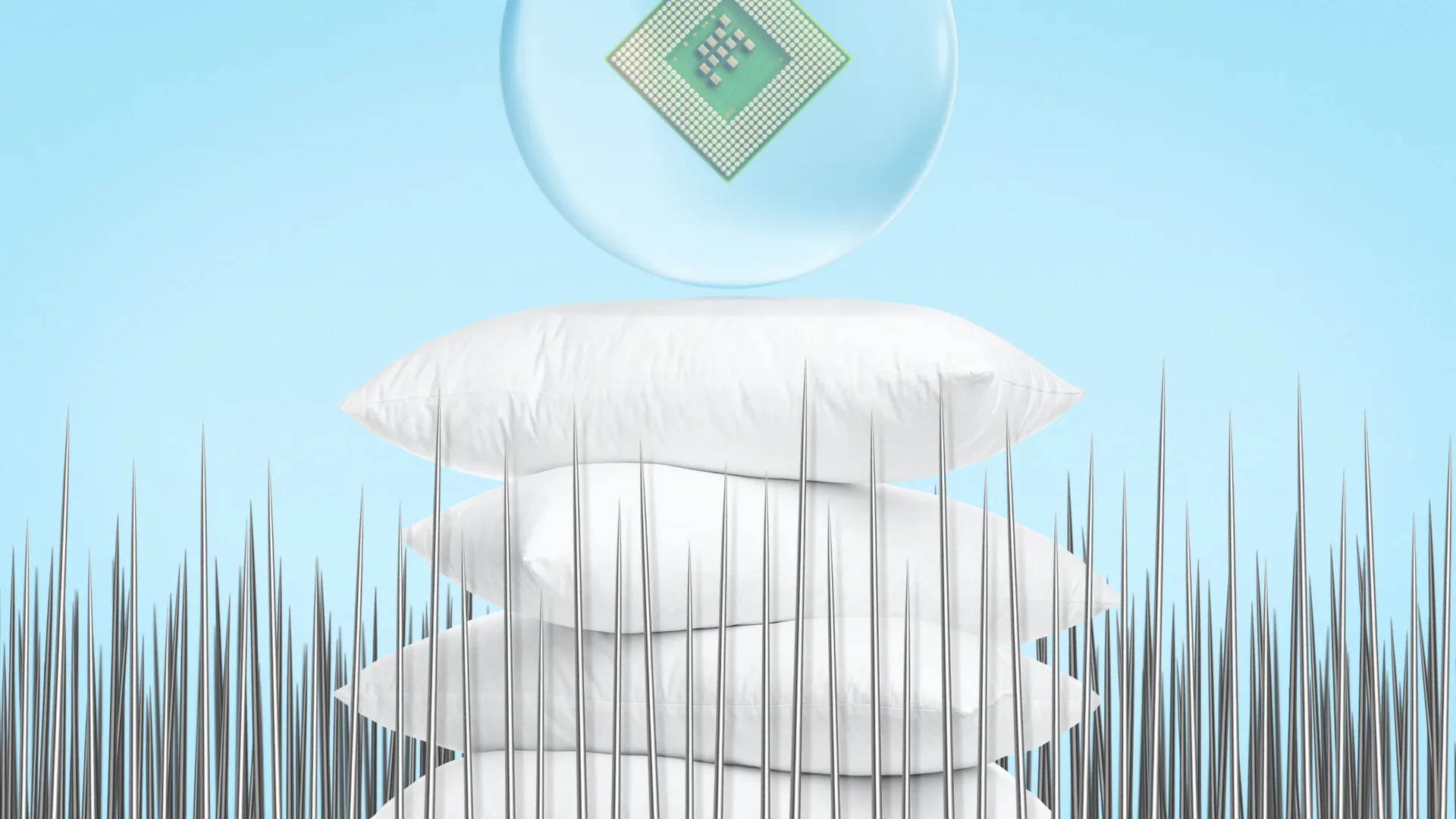
Economists have spent much of 2026 watching to see if the AI bubble will burst, much like the late 1990s boom-and-burn cycle of dot-com pioneer companies. But another possibility looms: The wild enthusiasm for artificial intelligence could settle into a sensible soft landing that spares the world a hard economic crash.
‘Reassessment under way’
Wall Street continues to believe that AI will “transform markets and the economy,” said Axios. But investors are also “pulling back funding” and looking for “evidence that their investments will actually pay off.” The markets that had a “blind enthusiasm for all things AI” are now are beginning to “differentiate between players, business models and financing approaches," said JPMorgan’s David Lebovitz to the outlet. That does not have to be scary. Call it a “rational exuberance phase,” said Axios.
The recent decision by Australian data center company Firmus to pull back from a planned initial public offering is “triggering the usual angst” about the AI bubble, said Patrick Commins at The Guardian. The growing skittishness by traders “doesn’t mean the whole thing is a disaster,” said NAB economist Sally Auld to the outlet. But there is a “reassessment under way” of AI’s anticipated returns.
The Week
Escape your echo chamber. Get the facts behind the news, plus analysis from multiple perspectives.
Join more than 350,000 subscribers and keep yourself informed with a selection of The Week’s most interesting, enlightening and entertaining stories - plus daily puzzles.
Join more than 350,000 subscribers and keep yourself informed with a selection of The Week’s most interesting, enlightening and entertaining stories - plus daily puzzles.
The damage from a popped AI bubble would be “severe but not permanent,” said Ruchir Sharma at Foreign Affairs. It will likely follow the cycle of previous technological revolutions, with the rise of artificial intelligence “moving forward even as the speculative frenzy around it fades.”
‘Double whammy’
Fears remain. The “untold billions poured into AI” have driven the economy but the “boom could quickly invert” if profits are elusive, said Futurism. The fallout could ironically result in job losses and end up “accelerating the replacement of workers with AI,” said Greg Rosalsky at NPR’s Planet Money.
One possible solution to that “double whammy” scenario is a tax on AI and robots that would make it “economical to continue employing humans” while funding the safety net, said Rosalsky. But there is a less-frightening path forward, as well. A downturn could “leave businesses with less money to invest in AI,” making them reliant on human workers.
Sign up to get Today’s Best Articles in your inbox
A free daily email with the day’s biggest news and analysis – and the best features from TheWeek.com
Joel Mathis is a writer with 30 years of newspaper and online journalism experience. His work also regularly appears in National Geographic and The Kansas City Star. His awards include best online commentary at the Online News Association and (twice) at the City and Regional Magazine Association.