Sign up to get Today’s Best Articles in your inbox
Join 350,000+ subscribers and keep yourself informed with a selection of
The Week’s most interesting, enlightening and entertaining stories - plus daily puzzles.
You are now subscribed
Your newsletter sign-up was successful
Want to add more newsletters?
An account already exists for this email address, please log in.
How internet domain addresses are controlled and why AI has shaken it up
Soon, .com will seem old school, and .fart and .agi could take over
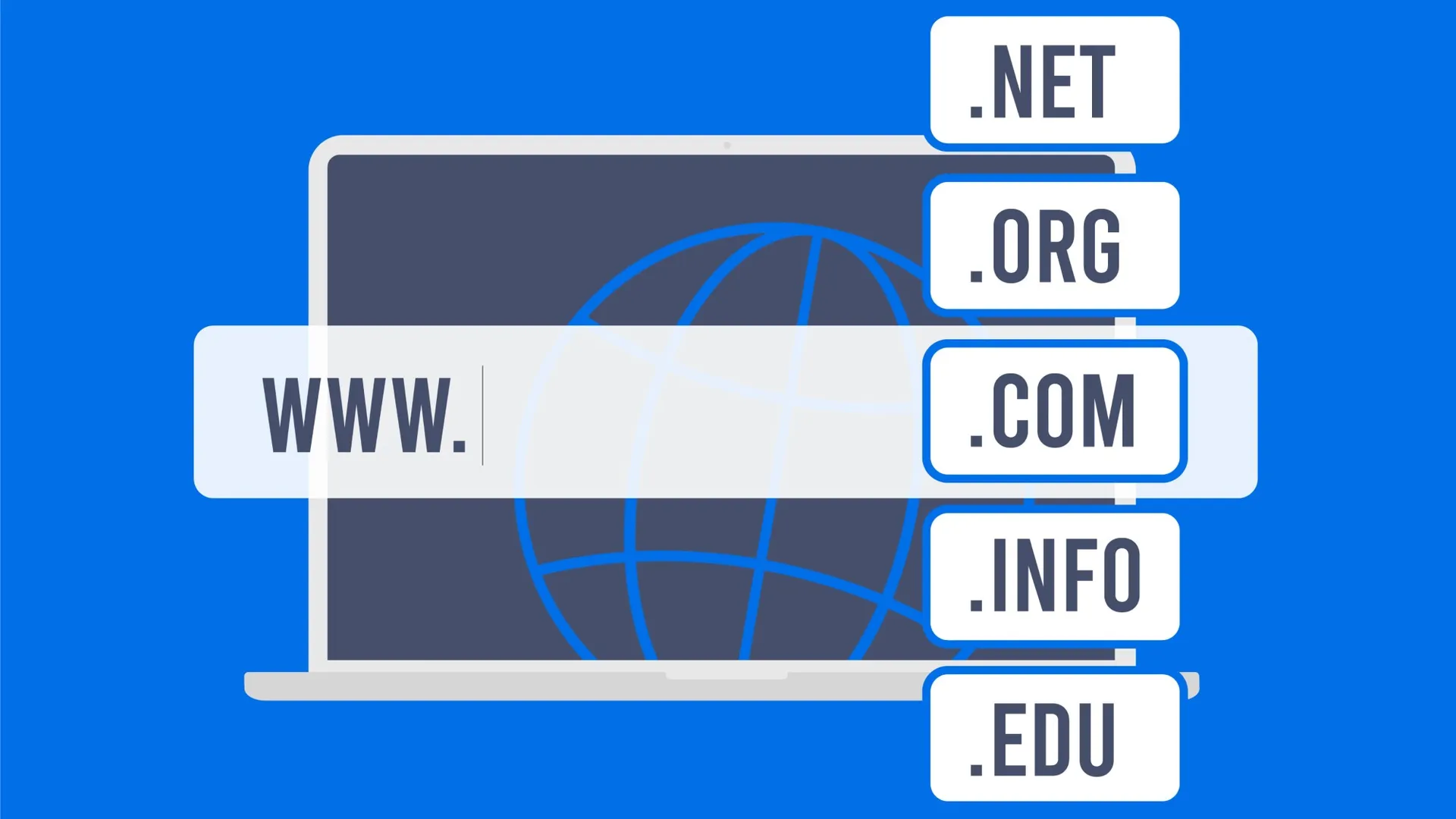
For the first time in years, applications are flowing in to the Internet Corporation for Assigned Names and Numbers (ICANN), the organization that controls web addresses, for new top-level domains. These proposed suffixes at the end of URLs will shape the internet’s next era.
What did the applications reveal?
ICANN has received 1,615 applications from 481 applicants so far, according to its Reveal Day announcement earlier this month. This is the “biggest shake-up” of internet addresses in “more than a decade” and could “result in you typing .fart to reach a website,” said The Times. While some domains are “quirky,” others show how “AI companies are seeking to grab domains like .agi, .superintelligence and .chatgpt.”
Ten different companies, “including both Meta and OpenAI,” applied for the .agent domain, said The Verge. Seven applied for .agi. Six, including OpenAI, applied for .asi, “clearly attempting to get in on” Trump’s push to switch from artificial intelligence to super intelligence. OpenAI applied for 15 TLDs (top-level domains), while Meta wants 21.
The Week
Escape your echo chamber. Get the facts behind the news, plus analysis from multiple perspectives.
Join more than 350,000 subscribers and keep yourself informed with a selection of The Week’s most interesting, enlightening and entertaining stories - plus daily puzzles.
Join more than 350,000 subscribers and keep yourself informed with a selection of The Week’s most interesting, enlightening and entertaining stories - plus daily puzzles.
This is the first time ICANN has accepted applications in over a decade. The “nonprofit first sought new top-level domain applicants in 2012,” said Politico, resulting in .app, .web and .pizza. Each application costs $227,000 and is “subject to, among other processes, a community input period that runs from November to March.”
Those awarded a domain “become registries, gaining control over the suffix,” said The Times. They can keep these for themselves or “sell the registrations under it to third parties.”
Who does this benefit?
The domain applications show that organizations worldwide are “seeking new ways to build trusted online identities, serve their communities and connect with internet users,” said ICANN President and CEO Kurtis Lindqvist in a press release. But not everyone is enthusiastic.
Internet safety expert John Carr, for one, is “critical of ICANN’s process,” said The Times. After attending company meetings for a decade, Carr “concluded it was a conspiracy against the public good,” he told the outlet. Under ICANN’s rules, the organization is supposed to check the “real-world identities” of the people buying the domain names, but “they don’t.” So these new domains will be “like the last round of new domains,” just “another way for them to make money.”
Sign up to get Today’s Best Articles in your inbox
A free daily email with the day’s biggest news and analysis – and the best features from TheWeek.com
Theara Coleman has worked as a staff writer at The Week since September 2022. She frequently writes about technology, education, literature and general news. She was previously a contributing writer and assistant editor at Honeysuckle Magazine, where she covered racial politics and cannabis industry news.