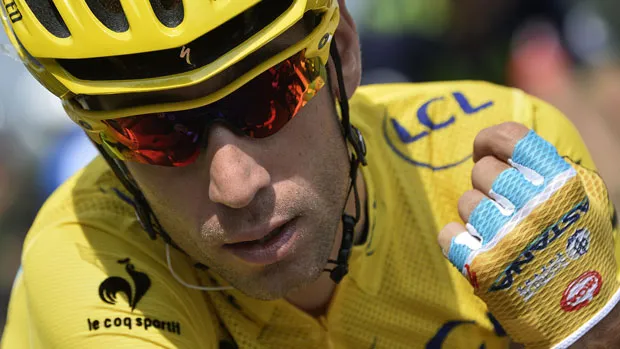
British sports fans may not have noticed but the Tour de France finished on Sunday afternoon in Paris with Italy's Vincenzo Nibali safely negotiating the final stage on the Champs-Elysees. It was the first win for an Italian cyclist since the ill-fated Marco Pantani won the event in 1998, six years before his death in 2004.
Sicilian Nibali has been the dominant rider in the 101st edition of the Tour, claiming his first stage win on day two of the race when he triumphed on the 201 km stretch between York and Sheffield. That was the day on which Mark Cavendish announced his Tour was over after a bad fall on the opening stage from Leeds to Harrogate. A few days later, when Chris Froome, Britain's other high-profile rider – and defending champion – also retired, British interest in the Tour plummeted.
Despite the fact 2.5m people lined the route in those first two days in Yorkshire, the lack of a serious British challenger and the absence generally of any serious rival to Nibali made the 2014 Tour something of an anti-climax and certainly not a nail-biter for the average British sports fan, as Froome admitted on Sunday evening.
The Week
Escape your echo chamber. Get the facts behind the news, plus analysis from multiple perspectives.
SUBSCRIBE & SAVE
Sign up for The Week's Free Newsletters
Join more than 350,000 subscribers and keep yourself informed with a selection of The Week’s most interesting, enlightening and entertaining stories - plus daily puzzles.
Join more than 350,000 subscribers and keep yourself informed with a selection of The Week’s most interesting, enlightening and entertaining stories - plus daily puzzles.
Latest Videos FromThe Week US
"I think Nibali definitely does deserve the win this year, he did make it through all those stages that had all the crashes and all those difficult parts," said Froome. "It's been difficult for me watching the race. Nibali in the mountains has been relatively unchallenged, he hasn't had people attacking him and it hasn't been a mano-a-mano fight for the yellow jersey. That's sad for a race like the Tour de France."
Nibali's winning margin of seven minutes 37 seconds is the biggest since Germany's Jan Ullrich won by more than nine minutes in 1997.
Nibali won't care, of course, as Britain's Bradley Wiggins didn't two years ago when he won the Tour in similarly unspectacular circumstances.
In winning the Tour, 29-year-old Astana rider becomes only the sixth man to win all three Grand Tours - the Tour de France, Giro d'Italia and Vuelta a Espana. "After winning the Vuelta, the Giro and the Tour, I'll keep focusing on Grand Tours but I'd also like to crown it all with a world champion's rainbow jersey one year," said Nibali.
Asked what it felt like emulating Pantani, who was later plagued by allegations of doping and died in 2004 of cocaine poisoning, Nibali replied: "It's very difficult to make a comparison between Pantani's victory and my victory, because Marco won his in the last week, two days before the end. For me it's the contrary - I had the yellow jersey on my back after two days."
While the 2014 Tour was something of a disaster from a British perspective – the first race since 2011 that a Briton hasn't finished on the podium – it perhaps signalled the rebirth of French cycling with Jean-Christophe Peraud claiming second place and Thibaut Pinot (who also won the white jersey as the fastest under-25 rider) third. It is the first time in 17 years that a home rider has finished in the top three and not since 1984 have two Frenchmen finished on the podium.
Britain's best was Geraint Thomas, who finished 22nd overall, 59 minutes and 14 seconds behind Nibali.