The Week The Week
flag of US
US
flag of UK
UK
https://cdn.mos.cms.futurecdn.net/flexiimages/jzblygzdxr1769609154.gif

SUBSCRIBE

Try 6 weeks free

Sign in
  • View Profile
  • Sign out
  • The Explainer
  • Talking Points
  • The Week Recommends
  • Podcasts
  • Newsletters
  • From the Magazine
  • The Week Junior
  • More
    • Politics
    • World News
    • Business
    • Health
    • Science
    • Food & Drink
    • Travel
    • Culture
    • History
    • Personal Finance
    • Puzzles
    • Photos
    • The Blend
    • All Categories
  • Newsletter sign up Newsletter
  • The Week Evening Review
    AI-driven inflation, a phone privacy ruling, and extreme heat’s effects on travel

     
    TODAY’S BIG QUESTION

    Is AI’s juice worth the financial squeeze?

    The hype of artificial intelligence is running up against pricey realities, at least for now. MacBooks and Xboxes are getting more expensive due to “AI inflation.” And central bankers are warning the AI boom could soon trigger a financial crash. Ford, meanwhile, has hired hundreds of engineers to do the work that artificial intelligence software could not. All this has opened debate as to whether the benefits of AI are worth the costs.

    What did the commentators say?
    The buildout of data centers has created the “global shortage of memory and storage chips” behind the device price hikes, said CBS News. MacBook Pros are going from $1,699 to $1,999, while the entry-level Xbox is rising to $499 from $399. 

    The demand from tech giants such as Alphabet, Amazon, Meta and Oracle leaves fewer chips for “regular consumer devices,” said Wedbush Securities’ Dan Ives to CBS News. “That just further drives up prices.”

    That inflation is typical of any “technological revolution,” said Jennifer Schonberger at Yahoo Finance. Big investment in new tech puts “pressure on resources.” 

    For now, AI inflation is “screwing with the rest of the economy,” said John Herrman at New York magazine. Once-accessible goods “seem to be slipping out of reach” of ordinary Americans, which could “meaningfully contribute to an already apocalyptic” national mood.

    But the data center surge could come to a sudden, thudding halt if those big companies do not soon see a return on their investment. The Bank for International Settlements has warned that an end to the data center “spending spree” could “damage the global economy,” said the Financial Times. 

    The payoffs are fuzzy. Ford has hired 350 “veteran engineers” to “reprogram the artificial intelligence tools that weren’t getting the job done,” said Bloomberg. AI is a “fantastic tool,” said Ford executive Charles Poon to reporters last week, per the outlet. But it’s “only as good as the information you use to train it.”

    What next?
    Businesses that enthusiastically embraced artificial intelligence are now trying to find a balance. Many firms urged their employees to “integrate AI tools into their work” only to see their “AI spending bills double or triple,” said The Wall Street Journal. Executives at enterprises like Meta, Microsoft and Uber are now looking to “steer workers toward cheaper, homegrown tools” and help those employees “hone their skills.”


    QUOTE OF THE DAY

    ‘On July Fourth, it’s going to be approximately 107 degrees out. And I’m going to go, and I’m going to make a really long speech just to show that I can do anything.’

    Trump, at the opening ceremony for the Theodore Roosevelt Presidential Library in North Dakota, on his Saturday night speech at Washington, D.C.’s National Mall for the U.S.’s 250th birthday


    THE EXPLAINER

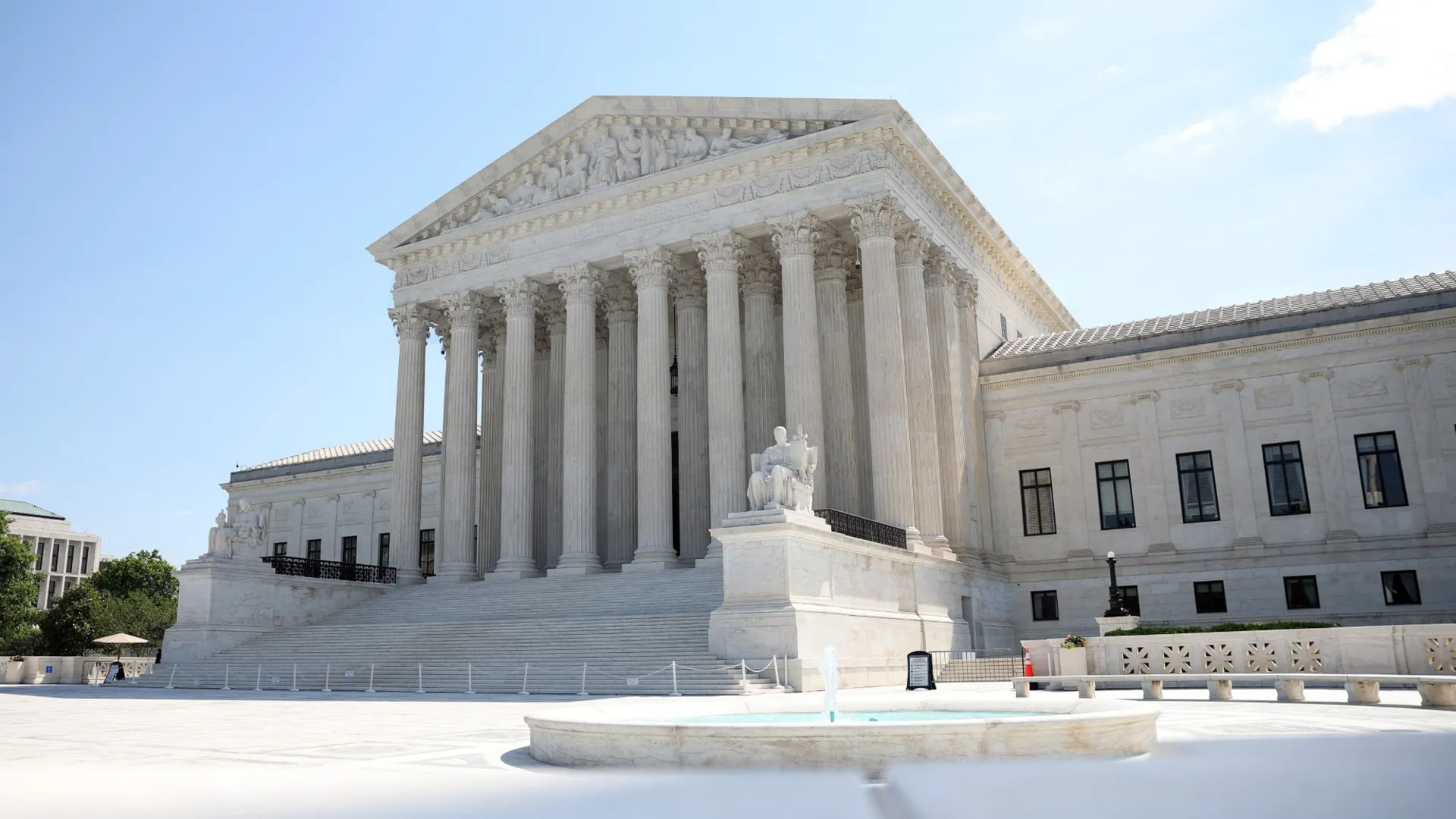
    Supreme Court makes it harder for police to track phones

    The Supreme Court has released a slew of opinions to mark the end of its current term, and one of them could prove to be a landmark case for personal protections. It has ruled that privacy laws must protect against widespread searches of phone location data — a decision that could have a monumental impact on future Fourth Amendment cases.

    What did the justices decide?
    The court’s opinion in the case, Chatrie v. United States, holds that people have an “expectation of privacy from the government as their mobile devices track them throughout their daily activities,” even if this data has already been shared with tech companies like Google and Apple, said Politico. The case stems from a 2019 armed robbery at a Virginia bank and how police tracked down the culprit.

    During the hunt for the robbery suspect, police used a cellular data search warrant called a geofence warrant to “capture location data from all the phones in the vicinity of the bank for 30 minutes before and after the robbery,” said The New York Times. The eventual suspect was found using the geofence warrant. But he argued that this type of broad search was illegal under the Fourth Amendment, which protects against unreasonable searches and seizures, because innocent people’s data could also be obtained.

    The Trump administration contended that users do not have an “expectation of privacy after voluntarily sharing their location data with companies like Google,” said Politico. But the Supreme Court did not buy that argument, ruling 6-3 that “sensitive data scooped up by geofence warrants counts as a Fourth Amendment search,” said The Guardian. 

    What’s the bigger picture?
    The court did not completely strike down the use of geofence warrants, instead sending the matter back to the Circuit Court of Appeals. Privacy advocates call these warrants a “form of dragnet surveillance because the information is not just about one suspect,” said NBC News. These advocates warn that such warrants could be “used to target disfavored political groups, including protesters.”

    The ruling “narrows the scope of what cloud-stored data the federal government can lawfully obtain without an individualized warrant,” said The Hill. And policing could also be significantly affected by the case, as geofence warrants are “typically employed by investigators when they know specific details of a crime but don’t yet have a suspect.”


    Statistic of the day

    3.7 miles: The distance between a small plane crash at the 109-story Citic Tower, Beijing’s tallest building, and Zhongnanhai, the Chinese Communist Party’s headquarters, located in a no-fly zone. The collision killed the pilot and injured at least 13 people. Eyewitness videos and photos have been “scrubbed off the internet,” said the BBC, as officials investigate the incident.


    IN THE SPOTLIGHT

    How climate change will transform travel

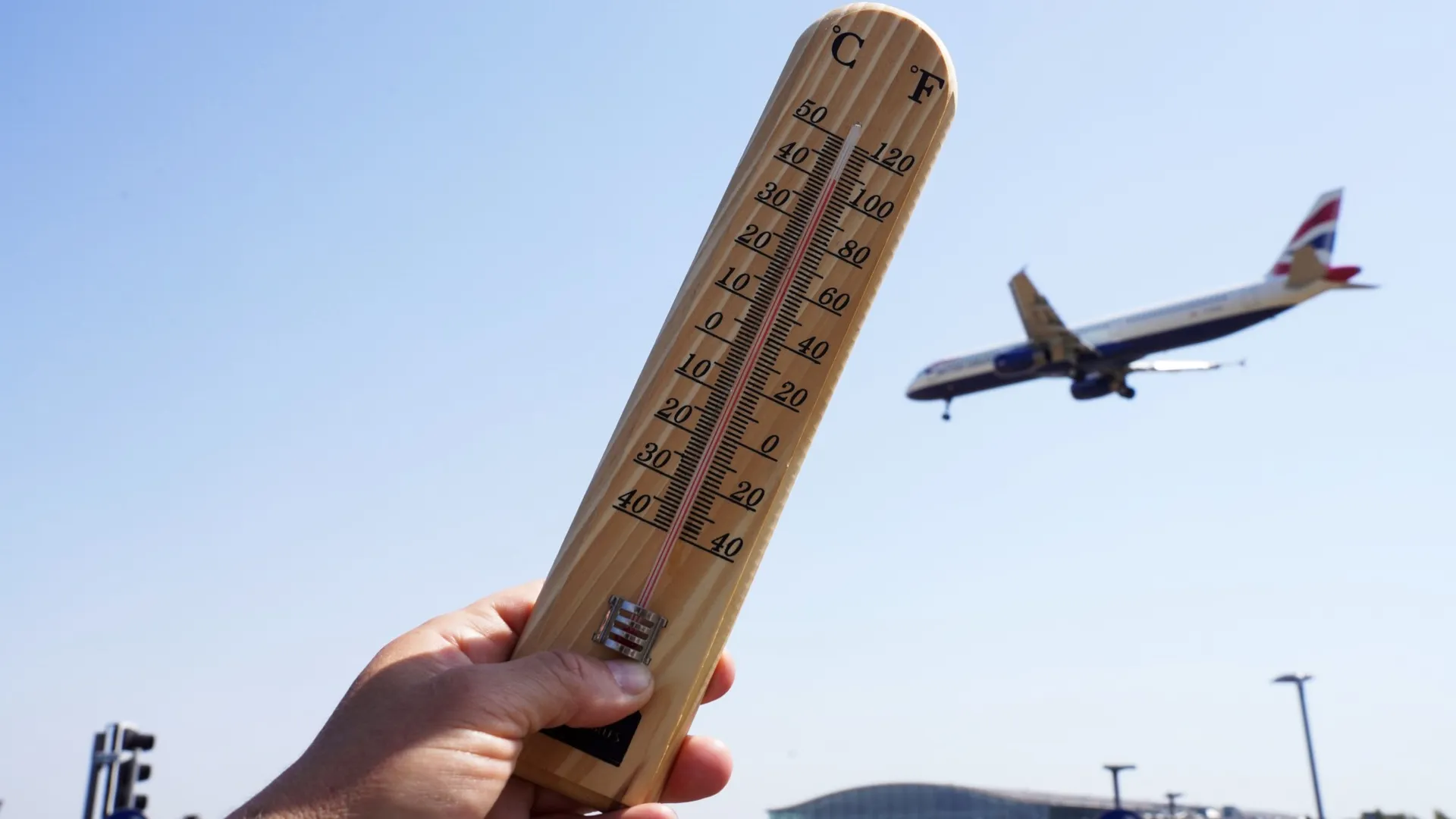
    The heat wave that has broken records across Europe could change travel in what seems to be the new normal of sizzling temperatures. And the impact of this extreme weather on “tourism-reliant” countries could be “huge,” said Alejandro Saez Reale, of the World Meteorological Organization, to National Geographic.

    ‘Coolcation’ trend
    Travel could become trickier during the hottest months as heat waves, storms, flooding and wildfires cause more delays and cancellations for flights, trains, ferries and even road travel. So travelers will seek more comfortable temperatures and place greater value on destinations where the weather is steadier and therefore less likely to disrupt their holiday. 

    And avoiding the peak summer months might not be enough, because heat waves are “spreading across the calendar,” said National Geographic. In May 2022, Spain endured a heat wave of “extraordinary intensity,” and the following year in France, “severe heat” extended into September. 

    There's an increasing desire for “coolcations.” Eighty-one percent of Europeans are adjusting their travel habits due to the changing climate, with 15% actively seeking cooler climates and 14% avoiding locations prone to extreme heat, said a 2025 study from the European Travel Commission. Finland, Iceland, Norway and Poland are already recording double-digit growth in inbound visitors.

    Numbers ‘not dropping’ yet
    Despite these changes, France and Spain remain the most visited countries in the world, with 102 million and 96.8 million visitors, respectively, according to U.N. Tourism. So, while the “growth rate may have slowed,” the number of visitors to these warmer countries is “not dropping” yet.

    For now, people are still “enjoying Mediterranean destinations during the summer months,” said the Association of British Travel Agents. There’s “increased interest in slightly cooler destinations,” but it “remains the exception rather than the norm.”


    Good day 💊

    … for fewer risks. Severe muscular problems from taking statins are a rarer side effect than people have feared, according to a study published in the journal The Lancet Digital Health. Statins help reduce the risk of a heart attack or stroke, but “less than half of the 50 million people” who could benefit use them, said NBC News.


    Bad day 💿

    … for physical media. Sony will no longer manufacture PlayStation games on discs as of January 2028, according to the company. Games will be available in “digital formats only,” said Sony in a blog post, reflecting how “most of our community prefers to access and play games today.” But the announcement has some gamers “concerned about the future of game ownership,” said Ars Technica.


    Picture of the day

    Dressing for the occasion

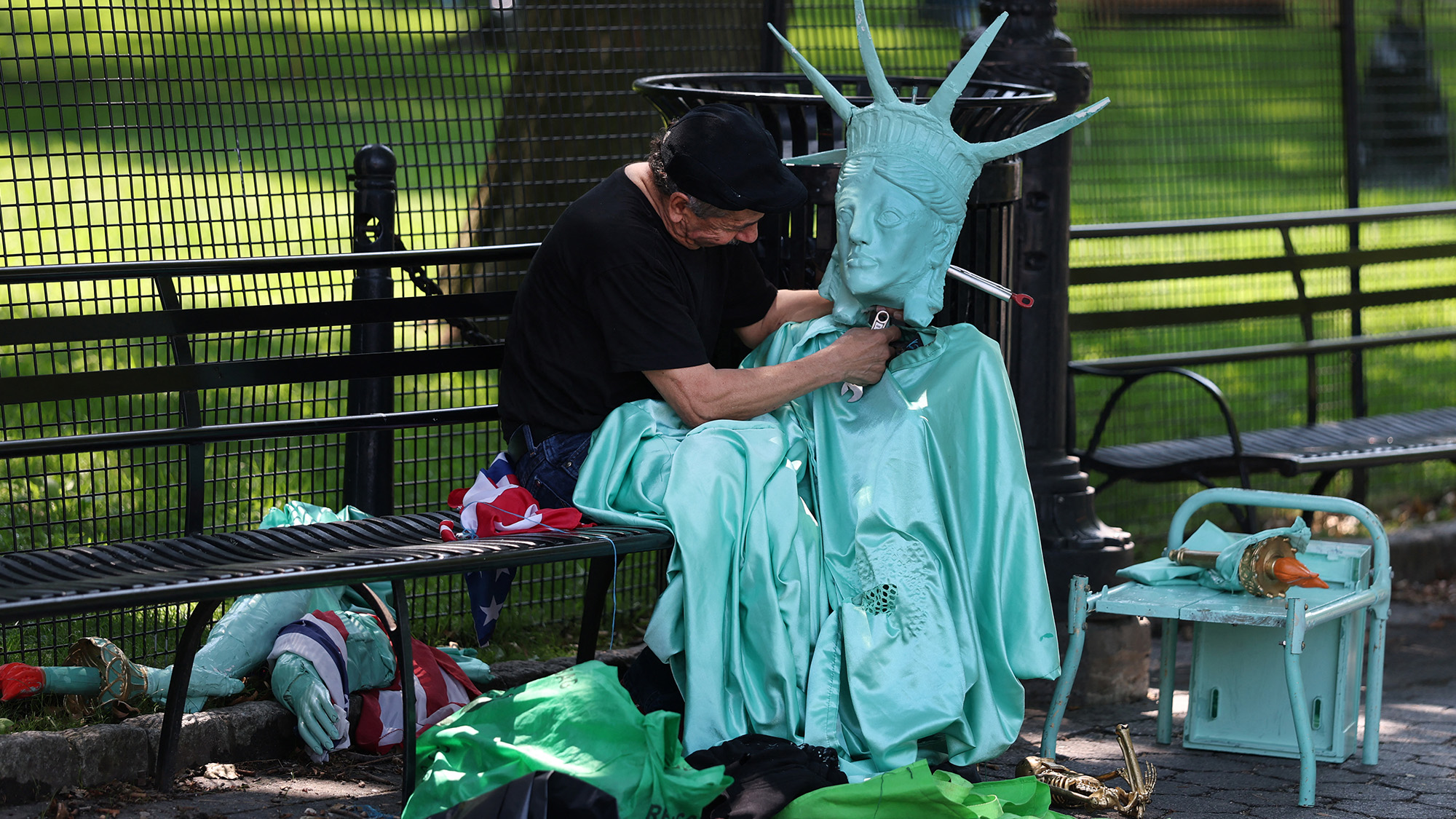
    A man works on a Statue of Liberty costume in New York’s Battery Park ahead of the city’s two-day Semiquincentennial events that include 30 ships, 200 planes, 20,000 sailors, an aerial show, and likely millions of spectators along the East and Hudson Rivers, according to The New York Times.
    Timothy A. Clary / AFP / Getty Images


    Puzzles

    Daily sudoku

    Challenge yourself with The Week’s daily sudoku, part of our puzzles section, which also includes guess the number

    Play here


    The Week recommends

    Closer is better for game-day lodging. These hotels prove it.

    After scoring tickets to see your favorite team, you are going to need to book somewhere to sleep if you don’t live nearby. And the best accommodations are always within walking distance. The hotels on this list are not just convenient, though. They are straight-up great stays.

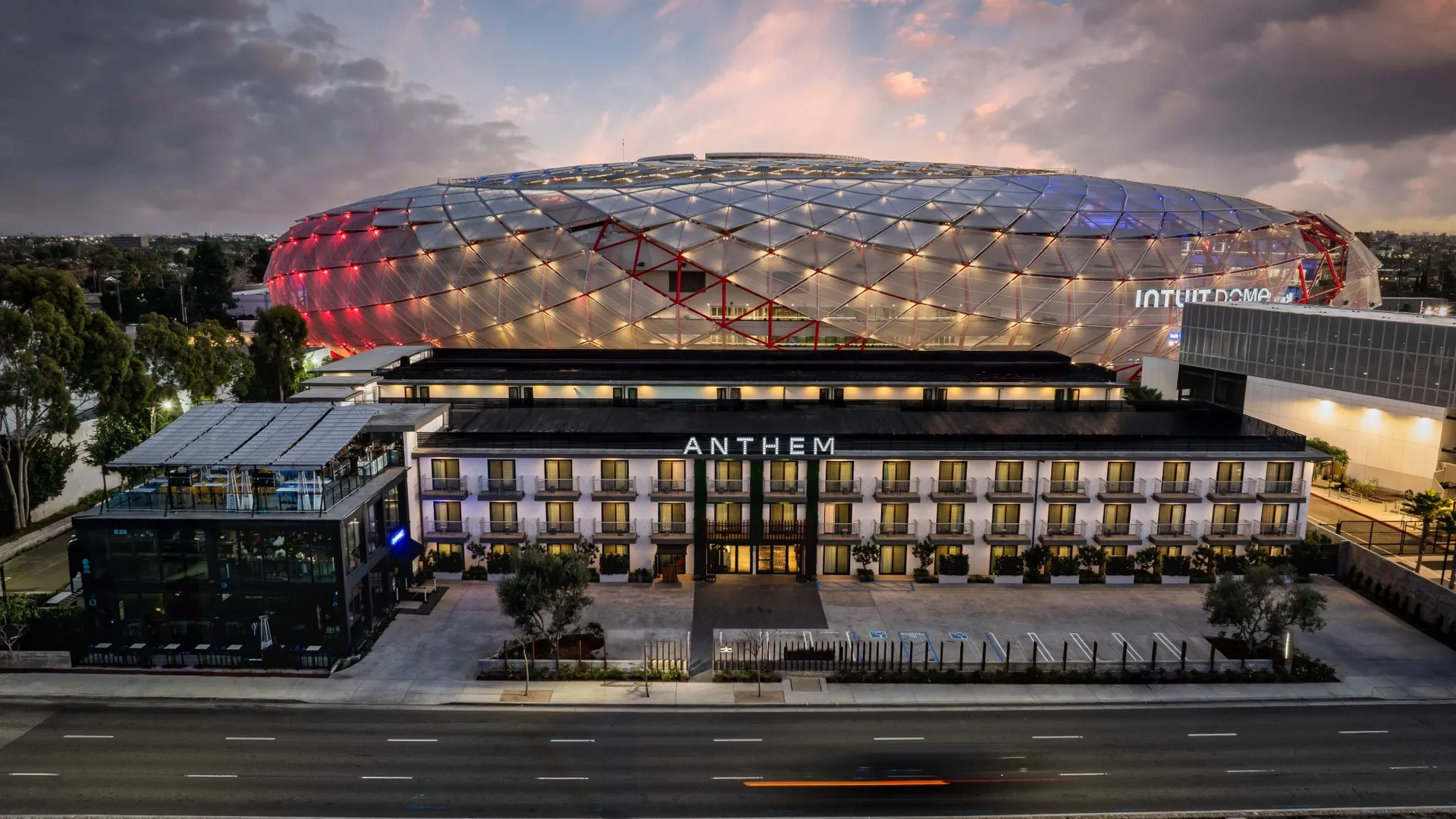
    The Anthem Hotel, Inglewood, California
    This vibrant hotel is in the “lively” Stadium District, next to Intuit Dome and down the street from SoFi Stadium and Kia Forum, said The Points Guy. All of the comfortable rooms have been recently renovated and decked with blackout curtains. There are also themed suites for an immersive experience that celebrates L.A. basketball and soccer. Cool off in the “massive” pool, and enjoy cocktails at the colorful Soundwave Pool Bar or rooftop Tom’s Watch Bar. (rates from $130)

    Fidelity Hotel, Cincinnati 
    The sophisticated rooms and suites feel like home, with plush couches and beds. Oversize windows look over downtown, and the Great American Ball Park, home of the Cincinnati Reds, is right around the corner. When it’s time to eat, there are two restaurants to choose from: the full-service Gwynne and grab-and-go Cora’s All Day Café. (rates from $143)

    Hotel Commonwealth, Boston
    The hotel’s Fenway Park Suite is a mere 507 feet from the legendary stadium, bringing guests as close to the action as possible. Hotel Commonwealth (pictured above) occupies an entire block in Kenmore Square, said Condé Nast Traveler, and is known for having “comfy” mattresses and “warm” service. (rates from $362)

    Read more


    Poll watch

    Almost half (46%) of Americans don’t know what the U.S.’s 250th anniversary commemorates, and a little more than half (53%) know it’s the adoption of the Declaration of Independence, according to a Cato Institute survey of 2,253 adults. Despite “civic ignorance,” the majority are grateful (86%) and proud (79%) to be Americans.


    INSTANT OPINION

    Today’s best commentary

    ‘Iran has zero chance of honoring the MOU’
    Mike Evans at The Jerusalem Post
    There are “people in Washington who still believe the Iranian regime can be persuaded to change through diplomacy,” says Mike Evans. They “believe another agreement,” another version of the Memorandum of Understanding or “another round of negotiations will somehow convince the ayatollahs to abandon their nuclear ambitions.” But Iran has “repeatedly shown that it views negotiations as a strategic tool.” Every “concession allows Tehran to strengthen its military, rebuild its economy and continue pursuing the very objectives it promised to abandon.”

    ‘The vultures arrived before the rescue teams’
    Gisela Salim-Peyer at The Atlantic
    Following two earthquakes, Venezuela’s “man-made disasters didn’t take long to exacerbate the natural one,” says Gisela Salim-Peyer. For “28 years and counting, Venezuela’s rulers have stolen or squandered much of the oil revenue of the most oil-rich country in the world” as “oligarchs pocketed the petrodollars.” The “humanitarian consequences of this wastefulness were well documented,” but now they have “acquired a fresh urgency.” In the “crucial first 24 hours following the quakes, the government response was practically nonexistent.”

    ‘How Trump plans to crush fast food workers’
    Timothy Noah at The New Republic
    Corporate America has “systematically shed low-wage workers, either by offshoring them, contracting out their work or designating them as independent contractors,” says Timothy Noah. The “consumer welfare standard is on its way out, but that transition is not happening quickly.” Today, fast food employees are “mostly grown-ups, often with families, and their best recourse, if they can’t make ends meet, is to go on welfare.” Trump’s “proposed joint-employer rule will impoverish these workers even more.”


    WORD OF THE DAY

    ballista

    An ancient catapult used to hurl bolts and stones. In the rainforests of northern Australia, a newly discovered spider nicknamed the ballista has been seen “building a similar contraption from silk” to launch green tree ants into its web, said The New York Times. Its hunting method is an “unprecedented example of specialization in a spider’s web.”


    Evening Review was written and edited by Theara Coleman, Nadia Croes, Catherine Garcia, Scott Hocker, Anya Jaremko-Greenwold, Justin Klawans, Joel Mathis, Summer Meza and Chas Newkey-Burden, with illustrations by Stephen Kelly.

    Image credits, from top: Illustration by Julia Wytrazek / Getty Images; Kevin Dietsch / Getty Images; Kristian Buus / In Pictures / Getty Images; The Anthem Hotel
     

    Recent editions

    • Morning Report

      Kane saves England from humiliating World Cup exit

    • Evening Review

      The Armed Forces reboot

    • Morning Report

      US Supreme Court defies Trump on birthright citizenship

    VIEW ALL
    TheWeek
    • About Us
    • Contact Future's experts
    • Terms and Conditions
    • Privacy Policy
    • Cookie Policy
    • Advertise With Us
    • FAQ
    Add as a preferred source on Google Add as a preferred source on Google

    The Week UK is part of Future plc, an international media group and leading digital publisher. Visit our corporate site.

    © Future Publishing Limited Quay House, The Ambury, Bath BA1 1UA. All rights reserved. England and Wales company registration number 2008885.