The Week The Week
flag of US
US
flag of UK
UK
https://cdn.mos.cms.futurecdn.net/flexiimages/jzblygzdxr1769609154.gif

SUBSCRIBE

Try 6 weeks free

Sign in
  • View Profile
  • Sign out
  • The Explainer
  • Talking Points
  • The Week Recommends
  • Podcasts
  • Newsletters
  • From the Magazine
  • The Week Junior
  • More
    • Politics
    • World News
    • Business
    • Health
    • Science
    • Food & Drink
    • Travel
    • Culture
    • History
    • Personal Finance
    • Puzzles
    • Photos
    • The Blend
    • All Categories
  • Newsletter sign up Newsletter
  • The Week Evening Review
    A Republican midterm convention, air conditioning in Europe, and AI philosophy

     
    TODAY’S BIG QUESTION

    How might a GOP convention upend the midterms?

    Historically unpopular and facing potentially catastrophic midterm elections in November, President Donald Trump has thrown an electoral hand grenade into the campaign calendar. “For the first time ever, the Republican Party will hold a midterm convention” in Dallas, Texas, Sept. 9-10 — a “rally like none other,” said Trump on Truth Social last week. And as the president tries to consolidate GOP strength ahead of a make-or-break election, Democrats see signs of desperation and political opportunities.

    What did the commentators say?
    Party officials have been “planning the logistics of the event for months” after Trump became “enamored with the idea of a splashy midterm convention last year,” said The New York Times. Given that the party in power has “historically lost ground in midterm elections, Republicans see a convention so close to election day as “offering the party a large platform to make the case to stay in power.” Democrats had “briefly considered” holding their own midterm convention but ultimately “decided against such a pricey event.”

    The gathering will offer Republicans a “chance to highlight all the wonderful things this president has done,” said Republican National Committee Chair Joe Gruters to Fox News. GOP officials also hope the convention will “energize MAGA voters who don’t always vote when Trump isn’t on the ballot,” said the outlet. 

    Despite being “designed to showcase Republican achievements,” however, the planned convention is “likely to have detractors, even among party officials,” said Al Jazeera. Critics fear the event could “draw resources away from key battlegrounds in the final stretch of the race” and will “shine a spotlight on Trump himself at a moment when his poll numbers are drooping.”

    What next?
    It’s likely that “many Democratic officials are looking forward” to Trump’s event, said MS NOW. The convention will “give the minority party an opportunity to do what it wants to do anyway: connect Republican candidates and officeholders to Trump.” 

    While much of the event’s programming remains under wraps, officials have begun to “fill in some of the details,” said The Dallas Morning News. The convention will “blend elements of a traditional political convention” with a “Trump-centered program designed to energize Republican voters.” The event will also include “delegates from across the country” but will feature “no official party business.”


    Talking Points

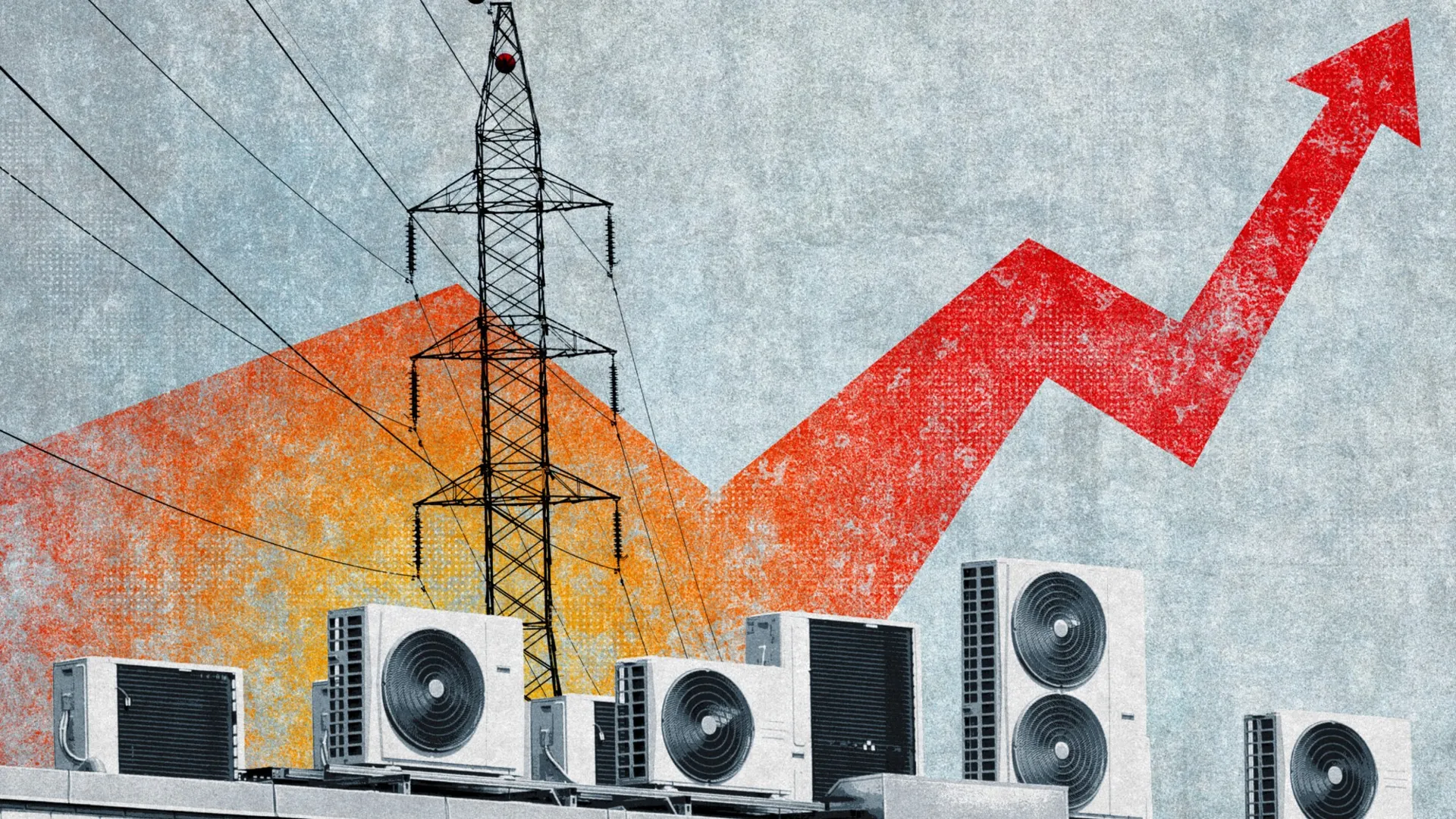
    Europe’s air-conditioning debate reaches a boiling point

    Americans use air conditioning just about everywhere. Europeans, for the most part, do not. But a deadly summer heat wave that threatens to become the new climate normal has sparked a fierce debate about whether it’s time for the continent to finally cool down.

    The dispute has grown “especially heated” in recent weeks, said Yahoo News. Visiting World Cup fans have kept cool in “American bars, restaurants, hotels and even stadiums” while their neighbors back home suffered Europe’s “worst-ever heat wave” without much relief. Just 20% of European homes have AC, mostly because northern Europe “rarely got hot enough to justify” the technology until recently, and electricity is “way more expensive” than in the U.S. 

    ‘Vast amounts of suffering’
    Americans and Europeans have “very different ideas about physical suffering and sacrifice,” said Thomas Chatterton Williams at The Atlantic. Americans are “scandalized” by European reluctance to cool down, but Europeans are “much more willing” to see discomfort as “part of life.” The result is “far too much air conditioning on one side” of the Atlantic Ocean and “not remotely enough on the other.”

    Air conditioning can “save your life” but also “drain your bank account and accelerate the apocalypse,” said Jonn Elledge at The New World. Running AC “adds to your carbon emissions,” especially if you are using “cheap portable air-conditioning units” that people tend to panic-buy during a heat wave. The flip side is that most homes overheat during the summer, with terrible effects on “health, productivity, hydration levels.” 

    Europe’s resistance to air conditioning is “driving it insane,” said Noah Smith at his Substack, Noahpinion. The lack of AC is causing “vast amounts of suffering” and death as “punishing, brutal heat waves” become more frequent. 

    ‘Frivolous sideshow’
    Adding more air conditioning to Europe’s grid could create a “vicious cycle,” said Deutsche Welle. The electricity to power those devices is substantially “generated by polluting, planet-warming fossil fuels.” That “only makes the problem worse.”

    The debate may seem a “frivolous sideshow,” but it reflects Europe’s inability to make “quick, effective, wholesale transformation even in the face of vital threats,” said Rym Momtaz at Carnegie Europe. The climate emergency has been coming for decades, and the continent’s governments are not ready. “Why trust them to manage defense if they can’t properly manage a heat wave?”


    Statistic of the day

    500,000: The number of military personnel South Korea plans to train as “drone warriors,” said its defense ministry. Every member of the forces “should be able to use drones like a second personal firearm,” said Defense Minister Ahn Gyu-back. In Ukraine and the Middle East, drones are a “game changer on the battlefield.”


    QUOTE OF THE DAY

    ‘I just want to go and get completely drunk and forget about tennis.’

    Belarus’ Aryna Sabalenka, the world No. 1 in women’s tennis, to reporters at the post-match press conference after her defeat to Japan’s Naomi Osaka, currently ranked 14th, in a Wimbledon round-of-16 match. Sabalenka plans on recovering and “building everything from scratch for the next one," she added.


    IN THE SPOTLIGHT

    Why AI firms are turning to philosophers

    For years, philosophy graduates have been the “butt of jokes about unemployable degrees,” said Business Insider. But now they can earn six-figure salaries as the “world’s most powerful AI companies” try to “shape how machines think and behave.”

    High-profile philosophers are already “embedded” in top AI firms, including Anthropic and Google DeepMind, said Business Insider. And OpenAI’s Sam Altman has claimed his company employed “hundreds of moral philosophers” when designing rules for ChatGPT.

    ‘AI constitutionalism’
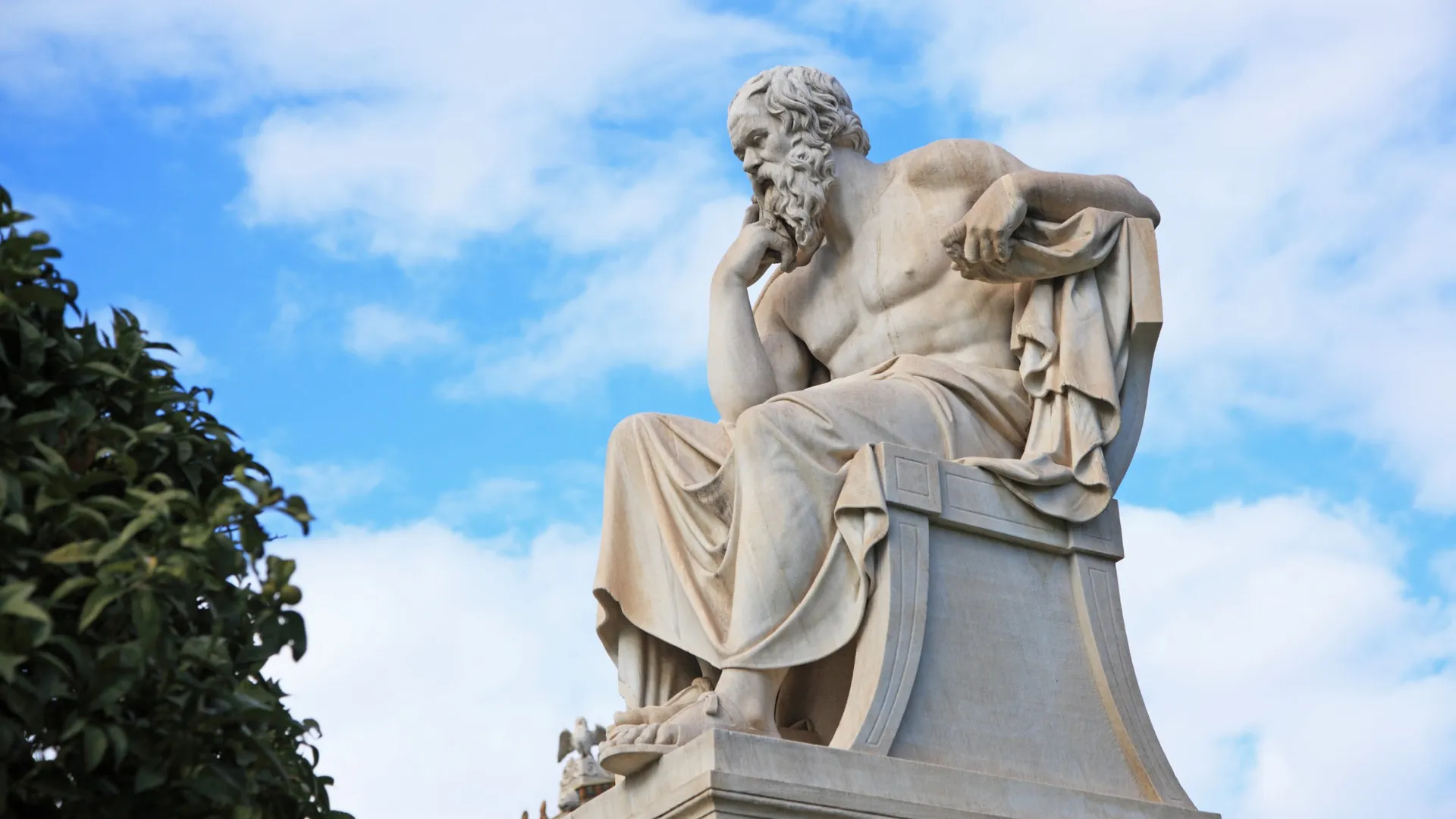
    Some “ancient” philosophical considerations are at the core of the contemporary tech industry, said The Economist. The idea of “Socratic ignorance” — that wisdom is realizing the extent of what we do not know — is a major principle in AI development used to avoid “sycophancy.”

    Philosophy is key to safety practices, too. Implementing the concept of “AI constitutionalism” — using legally or morally authoritative texts as “scaffolding” to direct the system — is intended to prevent “ominous behavior” from the models, said The Economist. Anthropic revealed earlier this year that its Claude constitution, nicknamed the Soul Doc, includes sources as “diverse as Immanuel Kant, Apple’s terms of service, and the Universal Declaration of Human Rights.”

    The influence goes both ways, said trend-tracker Observer. The demands of the AI industry are reshaping the “long-standing” landscape of philosophical thought, as foundational questions regarding consciousness, morality, minds and computation take on a “new urgency.”

    ‘Ethics-washing’
    The two disciplines of computer science and philosophy have “never been quite as entangled” or as “fraught” as they are now, said The Atlantic. And some experts are concerned that “misaligned incentives” will encourage a “rush of low-quality work.”

    There’s also a “degree of suspicion” in the academic world that AI firms are engaging in “ethics-washing,” said Wired. Hiring philosophers to train systems shows that companies are “outwardly performing a commitment to AI safety.” Even if philosophers are given “free rein” in tech companies, ultimately, they are “accountable to investors and shareholders.” And if a “for-profit AI company signs your paycheck, might that compromise your research”?


    Good day 📜

    … for finding historic rarities. A “vanishingly rare” copy of an early printing of the Declaration of Independence has been uncovered by a volunteer at the National Archives in London, said The Guardian. The document printed in Exeter is “one of just 11 copies to survive” and the “only one known outside the U.S.”


    Bad day 🦠

    … for battling shingles. Cases of the painful viral infection have been rising “across all age groups since the late 1960s,” especially among those in their “30s and 40s,” said The Cut. And women in this age range get shingles more than men because their immune systems are more susceptible to the virus and their lives tend to be more stressful.


    Picture of the day

    Sailing Fourth

    The Italian Navy’s Amerigo Vespucci sails past the Statue of Liberty during Sail4th, the largest-ever flotilla of more than 30 tall ships from around the world, alongside a naval review of more than 53 U.S. and foreign warships, in New York Harbor and along the Hudson River. 
    Yuki Iwamura / AP Photo


    Puzzles

    Daily sudoku

    Challenge yourself with The Week’s daily sudoku, part of our puzzles section, which also includes guess the number

    Play here


    The Week recommends

    Epic drama and comedy in July’s new movies

    Even with the many streaming-induced changes to the film industry’s operations, July remains a month for blockbusters. It includes an intriguing mix of madcap comedies, sweeping action epics and independent fare hoping to get as many viewers into theaters — or in front of their screens — as possible.

    ‘Gail Daughtry and the Celebrity Sex Pass’
    Gail (Zoey Deutch) is so shocked when her fiancé, Tom (Michael Cassidy), uses his half-joking “celebrity sex pass” that she travels to Los Angeles and convinces actor Jon Hamm to go to bed with her. Director David Wain (“Wet Hot American Summer”) brings us a film “so aggressive in its meta absurdity that it makes an episode of ‘Seinfeld’ look like Ingmar Bergman,” said Owen Gleiberman at Variety. (in theaters July 10)

    ‘The Odyssey’
    Director Christopher Nolan tackles Homer’s epic story of Odysseus. An extraordinary cast includes Matt Damon as the titular hero, Zendaya (pictured above) as the goddess Athena, and Jon Bernthal as Menelaus, the king of Sparta. Nolan has been “circling this kind of scale for much of his career, but ‘The Odyssey’ marks a new technical milestone even for him,” said Rodrigo Perez at The Playlist. (in theaters July 17)

    ‘The Dink’
    Sports comedies like “Dodgeball” don’t always get the critical love they deserve. In “The Dink,” director Josh Greenbaum (“Barb and Star Go to Vista Del Mar”) looks to capture the zeitgeist with this big-hearted satire of the pickleball phenomenon. It has “all the hallmarks of a typical sports redemption story,” said Ryan O’Rourke and Maggie Lovitt at Collider. (on Apple TV+ July 24)

    Read more


    Poll watch

    A majority of Americans (60%) believe Trump isn’t focused on the nation’s most pressing issues, according to an Economist/YouGov survey of 1,606 adults. More than half disapprove of his handling of healthcare, education, abortion and the environment, and only 28% feel the country is headed in the right direction.


    WORD OF THE DAY

    tungsten

    A rare metal known for having the highest melting point on Earth. Trump has secured an agreement with Kazakhstan’s president to grant an American company access to “one of the world’s largest untapped reserves of tungsten,” which is desperately needed to produce “missile warheads, fighter jets, computer chips and other critical goods,” said The New York Times.


    INSTANT OPINION

    Today’s best commentary

    ‘“Dignity” is a poor excuse for blocking press access to state executions’
    Austin Sarat at The Hill
    Indiana law says that the press has “no right to be present when the state carries out executions,” and the state “defends its limitations on access to executions by advancing the dignity argument,” says Austin Sarat. But there’s “something odd about using the word ‘dignity’ to describe what happens when the state kills one of its citizens and about allowing the state that seeks to do that deed to speak for a condemned person.”

    ‘SF’s recovery is missing one of the hardest things to bring back’
    Allison Arieff at the San Francisco Chronicle
    Everyone thinks that San Francisco was “perfect the day they arrived,” but many “can’t help but be nostalgic for a time when the arts felt core to the identity of the city,” says Allison Arieff. San Francisco “may be flush with private capital, but the culture of tech is largely one of metrics and results. Few in this community seem inclined to support something with a hard-to-measure return on investment,” and “federal funding has, of course, all but dried up.”

    ‘Telling time is a complicated business’
    Nishant Sahdev at The Wall Street Journal
    Modern economies “depend on everyone not only knowing the correct time but agreeing to it,” says Nishant Sahdev. About 450 atomic clocks are “continuously compared and averaged into a single international standard known as Coordinated Universal Time,” a “surprisingly thin thread on which much of the global economy depends.” A “difference of a fraction of a second can cause a breakdown,” and the “private sector could move faster by treating precise time as an essential service that needs protection.”


    Evening Review was written and edited by Will Barker, Theara Coleman, Nadia Croes, David Faris, Scott Hocker, Anya Jaremko-Greenwold, Justin Klawans, Joel Mathis, Summer Meza, and Rafi Schwartz, with illustrations by Julia Wytrazek.

    Image credits, from top: Illustration by Julia Wytrazek / Getty Images; zpagistock / Getty Images; Hiroshi Higuchi / Getty Images; Eamonn M. McCormack / Getty Images
     

    Recent editions

    • Morning Report

      Speculation grows over Farage’s future

    • Sunday Shortlist

      Florian Zeller’s ‘seat-shakingly funny’ farce

    • Saturday Wrap

      Can Spain’s ‘greyhound’ PM outrun scandal?

    VIEW ALL
    TheWeek
    • About Us
    • Contact Future's experts
    • Terms and Conditions
    • Privacy Policy
    • Cookie Policy
    • Advertise With Us
    • FAQ
    Add as a preferred source on Google Add as a preferred source on Google

    The Week UK is part of Future plc, an international media group and leading digital publisher. Visit our corporate site.

    © Future Publishing Limited Quay House, The Ambury, Bath BA1 1UA. All rights reserved. England and Wales company registration number 2008885.