Sign up to get Today’s Best Articles in your inbox
Join 350,000+ subscribers and keep yourself informed with a selection of
The Week’s most interesting, enlightening and entertaining stories - plus daily puzzles.
You are now subscribed
Your newsletter sign-up was successful
Want to add more newsletters?
An account already exists for this email address, please log in.
Why AI firms are turning to philosophers
Philosophy is becoming integral to the development of AI, but some critics accuse the industry of ‘ethics-washing’
For years, philosophy graduates have been the “butt of jokes about unemployable degrees”, said Thibault Spirlet in Business Insider. Now, they can earn six-figure salaries as the “world’s most powerful AI companies” try to “shape how machines think and behave”.
High-profile philosophers are already “embedded” in top AI firms. Amanda Askell is resident philosopher at Anthropic, and Iason Gabriel and Henry Shevlin work at Google DeepMind. OpenAI’s Sam Altman also claimed that the company employed “hundreds of moral philosophers” when designing rules for ChatGPT. But there is rising suspicion that there are ulterior motives at play.
‘Arc of redemption’
“Unemployed coders take note,” said The Economist: “there seems to be no shortage of work for philosophers of AI.” There are “thorny problems” in the developing field – “a philosopher’s favourite sort”.
The Week
Escape your echo chamber. Get the facts behind the news, plus analysis from multiple perspectives.
Join more than 350,000 subscribers and keep yourself informed with a selection of The Week’s most interesting, enlightening and entertaining stories - plus daily puzzles.
Join more than 350,000 subscribers and keep yourself informed with a selection of The Week’s most interesting, enlightening and entertaining stories - plus daily puzzles.
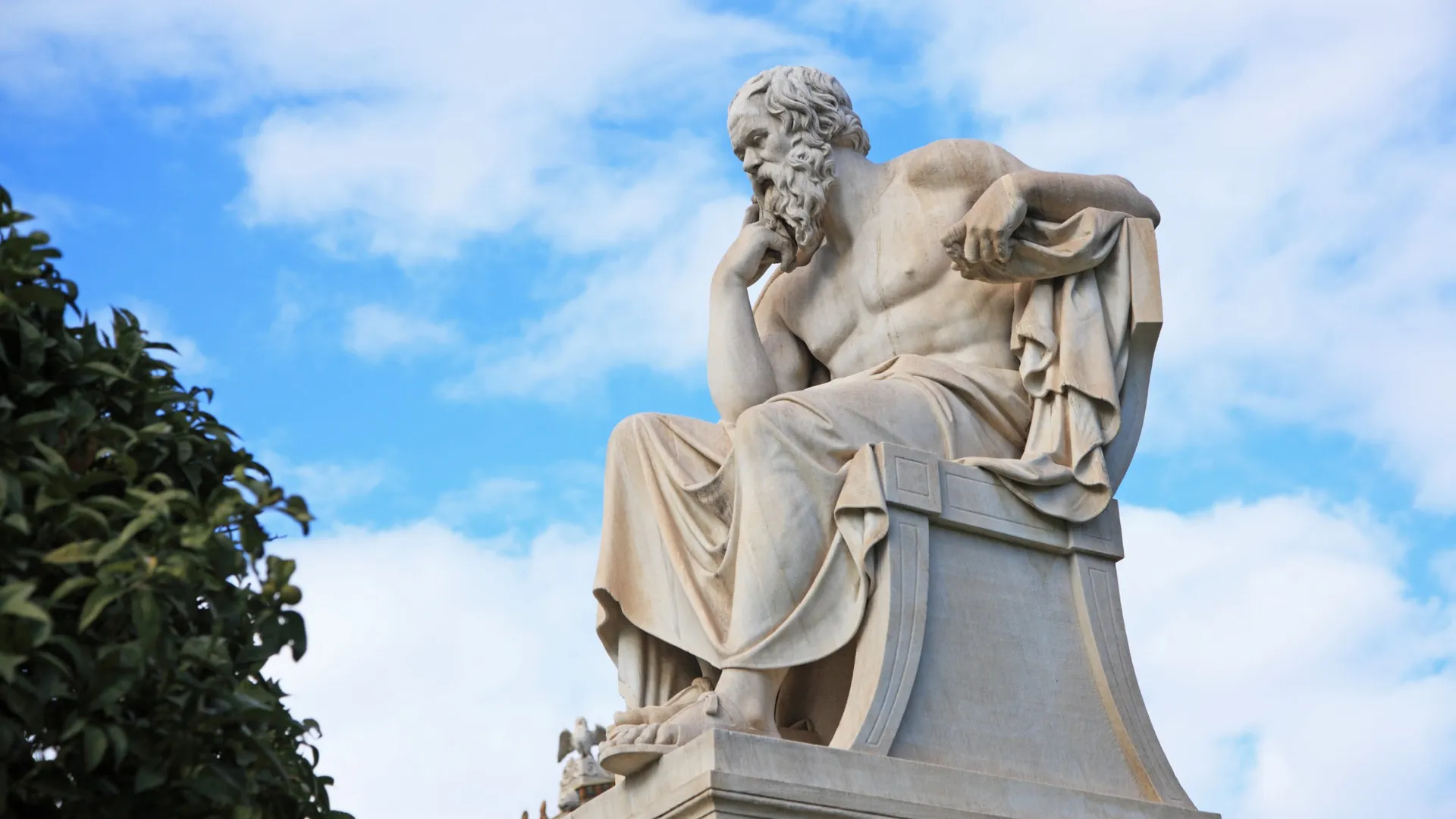
Some “ancient” philosophical considerations are at the core of the contemporary tech industry. The idea of “Socratic ignorance” – that wisdom is an individual realising the extent of what they do not know – is a major principle in AI development used to avoid “sycophancy”.
Deliberating whether a system should follow deontological aims (“strict rules” against “lying, coercion and treating people as a means rather than an end”), or consequentialist ones (which weigh “costs against benefits”) is also a common dilemma for developers.
Philosophy is key to safety practices, too. Implementing the concept of “AI constitutionalism” – where legally or morally authoritative texts are used as a base of “scaffolding” to direct the system – aims to prevent “ominous behaviour” from the models.
Anthropic revealed earlier this year that its Claude constitution included sources as “diverse as Immanuel Kant, Apple’s terms of service and the Universal Declaration of Human Rights”. This has been nicknamed the company’s “soul doc”.
Sign up to get Today’s Best Articles in your inbox
A free daily email with the day’s biggest news and analysis – and the best features from TheWeek.com
A rise in demand for philosophers has also coincided with a decline in admissions for computer science students, said Lance Eliot in Forbes. Arguably, computer science has become a “dead-end endeavour”, creating “automation that replaces the humans who made it all possible”. AI programming once held the “promise of big bucks and a stellar career”. This may just be a minor “course correction”, as no doubt degrees that directly relate to AI will remain important, but nonetheless, philosophy is experiencing an “amazing arc of redemption”.
But influence goes both ways and is “not limited to Silicon Valley”, said Alexandra Tremayne-Pengelly on Observer. Philosophy is impacting tech, but the demands of the AI industry are reshaping the “long-standing” landscape of philosophical thought. Academia is “rapidly adapting” as foundational questions regarding consciousness, morality, minds and computation have taken on a “new urgency”.
Suspicion and ‘ethics-washing’
The two disciplines of computer science and philosophy have “never been quite as entangled” nor as “fraught” as they are now, said Lila Shroff in The Atlantic. In a fundamental sense, the “careful thought” of philosophy is “at odds with the frenetic pace of AI”. In turn, some experts are concerned that “misaligned incentives” will encourage a “rush of low-quality work”.
There is a “degree of suspicion” in the academic world about philosophers migrating to AI firms, said Joel Khalili in Wired. The whole industry poses significant ethical risks. These programmes could be used to “develop new weapons of mass destruction, undermine democracy, or entrench existing social iniquities”.
But the greatest fear is of “ethics-washing”. Hiring philosophers to train systems not only demonstrates to the public that these models are so advanced that they warrant the attention of “serious people”, but also shows that companies are “outwardly performing a commitment to AI safety”.
In a broader sense, there are growing fears that philosophical research is becoming an “extension of the marketing function” of labs. And even if philosophers are given “free rein” in tech companies, ultimately, they are “accountable to investors and shareholders”. Essentially, “if a for-profit AI company signs your pay cheque, might that compromise your research?”
Will Barker joined The Week team as a staff writer in 2025, covering UK and global news and politics. He previously worked at the Financial Times and The Sun, contributing to the arts and world news desks, respectively. Before that, he achieved a gold-standard NCTJ Diploma at News Associates in Twickenham, with specialisms in media law and data journalism. While studying for his diploma, he also wrote for the South West Londoner, and channelled his passion for sport by reporting for The Cricket Paper. As an undergraduate of Merton College, University of Oxford, Will read English and French, and he also has an M.Phil in literary translation from Trinity College Dublin.