The Week The Week
flag of US
US
flag of UK
UK
https://cdn.mos.cms.futurecdn.net/flexiimages/jzblygzdxr1769609154.gif

SUBSCRIBE

Try 6 weeks free

Sign in
  • View Profile
  • Sign out
  • The Explainer
  • Talking Points
  • The Week Recommends
  • Podcasts
  • Newsletters
  • From the Magazine
  • The Week Junior
  • More
    • Politics
    • World News
    • Business
    • Health
    • Science
    • Food & Drink
    • Travel
    • Culture
    • History
    • Personal Finance
    • Puzzles
    • Photos
    • The Blend
    • All Categories
  • Newsletter sign up Newsletter
  • The Week Evening Review
    A wider wage gap, a major shift for Hamas, and a new fitness test

     
    TODAY’S BIG QUESTION

    Why is the wage gap growing between men and women?

    American women in the workforce have long been outearned by their male counterparts. And though the difference narrowed during the Covid-19 pandemic, the gap is now increasing, as overall wage growth slows and the economy shifts to jobs dominated by men.

    What did the commentators say?
    U.S. wage growth is “steadily slowing,” but for women, it’s “slowing even more,” said Marketplace. The gap got narrower during the last three decades of the 20th century due to “more women entering the workforce, broader minimum wage protections, and better access to contraception.” But progress has “stalled” this century, pausing briefly when the “demand for low-wage labor spiked” during the Covid-19 lockdown. 

    Now the gap is widening again, largely because women are “more likely to be in lower-paid, stretched-thin jobs, covering the households’ basic needs,” said Elissa Braunstein, a professor of economics at Colorado State University, to the outlet. Overall, women “earn 16% less than men on average,” said Forbes.

    “When women dominate a field, pay goes down,” said Mary Noble-Tolla at Lean In. When parks and recreation jobs shifted from a male-dominated field to one largely staffed by women, wages “dropped by 57%.” And mothers are “hit the hardest” by the disparity, but closing the wage gap would be broadly beneficial. Paying women “fairly” would “cut the U.S. poverty rate in half and inject over $1.6 trillion” into the American economy.

    The gap means most American households have “far fewer resources” to pay for “housing, food and healthcare,” said Stefanie O’Connell at MarketWatch. And that struggle “follows women throughout their lives” with more women over the age of 65 more likely than men their age to live in poverty.

    What next?
    There’s “no single policy that will close the wage gap,” said Emma Cohn and Elise Gould at the Economic Policy Institute’s Working Economics blog. Possible solutions would include “pay transparency” laws that require employers to “include wage information in job postings.” Expanded medical and family leave requirements, universal childcare and an improved minimum wage would also help. Such efforts would “build an equitable economy that works for all.”


    QUOTE OF THE DAY

    ‘It’s difficult. There are a lot of Ukrainian drones there. It’s dangerous.’

    Ukrainian President Volodymyr Zelenskyy, in front of reporters at the NATO Summit in Ankara, Turkey, when asked by Trump if he would go to Moscow for talks with Russian President Vladimir Putin


    IN THE SPOTLIGHT

    Hamas to dissolve Gaza government but not disarm

    For the first time since consolidating power to rule the Gaza Strip in 2007, Hamas will disband its Government Emergency Committee that has coordinated day-to-day life across the territory, according to the Palestinian militant group. This clears a path for the National Committee for the Administration of Gaza (NCAG), known as a technocratic committee, to assume control as part of President Donald Trump and his Board of Peace’s plan for the beleaguered region. 

    ‘Caretaker framework’
    The governmental dissolution “marks a significant political shift” by Hamas, said Al Jazeera. But while the group has “repeatedly said it’s prepared to step aside” from daily governance of Gaza, the question of its “disarmament remains unresolved.” 

    The decision to dismantle the governing authority was made to “remove any pretexts for the occupation, which continues its aggression and war of extermination,” said Hamas spokesman Hazem Qassem to AFP, per Le Monde. Hamas seeks the “swift entry” of the technocratic committee and “affirms its readiness to hand over governmental responsibilities.” 

    For Hamas, the move is designed to transform the group’s “existing governing structure” into a “caretaker framework,” said The Times of Israel. Hamas officials claim that “technical and professional staff” will “remain in place” to “maintain continuity in service to civilians in Gaza,” said The Jerusalem Post. 

    Unsurprisingly, Israel has rejected that characterization. The dissolution of a Hamas government wherein “all of the Hamas members stay in their positions” is a “spin that has no significance,” said one Israeli official to The Associated Press.

    ‘Actions, not promises’
    Any assessment of Hamas’ plan will be “guided by actions, not promises, to meet the critical needs of the people of Gaza,” said the Trump-led Board of Peace on X. Turning over full control of Gaza to the technocratic committee means “consolidation of all weapons under the control of the NCAG as provided for in the Comprehensive Gaza Peace Plan.”

    The change “does not concern its military wing,” about which mediators are “still negotiating,” said Haaretz. Israel, meanwhile, is “not allowing members of the technocratic committee to enter the territory.”


    Statistic of the day

    $10,000: The amount the International Olympic Committee is paying athletes to compete at the Olympic Games, breaking with “130 years of tradition,” said The New York Times. Starting with the recent Milan-Cortina Winter Olympics, all competitors will be entitled to the $10,000 grant six months after competing, “at a cost to the IOC of about $140 million.”


    THE EXPLAINER

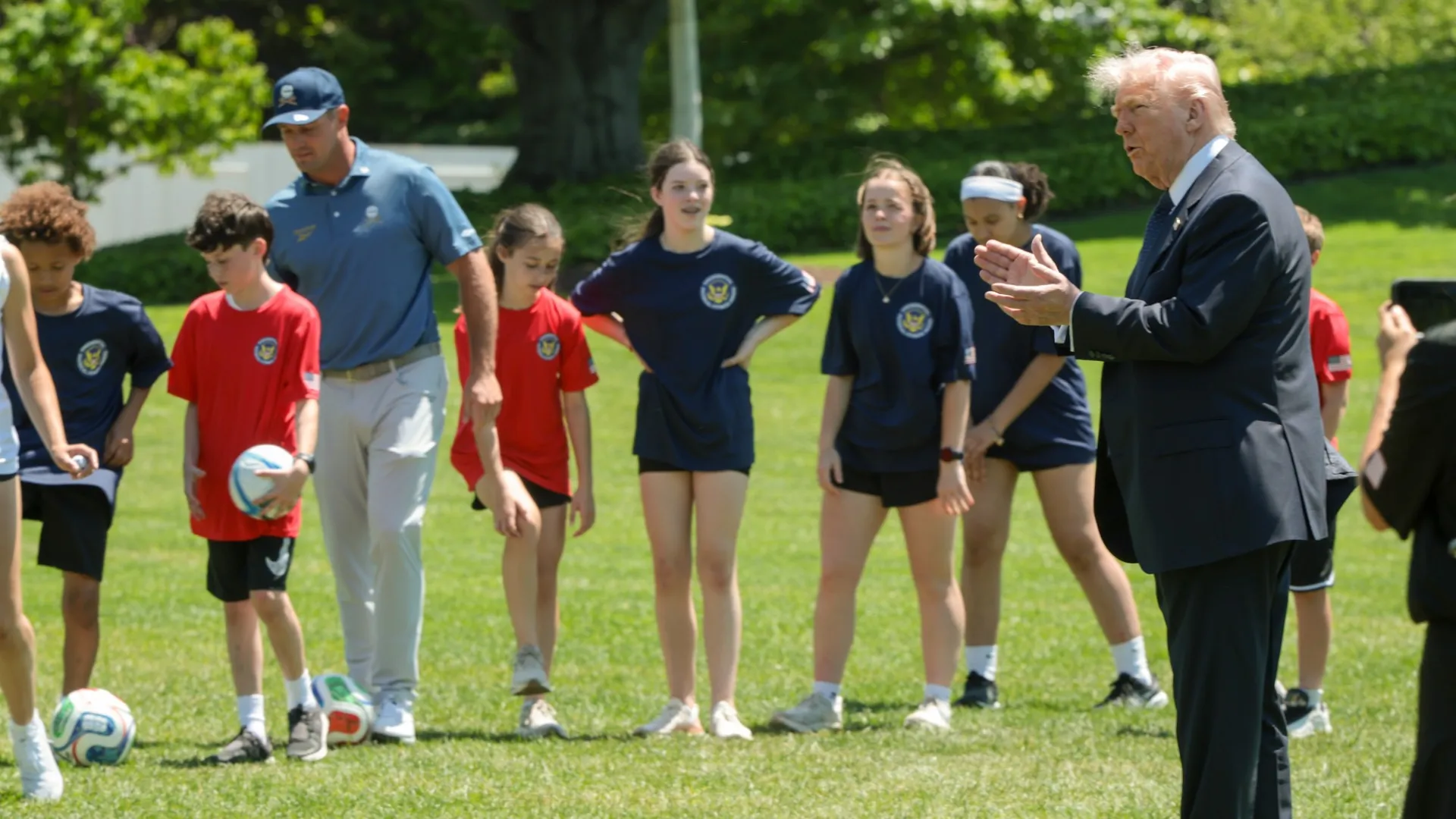
    Presidential Fitness Test draws mixed reviews

    The Trump administration has officially brought the Presidential Fitness Test back from the dead after it was discontinued in 2013, and Secretary of Health and Human Services Robert F. Kennedy Jr. is lauding it as a major step forward for children’s health. But some health experts aren’t so sure the revitalized test will meaningfully improve youngsters’ lives.

    ‘Not much has changed’
    The test, which was sunsetted during the Obama administration in favor of a different regimen called the Presidential Youth Fitness Program, is now back by executive order from President Donald Trump. But “compared to previous iterations of the test, not much has changed: It includes a timed run, an upper-body strength test, and a core test, with benchmarks set by a child’s age and gender,” said Chelsea Cirruzzo at Stat News. Health experts worry that such a stringent “focus on specific physical activity benchmarks could turn some kids off exercise.”

    The “worst experiences that people tend to report” from childhood fitness tests are “something having to do with embarrassment,” said Matthew Ladwig, an assistant professor of integrative human health at Purdue University Northwest, to Stat News. Negative memories of exercise as a child are “associated with adult sedentary behavior” later in life, according to a 2018 study co-authored by Ladwig. Others question whether a fitness test “alone will be enough to move the needle on physical activity and exercise,” said Mary Kekatos at ABC News. 

    ‘Recognizing the problem’
    Others believe the physical promises of the Presidential Fitness Test outweigh any negatives. A “healthy nation can only exist if its citizens are fit,” and “policymakers are finally recognizing the problem,” said K. John Lee at The Oklahoman. The reimplementation of the exam comes at a time when many children cannot “currently pass a military physical fitness test,” and “whether or not a student ever serves in uniform, that statistic should concern us.”

    “Too many young people are spending less time moving and building healthy habits,” said Rep. Jeff Van Drew (R-N.J.) in a statement. Reviving the test will “give students a positive goal to work toward and make physical activity a bigger part of their everyday lives.”


    Good day 🧊

    … for Arctic resilience. Scientists are celebrating a successful effort to rethicken Arctic sea ice by pumping seawater onto it in winter so that it freezes into a reinforcing layer. The thickness and brightness of sea ice can be significantly enhanced by making the ice more reflective, thereby increasing its resilience to melting, according to a study published in the journal Earth’s Future.


    Bad day 🐡

    … for Greek swimming. The Hellenic Red Cross has warned swimmers of an increasing number of a dangerous pufferfish species in the country’s waters. The silver-cheeked toadfish has sharp, powerful jaws strong enough to sever a human finger. Authorities on the island of Evia, a known hot spot, have installed a floating barrier to protect swimmers.


    Picture of the day

    Rock stars

    The Milky Way arcs over the volcanic landscape on Spain’s Tenerife island. The image titled ‘Path Towards the Stars’ by Italy’s Matteo Strassera has been shortlisted from nearly 4,000 entries to the international Royal Observatory Greenwich’s 18th annual ZWO Astronomy Photographer of the Year competition.
    Matteo Strassera / ZWO Astronomy Photographer of the Year


    Puzzles

    Daily sudoku

    Challenge yourself with The Week’s daily sudoku, part of our puzzles section, which also includes guess the number

    Play here


    The Week recommends

    Will Ferrell’s return is just one highlight of new TV

    For many people busy ferrying their kids to camp or embarking on vacations, summer is a time to let their TV backlog swell. But if you are the kind of person who streams as usual during the summer months, there are some terrific options for you this July.

    ‘Lucky’
    Anya Taylor-Joy plays Luciana “Lucky” Armstrong, a seasoned criminal aiming for one final heist before going straight. To complicate the narrative, her mom, Priscilla (Annette Bening), is a mob boss and her dad, John (Timothy Olyphant), is a career criminal. With “adrenalized action, tense familial drama, and a classic ‘one last job’ hook, the omens are strong” for this highly anticipated thriller, said Jordan King at Empire. (July 15 on Apple TV+)

    ‘The Hawk’
    In this sports parody (pictured above), Will Ferrell stars as Lonnie “The Hawk” Hawkins, a pro golfer two decades past his prime who seeks one last big tournament win even though his wife, Stacy (Molly Shannon), and golf phenom son, Lance (Jimmy Tatro), want him to retire. Lonnie’s “on-the-green rivalries take on an extrafamilial dimension” when he ends up competing against Lance, said Luke Buckmaster at The Guardian. (July 16 on Netflix)

    ‘Gone’
    Respected Bristol schoolteacher Michael Polly (David Morrissey) displays a strange lack of emotion when his wife, Sarah, goes missing, triggering the suspicion of Detective Sergeant Annie Cassidy (Eve Myles) in this engrossing six-part potboiler. “If there’s a tauter, clammier or more engrossing drama this year, I will eat my mortarboard with chips,” said Sarah Dempster at The Guardian. (July 23 on BritBox)

    Read more


    Poll watch

    A majority of U.S. psychologists (77%) report their patients have talked about using AI for mental health reasons, according to an American Psychological Association survey of 1,200 licensed psychologists. Nearly two in five (39%) say patients used the technology to self-diagnose, 34% for behavioral reminders, and 33% to aid therapy or treatment.


    INSTANT OPINION

    Today’s best commentary

    ‘A tax too far: Don’t punish immigrants sending money to family’
    Marcos Cruz at The Hill
    Immigrants “want to know how to safely transfer money to relatives” overseas, as these remittances “create a massive flow of capital out of wealthy nations and into lower- and middle-income countries,” says Marcos Cruz. This year, a “new 1% excise tax was added on money sent abroad,” and “although a 1% tax appears small when expressed as a decimal, its implications are strategic.” By “taxing remittances and lowering incomes,” Washington will have “worsened the root cause of the immigration problem.”

    ‘Stop mourning the old NATO. Build the new one.’
    Galip Dalay at Time
    This “must be the moment Europe stops mourning the alliance it once knew and begins building the one it actually needs,” says Galip Dalay. Europe should “strengthen the collective weight of European NATO members, not the European Union members or EU as an institution alone, within the alliance.” Europe “needs a continent-wide security architecture” and an “honest reckoning with an uncomfortable truth: Any post-American security framework cannot simply replicate the existing NATO-centric order.”

    ‘The end of reading is here’
    Rose Horowitch at The Atlantic
    Americans, “once members of a proudly literate society, read much less than they used to,” says Rose Horowitch. Even “demographics that traditionally read the most — retirees, women and college graduates — have seen a collapse,” and the books that people “do read are simpler than they used to be.” People are “losing the higher-order abilities of comprehension.” The U.S. “isn’t illiterate. It’s postliterate.” The people who “make a living from words are not the only ones who lose out in a postliterate age.”


    WORD OF THE DAY

    high-signal

    In the tech world, “signal” has become jargon for social behavior that predicts success or failure. “High-signal” individuals are “coming across as a winner,” and “rewards may follow,” said The New York Times. And if your actions are viewed as “anti-signal,” you are “radiating cringey energy that may hamper your chances.”


    Evening Review was written and edited by Theara Coleman, Nadia Croes, David Faris, Scott Hocker, Anya Jaremko-Greenwold, Justin Klawans, Joel Mathis, Summer Meza and Rafi Schwartz, with illustrations by Stephen Kelly and Julia Wytrazek.

    Image credits, from top: Illustration by Stephen P. Kelly / Getty Images; Ahmad Salem / Bloomberg / Getty Images; Anna Moneymaker / Getty Images; Colleen E Hayes / Netflix
     

    Recent editions

    • Morning Report

      Farage’s by-election gamble backfires

    • Evening Review

      Farage declares war

    • Morning Report

      Infantino faces calls to resign

    VIEW ALL
    TheWeek
    • About Us
    • Contact Future's experts
    • Terms and Conditions
    • Privacy Policy
    • Cookie Policy
    • Advertise With Us
    • FAQ
    Add as a preferred source on Google Add as a preferred source on Google

    The Week UK is part of Future plc, an international media group and leading digital publisher. Visit our corporate site.

    © Future Publishing Limited Quay House, The Ambury, Bath BA1 1UA. All rights reserved. England and Wales company registration number 2008885.