The Week The Week
flag of US
US
flag of UK
UK
https://cdn.mos.cms.futurecdn.net/flexiimages/jzblygzdxr1769609154.gif

SUBSCRIBE

Try 6 weeks free

Sign in
  • View Profile
  • Sign out
  • The Explainer
  • Talking Points
  • The Week Recommends
  • Podcasts
  • Newsletters
  • From the Magazine
  • The Week Junior
  • More
    • Politics
    • World News
    • Business
    • Health
    • Science
    • Food & Drink
    • Travel
    • Culture
    • History
    • Personal Finance
    • Puzzles
    • Photos
    • The Blend
    • All Categories
  • Newsletter sign up Newsletter
  • The Week Evening Review
    Plummeting Obamacare enrollment, Russia’s Olympic reinstatement, and a sinking telescope

     
    TODAY’S BIG QUESTION

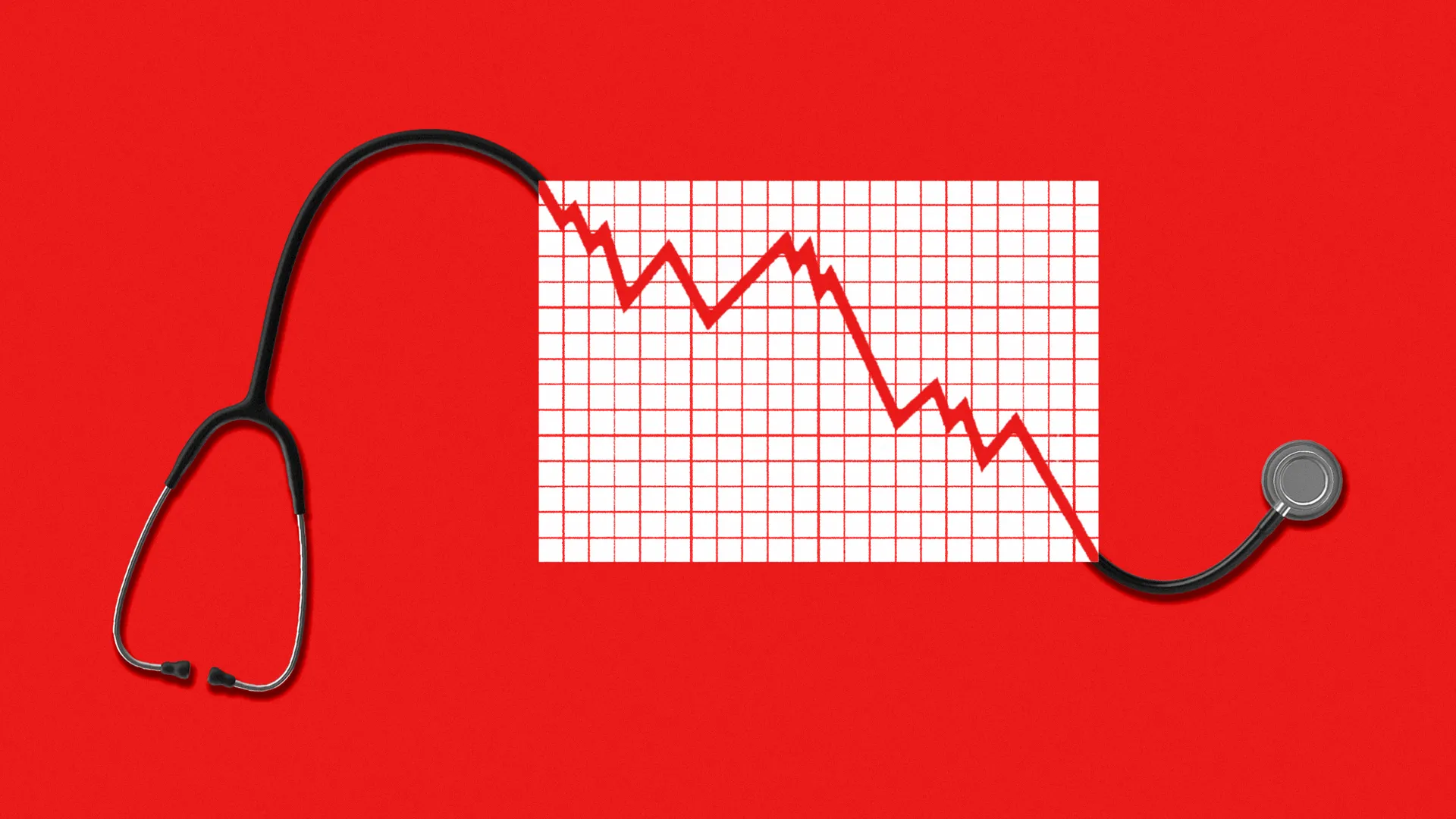
    Can Obamacare survive dropping enrollment?

    Affordable Care Act premiums are rising, and enrollment is plummeting, especially in red states. As healthcare costs increase, more Americans are choosing to go without expensive coverage, which could lead to a “death spiral” for the ACA, which was originally intended to expand healthcare affordability and accessibility.

    What did the commentators say?
    Middle-class Americans are “straining to pay” premiums for Obamacare, said The Associated Press. More than 2.5 million people dropped their coverage during the last year, and the problem is likely to get worse as insurers in the program’s marketplace are now seeking a “second straight year of double-digit premium hikes.” 

    Insurers attribute the rising costs to the expiration of Covid-era federal subsidies and tough new eligibility requirements imposed by the Trump administration. That may be leading to a vicious cycle. Healthier people are choosing to forgo coverage, leaving ACA insurers with a “sicker patient population that relies more heavily on insurance,” said the AP. And additional premium hikes could occur for those who remain.

    “It’s almost certain that things will get worse,” said Michael Hiltzik at the Los Angeles Times. President Donald Trump’s 2017 attempt to repeal Obamacare failed, so his administration has now “implemented changes” to the program that “reduce access to healthcare and increase paperwork.” 

    Instead of ending the program, Republicans are “eliminating or hamstringing all the elements that have bolstered its popularity,” said Hiltzik. The GOP never made good on its promise to end the ACA, but the latest statistics show that for “millions of Americans, repeal indeed has happened.”

    Obamacare is a “slow-rolling failure that Congress has propped up with subsidies,” said The Wall Street Journal editorial board. Republicans should pass legislation that serves as an “off-ramp to better insurance.”

    What next?
    The exodus of enrollees will leave insurers with a “smaller, sicker pool of people” to cover, said Lisa Jarvis at Bloomberg. That threatens to create a “death spiral” that could leave “some parts of the country” with no coverage options and many Americans with “impossible choices about their household budgets.”

    And rising premiums are “adding fuel to Democratic attacks over affordability” in the midterm elections, said The Hill. The Affordable Care Act survives for now, said Ceci Connolly, the CEO of the Alliance of Community Health Plans. But it’s “heading in a direction of instability.”


    Statistic of the day

    702: The number of people who have died in the Bundibugyo Ebola virus outbreak in the Democratic Republic of Congo, out of 1,926 confirmed cases. The disease has spread to five provinces since May and “may soon reach South Sudan,” said Reuters. But the University of Oxford has launched a human trial of a vaccine to ​combat it.


    The Explainer

    Russia’s lifted suspension could upend the 2028 Olympics

    When the next Summer Olympics kicks off in Los Angeles, a Russian team could be among the competitors for the first time in more than a decade. The International Olympic Committee (IOC) has lifted its suspension of Russia’s Olympic organization, which had been in place since 2016. But many are angry at the prospect of Russia rejoining the international competition, especially during its war with Ukraine.

    What’s the IOC’s decision?
    The group “provisionally lifted the suspension of the Russian Olympic Committee that had been in effect” since October 2023, said the group in a statement. This came partly because Russia is “no longer trying to claim regional sports organizations on Ukrainian soil” as part of the Russian Olympic Committee, said The Athletic. And Russia must abide by anti-doping measures.

    There’s also a “lack of confidence in the global sporting community relating to the return of Russian athletes to international competition,” said the IOC. But Olympic officials have stated they no longer want to punish Russian athletes for their country’s invasion of Ukraine.

    What does this mean for the Olympics?
    The IOC’s suspension of the ban represents a “significant step for bringing Russian athletes, who have struggled with their country’s pariah status on the world stage, back into the international fold after several years,” said The New York Times. But it’s a “highly controversial decision by the IOC and one likely to be condemned by European countries in particular,” said the BBC.

    “Many within the IOC” are “mindful of the current geopolitical landscape,” as well as “accusations of double standards if the sanction against Russia was maintained while other countries that have launched military action against other nations escape punishment,” said the BBC. Others say that Russia’s ban should only have ended when the country pulls out of Ukraine and that allowing it in the 2028 Olympics “risks emboldening President Vladimir Putin and handing him a propaganda win.”

    So while the IOC’s overturning of the ban does mean Russia could “compete at the 2028 Los Angeles Olympics,” Russian participation in the games will not come without backlash, said Politico. The IOC’s choice “sends a deeply concerning signal to the international community,” said Ukraine’s foreign ministry on X.


    QUOTE OF THE DAY

    ‘We start flying them next year. Maybe you can come see them if your parole officer approves.’

    Elon Musk, in an X post, responding to Sam Altman’s claims that the SpaceX CEO is scamming investors with “short-term space data centers.” After “stealing an open-source AI charity,” the OpenAI CEO “stole all of Apple’s phone technology,” added Musk, referencing the company’s lawsuit against OpenAI alleging trade secret theft.


    IN THE SPOTLIGHT

    NASA’s mission to save a sinking space telescope

    Launched in 2004, the Neil Gehrels Swift Observatory telescope detects some of the most powerful explosions in the universe. And the space agency’s attempt to catch this falling telescope is an unprecedented endeavor that has been repeatedly extended. But the observatory is sinking faster than expected due to recent solar storms and is at risk of crashing back to Earth in the coming months unless its orbit changes.

    ‘Especially tricky’
    NASA has enlisted the help of Arizona’s Katalyst Space Technologies, which has engineered a “custom capture mechanism” that will use three guided robotic arms to “latch on to” the Swift telescope, which contains no engines and was not built with docking hardware, said Astronomy. 

    Since Katalyst’s Link spacecraft launched on July 3, it has been undergoing a series of checks. The car-sized telescope will then be surveyed to determine the best point of contact before being captured and lifted back into its correct altitude. The capture will be “especially tricky because Swift was never meant to be touched again once it reached orbit,” said Astronomy. 

    ‘Worth saving’
    At $30 million, the mission to save a “nearly 22-year-old space telescope” that’s “well past its prime” might seem, “on paper” at least, to be poor value for money, said Space (a sister site of The Week). But Swift is “still worth it, according to NASA.”

    “We didn’t want to set the precedent that anything that comes out of orbit has to be boosted, because it’s part of our space ecosystem to have things deorbit frequently,” Shawn Domagal-Goldman, the director of NASA’s astrophysics division, said in June. But Swift is “not just any spacecraft” and has a unique ability to “quickly pivot across the night sky to find things that go boom in the night.” There’s “nothing like Swift,” said Pallab Ghosh at the BBC. And NASA “deemed that it was a spacecraft worth saving.”


    Good day 🎫

    … for concert attendance records. Jay-Z set a record last night for the most tickets ever sold — 45,832 — for a concert at Yankee Stadium in New York City’s Bronx borough for his third and final show. He broke his own record from the night before, which celebrated 25 years since the release of his album “The Blueprint.”


    Bad day 🌺

    … for live-action remakes. Disney’s live-action “Moana” flopped at the box office in its opening weekend, earning $43 million against a “massive $250 million production budget,” said Variety. The figure underscores the “trickiness of timing.” A decade after the original, there’s “not enough nostalgia to bring audiences back to theaters” for something they have already seen.


    Picture of the day

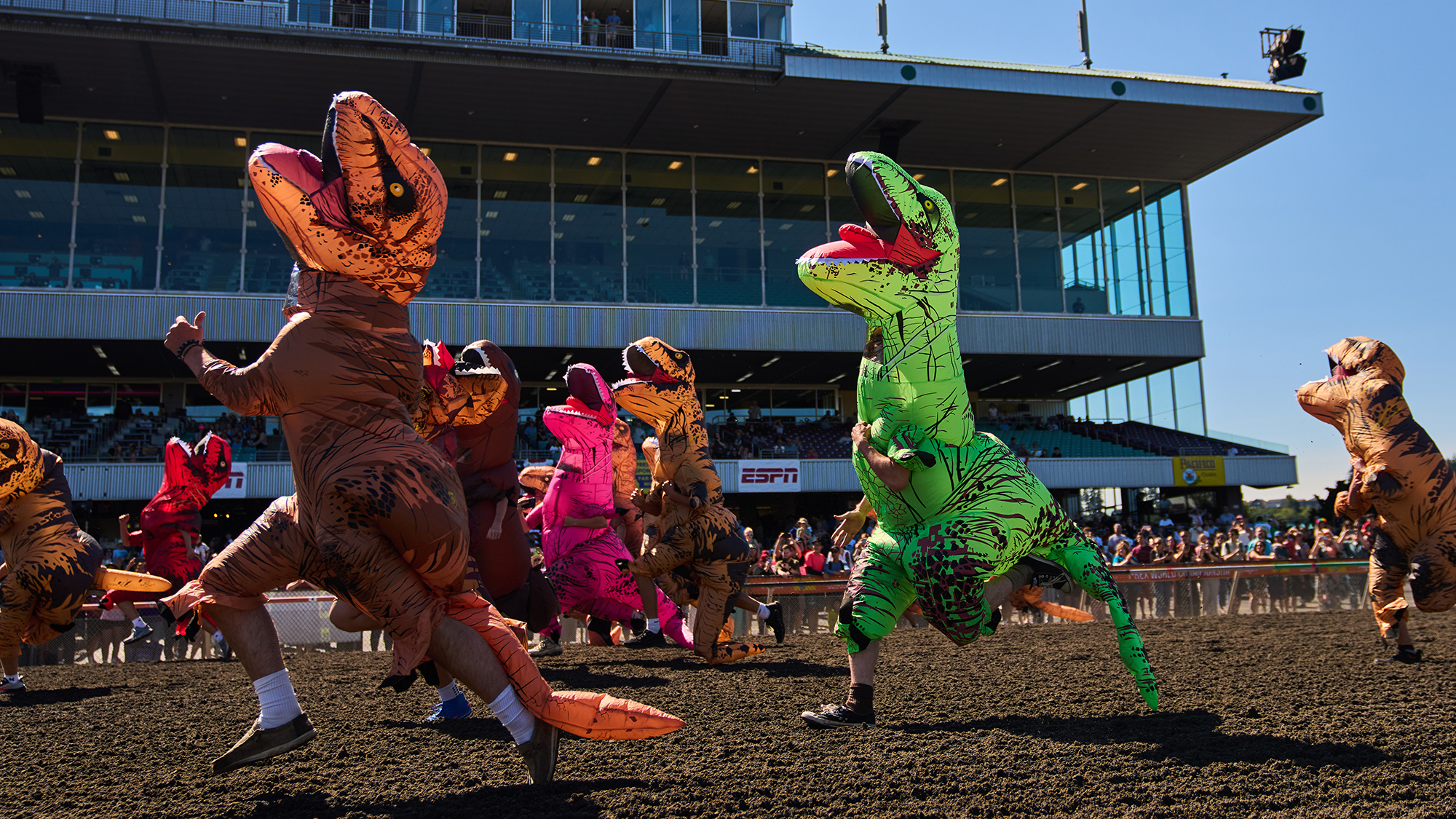
    Dino might

    Participants sprint to the finish line in the T-Rex World Championship Races at Emerald Downs racetrack in Auburn, Washington. Clad in inflatable dinosaur suits, runners dash for glory in a 100-yard race that began in 2017 as a pest control company’s team-building activity and is now broadcast on ESPN.
    Lindsey Wasson / AP Photo


    Puzzles

    Daily sudoku

    Challenge yourself with The Week’s daily sudoku, part of our puzzles section, which also includes guess the number

    Play here


    The Week recommends

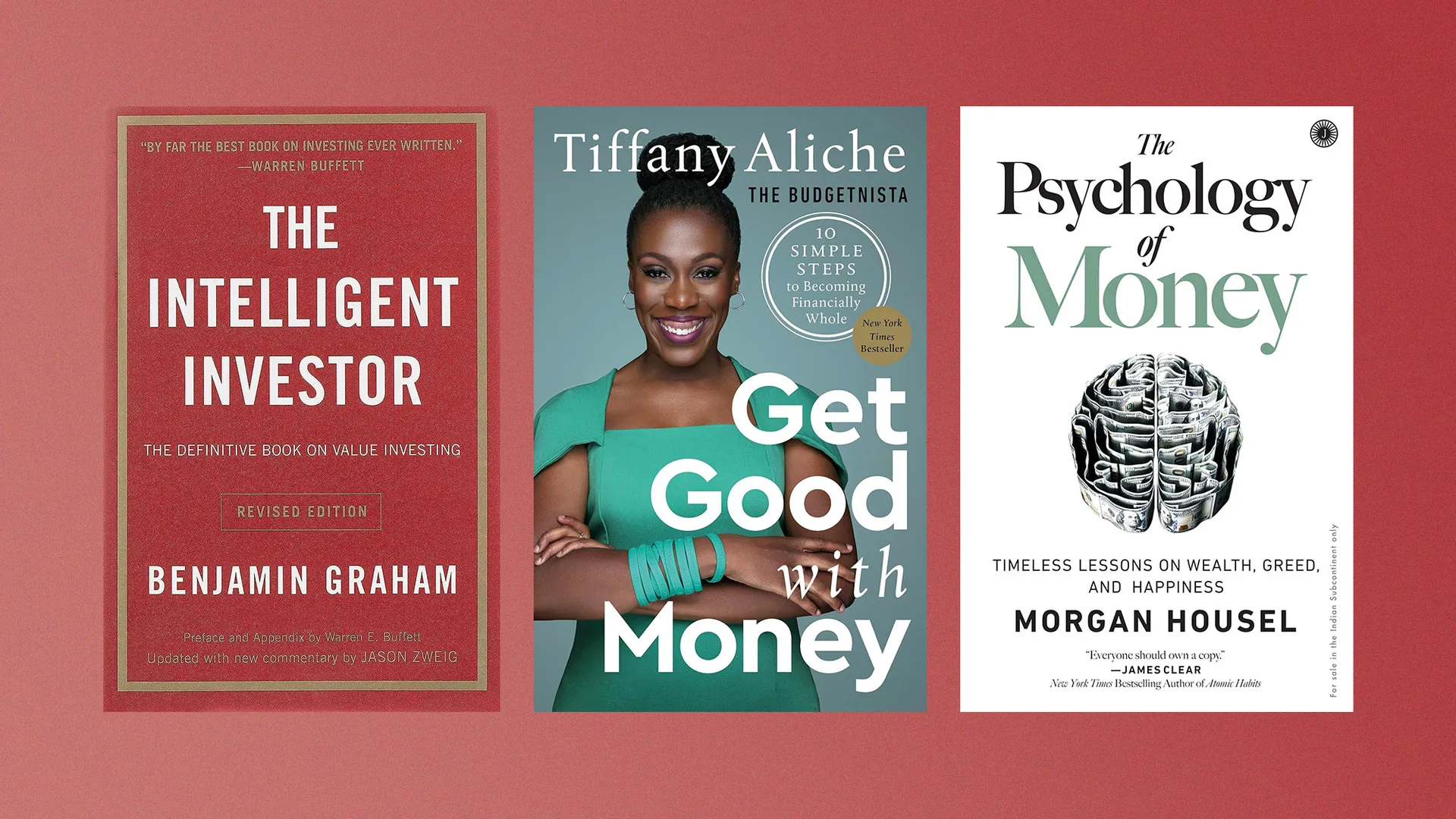
    Learn to budget, save and invest with personal finance books

    While everything from algebra to essay writing may have been covered in school, a subject area often left off the curriculum is personal finance. Unfortunately, most people are far more likely to run into questions of budgeting and investing than, say, calculating the area of a triangle (some professions aside). But the good news is that it’s never too late to play catch-up. And with these personal finance books, doing so does not have to feel like homework.

    ‘Get Good with Money’ 
    This book by financial educator Tiffany Aliche, aka the Budgetnista, offers a breakdown of financial foundations and daily money habits. Perhaps unsurprisingly, given her moniker, it helps with establishing a baseline budget, but it also offers guidance on other staples like saving, investing, insurance coverage, credit scores and more. Ultimately, Aliche succeeds in presenting an “ethos of financial wholeness that rejects the unnecessary complexity and unrealistic nature of traditional financial advice,” said U.S. News & World Report.

    ‘Your Money or Your Life’ 
    This book by Joe Dominguez and Vicki Robin encourages readers to get clear about their personal values around money. “The simple premise: How much money are you willing to trade your life for? Whenever you are working, you are trading your life and energy for money. What does that mean to you?” said Grant Sabatier, a personal finance blogger, to The Strategist. The idea is that “once you are clear on the ‘why’ behind your saving and spending, making decisions about investing and budgeting becomes much easier,” said the outlet.

    ‘The Intelligent Investor’
    Once budget and debts are ironed out and a money mindset has been cemented, you are in a good place to begin investing, a practice foundational to building wealth. Benjamin Graham and Jason Zweig’s book was originally published in 1949, though it has since been updated, and remains a classic for a reason. It provides a guide to “investing for individuals looking to develop sensible strategies and protect their investments,” said GOBankingRates. Business magnate Warren Buffett has called it “by far the best book about investing ever written.”

    Read more


    Poll watch

    More than one-third (34%) of Americans consider Trump the worst person in U.S. history, according to a YouGov survey of 2,228 adults. This includes 64% of Democrats, 34% of independents and 4% of Republicans. Conversely, he leads the pack among those whom Republicans think is the greatest, with 24% choosing him over runner-up George Washington.


    INSTANT OPINION

    Today’s best commentary

    ‘Dragging the Constitution into every political fight will kill it’
    Clive Crook at Bloomberg
    The Constitution has “endured, it has adapted, and it has been the foundation for unsurpassed prosperity and material advance,” says Clive Crook. But “disagreements over policy are reflexively pitched as arguments about constitutional foundations,” and “as a result, rhetoric escalates, and polarization intensifies.” Bringing the Constitution “into every political dispute also threatens the constitutional order, by framing the courts as unaccountable political players and lowering the electorate’s respect for their role.”

    ‘What’s really going on with mental health’
    John Burn-Murdoch at the Financial Times
    One of the “biggest stories of the past decade has been worsening mental health among young adults,” says John Burn-Murdoch. The “rise in young people’s psychological distress is certainly real — it shows up most unambiguously and alarmingly in sharply rising rates of hospitalization.” The “shift in how people conceptualize mental health could be seen as a positive,” but if it’s “happening more among some groups than others, it will distort our sense of what’s really getting worse.”

    ‘Sure, e-bikes seem fun. Until you are on my operating table.’
    Blake Taylor at USA Today
    What’s “missing from the debates surrounding e-bike freedoms and regulation is the focus on the injuries that happen when youths crash their bikes,” says Blake Taylor. If kids “could see the internal injuries and what happens in my operating room and in many trauma centers across the country and what it takes to save these lives or prevent devastating disabilities, maybe they would rethink their priorities.” These e-bike injuries are “not like those associated with traditional bikes.”


    WORD OF THE DAY

    glossa

    An insect’s tongue-like structure. In slow-motion footage, bees exhibit “post-consumption glossa protrusions” akin to “licking their lips after eating sugar solutions” and wipe their mouths or shake their heads after sampling unpleasant flavors, said researchers in a study published in the Proceedings of the National Academy of Sciences. The behavior mirrors the “liking” and “disliking” responses seen in mammals.


    Evening Review was written and edited by Theara Coleman, Nadia Croes, Anya Jaremko-Greenwold, Justin Klawans, Joel Mathis, Summer Meza and Becca Stanek, with illustrations by Stephen Kelly and Julia Wytrazek.

    Image credits, from top:  Illustration by Stephen P. Kelly / Shutterstock; AP Photo / Pavel Bednyakov; NASA; HarperCollins / Penguin Random House / Harriman House
     

    Recent editions

    • Morning Report

      Police keep ‘open mind’ on Widdecombe murder motive

    • Sunday Shortlist

      Olivia Wilde’s sex comedy is ‘not to be missed’

    • Saturday Wrap

      Shabir Ahmed: the deportation row

    VIEW ALL
    TheWeek
    • About Us
    • Contact Future's experts
    • Terms and Conditions
    • Privacy Policy
    • Cookie Policy
    • Advertise With Us
    • FAQ
    Add as a preferred source on Google Add as a preferred source on Google

    The Week UK is part of Future plc, an international media group and leading digital publisher. Visit our corporate site.

    © Future Publishing Limited Quay House, The Ambury, Bath BA1 1UA. All rights reserved. England and Wales company registration number 2008885.