The Week The Week
flag of US
US
flag of UK
UK
https://cdn.mos.cms.futurecdn.net/flexiimages/jzblygzdxr1769609154.gif

SUBSCRIBE

Try 6 weeks free

Sign in
  • View Profile
  • Sign out
  • The Explainer
  • Talking Points
  • The Week Recommends
  • Podcasts
  • Newsletters
  • From the Magazine
  • The Week Junior
  • More
    • Politics
    • World News
    • Business
    • Health
    • Science
    • Food & Drink
    • Travel
    • Culture
    • History
    • Personal Finance
    • Puzzles
    • Photos
    • The Blend
    • All Categories
  • Newsletter sign up Newsletter
  • The Week Evening Review
    Australia’s retirement system, Nicaragua’s loss of democracy, and ICE’s tech partnership

     
    TODAY’S BIG QUESTION

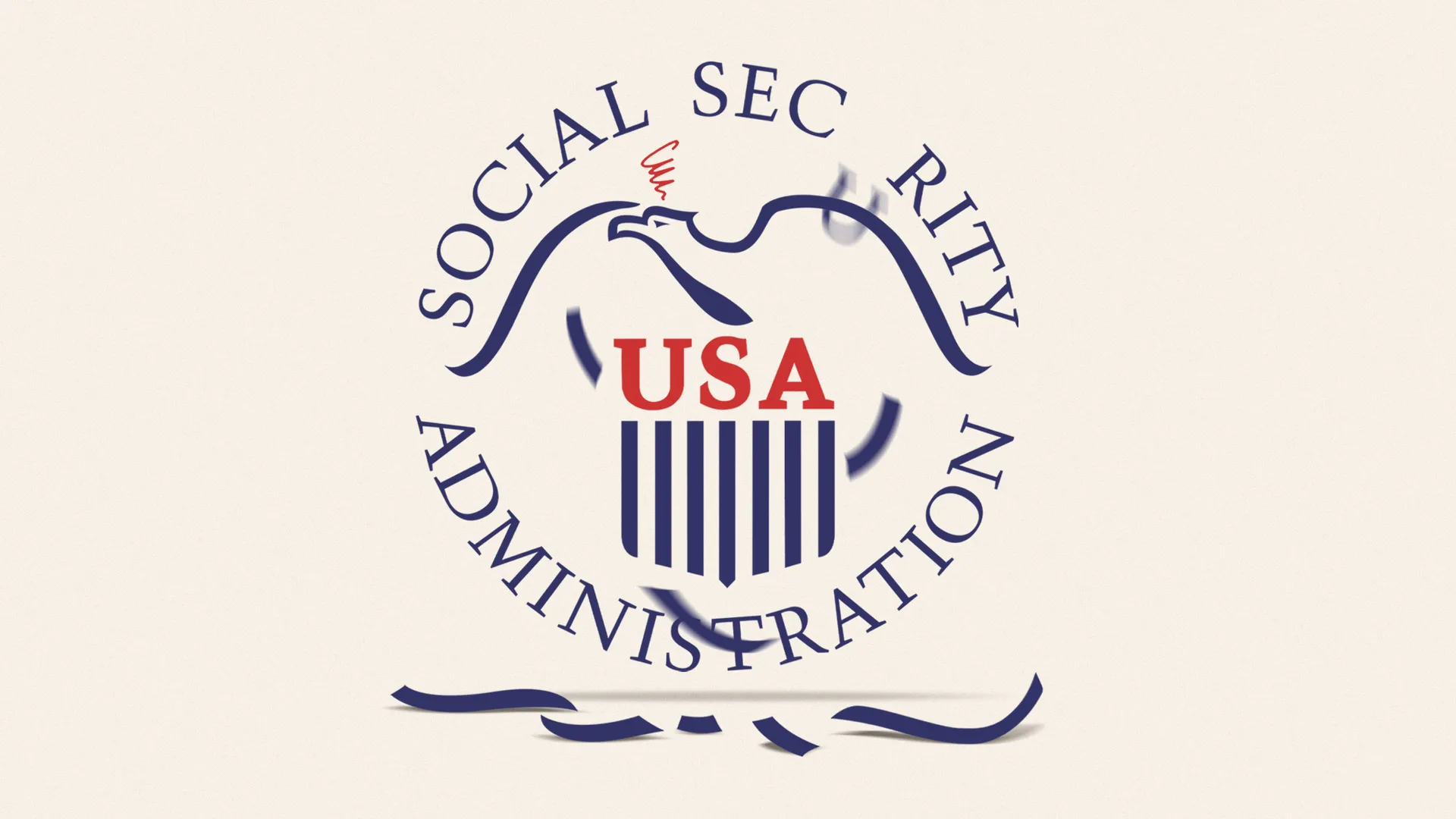
    Will Trump try Australia’s retirement system?

    As Social Security is on track to be depleted by 2032, the White House is seeking alternatives for aging Americans. President Donald Trump seems enamored with the solution of one particular country: Australia. 

    What did the commentators say?
    Australia’s retirement system has “three main pieces: a compulsory employer-funded retirement account, a public means-tested Age Pension, and voluntary private saving, including housing,” said Forbes. The part Trump seems to be honing in on is the first piece, called superannuation. The process works by requiring employers to contribute at least 12% of an employee’s earnings into an investment account similar to a 401(k).

    In other words, Australia “does not merely tell workers to save. It makes retirement saving part of the employment system,” said Forbes. Under Australian law, an employee’s retirement account “stays open even when switching jobs, their balance remains invested, and the new employer can continue contributing to the same account” without having to cash out, said Newsweek. The superannuation plan differs significantly from the U.S., where there is no requirement for employers to “offer or contribute to any retirement plan.”

    Whether the idea would actually work in the U.S. has experts divided. Since the money for the savings would still be taken out of employee earnings, it “would hurt low-income workers, who might need all of their paycheck to cover the expenses of daily life,” Romina Boccia, the director of budget and entitlement policy at the Cato Institute, told USA Today.

    What next?
    While Trump has gotten behind Australia’s superannuation system, there isn’t a significant plan in place. As Trump’s handling of the economy gets low marks among voters, some economists say copying Australia would be a good idea. “If you were inventing a retirement system from scratch today, you would almost certainly do something like the Australian retirement system,” Andrew Biggs, a senior fellow at the American Enterprise Institute, told USA Today.

    But the U.S. could still be a ways away from such a system. While “access to tax-favored retirement plans is widening as more states introduce ‘automated savings’ programs,” that is still a “far cry from requiring workers to save for retirement, as Australia mandates,” said USA Today.


    QUOTE OF THE DAY

    ‘Milei went to Brazil shouting like a madman, demanding to see a coup plotter in jail. Insulting the president of a sister nation and our main trading partner is unforgivable.’

    Former Argentine President Alberto Fernandez, in a post on X, reacting to news that current President Javier Milei insulted Brazilian officials while in Sao Paulo. Milei also accused Brazil’s President Luiz Inácio Lula da Silva of being a “thief” and a “delinquent”


    THE EXPLAINER

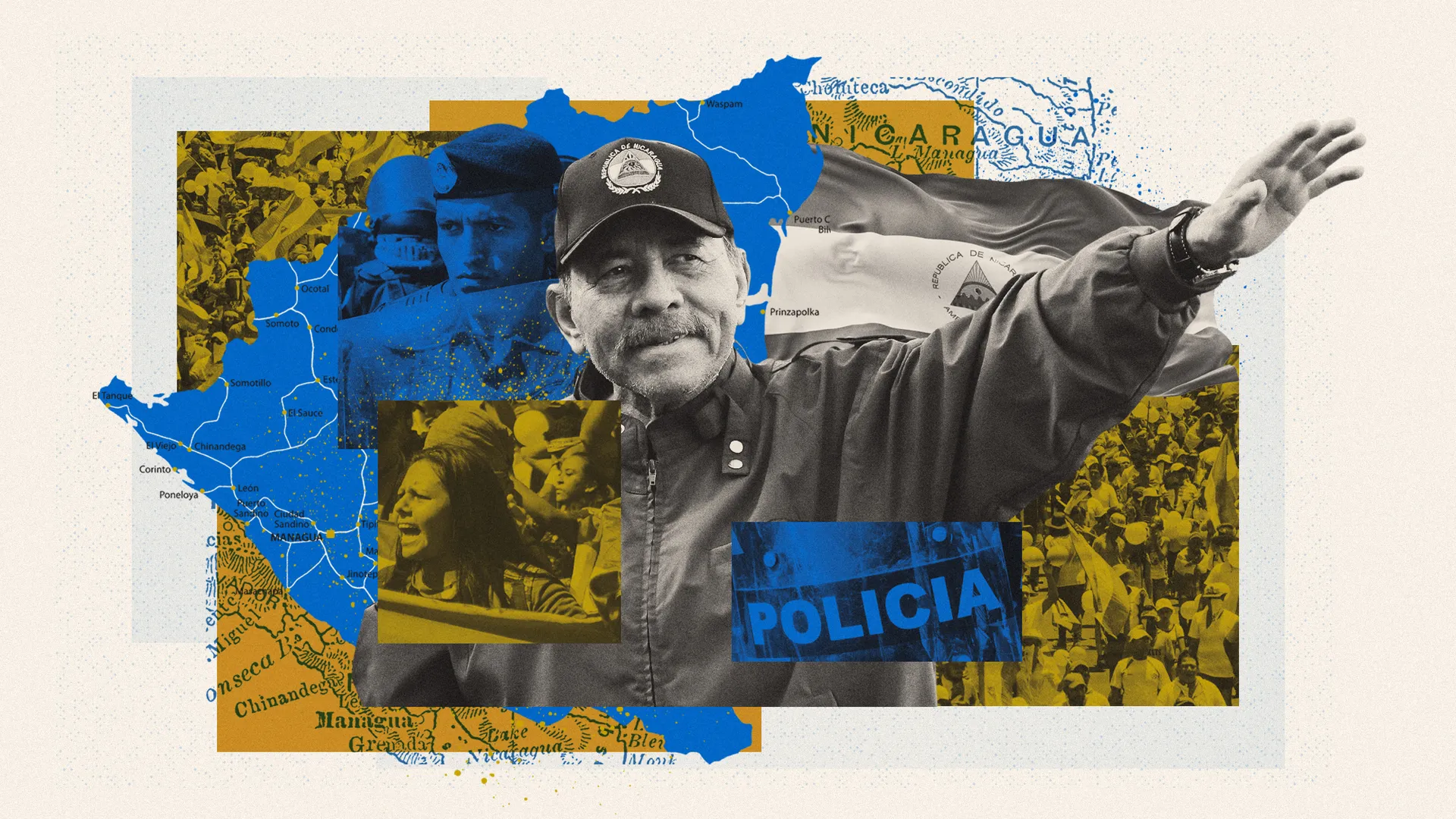
    Why Nicaragua is scrapping elections

    Nicaragua will stop holding elections to prevent foreign-backed interference, the country’s long-serving strongman leader Daniel Ortega announced last week. “The days when parties backed by the Yankees and the Somocistas would return to power are over — never again,” said the 80-year-old president in a speech to commemorate the Sandinista revolution, which overthrew the U.S.-backed Anastasio ⁠Somoza dictatorship in 1979.

    Who’s Ortega?
    A key figure in the Sandinista revolution, Ortega has served as president since 2007. His government has transformed Nicaragua into an “authoritarian state,” said the U.N. Human Rights Council. He has cemented control over virtually all branches of government and crushed political opposition, with hundreds killed and many more imprisoned following mass anti-government protests in 2018. 

    Why has he canceled elections?
    Nicaragua’s last elections, in 2021, were “widely disputed” after Ortega “detained opponents and business leaders and criminalized dissent,” said Reuters. Voters had been due to go to the polls again next year, but Ortega has declared there “won’t be any more elections here” for the country’s internal enemies to “try to seize the government and seize power.”

    Nicaragua has become a “full-fledged, family-run dictatorship,” said Tiziano Breda, a senior analyst at the Armed Conflict Location and Event Data nonprofit, to Reuters. Ortega and his wife, Rosario Murillo, who is co-president, are “evidently afraid of the idea that the slightest political opening could create the conditions for dissent to manifest.”

    What has the reaction been?
    Despite proscribing the Ortega government as a dictatorship, the Trump administration has remained remarkably quiet on the potential for Venezuela-style regime change. There are a “range of explanations” for this, said Nahal Toosi at Politico. The Ortega regime is “making smart moves on battling drug trafficking” and “benefiting from a lack of natural resources” for President Donald Trump to “covet.”

    “The lesson from Nicaragua is: Don’t matter too much, don’t embarrass Washington and don’t become a domestic political issue,” said Juan Gonzalez, a former Latin America aide to Joe Biden. For an administration that “doesn’t care about democracy or human rights, that’s an effective survival strategy.”


    Statistic of the day

    £60,000 ($79,834): The selling price at auction for a letter written by a second-class passenger named Henry Price Hodges days before he died on the Titanic. Sold yesterday in the U.K., the letter is among the rarest of Titanic artifacts and gives a “historically priceless snapshot” of life onboard, auctioneer Andrew Aldridge said to the BBC.


    IN THE SPOTLIGHT

    ICE is using a major data broker to mine for ‘fraud’

    While Immigration and Customs Enforcement (ICE) may be at the center of numerous controversies, one of the most recent has gone international: The agency has agreed to a five-year contract with Canadian tech conglomerate Thomson Reuters to obtain information on alleged voter and immigration fraud. Many are wary of the two parties working together.

    ‘Let ICE continuously monitor’
    While Thomson Reuters is best known for its eponymous news agency Reuters, its data broker division has deals with several U.S. government organizations. The latest ICE contract, valued at $25 million per year, directs Thomson Reuters to assist with the “screening and vetting of individuals and entities for immigration, criminal and national security risks,” according to the contract document in the Federal Register. Thomson Reuters will also assist with identifying “violations of U.S. immigration and customs laws.”

    The contract means ICE will now have access to the company’s “databases of personal data — which includes peoples’ names, addresses, Social Security numbers, ethnicity, social media posts and geolocation information,” said 404 Media. By signing the document, Thomson Reuters will be “able to let ICE continuously monitor millions of people and entities of interest.” 

    ‘My blood ran cold’
    There has been significant opposition to Thomson Reuters’ partnering with ICE, including in Canada where the company is based. “My blood ran cold when I read about this development,” Canadian New Democratic Party Leader Avi Lewis said to The Guardian. “Complicity between Canadian corporations and ICE should absolutely be illegal.”

    ICE has been working with Thomson Reuters since at least 2015. But the new contract is the first to state that the “software will be used to support the Trump administration’s objectives of addressing supposed ‘voter fraud,’” said The Guardian. The company has denied any wrongdoing with the deal. 

    Prior to the contract being signed, 200 Thomson Reuters employees wrote a letter asking the company not to renew its agreement with ICE. “We have experienced our neighbors, friends and family members undergoing arrests and detention, intimidation and harassment,” said the letter obtained by The New York Times. “We question if our investigative products and services are being used in accordance with our mission and values.”


    Good day 🥬

    … for Korean cabbage. Probiotic bacteria in kimchi, a Korean fermented cabbage dish, could help remove nanoplastics from the gut, according to a preliminary study on mice published in the journal Bioresource Technology. The lactic acid bacteria strain found in kimchi helped mice “excrete twice as many nanoplastics” as those who weren’t given the bacteria, said Very Well.


    Bad day 🧅

    … for French onions. France is facing a shortage of onions and other vegetables after “heat waves decimated crops across the country,” said The Telegraph. The hardest-hit crops include “onions, shallots, carrots, leeks, fennel, radishes, garlic, blueberries and strawberries,” according to trade group Vegetables of France. Shoppers have been warned to expect a drop in fresh produce after a “catastrophic year.”


    Picture of the day

    Ringing the alarm

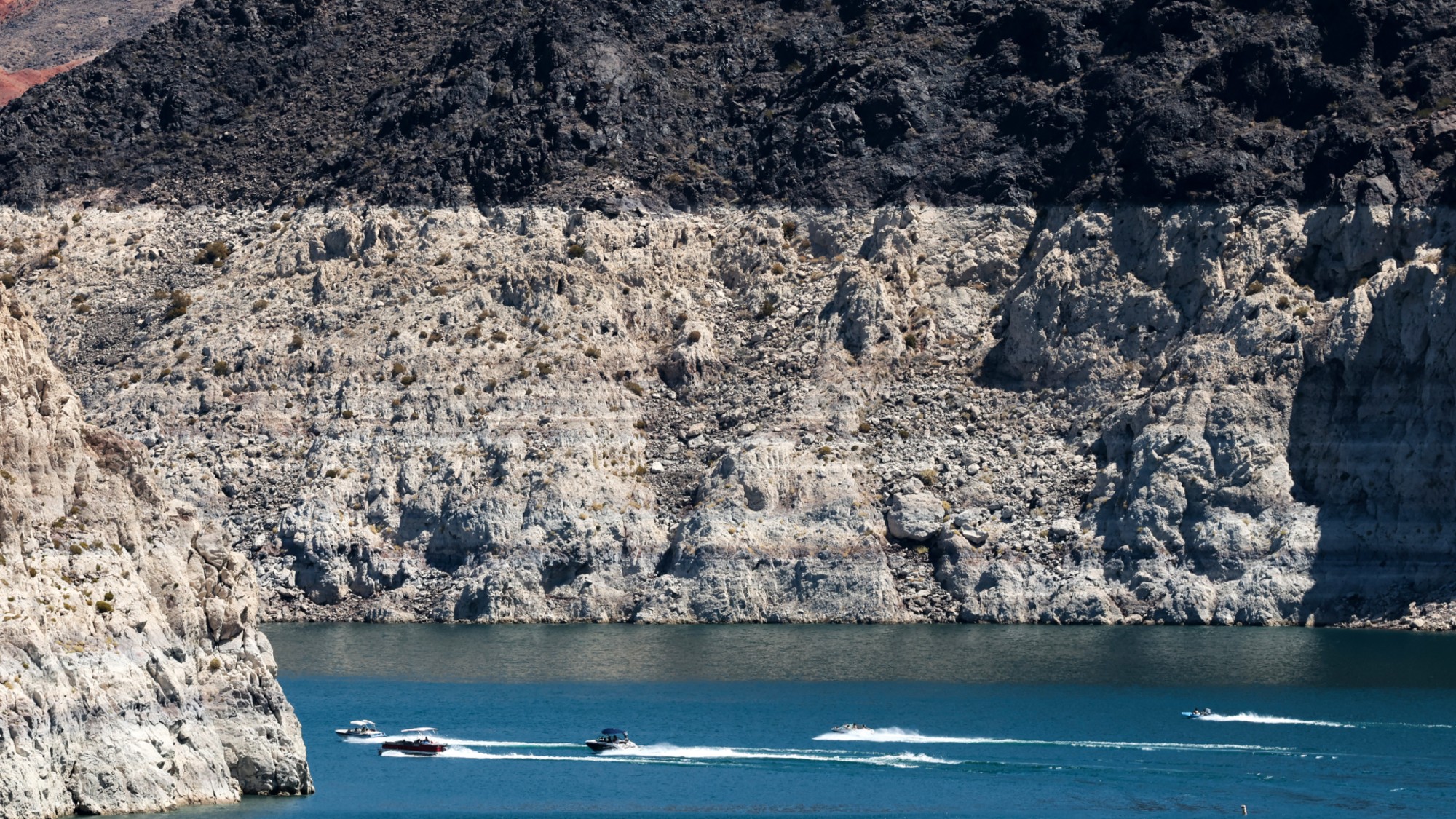
    Boats cruise past a “bathtub ring” of mineral-stained rocks left by higher water levels in Lake Mead, Nevada. This month, the combined waters of Lake Mead and Lake Powell, the country’s two biggest reservoirs, fell to unprecedentedly low levels, threatening water and power shortages for seven states and Mexico.
    Ethan Miller / Getty Images


    Puzzles

    Daily sudoku

    Challenge yourself with The Week’s daily sudoku, part of our puzzles section, which also includes guess the number

    Play here


    The Week recommends

    The best political thrillers of all time

    Politics is the art of human beings solving problems without killing each other. Sometimes those efforts fail, never more memorably than in these classic political thrillers. They run the gamut from true storytelling to entirely fictional yet still believable nail-biting stories.

    ‘The Conversation’ (1974)
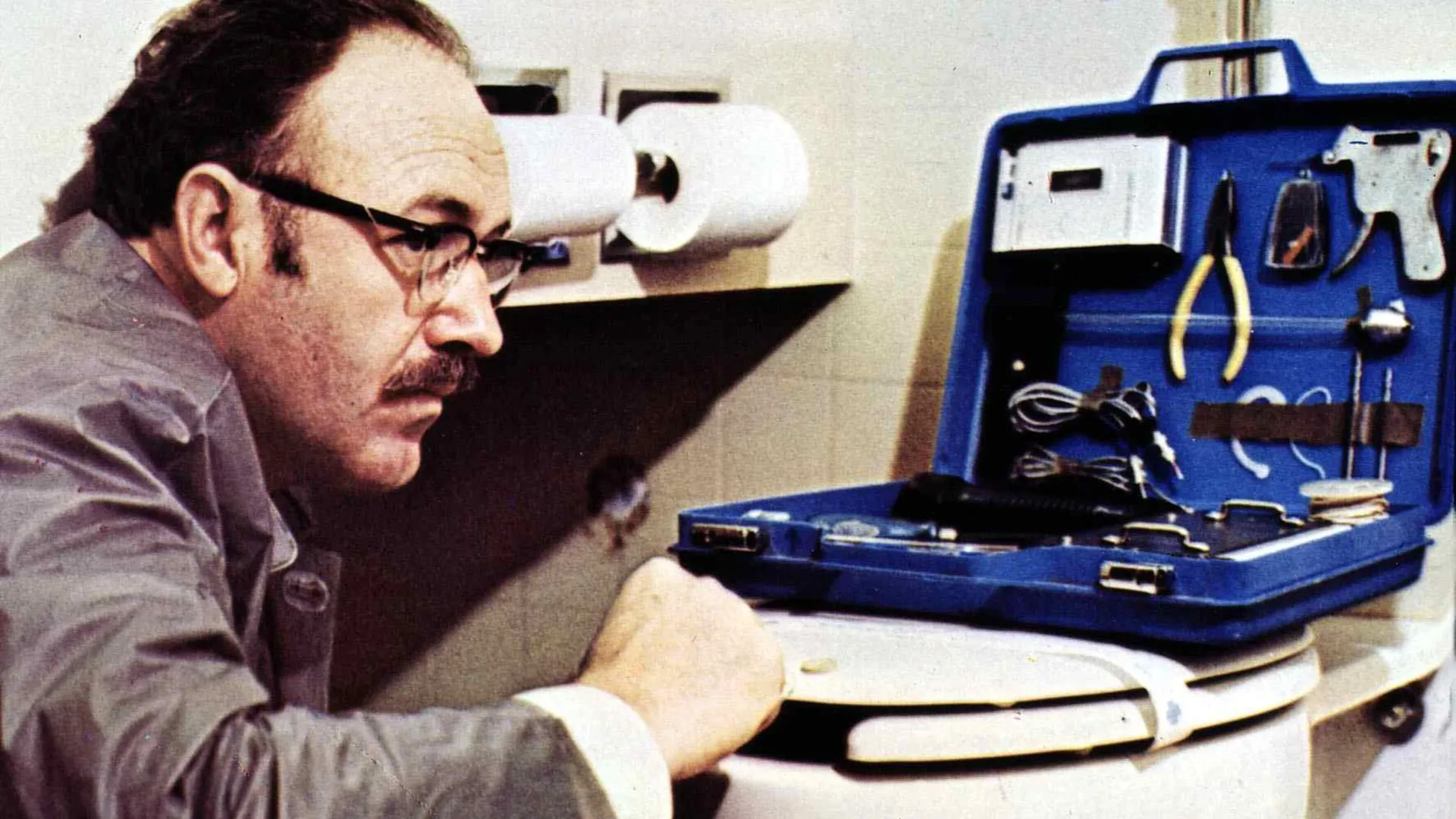
    Arriving the same year that a wiretapping scandal brought down the administration of President Richard Nixon, director Francis Ford Coppola’s quietly devastating thriller (pictured above) follows a surveillance wizard hired to record a, yes, conversation. Coppola’s haunting masterpiece is a “chillingly prescient and masterfully crafted character study with themes that echo louder than ever in our hyper-surveilled world,” said Andy Punter at InSession Film. (Prime Video)

    ‘Argo’ (2012)
    Ben Affleck directs and stars in this zippy thriller about the clandestine efforts to exfiltrate six American diplomats who managed to escape before they became hostages at the U.S. embassy during the Iranian Revolution. Affleck “displays a fearlessness when it comes to mixing genre” in this “part-comic, part-thriller narrative” whose mostly-but-not-entirely-true twists and turns “ensure your nails are down to the quick by the end credits,” said Amber Wilkinson at Eye for Film. (Prime Video)

    ‘Official Secrets’ (2019)
    The combination of arrogance and doctored intelligence that led the United States and its allies into the 2003 Iraq War is almost made for Hollywood. This film turns a “historical footnote with potent resonance” into a “compelling tale of injustice on an individual and global level,” said Peter Travers at Rolling Stone. (Netflix)

    Read more


    Poll watch

    Many Americans (41%) would oppose an AI data center being built within three miles of where they live, up from 28% in January, according to a Politico survey of 2,061 adults. The attitude shift “signals trouble for the artificial intelligence industry and leaders of both parties,” Politico said.


    INSTANT OPINION

    Today’s best commentary

    ‘Joint European response to wildfires is essential’
    Le Monde editorial board
    The “flames currently devastating much of Western Europe are the latest, and dramatic, manifestation of climate change driven by human activity,” says the Le Monde editorial board. Beyond France and Spain, fires are “raging across Germany, Italy, Ireland, Scotland and the Netherlands,” and the “map clearly shows that any response must be coordinated at the European level.” The “increasing frequency of extreme weather events has forced both rapid adaptation and a global rethinking of how to respond.”

    ‘The drug policy debate’s common ground: better treatment and recovery’
    Jim Crotty at The Hill
    Few “public policy debates are as polarized as drug policy, which is often framed around two competing visions — prohibition and decriminalization,” says Jim Crotty. Both are “passionate about their positions, and both make valid arguments,” but they “frequently overlook the same prerequisite for success: a system capable of meeting the country’s growing demand for addiction treatment and recovery services.” The U.S. “must help promote careers in treatment and recovery through more competitive pay, streamlined education and licensing pathways.”

    ‘We need more therapists. They need more power.’
    Isabel M. Perera at USA Today
    Americans “need therapy now more than ever before,” but if “you’ve tried to find a therapist recently, you know it’s tough,” says Isabel M. Perera. The “people we rely on to help us cope with life’s hardest moments are themselves unsupported.” Weak “union representation makes it difficult for them to negotiate fair pay” and “advocate for better working conditions.” From “rehab centers to school counselors, the entire mental health ecosystem suffers from underinvestment and fragmentation.”


    WORD OF THE DAY

    motif

    The fundamental types of sounds that are the “building blocks of the incredible diversity of birdsong,” said the BBC. After analyzing the songs of more than 100,000 songbirds, scientists say that all birdsong around the world is made up of combinations of these motifs: “three types of trill, three types of whistle, chaotic notes and harmonies.”


    Evening Review was written and edited by Theara Coleman, Nadia Croes, David Faris, Scott Hocker, Anya Jaremko-Greenwold, Justin Klawans and Summer Meza, with illustration by Stephen Kelly.

    Image credits, from top: Illustration by Stephen P. Kelly / Future; Illustration by Stephen P. Kelly / Getty Images; Spencer Platt / Getty Images; FilmPublicityArchive / United Archives / Getty Images
     

    Recent editions

    • Morning Report

      Thousands evacuate as wildfires threaten Bordeaux

    • Sunday Shortlist

      Christopher Nolan’s ‘jaw-detaching’ epic

    • Saturday Wrap

      The surprise choice at No. 11

    VIEW ALL
    TheWeek
    • About Us
    • Contact Future's experts
    • Terms and Conditions
    • Privacy Policy
    • Cookie Policy
    • Advertise With Us
    • FAQ
    Add as a preferred source on Google Add as a preferred source on Google

    The Week UK is part of Future plc, an international media group and leading digital publisher. Visit our corporate site.

    © Future Publishing Limited Quay House, The Ambury, Bath BA1 1UA. All rights reserved. England and Wales company registration number 2008885.