The Week The Week
flag of US
US
flag of UK
UK
https://cdn.mos.cms.futurecdn.net/flexiimages/jzblygzdxr1769609154.gif

SUBSCRIBE

Try 6 weeks free

Sign in
  • View Profile
  • Sign out
  • The Explainer
  • Talking Points
  • The Week Recommends
  • Podcasts
  • Newsletters
  • From the Magazine
  • The Week Junior
  • More
    • Politics
    • World News
    • Business
    • Health
    • Science
    • Food & Drink
    • Travel
    • Culture
    • History
    • Personal Finance
    • Puzzles
    • Photos
    • The Blend
    • All Categories
  • Newsletter sign up Newsletter
  • The Week Evening Review
    COP17’s drought spotlight, TV’s ownership cap, and 2Pac’s murder trial

     
    TODAY’S BIG QUESTION

    How is COP17 taking on the desertification fight?

    The United Nations’ 17th Conference of the Parties in Ulaanbaatar, Mongolia, has once again brought together an array of countries to battle climate change. But this COP edition is focused on a unique element of the shifting environment: desertification. As more fertile land degrades into dry, barren desert, the meeting is workshopping climate solutions using its key anti-desertification treaty, the United Nations Convention to Combat Desertification (UNCCD).

    What did the commentators say?
    The main goal of the Mongolia conference is to “put pledges made two years ago into action through projects in the developing world,” said The Guardian. This will involve “allocating more than $12 billion to vulnerable countries to help them deal with drought and land degradation.”

    The “biannual talks on desertification have taken on far greater importance in the wake of recent heatwaves and wildfires in the Northern Hemisphere, Europe and Asia,” said French radio broadcaster RFI. The $12 billion pledge is “small compared to the needs — about $2.6 trillion by 2030,” which would be required to “repair degraded land, halt desertification, protect against drought and restore soils.” 

    “Up to 40% of the world’s land is currently degraded,” said the U.N. regional information center’s site. Beyond desertification causing environmental damage, it can also “reduce food production and water availability, undermine livelihoods and increase economic and social vulnerability.” 

    “Countries around the world are bracing for food price rises as a result of damage to harvests from record heat and lack of water,” said The Guardian. And the U.N.’s World Food Program “predicts that 50 million more people could be pushed into hunger by the ‘super El Niño’ weather system currently developing.”

    What next?
    Many are hoping that COP17 will help push the UNCCD more into the foreground. It has garnered the “least attention” of three environmental treaties signed in the 1990s, said The Guardian. However, it is currently the only one in which the U.S. “remains a full party,” said Jean-Daniel Cesaro, a member of the French Scientific Committee on Desertification, to Le Monde, and is “one of the last multilateral arenas for environmental diplomacy.”


    QUOTE OF THE DAY

    ‘I think people make their own assessment about whether something is the size of a soda bottle or not.’

    Health Secretary Robert F. Kennedy Jr. on CNN regarding Trump’s comment that vaccines “look like the size of a bottle of soda poured into a little child’s body.” The president said this when he signed an executive order limiting the number of vaccinations recommended for children.


    IN THE SPOTLIGHT

    FCC abandoning TV owner caps could reshape national media

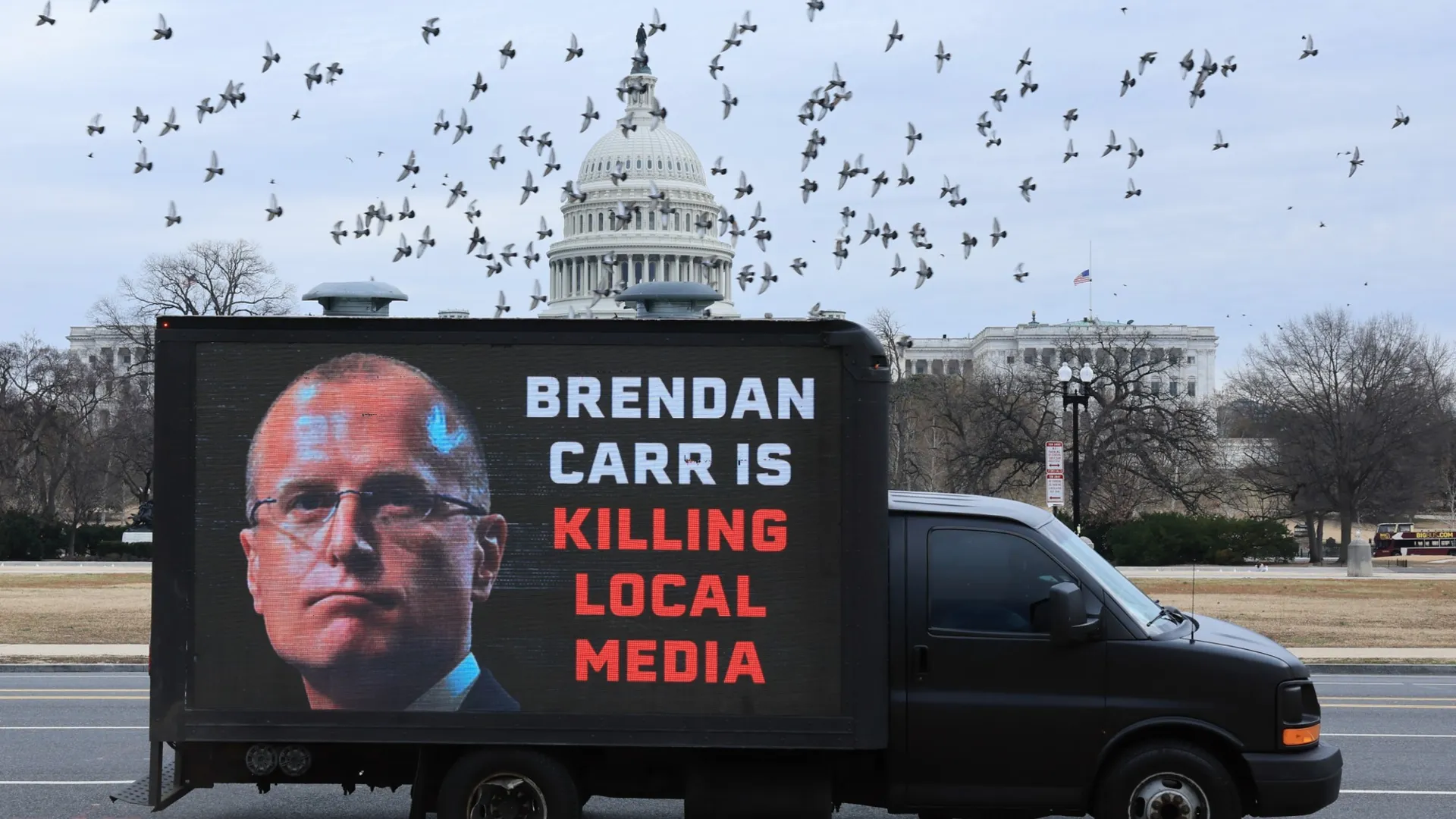
    The Federal Communications Commission voted this month to repeal its 39% cap limiting how much of the national television market a single owner can legally own. In doing so, the FCC has supercharged an ongoing debate over media consolidation and monopolies.

    Moving forward, station purchases will be adjudicated with a “granular case-by-case review,” said the FCC in a press release. But concerns over increased monopolization and questions about the commission's authority in this case have some critics crying foul and predicting a rocky legal road for FCC Chair Brendan Carr.

    ‘Shift from local to national’
    The FCC claims that its 39% ownership cap had “become outdated” and “hindered broadcasters’ ability to compete for viewers and advertising dollars” against digital services that “face no comparable restrictions,” said The Wall Street Journal. Removing the cap will “foster a competitive media market, enhance localism and promote investment in trusted sources,” said the commission in its release.

    But the change is a “big win” for media companies “aligned with President Donald Trump and the Republican Party,” said CNN. If allowed to stand, removing the cap means big station group owners will be able to “buy up more TV stations, furthering a shift from local to national ownership.”

    Carr’s “rationale” for the change is to “balance the power between local broadcasters and networks,” said Anna Gomez, the FCC's lone Democrat and sole “no” vote on removing the rule cap, per NPR. In practice, the commission is “putting its thumb on the scale.”

    ‘Serious concerns’ 
    The new rule is “already facing legal challenges,” with experts warning of a “real chance the agency loses in court,” said Axios. Some observers, including an array of conservative lawmakers, are skeptical of the FCC’s legal ability to make the changes in the first place.

    The cap was enacted by Congress to “protect localism, viewpoint diversity and consumer choice,” said Hunter Wilson, the spokesperson for the lobbying group American Television Alliance, to Variety. The FCC has “ignored Congressional intent” and “opened the door to unchecked ‘Big Broadcast’ consolidation that will drive up costs for viewers and reduce local news programming.”


    Statistic of the day

    $40 million: The price at which Ferrari’s first-ever electric car has sold at a charity fundraiser, “setting a record for a new vehicle sold at auction,” said the BBC. The Ferrari Luce raised “more than 35 times the usual price of the car” at the event at RM Sotheby’s in California.


    THE EXPLAINER

    Duane Davis and his disavowed 2Pac memoir

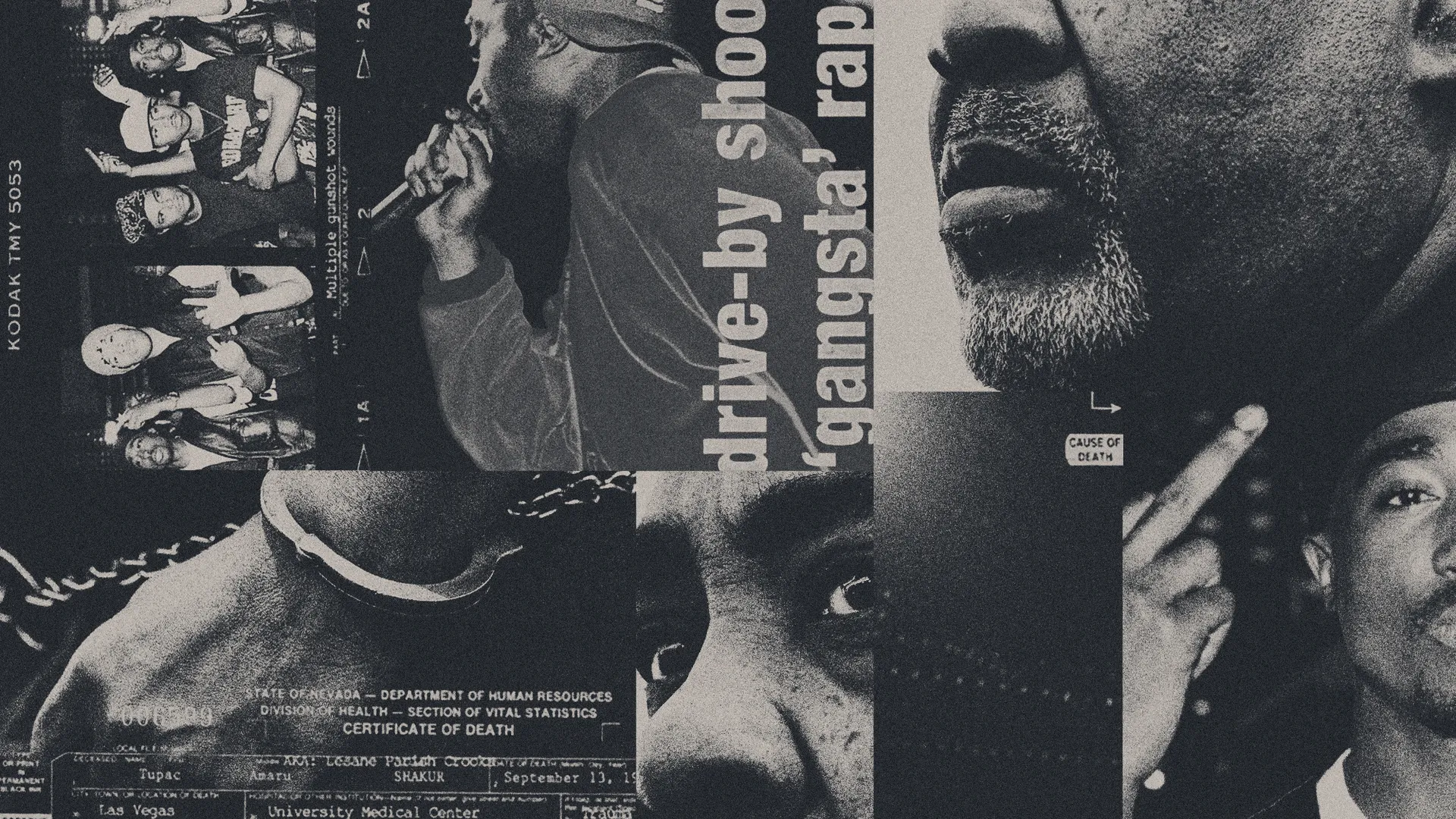
    Nearly 30 years after the fatal shooting of rapper Tupac Shakur, Duane “Keffe D” Davis is standing trial for one of the U.S.’s most notorious unsolved murders. At the core of the case is Davis’ self-published memoir in which he claims to be “one of the only living eyewitnesses” to the rapper’s killing. It means, rather unusually, “he’s the defendant, but he’s also the all-star witness,” said legal analyst Joey Jackson on CNN.

    What’s in the book?
    Published in 2019, “Compton Street Legend” opens in Las Vegas on the night of 7 Sept. 7, 1996, with a step-by-step account of a plan to confront Shakur and Death Row Records CEO Marion “Suge” Knight in retaliation for an earlier fight. Davis describes how he secured a gun, jumped into a Cadillac with three others and drove around before spotting the pair at a junction. 

    “No words exchanged, the time for talking had passed, the shit was about to go down!” he said in the book. Shakur was hit multiple times in the shooting that followed and died from his wounds six days later.

    At first, the book “drew little attention outside online circles devoted to hip-hop lore and true crime,” said Julia Jacobs at The New York Times. But a detective with the Las Vegas Metropolitan Police Department quietly began to build a case around it, and in 2023, excerpts from it convinced a grand jury to indict Davis on one count of murder, which Davis denies.

    How will it be used at trial?
    The prosecution’s case is “largely built on the defendant’s own words” from his book, podcast and documentary interviews, and statements made to police, said Eric Levenson on CNN. Davis is accused of orchestrating the killing, without actually being the one who pulled the trigger. 

    The passages in the book, prosecutors argue, are a confession that he made public in the mistaken belief he had immunity. Davis has pleaded not guilty and claims that his prior statements about the night in question were false and merely an attempt to sell books.

    All this means the jury will face an “unusual dynamic,” said Levenson. Prosecutors will “argue the accused murderer is credible and trustworthy, while defense attorneys will deride their client as a liar and fraud.” 


    Good day 👶

    … for pushing a stroller. Running with a baby carriage could make you less prone to injury, according to a study published in the journal PLoS One. Those who run with strollers see a 37% decrease in the risk of “ankle pain and injuries to their calf muscles, foot arches and Achilles tendons,” said New Scientist.


    Bad day 🌎

    … for launching AI tools. Google has been forced to remove an artificial intelligence tool, Create Image, for Google Earth only 48 hours post-launch after users created images of fake catastrophes on top of a layer of real satellite, aerial or 3D imagery. These included the destruction of the Pyramids and Eiffel Tower, as well as the addition of Russian tanks in Kyiv. 


    Picture of the day

    Gilding the lily

    Farmers arrange bunches of pink water lilies in their boats in Barishal, Bangladesh. The flowers bloom across more than 10,000 acres of the region’s wetlands during monsoon season, when they are handpicked, tied into bundles and sold at local markets.
    Joy Saha / Alamy Live News


    Puzzles

    Daily sudoku

    Challenge yourself with The Week’s daily sudoku, part of our puzzles section, which also includes guess the number

    Play here


    The Week recommends

    The best movies of the 1980s

    Whether the ’80s were “morning in America” or the beginning of the end for the postwar political consensus, there’s no question that the decade produced its share of landmark cinematic achievements and seat-filling blockbusters. These memorable films include huge box office hits and gems known mostly to dedicated cinephiles.

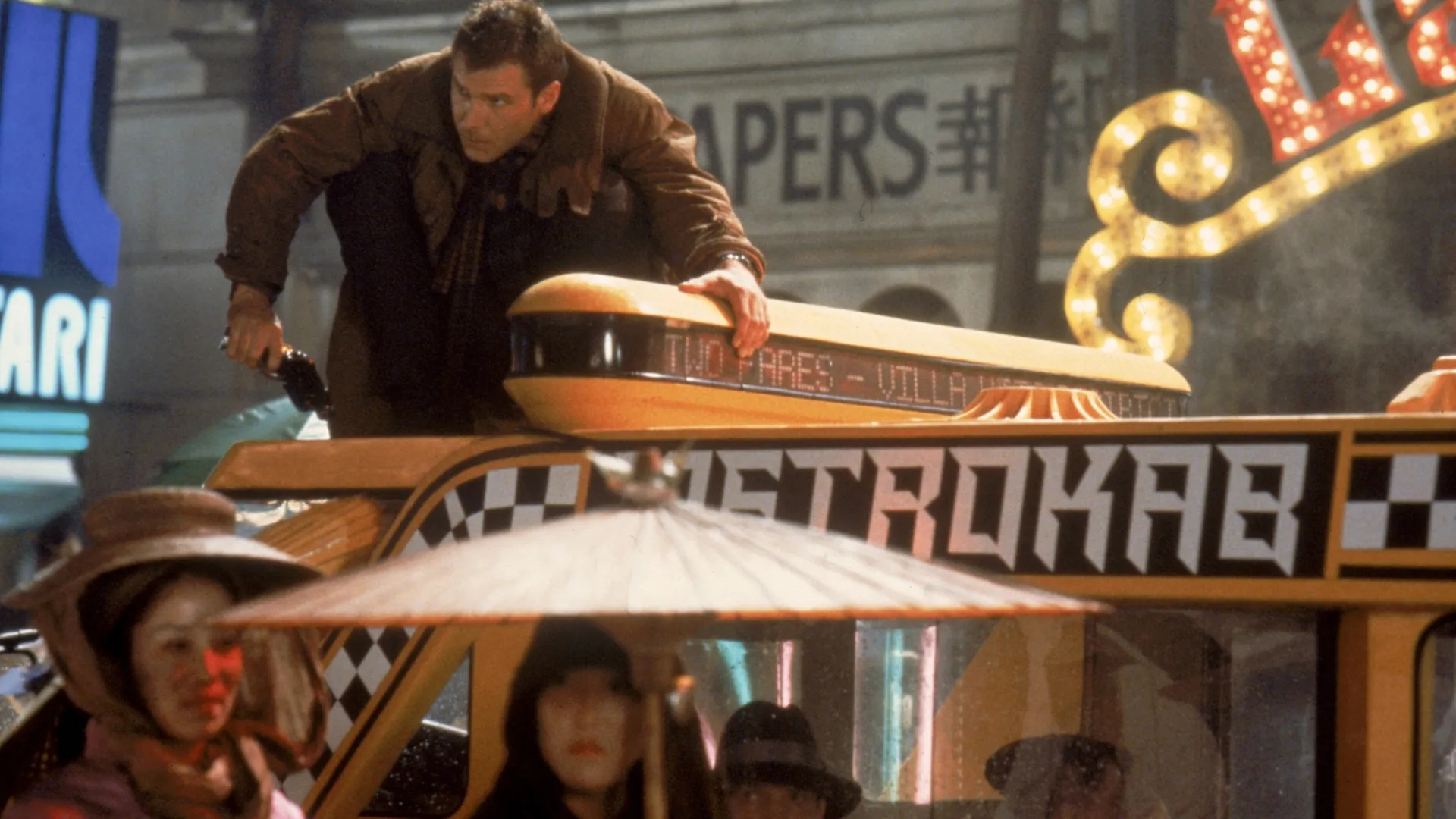
    ‘Blade Runner’ (1982)
    Harrison Ford plays Rick Deckard, one of the titular agents who hunt and retire rogue synthetic “replicants” in a bleak, polluted future Los Angeles. This “visionary” film presents the “future as a black market, made up of scrambled sordid aspects of the past,” said Pauline Kael at The New Yorker. And its unforgettable visual canvas gives it its “place in film history.” (YouTube)

    ‘Full Metal Jacket’ (1987)
    Hollywood’s belated reckoning with the disastrous Vietnam War reached its apotheosis in the late 1980s. The first half of this “astonishingly assured piece of film-making” depicts the “steady dehumanization of Marine recruits,” while the second half builds to a “mini-inferno of sniper fire and gushing bullet wounds” that’s “hard to live through but impossible to forget,” said John Patterson at The Guardian. (Prime Video)

    ‘When Harry Met Sally’ (1989)
    The standard against which all modern romantic comedies are measured, director Rob Reiner’s “When Harry Met Sally” is more than the sum of its well-known vignettes (fake orgasm in a deli, anyone?). A movie that treasures its “characters, atmosphere and setting,” it is also a “collection of finely hewn set pieces, nearly all of which pivot around nothing more than a conversation,” said Sonia Saraiya at Vanity Fair. (Prime Video)

    Read more


    Poll watch

    More than half of Americans (56%) have noticed at least a small shift in the way the Trump administration has been conducting its deportation campaign, according to a Politico survey of 2,004 U.S. adults. Still, many (44%) believe the shifts have made “no difference in how much they trust the administration on immigration.”


    INSTANT OPINION

    Today’s best commentary

    ‘You cannot rebuild a country with people who are shattered’
    Lilia Yapparova at The Boston Globe
    “Stigma around mental health care still runs deep in Ukraine,” says Lilia Yapparova. This happens “even though the scale of trauma in Ukraine is extraordinary.” If the nation’s “mental health crisis goes untreated, overlooked grief and loss could become indelible parts of Ukraine’s social fabric, with cascading effects on future generations.” It’s “not only soldiers who continue to live in a nightmare of ongoing trauma,” but there’s “no systematic, streamlined approach to mental health support in Ukraine.”

    ‘I grew up watching Hayden Panettiere. Her death is a reckoning.’
    Sara Pequeño at USA Today
    The “late-night Aug. 16 notification that Hayden Panettiere died took my breath away,” says Sara Pequeño. “Every so often, a celebrity’s death will feel like an exposed nerve,” and “millennials and Gen Z are still getting used to that feeling.” In the “last years of her life, Panettiere was talking about serious topics that many young women can empathize with.” Hers is “not simply a cautionary tale — it’s also a story about the importance of speaking your truth.”

    ‘Pilots and flight attendants face a real cancer risk. Frequent fliers shouldn’t panic.’
    Vishal R. Patel, Christopher M. Worsham and Anupam Jena at Time
    There’s a “particular unease that comes from seeing that an ordinary part of life has been linked to cancer,” as “pilots and flight attendants die of radiation-related cancers at higher rates than workers in over 500 occupations,” say Vishal R. Patel, Christopher M. Worsham and Anupam Jena. The “next time a flight attendant hands you a coffee at 30,000 feet, there’s no need to fret over the tiny radiation dose,” but “do consider the doses they take on day after day.”


    WORD OF THE DAY

    meteor-wrong

    A meteorite lookalike. Most of the discoveries by Fireballs Aotearoa, a New Zealand citizen science network that tracks meteorites, have turned out to be meteor-wrongs, said Steve Wyn-Harris, the group’s director, to The Guardian. But last month he did find part of a meteorite after a huge fireball flashed through the sky — the 11th confirmed identification in the country.


    Evening Review was written and edited by Theara Coleman, Nadia Croes, David Faris, Scott Hocker, Anya Jaremko-Greenwold, Justin Klawans and Rafi Schwartz, with illustrations by Stephen Kelly.

    Image credits, from top: Illustration by Stephen P. Kelly / Shutterstock / Getty Images; Jemal Countess / Getty Images for CARR Rapid Response; Illustration by Stephen P. Kelly / Getty Images; Sunset Boulevard / Corbis / Getty Images
     

    Recent editions

    • Morning Report

      Burnham unveils ‘everyone in for Christmas’ plan

    • Evening Review

      How Reform’s welfare axe would fall

    • Morning Report

      Trump threatens Oman as Iran talks miss deadline

    VIEW ALL
    TheWeek
    • About Us
    • Contact Future's experts
    • Terms and Conditions
    • Privacy Policy
    • Cookie Policy
    • Advertise With Us
    • FAQ
    Add as a preferred source on Google Add as a preferred source on Google

    The Week UK is part of Future plc, an international media group and leading digital publisher. Visit our corporate site.

    © Future Publishing Limited Quay House, The Ambury, Bath BA1 1UA. All rights reserved. England and Wales company registration number 2008885.