The Week The Week
flag of US
US
flag of UK
UK
https://cdn.mos.cms.futurecdn.net/flexiimages/jzblygzdxr1769609154.gif

SUBSCRIBE

Try 6 weeks free

Sign in
  • View Profile
  • Sign out
  • The Explainer
  • Talking Points
  • The Week Recommends
  • Podcasts
  • Newsletters
  • From the Magazine
  • The Week Junior
  • More
    • Politics
    • World News
    • Business
    • Health
    • Science
    • Food & Drink
    • Travel
    • Culture
    • History
    • Personal Finance
    • Puzzles
    • Photos
    • The Blend
    • All Categories
  • Newsletter sign up Newsletter
  • The Week Evening Review
    Trump’s midterm checks, the BRICS summit, and ICE custody miscarriages

     
    TODAY’S BIG QUESTION

    Will Trump actually send out $5K checks after midterms?

    President Donald Trump last week promised to send a $5,000 check to every U.S. adult but only if Republicans win the midterm elections. Polls prove voters are skeptical, Trump’s GOP allies in Congress are leery, and experts believe a mass payout might add to the growing national debt. The president, meanwhile, says the payments will “happen 100%.”

    What did the commentators say?
    Polls show people “don’t expect” the checks to “materialize,” said Axios. Sixty-one percent of likely voters doubt Trump will keep his pledge and think it’s unclear “whether Republicans have the will to make” the checks a “reality.” This looks like a “publicity stunt,” said one voter to Fox News. The president made previous vows to send out big checks — $5,000 from DOGE savings, $2,000 tariff rebates — that never came. 

    The $1 trillion-plus cost of keeping Trump’s guarantee “would be enormously expensive to fulfill,” and there’s little sense of where the money would come from, said The New York Times. The “conceit” of the aborted DOGE and tariff check pitches was that “money to pay for them was already available,” but the “envisioned funding sources proved illusory.” The president did deliver big tax cuts last year in the “One Big Beautiful Bill,” but that was provided by “reducing federal spending on healthcare and food assistance for poor Americans.”

    Funds for $5,000 checks would not come from “taxpayer money,” said Commerce Secretary Howard Lutnick to NBC News. Cash could come from sources like the administration’s new stake in chipmaker Nvidia or the “Trump Platinum Card” that lets wealthy foreigners pay $5 million to extend their U.S. visas. Still, the federal government is already $40 trillion in debt, and the president “lacks the legal authority to issue a dividend on a whim,” said Larry Persily at the Anchorage Daily News.

    What next?
    Trump doubled down this week. The U.S. government is “taking in tremendous amounts of money,” he said to reporters, per USA Today. He will not press to send out checks before the election because “our country will be in shambles” if Democrats win the midterms. But the “$5,000 is going to happen” if Republicans win.


    Statistic of the day

    $3 billion: The estimated monthly cost of the war with Iran, according to the Congressional Budget Office. The war has “tallied more than $38 billion” in direct costs to the government since it began over six months ago and “became a flash point in voters’ frustrations over rising prices,” said The Philadelphia Inquirer.


    IN THE SPOTLIGHT

    The BRICS summit and a multipolar order

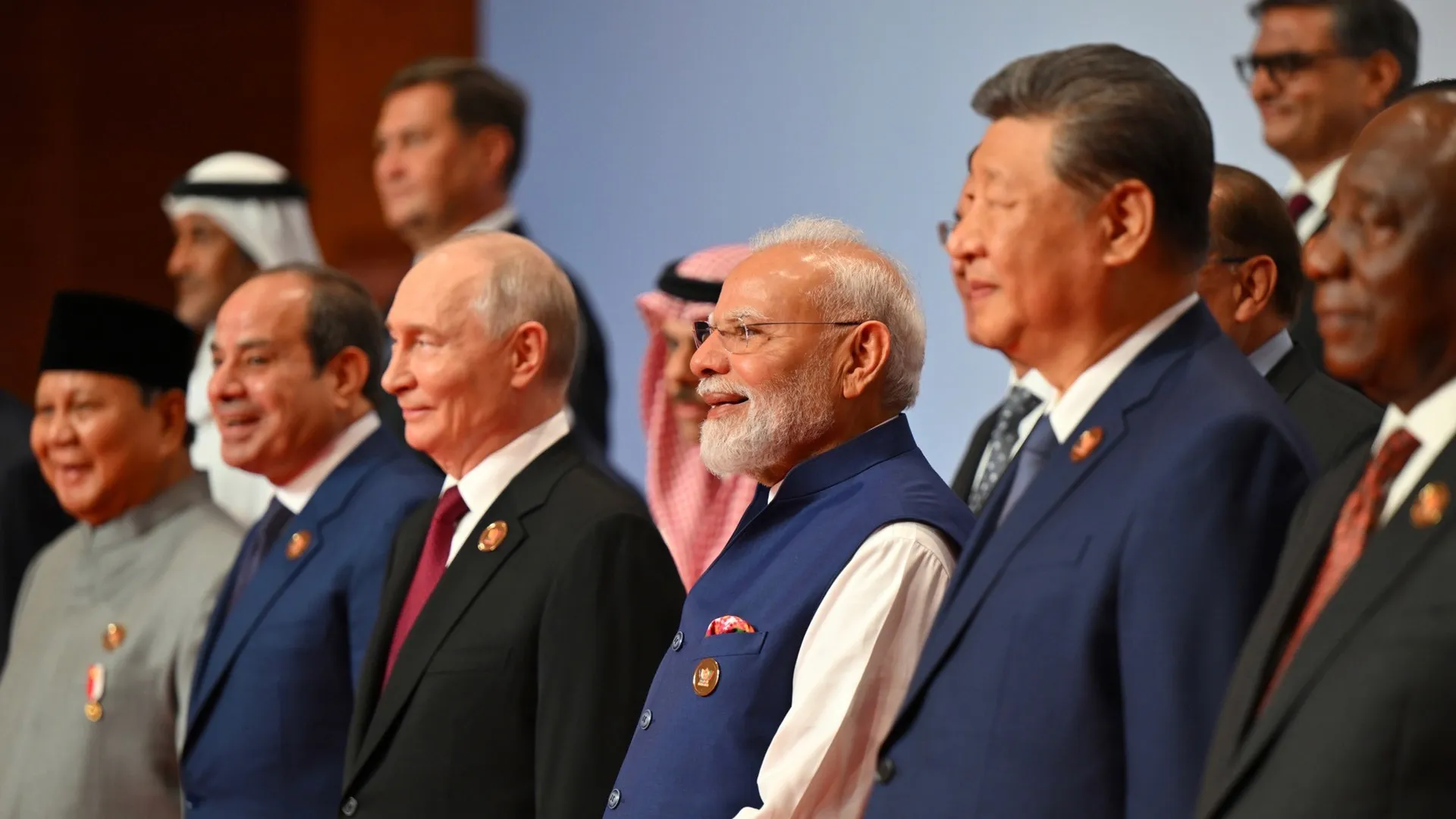
    BRICS, which represents 49.5% of the global population, 40% of global GDP and 26% of global trade, has been described as a “motley collection of emerging markets that agree on little and achieve even less,” said the Financial Times. Many of its members are at odds with their supposed allies, but at last weekend’s summit in India, leaders of the group’s 11 countries united to sign a 45-page declaration calling for a multipolar world: a global system in which power is spread across several major countries or power blocs rather than being controlled by just one or two.

    ‘Source of tension’
    The “historically unruly bloc” — which started as Brazil, Russia, India and China — and now includes Egypt, Ethiopia, Indonesia, Iran, Saudi Arabia, South Africa and the UAE — agreed on a statement “blasting protectionism and economic sanctions and calling for peace in the Gulf,” said the Financial Times. The declaration also expresses concerns about the “unilateral tariff and nontariff measures” that distort trade. It urges cooperation to protect global trade, supply chains, energy flows and maritime security as wars disrupt international commerce.

    The Ukraine war is a “source of tension” within BRICS, of which Russia is a founding member, said Al Jazeera. The declaration states that international disputes should be resolved through “dialogue, consultation and diplomacy” but makes no mention of Ukraine.

    ‘Space for rivals to talk’
    For Iran, this month’s summit in New Delhi was a “chance to show that it does not stand alone amid the U.S.’s and Israel’s military attacks and economic pressure,” said the BBC. In the face of Washington’s sanctions, Iran “pressed for deeper economic ties” with BRICS members, including India and Ethiopia. And for China, this was its leader Xi Jinping’s first visit to India in seven years, showing that BRICS can “create space for rivals to talk and maneuver outside Western-dominated institutions.”

    But “key members and partners of the bloc are at serious loggerheads,” said political scientist Stefan Wolff at The Conversation. Iran is “effectively in a state of war” with the UAE and Saudi Arabia, while the Saudis and the UAE have been “at odds for years” over Yemen, Sudan and Somalia. A group whose “sole remaining source of unanimity is opposition to the U.S. and its allies” is “hardly likely to become a pole of a multipolar order.”


    QUOTE OF THE DAY

    ‘The best thing that Education Secretary Linda McMahon can do for our students is to resign.’

    Rep. Mark Takano (D-Calif.), a member of the House Education and the Workforce Committee, to ABC News on how students are suffering due to grant cuts and changes to civil rights services under McMahon. If she won’t leave, “we need to impeach her,” he added.


    THE EXPLAINER

    ICE’s treatment of detained pregnant women 

    U.S. Immigration and Customs Enforcement has arrested a record number of pregnant people and placed them in detention centers where they receive subpar prenatal and postnatal care. And the agency has lost count of how many have suffered miscarriages.

    What’s happening to women who miscarry?
    The Trump administration “placed more pregnant immigrants in detention” last fall and winter than ever before, said The Guardian. In October, there were at least 87 pregnant women and teens in detention, and by November, there were 101, according to government documents. ICE reported 18 miscarriages during the first nine months of the Trump administration, but the agency stopped recording miscarriages after Oct. 3. 

    Detained pregnant women report they are “struggling to access routine and emergency medical care,” said The Guardian. Women who miscarried or were hospitalized for pregnancy complications told the outlet they “did not receive follow-up care, despite experiencing ongoing pain and symptoms.” Center for Reproductive Rights reports from earlier this year also indicate high numbers of miscarriages in detention centers and, in severe cases, “allegations of coerced or unnecessary gynecological surgeries and hysterectomies,” said Forbes. 

    What does the DHS have to say?
    A spokesperson for the Department of Homeland Security, which oversees ICE, confirmed it “does not have data on miscarriages from October 2025 through June 2026,” said The Guardian. It’s convenient for the Trump administration that ICE cannot report how many miscarriages happened in its custody, because when “you don’t track something,” you don’t have to be “confronted with the reality of what your policies have yielded,” said Faisal Al-Juburi, the co-chief executive of the nonprofit Raíces, to the outlet.

    In May, Democratic Senators Richard Blumenthal (Conn.), Mazie Hirono (Hawaii) and Jon Ossoff (Ga.) demanded answers regarding the “horrific treatment” of pregnant, postpartum and nursing women in immigration detention, in a letter sent to Homeland Security Secretary Markwayne Mullin and private contractors operating an ICE facility in Texas. The trio cited “cases of miscarriages, medical neglect and the use of shackles during pregnancy,” said the Latin Times. They also urged the Trump administration to “restore a policy presuming the release of pregnant women from immigration custody except in extraordinary circumstances.”


    Good day 🍿

    … for box-office records. “Spider-Man: Brand New Day” has dethroned “Star Wars: The Force Awakens” as the “highest-grossing movie ever at the domestic box office” after a month and a half in theaters, said Kotaku. The Marvel/Sony joint feature has hit $937 million in U.S. ticket sales, “surpassing ‘The Force Awakens’ $936 million run after it premiered in 2015.”


    Bad day ⚖️

    … for attorney-client relationships. Lawyers representing Sean “Diddy” Combs have dropped him as a client in a dispute over more than six months of unpaid legal bills. The music producer has become increasingly belligerent, causing a “total breakdown in cooperation and communication” with New York law firm Sher Tremonte, said one of its partners in a court filing seeking to withdraw as counsel.


    Picture of the day

    Gentle giant

    A mahout, or elephant keeper, watches over a Sumatran elephant amid a smoky haze caused by forest fires at the Buluh Cina Nature Tourism Park in Riau, Indonesia. Critically endangered Sumatran elephants continue to be pushed further to the brink as wildfires destroy their habitat.
    Wahyudi / AFP / Getty Images


    Puzzles

    Daily sudoku

    Challenge yourself with The Week’s daily sudoku, part of our puzzles section, which also includes guess the number

    Play here


    The Week recommends

    Castles you can stay at without storming the gates

    Not all castles are as they seem. Many have been transformed into hotels where guests can live out their aristocratic dreams behind stone walls and high gates. These historic castles offer a stay you won’t experience anywhere else, plus the chance to be king or queen for the night.

    Dromoland Castle, Newmarket-on-Fergus, Ireland
    Upon arrival, you will notice the “legendary” porters and doormen who carry your bags to your room with “cheery smiles and lots of stories,” said Condé Nast Traveler. Their excellent service is just one perk of staying at Dromoland (pictured above). Take time to explore the “maze-like” main building, where architectural details include stained glass windows and carved ceilings.

    Ozu Castle, Ehime, Japan
    This meticulously restored wooden castle is one of only a few still standing in Japan and the first to welcome overnight guests. It’s believed that the original fortress went up in the 14th century, about 200 years before the Kato clan took control of Ozu. Amenities and items like sheets and tableware are made locally, and guests are introduced to the area’s history.

    Pousada Castelo Estremoz, Portugal
    Built in the 13th century by King Dinis I for Queen Saint Elizabeth of Portugal, Pousada Castelo Estremoz offers “sweeping views” of the Alentejo region, said Condé Nast Traveler. Rooms and suites come with “gorgeous” canopy beds, and outside there are “manicured” gardens, a swimming pool, and a terrace perfect for meditation sessions. 

    Read more


    Poll watch

    More than half (57%) of Americans disapprove of Trump’s handling of artificial intelligence, up 7% since March, while only 23% approve, according to a University of Massachusetts Amherst survey of 1,000 U.S. adults. Only 11% of Americans support the building of a data center in their community, while 65% oppose it.


    INSTANT OPINION

    Today’s best commentary

    ‘Trust in America’s food safety system is crumbling — Congress can restore it’
    April McClain Delaney at The Hill
    The agencies that “keep our food safe have been hollowed out,” says April McClain Delaney. As evidenced by this summer’s cyclosporiasis crisis, tainted lettuce is increasingly common, but the Trump administration “cannot tell us why these outbreaks happen or, in many cases, where they came from,” and there’s “no clear plan to prevent” the next one. The former director of the FDA’s food safety center says the “people whose job” it is to “warn Americans” about outbreaks were “eliminated in last year’s cuts.”

    ‘Colin Kaepernick set an example. Nobody wants to follow it.’
    Will Leitch at The Washington Post
    The quarterback who knelt during the national anthem desperately “wanted to play,” says Will Leitch. But as the “maelstrom he set off exploded, every NFL team chose not to roster him.” Kaepernick “wouldn’t retreat from his fundamental protest against police violence and oppression of Black people,” even if it meant losing his job. It turned out the “main lesson of it was the high cost of standing firm on belief, particularly against an organization as powerful” as the NFL.

    ‘Dear Ed Sheeran, fence-sitting is so last century: Musicians can no longer opt out of politics.’
    Zoe Williams at The Guardian
    Since the rapper Macklemore was “dropped as a support act on Ed Sheeran’s ‘Loop Tour,’ every other opening act has pulled out,” says Zoe Williams. Sheeran, “seeking to stay out of politics, has become, in this moment, the most political artist in the world.” The “concern” of many of the involved artists was that they were “facing not just censorship but censorship by billionaires, specifically Robert Kraft, who demanded Macklemore’s removal with the threat of axing the whole show from his Gillette Stadium.”


    WORD OF THE DAY

    coprolite

    A fossilized dinosaur dropping. A bird that was eaten and partially excreted by a dinosaur 66 million years ago has left behind the “best-preserved feathers ever recovered by scientists from dinosaur-age rock,” according to a study published in Current Biology, said New Scientist. This pushes the “evolution of feathers,” like the ones on modern birds, “back by 10 million years.” 


    Evening Review was written and edited by Theara Coleman, Nadia Croes, Catherine Garcia, Scott Hocker, Anya Jaremko-Greenwold, Joel Mathis and Chas Newkey-Burden, with illustrations by Stephen Kelly.

    Image credits, from top: Illustration by Stephen P. Kelly / Getty Images; Press Information Bureau / Handout / Anadolu / Getty Images; Anadolu / Contributor / Getty Images; Dromoland Castle
     

    Recent editions

    • Morning Report

      Palace hits back at Earl Spencer over Diana claims

    • Evening Review

      Is big money a threat to UK democracy?

    • Morning Report

      Vow to overhaul NHS after ‘devastating’ Letby inquiry

    VIEW ALL
    TheWeek
    • About Us
    • Contact Future's experts
    • Terms and Conditions
    • Privacy Policy
    • Cookie Policy
    • Advertise With Us
    • FAQ
    Add as a preferred source on Google Add as a preferred source on Google

    The Week UK is part of Future plc, an international media group and leading digital publisher. Visit our corporate site.

    © Future Publishing Limited Quay House, The Ambury, Bath BA1 1UA. All rights reserved. England and Wales company registration number 2008885.