Ukraine's Zelensky says he learned of Biden's decision to waive Russian pipeline sanctions through the press
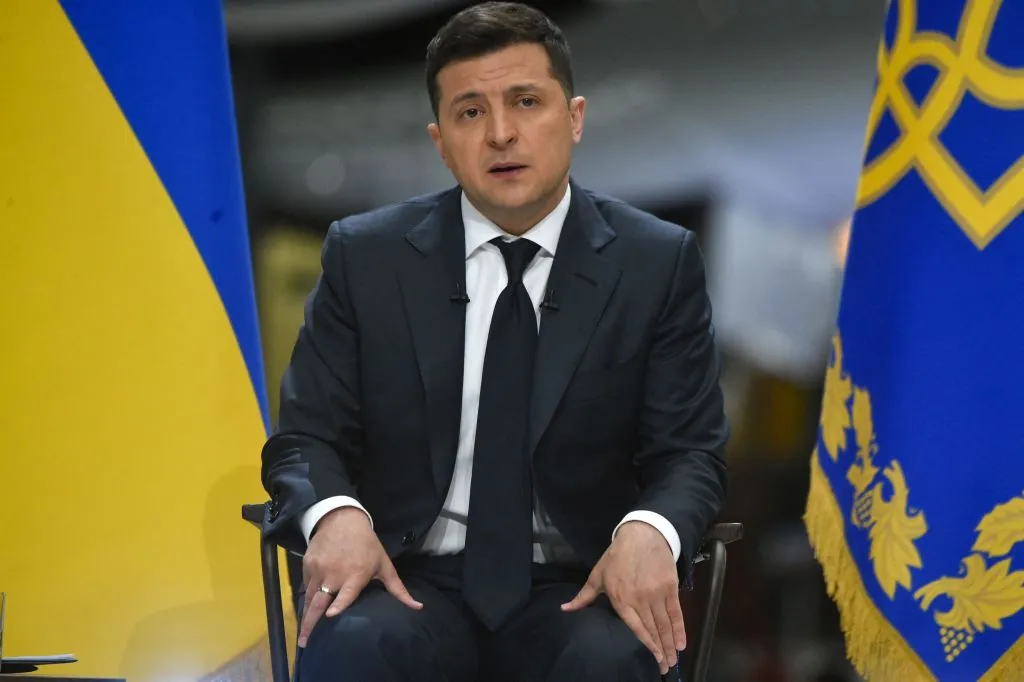
Ukrainian President Volodymyr Zelensky told Axios in an exclusive interview that he's no longer angry about President Biden's decision to waive sanctions on the Russian company overseeing the Nord Stream 2 pipeline, which will transport natural gas from Russia to Germany, he's just disappointed. And he seemingly wants Washington to communicate a little more directly with Kyiv about its Russia strategy.
Nord Stream 2 is a big deal for Ukraine, whose eastern regions are typically under threat from Russia. Currently, Ukraine is a major natural gas supplier to Western Europe itself, which Zelensky said is a "powerful political tool" that forces Russia to talk to Ukraine and Europe "at the same table." But if Nord Stream 2 is completed, which looks more and more likely, Zelensky warns that "Ukraine will no longer have this leverage," leaving it vulnerable.
Biden and top administration officials, like Secretary of State Antony Blinken, have said they oppose the pipeline, but it's 95 percent complete, and they don't want to anger Germany, a major ally, so they consider the sanctions a lost cause. Even if the decision was pragmatic, Zelensky said he didn't get a heads up, telling Axios he was "surprised" by the move, especially because he learned about it — and the U.S.'s explanation for it — "through the press." "I feel that … well, between strategic partners the relations should be direct," he said. Read more at Axios and the full intereview transcript here.
The Week
Escape your echo chamber. Get the facts behind the news, plus analysis from multiple perspectives.
Sign up for The Week's Free Newsletters
From our morning news briefing to a weekly Good News Newsletter, get the best of The Week delivered directly to your inbox.
A free daily email with the biggest news stories of the day – and the best features from TheWeek.com
Tim is a staff writer at The Week and has contributed to Bedford and Bowery and The New York Transatlantic. He is a graduate of Occidental College and NYU's journalism school. Tim enjoys writing about baseball, Europe, and extinct megafauna. He lives in New York City.
-
Political cartoons for November 29Cartoons Saturday's political cartoons include Kash Patel's travel perks, believing in Congress, and more
-
Nigel Farage: was he a teenage racist?Talking Point Farage’s denials have been ‘slippery’, but should claims from Reform leader’s schooldays be on the news agenda?
-
Pushing for peace: is Trump appeasing Moscow?In Depth European leaders succeeded in bringing themselves in from the cold and softening Moscow’s terms, but Kyiv still faces an unenviable choice
-
Is conscription the answer to Europe’s security woes?Today's Big Question How best to boost troop numbers to deal with Russian threat is ‘prompting fierce and soul-searching debates’
-
Trump peace deal: an offer Zelenskyy can’t refuse?Today’s Big Question ‘Unpalatable’ US plan may strengthen embattled Ukrainian president at home
-
The Baltic ‘bog belt’ plan to protect Europe from RussiaUnder the Radar Reviving lost wetland on Nato’s eastern flank would fuse ‘two European priorities that increasingly compete for attention and funding: defence and climate’
-
How should Nato respond to Putin’s incursions?Today’s big question Russia has breached Nato airspace regularly this month, and nations are primed to respond
-
What will bring Vladimir Putin to the negotiating table?Today’s Big Question With diplomatic efforts stalling, the US and EU turn again to sanctions as Russian drone strikes on Poland risk dramatically escalating conflict
-
The mission to demine UkraineThe Explainer An estimated quarter of the nation – an area the size of England – is contaminated with landmines and unexploded shells from the war
-
Ottawa Treaty: why are Russia's neighbours leaving anti-landmine agreement?Today's Big Question Ukraine to follow Poland, Finland, Lithuania, Latvia and Estonia as Nato looks to build a new ‘Iron Curtain' of millions of landmines
-
How drone warfare worksThe Explainer From Ukraine to Iran, it has become clear that unmanned aircraft are rapidly revolutionising modern warfare