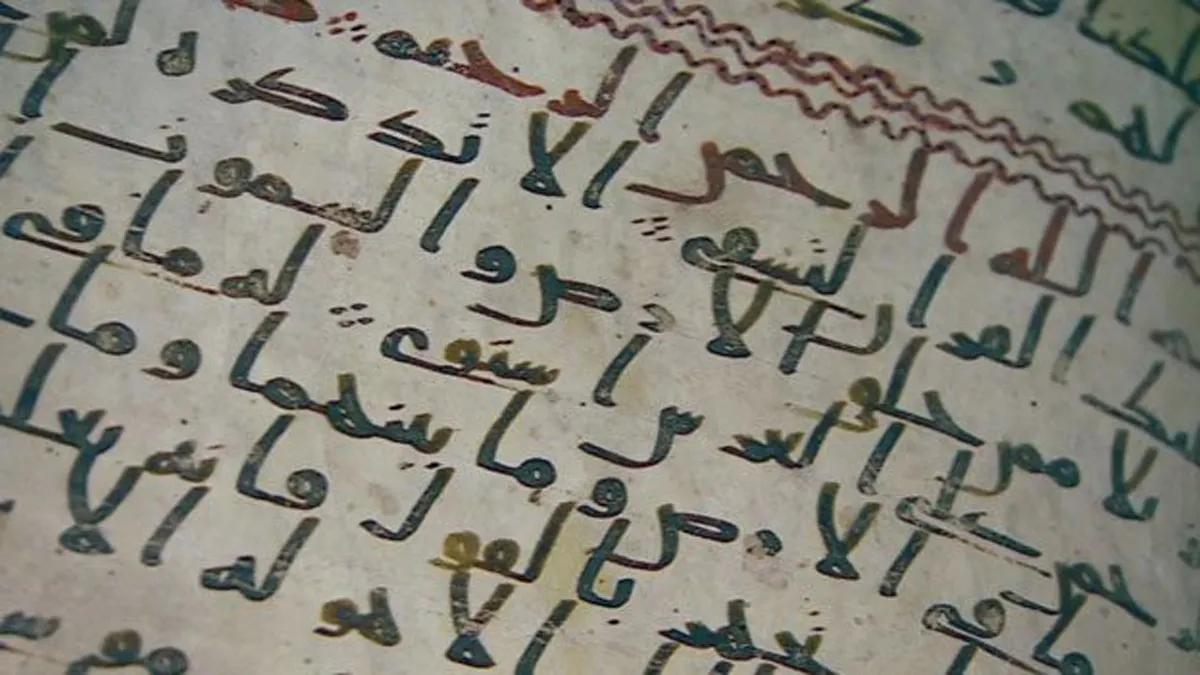
Fragments of a 1,370-year-old copy of the Koran, one of the oldest in existence, have been discovered in the University of Birmingham's library.
Experts have said it is possible that its writer might even have known Prophet Muhammad.
The Muslim holy text, written in an early form of Arabic, remained in the library with a collection of other Middle Eastern books and documents for almost a century before it was found by a PhD researcher. A radiocarbon dating test, carried out by the Oxford University Radiocarbon Accelerator Unit, found that the parchment fragments, made of sheep or goat skin, date back to between 568 and 645.
The Week
Escape your echo chamber. Get the facts behind the news, plus analysis from multiple perspectives.
SUBSCRIBE & SAVE
Sign up for The Week's Free Newsletters
Join more than 350,000 subscribers and keep yourself informed with a selection of The Week’s most interesting, enlightening and entertaining stories - plus daily puzzles.
Join more than 350,000 subscribers and keep yourself informed with a selection of The Week’s most interesting, enlightening and entertaining stories - plus daily puzzles.
Latest Videos FromThe Week US
"They could well take us back to within a few years of the actual founding of Islam," said David Thomas, the university's professor of Christianity and Islam.
Muslim tradition says Prophet Muhammad received the revelations that form the Koran, the scripture of Islam, between the years 610 and 632, the year of his death, Thomas told the BBC. Passages were written on parchment, stone, palm leaves and the shoulder blades of camels, with a final book completed in about 650.
"The person who actually wrote it could well have known the Prophet Muhammad. He would have seen him probably, he would maybe have heard him preach. He may have known him personally – and that really is quite a thought to conjure with," he said.
Dr Muhammad Isa Waley, curator for such manuscripts at the British Library, told the BBC the "exciting discovery" would make Muslims "rejoice".
He believes the texts, written in "surprisingly clear" script, "almost certainly date from the time of the first three caliphs", the first leaders in the Muslim community between 632 and 656.